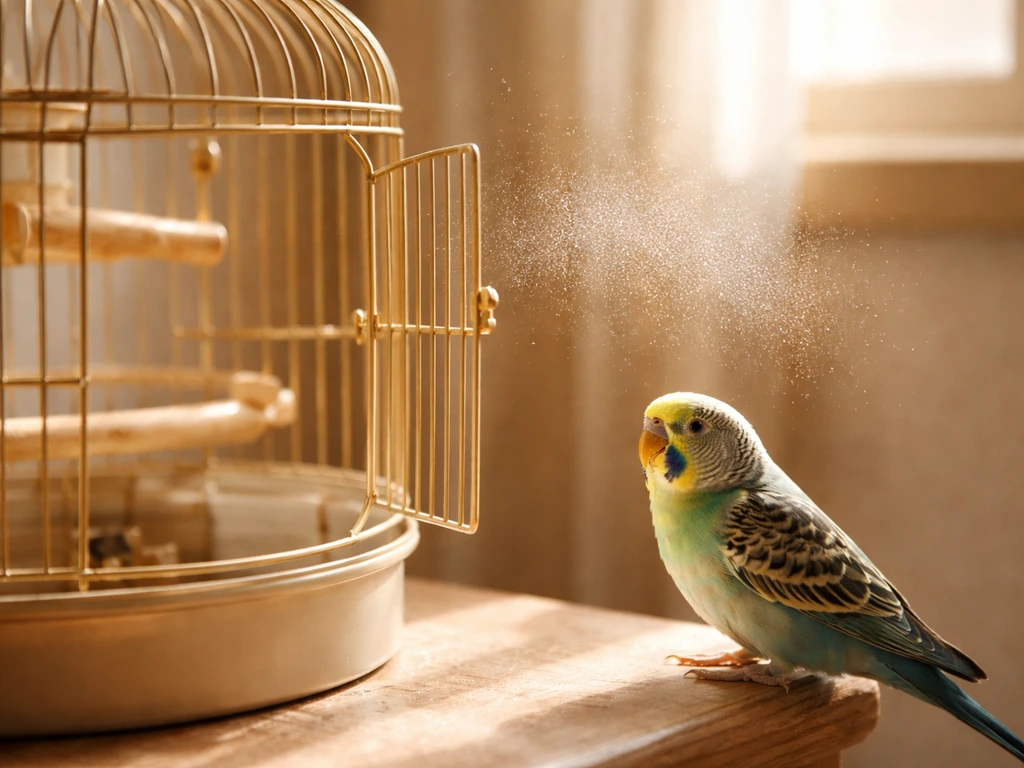
Bird dander is the microscopic biological material that birds shed constantly into the air around them. It includes tiny flakes of dead skin, fragments of feather material, proteins from dried droppings, and even trace amounts of bird serum proteins. Fragments of bird feathers can carry proteins that may contribute to allergy symptoms in sensitive people can bird feathers cause allergies. These particles range roughly from 0.5 to 100 micrometers in size, meaning many of them are small enough to float in the air for long periods and land deep in your lungs without you ever noticing. For most people, this is a mild nuisance at worst. For others, especially those with sensitivities, it can trigger real allergy symptoms or, in more serious cases, a lung condition called bird fancier's lung.
What Is Bird Dander and How to Reduce It Safely

What bird dander actually is and where it comes from

The word "dander" gets used loosely, but it refers specifically to the tiny protein-carrying particles that come off a living animal. With birds, it is more complex than just dry skin. What you are actually dealing with is a mixture of shed skin cells, fine feather dust (sometimes called "bloom" on certain species like cockatiels and cockatoos), dried droppings, and in some cases proteins from the bird's own blood serum. Research on pigeon allergens, for example, identifies allergenic proteins present not just in feathers but also in dried droppings and pigeon bloom, which is that powdery coating on some feathers.
In poultry or farm-bird settings, the mix gets even more complex. The dust in those environments contains feed particles, bedding, dander, feather fragments, dust mites, bacteria, and endotoxins, all becoming airborne together. Even for pet bird owners, the principle holds: what you are inhaling is not just one thing. It is a biological soup, and the allergenic proteins in it are what cause immune reactions in sensitive people.
One practical reality worth knowing: bird-derived allergens can persist in a home for weeks even after the bird is no longer there. Studies have found measurable bird antigen in homes after the bird was removed. So if you moved into a home where birds previously lived, or if you are trying to figure out whether past exposure is still affecting you, that residual contamination is a real factor.
How bird dander affects people: allergies versus irritation
There are two separate things that bird dander can do to a person, and it helps to understand which one you are dealing with.
The first is a straightforward allergic reaction. The proteins in bird dander trigger your immune system, which produces IgE antibodies, and the result is classic allergy symptoms: sneezing, runny or stuffy nose, itchy and watery eyes, and sometimes wheezing or difficulty breathing if your airways are involved. This pattern looks a lot like hay fever and tends to happen relatively quickly after exposure. If you have ever noticed that your nose runs or your eyes itch every time you are around your bird, that is the most likely explanation. It is also possible to be allergic to bird feathers, which is why symptoms can show up when you are around a bird even if the main exposure is airborne dander can you be allergic to bird feathers.
The second, and more serious, response is hypersensitivity pneumonitis, sometimes called bird fancier's lung. This is not a typical hay-fever reaction. It is an inflammatory response deep in the lung tissue, and it feels more like a flu or pneumonia than a common allergy. Symptoms typically develop 4 to 6 hours after heavy exposure and can include chills, fever, cough, and shortness of breath. Because it resembles an infection, it often gets misdiagnosed. Chronic, lower-level exposure can cause a slower-developing form that is even harder to recognize. Exposure to bloom and dried droppings is particularly associated with worsening this condition.
Bird dander can also act as a plain irritant in people who are not technically allergic to it. Fine airborne particles irritate the mucous membranes and airways of some people without triggering a true immune response. The symptoms can feel similar, but they tend to be milder and more directly tied to the level of dust in the air rather than a specific protein sensitivity.
Telling your own symptoms apart from a sick bird's signs
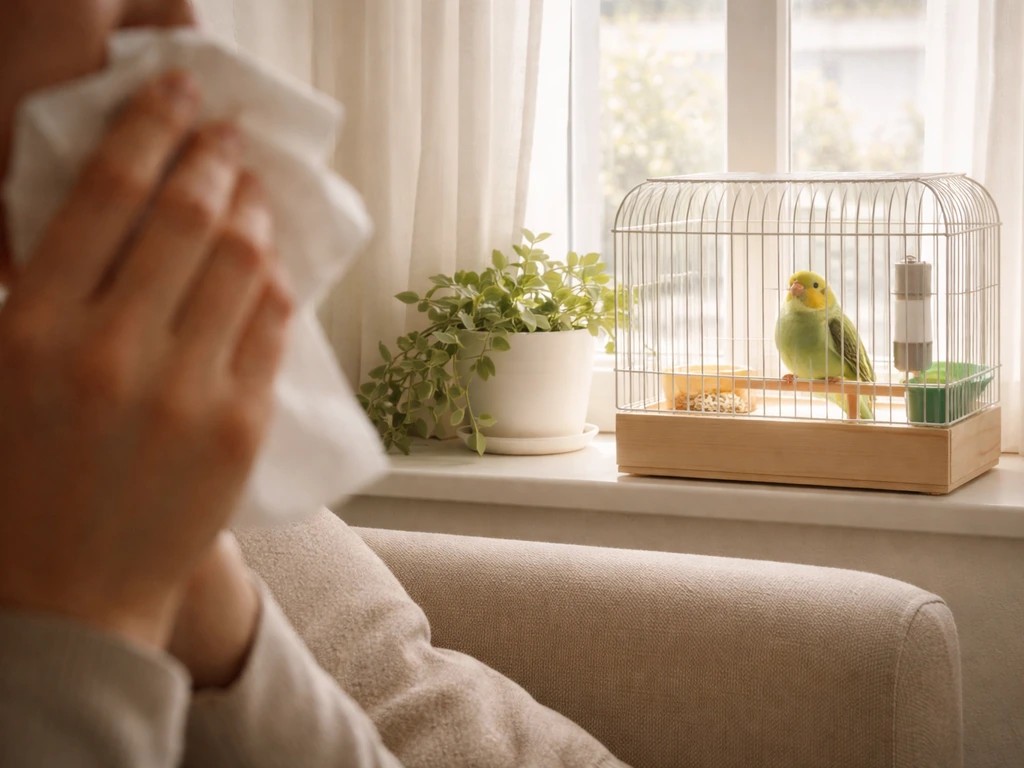
This is a question that comes up a lot, and it is a smart one to ask. If you or someone in your home is feeling unwell and you have a bird, it matters whether the problem is with you or with the bird, because the next steps are completely different.
Human allergy symptoms from bird dander typically involve the nose, eyes, and airways. You are looking at sneezing, congestion, itchy or red eyes, and potentially coughing or wheezing. If bird fancier's lung is developing, add fever, chills, and feeling genuinely ill a few hours after spending time near the bird. These symptoms center on you, not on any change in the bird's appearance or behavior.
A sick bird shows a completely different set of signals. Watch for these warning signs that indicate the bird itself may need veterinary attention:
- Fluffed feathers or a huddled posture at the bottom of the cage
- Visible difficulty breathing, tail bobbing, or labored breathing
- Discharge from the nostrils or eyes
- Feather plucking, damaged feathers, or unusual feather loss
- Significant weight loss or refusal to eat
- Changes in droppings (color, consistency, volume)
- Lethargy or reduced activity compared to normal
Excessive feather dust or abnormal feather shedding in the bird can also be a health signal, not just a housekeeping issue. Conditions like mites, psittacine beak and feather disease (PBFD), malnutrition, or infections can all affect feather quality and increase the amount of biological material the bird sheds. It is worth noting that PBFD spreads through feather dust and dander, so a bird that is shedding more than usual and showing feather abnormalities warrants a vet visit both for the bird's sake and because the material it is putting into the air may carry disease particles.
The short version: if you feel sick and the bird looks fine and is behaving normally, you are probably dealing with a dander exposure or allergy issue in yourself. If the bird looks or acts unwell, that is a separate problem that needs avian vet attention regardless of how you are feeling.
Practical ways to reduce bird dander in your home
You cannot eliminate bird dander if you have a bird, but you can reduce your exposure significantly with a consistent routine. These steps make a real difference.
Cleaning and surfaces
Vacuum frequently, and make sure your vacuum has a true HEPA filter. Standard vacuums without HEPA filtration often just redistribute fine particles back into the air. If you are particularly sensitive, leave the room while someone else vacuums and stay out for at least 20 to 30 minutes afterward to let airborne particles settle. Wipe down hard surfaces with a damp cloth rather than dry dusting, which just moves the dander around. Hard flooring is easier to keep clean than carpet when you have a bird, because carpet traps allergen-laden particles and holds them.
Air filtration and ventilation
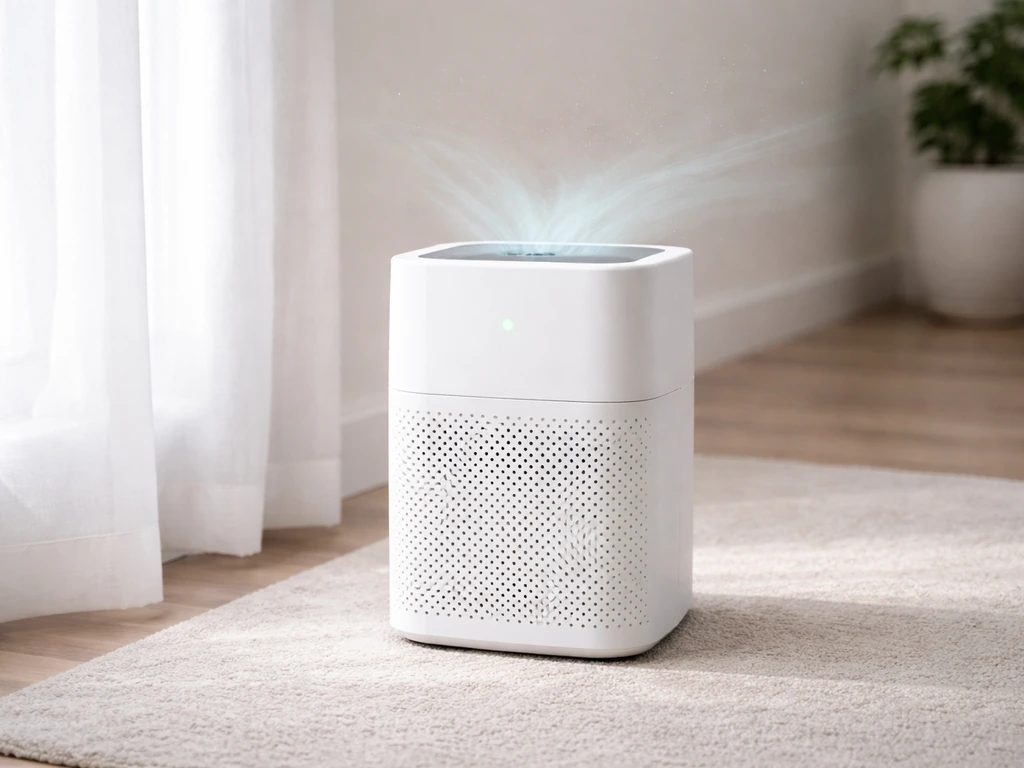
A portable air purifier with a HEPA filter is one of the most effective tools available. The key is to match the unit's clean air delivery rate (CADR) to the actual size of the room where the bird lives. Undersized purifiers running constantly still will not process the air volume quickly enough to make a meaningful difference. Run the purifier continuously in the bird's room, and consider a second unit in the bedroom if you are having nighttime symptoms. Open windows when weather allows, especially after cleaning the cage or handling the bird.
Humidity control
Keep indoor humidity between about 30 and 50 percent. Below 30 percent, air gets very dry and fine particles stay airborne longer. Above 50 to 55 percent, you are creating conditions that encourage dust mites and mold, both of which add to your overall allergen load. A simple digital hygrometer tells you where you stand, and a dehumidifier or air conditioner can help you stay in the right range during humid months.
Handling and grooming practices
Wash your hands after handling the bird or cleaning the cage. Avoid touching your face during or right after handling. If you are sensitive, wear a mask when doing a deep cage clean. Bathe or mist your bird regularly if the species tolerates it, since this settles loose feather dust and reduces how much becomes airborne. Do cage cleaning in a well-ventilated area, and if possible, do it outside.
The bird's environment
Keep the bird's cage in a room that can be somewhat isolated from the rest of the house, such as a room you do not sleep in. Clean the cage and surrounding area at least weekly. Consider cage liners that make cleaning easier and faster, reducing how long droppings sit and dry out into airborne particles. Avoid placing the cage near central air vents, which will spread dander throughout the whole house.
When to see a doctor and what to expect
If your symptoms are mild and only happen occasionally around your bird, you can reasonably start with over-the-counter antihistamines and better cleaning habits before seeing a doctor. But there are clear signals that you should get a professional involved sooner rather than later.
See a doctor promptly if you have symptoms that resemble a flu or pneumonia rather than a classic allergy, especially if they develop a few hours after time spent near the bird. Fever, chills, a persistent cough, and shortness of breath in that pattern suggest hypersensitivity pneumonitis, which requires a different workup than simple allergic rhinitis.
Go to an emergency room or call emergency services immediately if you experience severe difficulty breathing, throat tightening, swelling, or signs of anaphylaxis. Anaphylaxis is rare with bird dander but possible in highly sensitized individuals, and it requires epinephrine as first-line treatment, not antihistamines.
When you see an allergist, expect a detailed exposure history followed by testing. Skin prick testing (where small drops of allergen are applied to the skin and observed for a reaction) or specific IgE blood testing can identify exactly what you are sensitized to. For suspected bird fancier's lung, diagnosis typically involves lung function tests, blood work, and imaging, since the history of bird exposure is a key diagnostic clue that is easy to overlook without it.
Treatment depends on what is found. Classic allergy symptoms are often managed with antihistamines, nasal corticosteroids, and in some cases allergen immunotherapy. For hypersensitivity pneumonitis, reducing or eliminating exposure is the most important step. If inflammation is severe, a doctor may prescribe corticosteroids or other medication to calm the immune response.
When the bird needs to see an avian vet
Abnormal feather shedding and feather damage are not just a human air-quality problem. They are often a signal that something is wrong with the bird itself. If you notice your bird plucking or damaging its own feathers, developing crusty lesions on the face or legs, losing significant feather coverage, or producing more feather dust than usual, those are all reasons to book an avian vet appointment.
Feather problems in birds can stem from mites, bacterial or fungal infections, nutritional deficiencies, toxin exposure, stress, or serious viral diseases like PBFD. A vet can distinguish between a behavioral feather issue and a medical one, and some of these conditions require treatment before they worsen or spread to other birds.
Beyond feather concerns, contact an avian vet promptly if the bird shows any of these signs:
- Labored breathing or tail bobbing with each breath
- Discharge from the eyes or nostrils
- Sudden change in droppings
- Sitting huddled at the cage bottom with fluffed feathers
- Refusing food or losing noticeable weight
- Unusual lethargy or loss of balance
These are urgent signals. Birds instinctively hide illness, so by the time these signs appear, the condition may already be serious. Respiratory distress in particular can deteriorate quickly in birds and should never be a "wait and see" situation.
Long-term management for pet bird owners and people around wild birds
If you have a bird and a sensitivity to dander, the goal is long-term control rather than a one-time fix. That means treating the cleaning and filtration routine as ongoing maintenance, not something you do once and forget.
Keep your HEPA purifier running continuously and replace the filter on schedule. Check in on your humidity levels seasonally, since they shift with weather changes. Schedule regular avian vet checkups for your bird even when it looks healthy, because a bird in good health with a good diet and proper humidity produces less problematic dander than an unhealthy or stressed one.
If your symptoms are linked to wild birds, such as pigeons near your home, at a workplace, or in a garden, the approach is different. You cannot manage the bird, so you manage your exposure. Avoid disturbing roosting areas, dried droppings, or nests without appropriate protection (an N95 mask and gloves at minimum). If droppings have accumulated in an enclosed space like an attic or balcony, professional cleanup is safer than doing it yourself, since disturbing dry droppings releases concentrated airborne particles.
For anyone managing ongoing symptoms, working with an allergist to develop a long-term plan makes sense. Tracking when symptoms are worse (time of day, after certain activities, in certain rooms) helps identify where your biggest exposures are happening, which makes your mitigation efforts more targeted and effective.
| Situation | Who to contact | Urgency |
|---|---|---|
| Mild sneezing/runny nose around bird | Primary care doctor or allergist | Non-urgent, book routine appointment |
| Flu-like symptoms hours after bird exposure (fever, chills, cough) | Doctor promptly | See doctor within 1 to 2 days or same day |
| Severe difficulty breathing or throat tightening | Emergency services (911) | Immediately |
| Bird plucking feathers or showing feather damage | Avian vet | Within a few days |
| Bird showing labored breathing or discharge | Avian vet | Same day, treat as urgent |
| Bird sitting hunched or not eating | Avian vet | Same day |
Bird dander is not something most people need to be alarmed about, but it is something worth understanding clearly. If you are wondering can bird dander make you sick, the key is whether it triggers allergy symptoms or a lung reaction like bird fancier's lung. Whether you are trying to figure out why your nose runs every time you sit with your parrot, or you are worried your bird is shedding too much, the answer is usually somewhere in the practical steps above. Start with the cleaning and filtration basics, pay attention to what your bird's feathers and behavior are telling you, and do not hesitate to involve both a doctor for your symptoms and an avian vet for the bird's health when the situation calls for it.
FAQ
Can I still get bird dander symptoms even if I don’t handle my bird?
Yes. Bird proteins and fine feather dust can remain airborne after normal cage activity, feeding, or cleaning, and they can settle onto nearby fabrics and surfaces. If symptoms show up in rooms where the bird sits but not during direct handling, the likely driver is airborne dander from the bird’s environment, not contact with feathers.
How long should I expect dander to linger after I remove a bird from my home?
Residual allergens can persist for weeks after the bird is gone, especially in soft furnishings like carpets, curtains, and upholstered furniture. If you’re trying to confirm whether symptoms are still caused by past bird exposure, focus first on HEPA filtration and deep cleaning of fabric surfaces, then reassess after several weeks rather than days.
What’s the difference between bird dander and “feather bloom,” and why does it matter?
“Dander” is often used broadly, but some species develop a powdery feather coating (bloom) that sheds into the air with feathers. Bloom and dried droppings can contribute proteins linked to symptoms, so homes need both airflow control (HEPA) and droppings-focused cleaning, not only feather dust removal.
Do air purifiers with HEPA help if I have a whole-house HVAC system?
They help, but they don’t prevent spread through ducted air. If the cage is near supply/return vents or the system runs continuously, allergens can circulate. Consider relocating the bird to an isolated room, keep the purifier in that room running continuously, and if possible reduce HVAC airflow from that zone during high-shedding periods.
Can vacuuming make bird dander worse even if I’m cleaning more often?
It can, if the vacuum doesn’t truly trap fine particles. Without a sealed HEPA system, suction can stir up dust and blow it back out, worsening airborne exposure. Use a vacuum with a sealed HEPA filtration system, and if you’re highly sensitive, avoid the room during and after vacuuming.
How do I know whether my symptoms are allergy versus hypersensitivity pneumonitis?
A key clue is timing and severity. Classic allergy tends to hit the nose and eyes, and usually comes on relatively quickly with exposure. Hypersensitivity pneumonitis often feels like flu or pneumonia, with chills or fever and symptoms that typically develop hours after heavier exposure. If you suspect the lung reaction pattern, you need medical evaluation rather than treating it like simple hay fever.
Is it ever safe to “test” my sensitivity by reducing cleaning or stopping meds?
Be cautious. If you stop control measures, you might temporarily worsen breathing symptoms, including those consistent with hypersensitivity pneumonitis. A safer approach is to document symptoms during normal routines, then discuss adjustments with a clinician, especially if you’ve had wheezing, shortness of breath, or delayed flu-like symptoms after bird exposure.
Do humidity changes really affect bird dander symptoms?
They can. Lower indoor humidity can increase how long fine particles stay airborne, while higher humidity can promote dust mites and mold, adding additional allergen load. Using a hygrometer to keep humidity in the recommended range can reduce overall triggers, not just bird proteins.
Should I mist or bathe my bird if I’m sensitive to dander?
Often it can help settle loose feather dust, but only if the bird tolerates it and your husbandry practices are safe. Overdoing misting can stress some birds or worsen respiratory issues if done incorrectly, so start gradually, avoid chilling the bird, and prioritize good ventilation during any bird-wetting routine.
What should I do if my bird seems healthy, but I keep getting symptoms at certain times of day?
Track when symptoms spike (morning vs evening, after feeding, during cage cleaning, after opening windows). Those patterns can identify whether the main exposure is airborne feather dust, droppings that dry out, or particulates stirred during daily tasks. Use the log to target interventions, like changing cleaning timing, adding a purifier in the bedroom, or improving droppings management.
If I think my bird is shedding abnormally, should I also assume I’m getting more allergens?
Usually yes, higher shedding and feather dust often mean more airborne material, but the bird’s health issue matters too. Abnormal shedding can reflect mites, infections, PBFD, malnutrition, or other problems, some of which can increase dust and spread through feather material. Book an avian vet appointment and intensify protective cleaning until you know the cause.
What protection should I use during cage deep-cleaning?
A well-fitting mask and good ventilation are important, especially when disturbing dried droppings or heavy feather dust. If you’re doing a deep clean or it’s a concentrated, dirty job, avoid doing it in the living areas, limit airflow from that room to the rest of the house, and consider leaving temporarily until particles settle.
When should I treat this as an emergency?
Get emergency help immediately for severe breathing difficulty, throat tightness or swelling, collapse, or signs consistent with anaphylaxis. While bird dander reactions are more commonly allergic symptoms, severe reactions can occur in highly sensitized individuals and require prompt first-line treatment with epinephrine.
If wild birds are the trigger, what’s different from managing a pet bird?
You cannot control the bird, so exposure control is the priority. Avoid disturbing roosting areas, dried droppings, and nests, especially in enclosed spaces like attics or balconies. If droppings have built up, professional cleanup is often safer because disturbing dry material releases concentrated airborne particles.
What should I ask an allergist if bird exposure is causing ongoing symptoms?
Ask about both bird-specific sensitization and lung-related evaluation if you ever get delayed flu-like symptoms. Request guidance on which tests fit your history (skin testing or specific IgE for sensitization, and lung function workup if bird fancier’s lung is a possibility). Also ask for a written long-term plan covering environmental controls and medication timing.
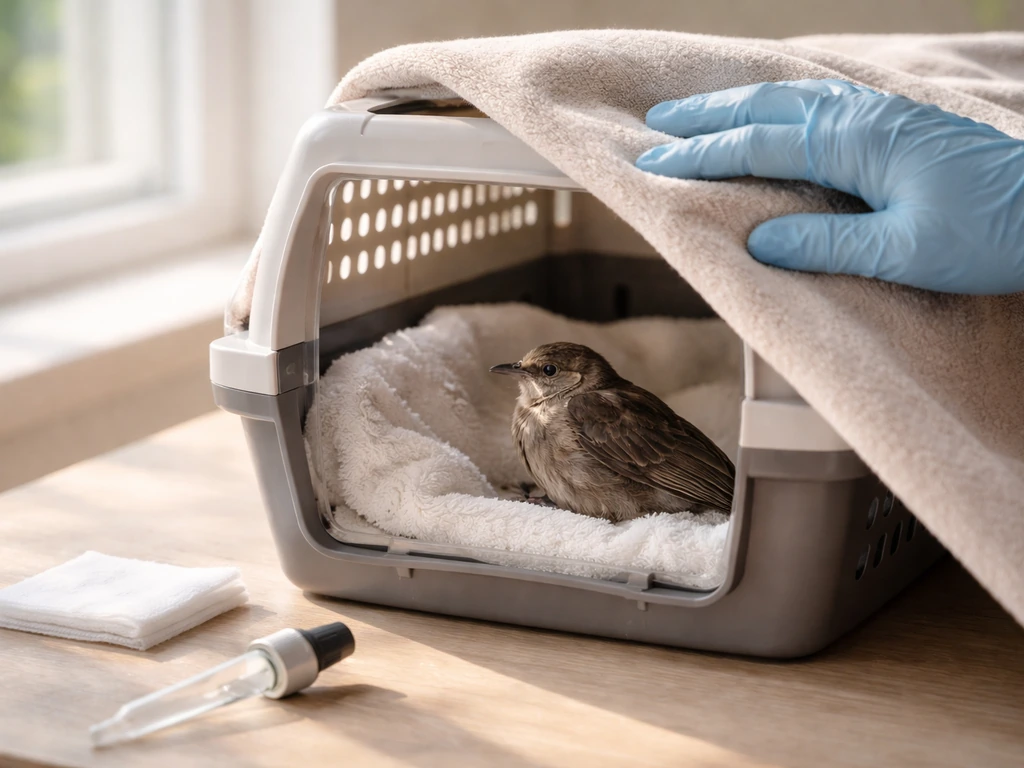
Bird Trauma Symptoms: Signs, Triage, and First Aid Steps
Recognize bird trauma symptoms, triage urgency, and give safe first aid for bleeding, fractures, head injuries, and shoc