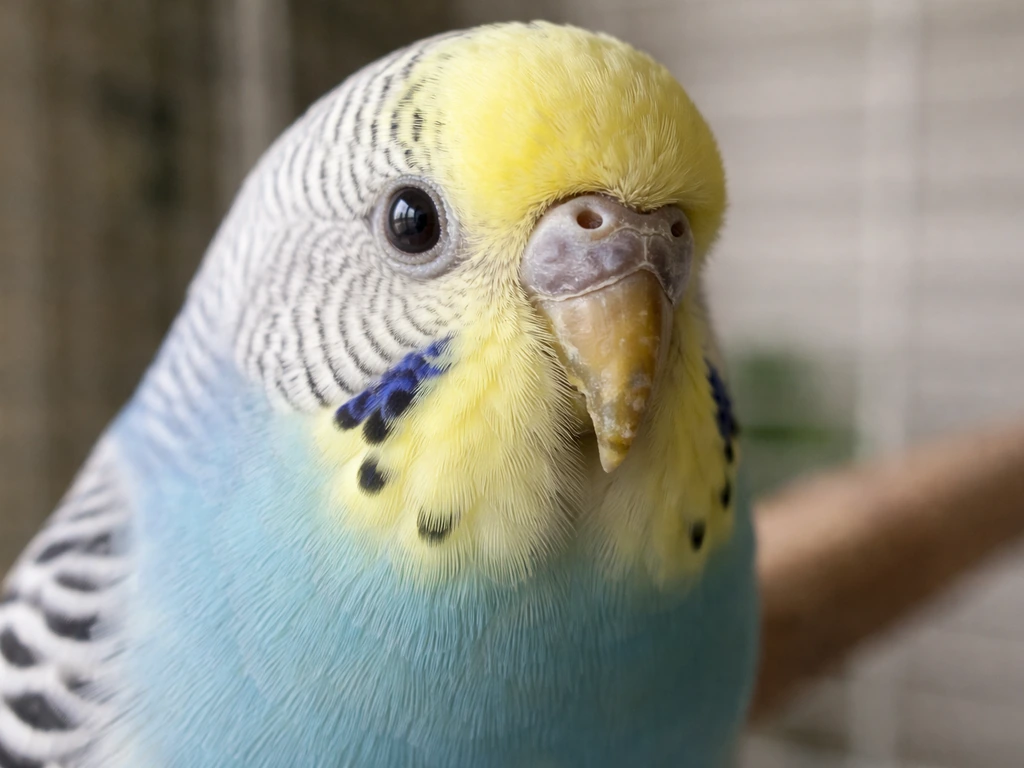
The most common signs a budgie is sick include fluffed-up feathers, sitting on the cage floor, tail bobbing while breathing, open-mouth breathing, watery or discolored droppings, and sudden changes in activity or personality. Some of these are mild and monitorable for a day or two. Others, especially anything affecting breathing, coordination, or consciousness, mean you need an avian vet the same day. If your bird is open-mouth breathing or has collapsed, treat it as an emergency right now.
Budgie Bird Sick Symptoms: Check, Interpret, and React Fast

Marcus Webb
16 May 2026
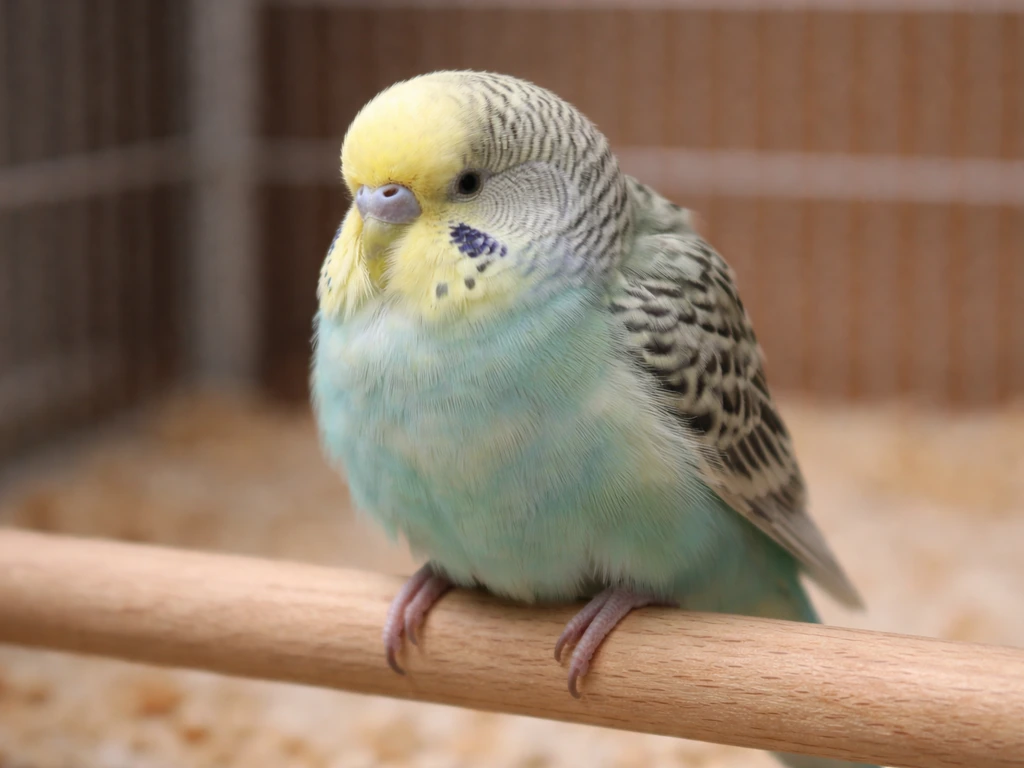
Common warning signs to check first
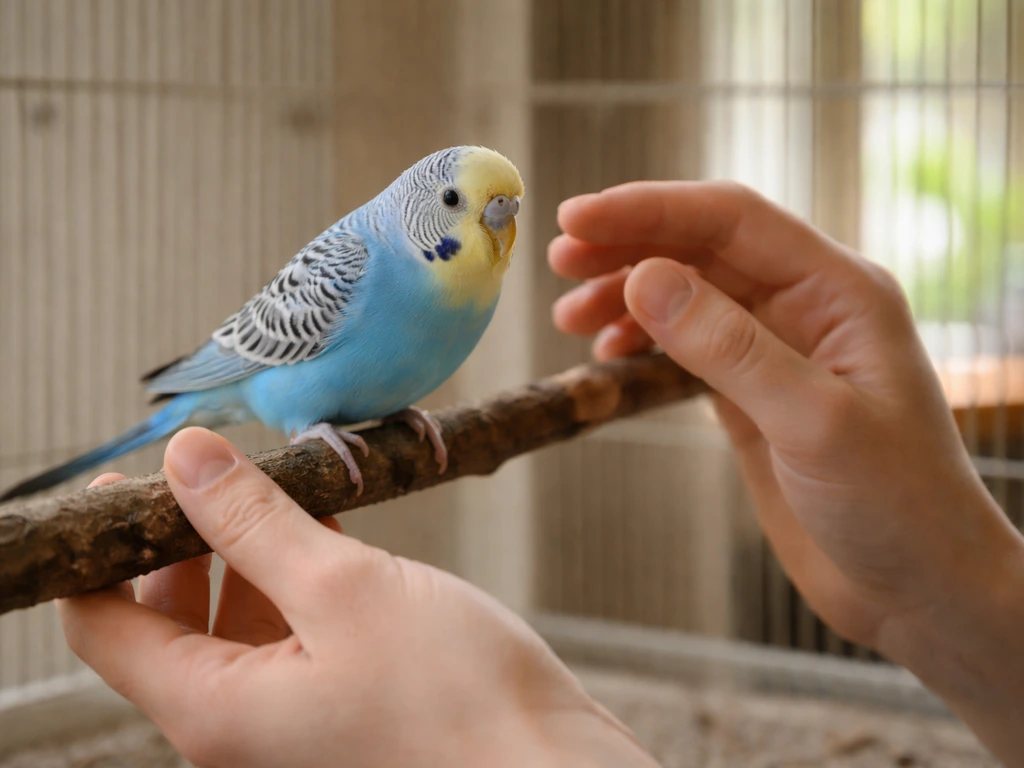
Before diving into specific symptom categories, do a quick full-body scan of your bird. You're looking at posture, breathing, droppings, activity level, and appearance. A healthy budgie is alert, upright on its perch, bright-eyed, eating regularly, chirping or vocalizing, and producing firm droppings with a solid dark center, white urate cap, and small amount of clear liquid.
Here are the classic first signs that something is off. You don't need to see all of them at once. Even two or three together should put you on alert.
- Sitting on the cage floor instead of a perch
- Feathers puffed out for extended periods (not just after a bath or nap)
- Eyes half-closed or dull-looking
- Tail bobbing up and down with each breath
- Reduced or absent vocalization in a normally chatty bird
- Not eating or showing no interest in food
- Droppings that look watery, unusually colored, or much more frequent than normal
- Gripping the cage bars instead of perching normally
Any one of these on its own might mean nothing. A bird that's just tired after a stressful afternoon might fluff up briefly. But if you're seeing several of these at once, or if the behavior has lasted more than a few hours, your budgie is telling you something real.
Respiratory symptoms and breathing-related illness clues
Breathing problems are the most urgent category of budgie illness. Respiratory issues are one of the biggest budgie bird health problems, so these breathing clues deserve close attention. If you suspect scouse bird problems, start by focusing on breathing changes because they can become serious quickly Breathing problems. Birds have a very efficient but fragile respiratory system, and symptoms can escalate quickly. Get in the habit of watching your budgie's chest and tail from a few feet away, calmly, without startling it. Normal breathing should be almost invisible.
Tail bobbing is one of the clearest early warning signs. If your bird's tail is pumping up and down noticeably with every breath, that means it's working harder than normal just to breathe. This alone warrants a call to an avian vet. Open-mouth breathing is even more serious and should be treated as an emergency unless the room is extremely hot or the bird just had vigorous exercise. Wheezing, clicking, or crackling sounds during breathing are also red flags.
Other respiratory clues include nasal discharge (wet or crusty nostrils), sneezing more than a few times in a row, a voice that sounds different or more hoarse than usual, and increased sternal motion where you can see the breastbone rising and falling visibly. A bird struggling to breathe may also stretch its neck out or tilt its head in unusual ways while trying to get air.
Common causes behind these symptoms include bacterial infections, fungal infections like Aspergillosis, air sac mites, and viral respiratory diseases. You cannot tell which one it is at home, and treatment requires a diagnosis from an avian vet. What you can do is recognize that breathing symptoms almost always need professional attention.
Digestive, droppings, and hydration or weakness symptoms
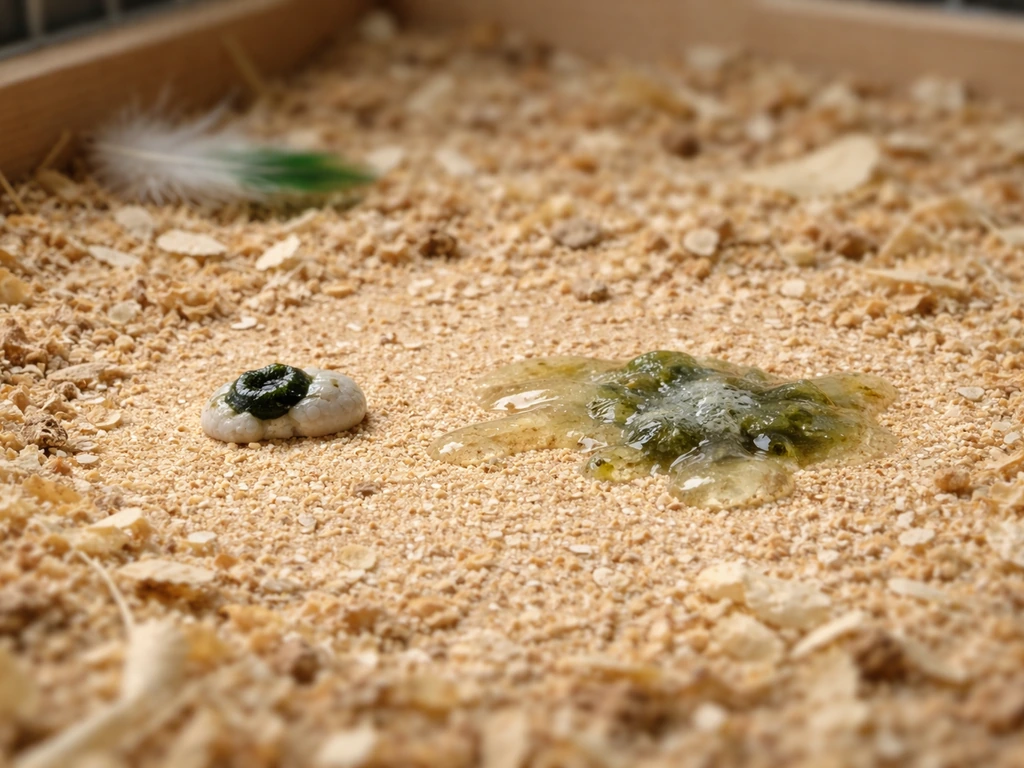
A budgie's droppings tell you a lot about what's going on inside. Get comfortable looking at them daily. Normal droppings have three parts: a dark green to black solid center (the feces), a white or cream urate portion, and a small clear liquid area. Any significant change in color, consistency, or volume is worth noting.
Diarrhea or very watery droppings that persist for more than a day suggest a digestive problem, infection, or dietary issue. Bright green or yellow-green droppings with little solid matter can indicate liver stress. Completely black or tarry droppings can signal internal bleeding. Red-tinged droppings could mean blood in the digestive tract. If you notice straining or the bird is repeatedly crouching at the cage floor without producing droppings, that could signal an egg-binding problem in female birds, which is an emergency.
Weakness and weight loss often go hand in hand with digestive illness. Run your finger along your budgie's keel bone, the ridge running down the center of the chest. In a healthy bird, it should have some muscle padding on either side. If the keel feels sharp like a knife blade with no muscle coverage, your bird has lost significant weight. This is a serious finding, especially if you didn't notice any obvious change in appetite.
Signs of dehydration include skin that looks dry or wrinkled around the legs, sunken eyes, and droppings that are more solid and reduced in volume than usual. A bird that's not drinking or eating for more than 24 hours needs veterinary care.
Neurologic and behavior changes
Changes in your budgie's behavior or coordination can be subtle at first, but they're often early signs of something serious. You know your bird better than anyone, so trust your instincts if something feels off even before you can name exactly what it is.
Neurologic symptoms to watch for include falling off the perch, difficulty balancing, tilting the head to one side (called torticollis or wry neck), circling, or walking in an uncoordinated way. Seizures are an outright emergency. If your bird suddenly convulses, trembles uncontrollably, or loses consciousness even briefly, you need emergency avian care immediately.
Behavioral changes are also meaningful. A normally friendly bird that suddenly becomes aggressive or fearful, a bird that stops responding to your voice, or one that sits motionless and unresponsive for long periods is showing signs of systemic illness. If you notice these kinds of bird behavior problems, treat it as a health signal and not just a temperament change. Lethargy in budgies is particularly telling because they are naturally active and social. A budgie that just sits there, even when you open the cage or offer its favorite treat, is a budgie that doesn't feel well.
Fluffed-up posture is worth separating from ordinary resting. Birds puff up briefly during sleep or after bathing. But a bird that stays puffed up for hours, especially combined with lethargy or perching instability, is using that posture to conserve heat because its body is under stress.
Eye, beak, skin, and feather red flags
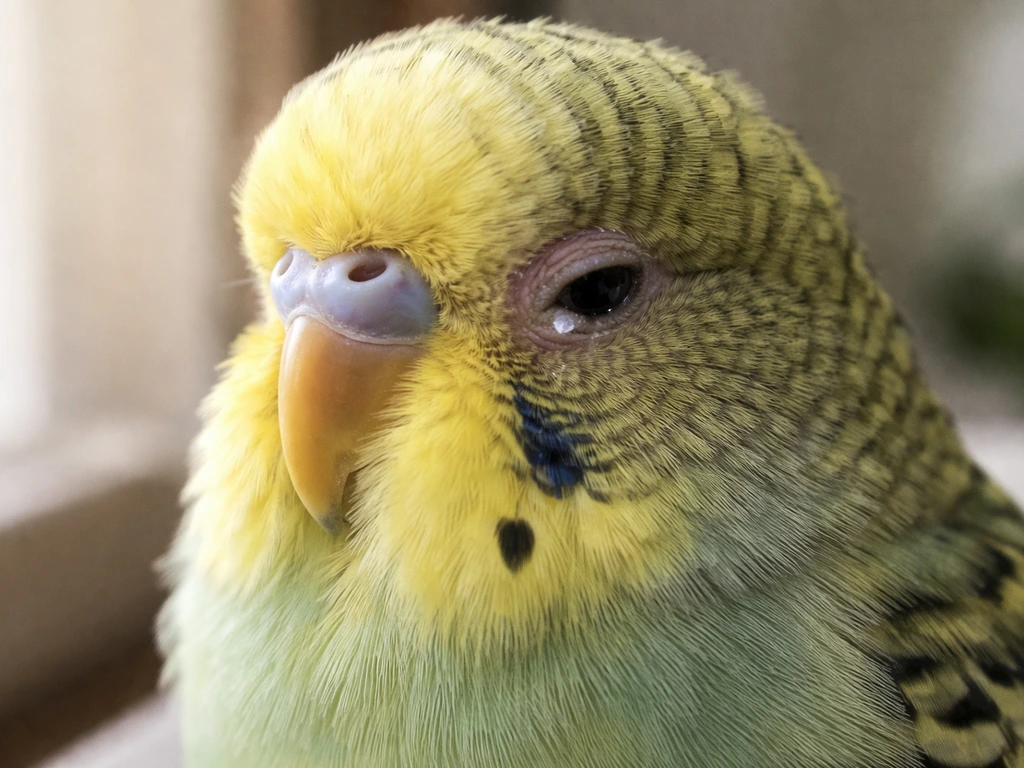
The surface of your bird gives you a lot of information. Eyes should be clear, round, and bright. Any discharge, swelling around the eyelids, cloudiness in the eye itself, or visible crusting around the eye socket points to infection, injury, or a systemic illness. If one eye is consistently closed or half-shut when the other is open, that bird needs an exam.
The beak and cere (the fleshy area above the beak where the nostrils are) can also reveal health problems. Overgrowth, flaking, or a beak that's become soft or misaligned may indicate underlying health conditions rather than just a grooming issue. Crusty or discolored nostrils point to respiratory infection or mites. Detailed beak-specific concerns are worth exploring separately if you notice changes there.
Feather condition is another major indicator. If you notice budgie bird feathers problem signs like ruffled or broken feathers, it is worth checking whether stress, nutrition issues, or conditions such as French moult might be involved. Healthy budgie feathers are smooth, intact, and tightly arranged. Feathers that are ruffled, broken, growing in oddly, or being chewed and destroyed by the bird itself can signal everything from stress and boredom to nutritional deficiency or French moult (a viral condition causing feather loss). Bare patches on the skin, or skin that looks red, irritated, or scaly, may indicate mites, bacterial infection, or self-trauma. Feather and skin problems in budgies often have their own range of causes that deserve a closer look.
How to tell if it's urgent or just worth monitoring
Not every symptom requires an emergency clinic visit at midnight, but some absolutely do. The table below gives you a straightforward way to sort what you're seeing into urgent versus monitor categories.
| Symptom or sign | Urgency level | What to do |
|---|---|---|
| Open-mouth breathing | Emergency | Avian vet or emergency clinic immediately |
| Pronounced tail bobbing | Emergency | Same-day vet visit, do not wait |
| Seizures or collapse | Emergency | Emergency avian care right now |
| Blue or pale tissues (tongue, feet) | Emergency | Emergency avian care right now |
| Sudden inability to stand or perch | Emergency | Same-day emergency visit |
| Uncontrolled bleeding | Emergency | Emergency avian care right now |
| Wheezing or audible breathing sounds | Urgent (same-day) | Call avian vet first thing today |
| Sitting on cage floor for hours | Urgent (same-day) | Call avian vet today |
| Watery or discolored droppings (more than 24 hours) | Urgent (same-day) | Avian vet appointment today |
| Severe weight loss (sharp keel bone) | Urgent (within 24 hours) | Schedule vet as soon as possible |
| Lethargy with fluffed feathers | Monitor closely, vet if persists 12-24 hours | Warm environment, watch closely |
| Sneezing (occasional, no discharge) | Monitor | Watch for worsening or added symptoms |
| Slightly reduced appetite (one day) | Monitor | Watch for 24 hours, vet if continues |
The general rule is: if breathing is involved, don't wait. Birds deteriorate fast because they hide illness as a survival instinct. By the time a bird looks visibly sick, it has often been unwell for a while already. Err toward action rather than watchful waiting whenever you're genuinely unsure.
What to do right now while you arrange care
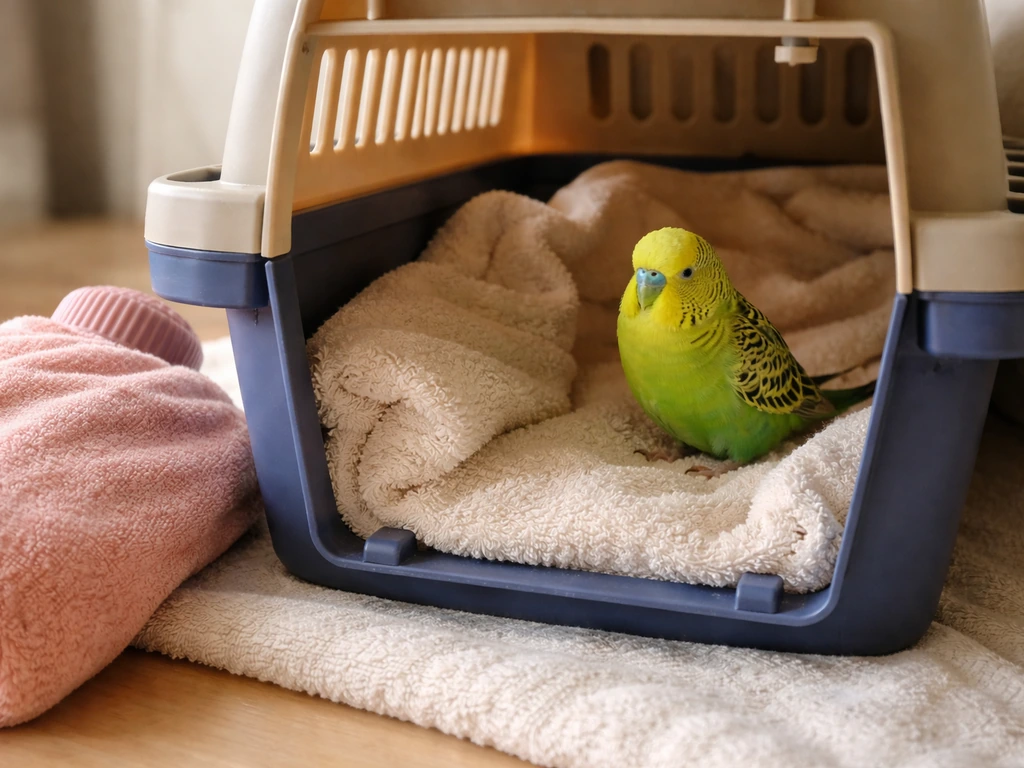
If your budgie is showing serious symptoms, here are practical things you can do immediately while you're calling the vet or driving there. Respiratory difficulty signs can include open-mouth breathing, increased sternal motion, and tail bobbing, and severely dyspneic birds may need supportive care like placing them in an oxygen cage or incubator in a dark, quiet room before evaluation. These steps are about stabilizing, not treating.
- Keep the bird warm. Sick birds lose their ability to regulate body temperature. Place the cage near a heat source (a 60-watt bulb aimed at one side of the cage works, or a heating pad on low under half the cage) to bring the ambient temperature up to around 85-90°F (29-32°C). Make sure the bird can move away from the heat if needed.
- Reduce stress to the absolute minimum. Put the cage in a quiet, dim room away from other pets, loud sounds, and activity. A calm environment slows the energy expenditure the bird is fighting through.
- Keep food and water accessible and close. Move food and water dishes to a low level in the cage so the bird doesn't have to climb or fly to reach them. If the bird is on the cage floor, place dishes on the floor.
- Do not try to force-feed or medicate. Unless an avian vet has already prescribed something and told you the dose, do not give medications of any kind, including over-the-counter treatments or human medications. These can cause serious harm.
- Observe and document. Write down or record what symptoms you're seeing, when they started, any changes in droppings, what the bird has eaten recently, and anything in the environment that changed (new food, cleaning products used nearby, new toys, open windows). The vet will want this.
- Transport carefully. If you're taking the bird in, use a small carrier or covered cage to keep the bird contained and reduce visual stimulation. Keep the car warm. Cover the carrier with a light cloth to keep it dark and calm.
- Do not use aerosols, scented candles, or air fresheners near a sick bird. Birds have highly sensitive respiratory systems and airborne chemicals can make things dramatically worse.
Finding an avian vet before you have an emergency is genuinely one of the best things you can do as a budgie owner. General practice vets often have limited experience with birds. Search specifically for a vet certified in avian medicine or one who lists birds as a primary species they treat. Having that contact saved in your phone means you're not scrambling when your bird needs help fast.
Budgies are small and their reserves are limited, but they're also surprisingly resilient when illness is caught early. The symptoms covered here overlap with several related health areas worth knowing, including changes in beak condition, feather and skin problems, and broader behavioral shifts that can all point to underlying illness. The more familiar you are with what a healthy budgie looks and acts like, the faster you'll catch something wrong, and speed is often what makes the difference in a bird's outcome.
FAQ
What budgie bird sick symptoms should make me suspect it is more than a minor illness?
Breathing effort signs (tail bobbing, open-mouth breathing, wheezing or crackling sounds) and any neurologic change (falling, wry neck, tremors, seizures) are the fastest way to separate mild from potentially life-threatening problems. If you notice multiple symptom categories at once (for example, fluffed posture plus watery droppings plus lethargy), treat it as more urgent even if each symptom seems mild on its own.
How can I tell if my budgie is just cold or actually sick when it is fluffed up?
A resting bird fluffs briefly and then resumes normal posture and activity. If fluffed posture lasts for hours, especially with reduced movement, poor balance, or abnormal breathing, assume illness. Also check breathing quietly at a distance, normal breathing should be barely visible.
What should I do if my budgie’s droppings look different, but my bird seems otherwise normal?
Start by tracking the change for a few hours and confirm it is true droppings (not just stuck-on debris) and that the volume and color stay altered. If it persists beyond about 24 hours, or if there is diarrhea that becomes watery, a vet visit is appropriate because budgies can worsen quickly. If the bird also stops eating or looks puffed, do not wait.
Is it okay to try home treatment for respiratory symptoms if my budgie is still alert?
Do not try antibiotics or nebulizers unless an avian vet prescribes them. Respiratory symptoms in birds often involve air sacs and can escalate fast, so the key home action is stabilization (warm, low stress, clear air flow) while you arrange same-day avian care. If open-mouth breathing happens, treat it as an emergency immediately.
How do I handle a budgie with open-mouth breathing if I can’t reach a vet right away?
Keep the room calm, slightly warm, and reduce irritants (no aerosols, smoke, strong cleaners). Do not force food or water by hand. Prioritize quick transport and call the clinic for instructions, because the risk is rapid deterioration and dehydration.
What is the safest way to check weight loss at home?
Use the keel bone feel, but be consistent by gently palpating the same area each day and compare sides. If the keel feels sharply defined like a blade with little padding, assume meaningful weight loss even if appetite seems only slightly reduced. Weight loss plus inactivity or abnormal droppings is a stronger reason for urgent evaluation.
Can a budgie with head tilt still be “just stressed,” or is it usually serious?
Head tilt, especially if persistent, accompanied by falling, uncoordinated walking, or circling, is a neurologic warning sign rather than just stress. Because causes can include infection and other conditions that need medication, schedule an avian exam promptly. If there is wobbling that prevents normal perching, treat it as urgent.
When should I worry about dehydration even if the droppings are not clearly abnormal?
Look at legs skin appearance, eye prominence, and how much droppings change in volume. If the bird is not drinking or not eating for more than about 24 hours, assume dehydration risk and contact an avian vet. Reduced drinking with normal droppings can still precede decline, so monitor closely.
What caregiver mistakes make budgie illnesses harder to treat?
Waiting too long when breathing is involved is the biggest mistake, since birds hide illness until it becomes obvious. Another common issue is using household remedies, essential oils, or cleaning sprays near the cage, which can worsen respiratory irritation. Finally, don’t delay by trying to identify the exact cause at home, birds often need diagnostic testing to choose the right treatment.
Should I separate sick budgies from other birds immediately?
If you have multiple birds, isolate the sick one in a quiet, warm hospital cage to reduce stress and limit contamination risk, especially for respiratory or fecal-oral illnesses. Keep routines simple (fresh food and water, minimal handling), and wash hands thoroughly between cages. Avoid moving the bird more than necessary.
Next Article
Budgie Bird Beak Problems: Checklist and What to Do Now
Checklist for budgie beak problems, causes, safe at-home checks, urgent vet warning signs, and prevention tips.