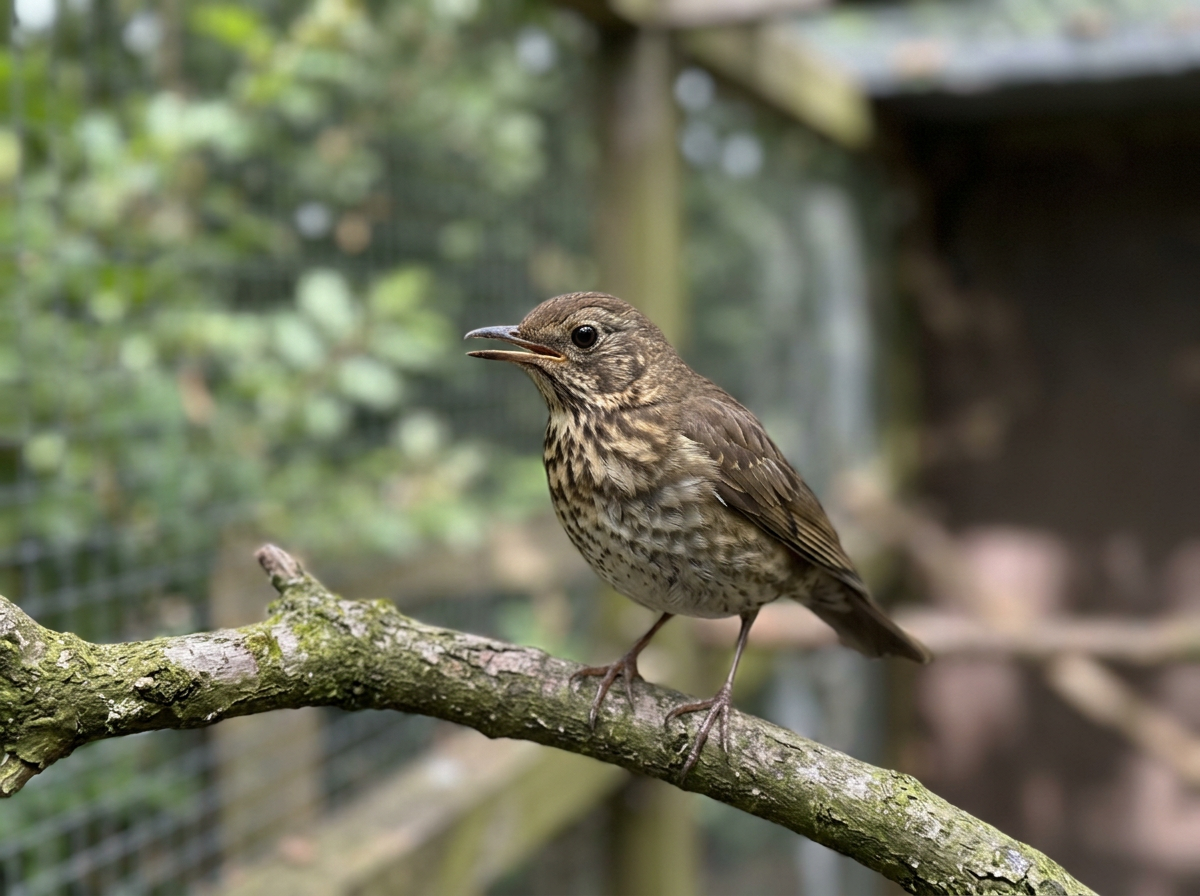
White spots on a bird's wings can mean two very different things: normal feather patterning that's just part of what that species looks like, or a health problem like mites, feather damage, or a viral infection that needs attention. The answer depends on what kind of bird you're looking at, where exactly the spots sit on the wing, and whether the spots are part of the feather itself or sitting on top of it. This guide walks you through both possibilities so you can figure out which one you're dealing with.
What Bird Has White Spots on Wings? ID and Health Checks

Marcus Webb
23 Mar 2026
Common look-alikes: white spots vs normal patterning
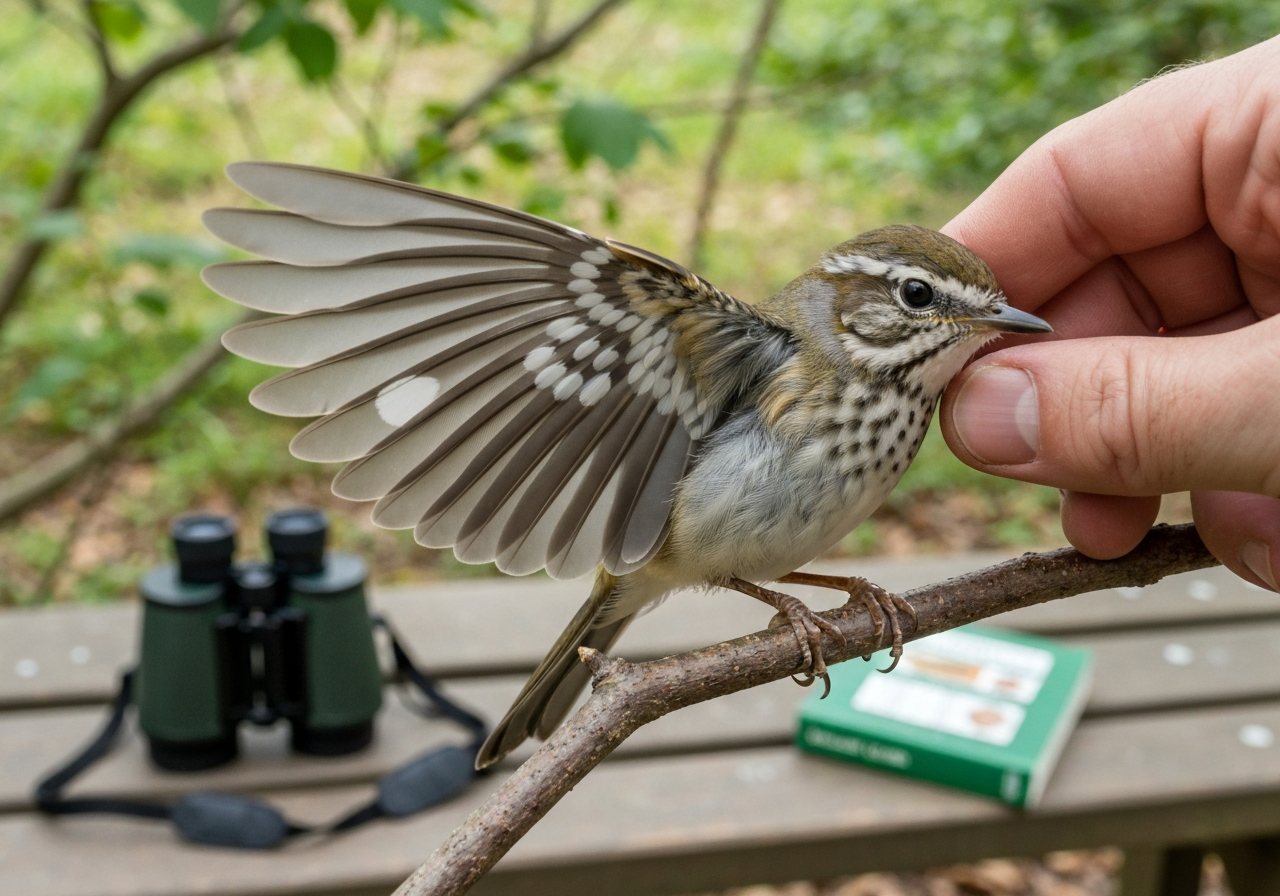
A lot of birds carry white markings on their wings as a completely normal part of their plumage. The spotted towhee, for example, has distinct white spots on its primary and secondary flight feathers that look almost like they were painted on. The white-browed fantail and the white-bellied thicket fantail both carry white speckles across the wings as a species-typical pattern. The white-tailed stonechat has white on its wing coverts and rump that can look like patches or spots in photos. None of these are signs of illness.
The key difference between normal patterning and something concerning is this: natural white markings are part of the feather itself. They have clean, consistent edges. They're symmetrical on both wings. They don't flake, smear, or wipe off. And they've been there since the bird's last full molt. If the white you're seeing matches all of that, you're almost certainly looking at species-typical plumage.
Where the spots sit matters too. Pigment differences tend to concentrate in specific feather types. White marks on the coverts (the smaller feathers that overlap the base of the flight feathers) look different from white tips on the primaries. A white wing bar running across covert feathers in a clean line is normal patterning. White speckling scattered unevenly across multiple feather types, especially if it's new or asymmetrical, is worth investigating more closely.
Quick identification steps: species, size, habitat, and season
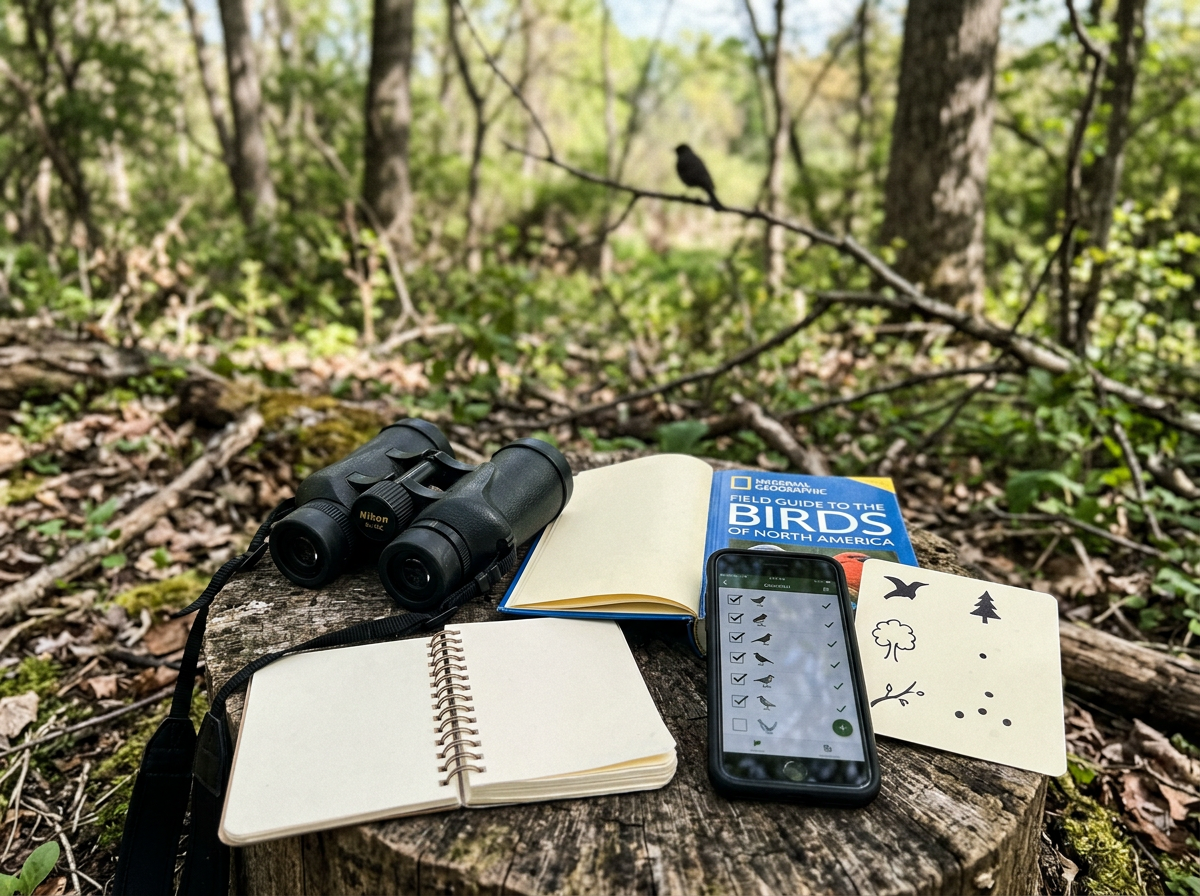
Before you decide whether what you're seeing is normal or alarming, nail down a few basic facts about the bird. These four factors will narrow things down quickly.
- Species: Identify the bird as accurately as you can. Compare with a field guide or a reputable birding app. Many white wing markings are species-specific and will show up in reference images if the bird is healthy and patterned correctly.
- Size and location of spots: Are the white marks on the flight feathers (primaries/secondaries), the wing coverts, or across multiple areas? Are they symmetrical on both wings? Do they sit inside the feather or on its surface?
- Habitat and context: Is this a wild bird you spotted outside, a pet bird in a cage, or a bird in a shared aviary? Captive birds are at higher risk for parasites and stress-related feather problems than most wild birds you'll observe briefly.
- Season and molt stage: Molting birds look rough. Primary flight feathers drop one or two per week during active molt, and new pin feathers coming in can create an uneven, spotty appearance temporarily. If the bird is mid-molt, many 'spots' are simply new feathers emerging.
Which bird diseases and conditions can cause white spots
When the spots are not part of normal patterning, a few specific health conditions are worth knowing about. Here are the most common ones.
Feather mites and lice
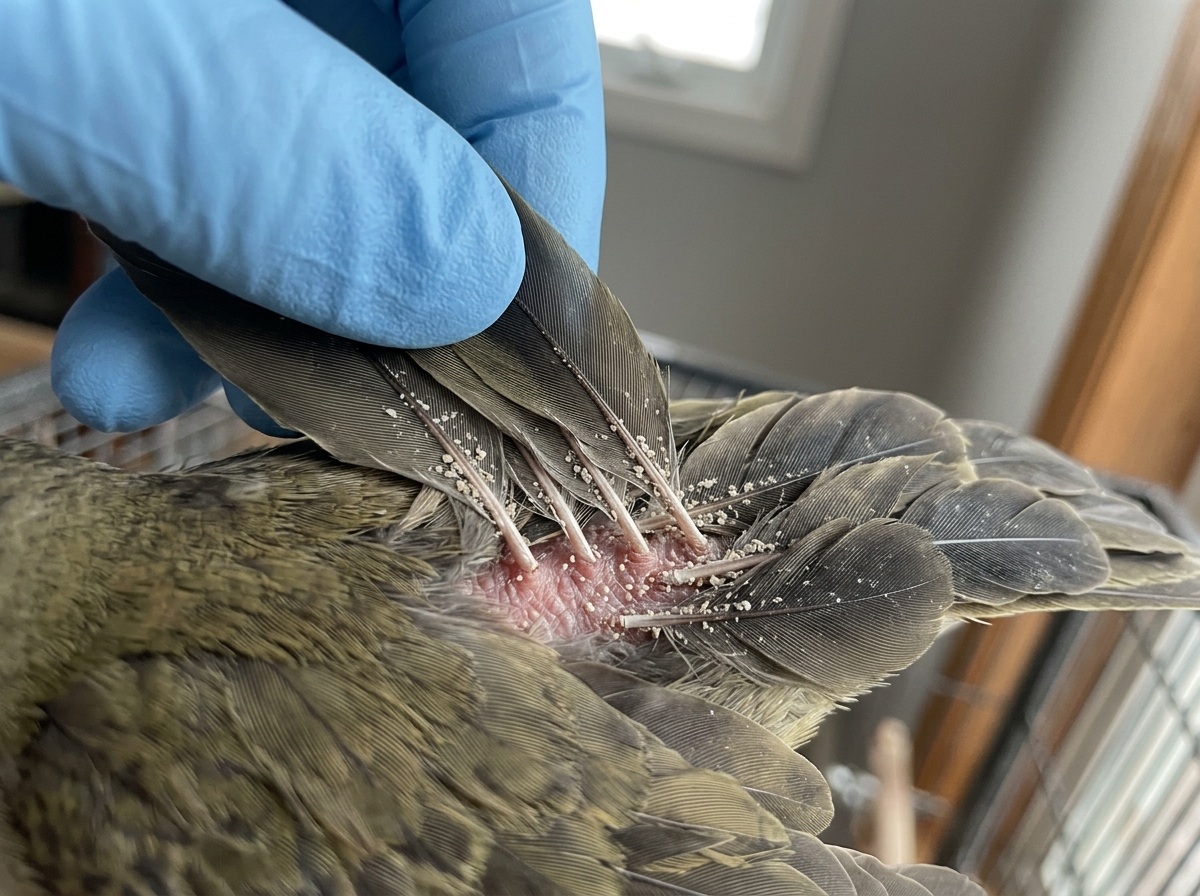
Feather mites can cause white or pale speckling on and around feathers by damaging the feather shaft or creating debris. In some cases, the white 'spots' are actually the mites or their eggs themselves. Lice tend to stay on the bird and can be found with a close look at the feather bases, especially around the vent. Tiny moving specks near the vent or along the wing feathers are a common sign. ...Mites are trickier because certain types (like red mites) retreat off the bird during the day and return at night to feed... [common thrush bird](/avian-infectious-diseases/common-thrush-bird) common thrush bird
Knemidokoptic mange (scaly face and leg mites)
This is caused by burrowing Knemidokoptes mites and tends to show up first as a fine white crusty coating near the cere (the fleshy area above the beak) or at the corners of the mouth. It can progress to the eyelids, beak, throat, vent, and legs. It doesn't typically start on the wing feathers, but the early white crusty appearance can be confused with feather spotting if you're not looking carefully at the location.
Psittacine Beak and Feather Disease (PBFD)
PBFD is a viral disease that affects parrots and related species. It causes progressive, often symmetrical changes in feather appearance: feathers become stunted, club-shaped, or pinched at the base. Abnormal feather patterning (including pale or discolored patches) tends to show up after each new molt. If you're seeing white or pale areas in a parrot's feathers that worsen over time and follow a symmetrical pattern, PBFD needs to be on the list of possibilities.
Avian pox
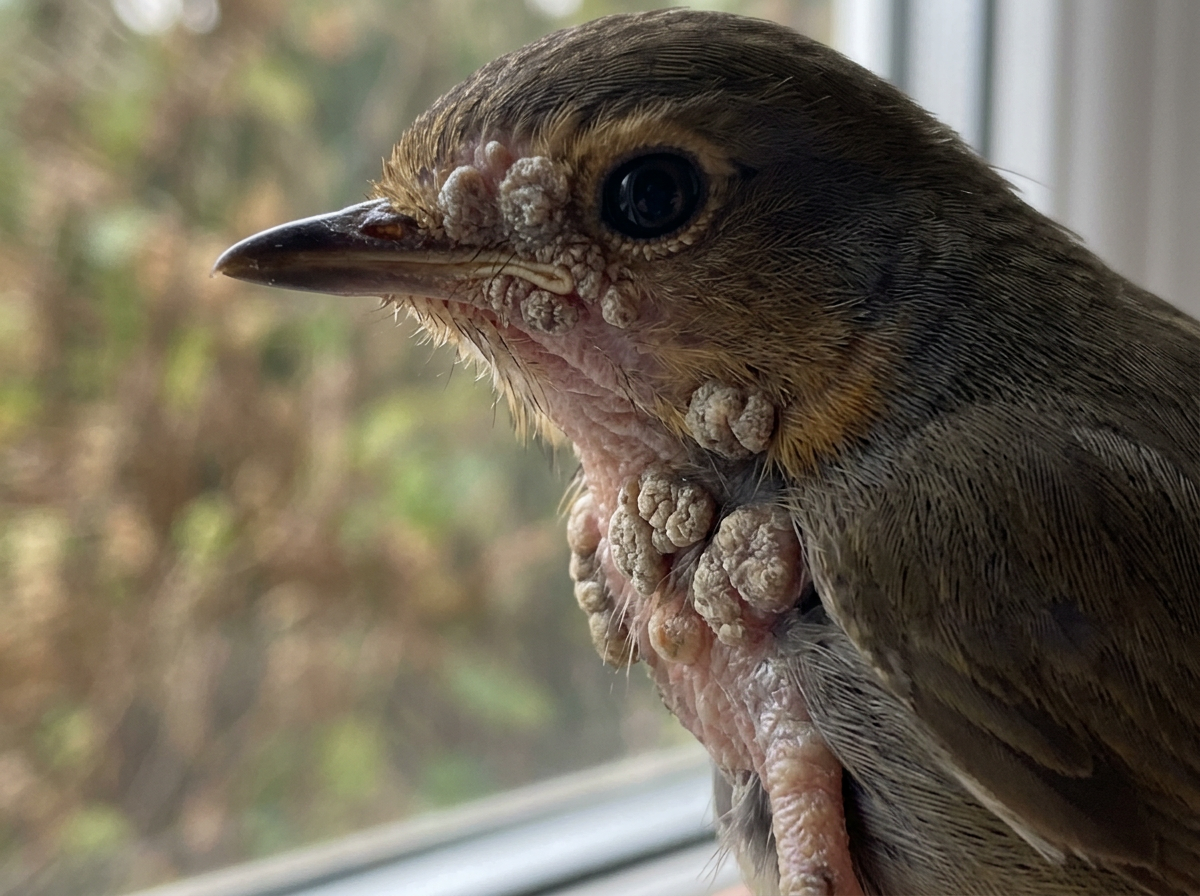
Avian pox has two main forms. The dry (cutaneous) form creates raised warty lesions on unfeathered skin. The wet form produces white to grayish nodules that can appear in the throat and upper respiratory tract and enlarge into yellow cheesy masses. The white nodule appearance can be confused with other issues, especially in early stages. Avian pox is more common in backyard poultry and some wild bird species. Definitive diagnosis typically requires a biopsy or skin scraping.
Why the spots appear: plucking, molting, feather damage, and parasites
Understanding what actually creates white spots helps you sort benign from serious causes faster.
| Cause | What it looks like | Key detail |
|---|---|---|
| Normal molting | Patchy, uneven plumage; new pin feathers emerging | Symmetrical; bird otherwise behaves normally |
| Feather plucking (self or cage-mates) | Feather loss in areas the bird can reach; abnormal pin feathers; blood in shafts | May be behavioral or medical; vet evaluation needed |
| Feather mites | Pale speckling or debris on/around feathers; possible feather breakage | Worse at night; white sheet test can reveal mites |
| Knemidokoptic mites | White crusty coating near cere, beak corners, legs | Starts on unfeathered skin, not wing feathers |
| PBFD | Stunted, club-shaped, or discolored feathers; progressive and symmetrical | Worsens with each molt cycle |
| Avian pox (wet form) | White/gray nodules in throat or mouth area | Respiratory signs may accompany; not typically on wings |
| Bacterial/fungal skin infection | Inflamed, scaled, or discolored patches | May have odor; skin appears unhealthy underneath |
Feather plucking is worth a separate mention because it can look like a lot of things. Merck Veterinary Manual lists abnormal pin feathers (constricted, clubbed, or stunted), blood in the feather shaft, and feather loss in areas the bird can't reach as classic signs. Picking can be driven by medical causes (skin inflammation, infection, poor nutrition, toxins, parasites) or by behavioral ones (stress, boredom, social issues). You can't tell which it is just by looking at the feathers. That distinction requires a vet.
When to treat at home vs when to call an avian vet
Not every white spot warrants a vet visit. But some do, and acting quickly matters for certain conditions. Here's how to think about the decision.
Home observation is reasonable when
- The bird is actively molting and the spots line up with emerging pin feathers or dropped flight feathers
- The marks are clearly symmetrical and match images of normal plumage for that species
- The bird is eating, drinking, and behaving normally with no fluffing, lethargy, or respiratory signs
- The 'spots' are consistent across both wings and have been there since you first noticed the bird
- You confirmed the marks are part of the feather structure and not on the skin or feather surface
Call an avian vet when
- The spots are new, spreading, or have changed since you first noticed them
- The feathers look structurally abnormal: stunted, club-shaped, pinched, or have blood in the shaft
- You see white crusty material on the cere, beak corners, eyelids, legs, or vent area (possible knemidokoptic mange)
- You find tiny moving specks on or around the feathers, especially after a night-time check
- The bird is fluffed, lethargic, not eating, or showing any respiratory signs alongside the feather changes
- The feather changes are progressing with each molt cycle in a symmetrical pattern (possible PBFD)
- You suspect feather plucking but can't identify an obvious cause
One important note: mites and lice are frequently misdiagnosed by owners, and over-treating is a real problem. The RSPCA specifically flags that captive birds are often over-treated for parasites that may not be present. Before reaching for any spray or powder, confirm what you're dealing with. Treatment regimes differ significantly between mite types, lice, and fungal or bacterial issues, and the wrong treatment can cause harm. An avian vet can do a skin scraping and examine it under a microscope to give you an actual answer.
What you can do at home safely
While you're waiting for a vet appointment or trying to figure out what you're looking at, there are practical steps you can take that won't make things worse.
Do a proper night-time check for mites
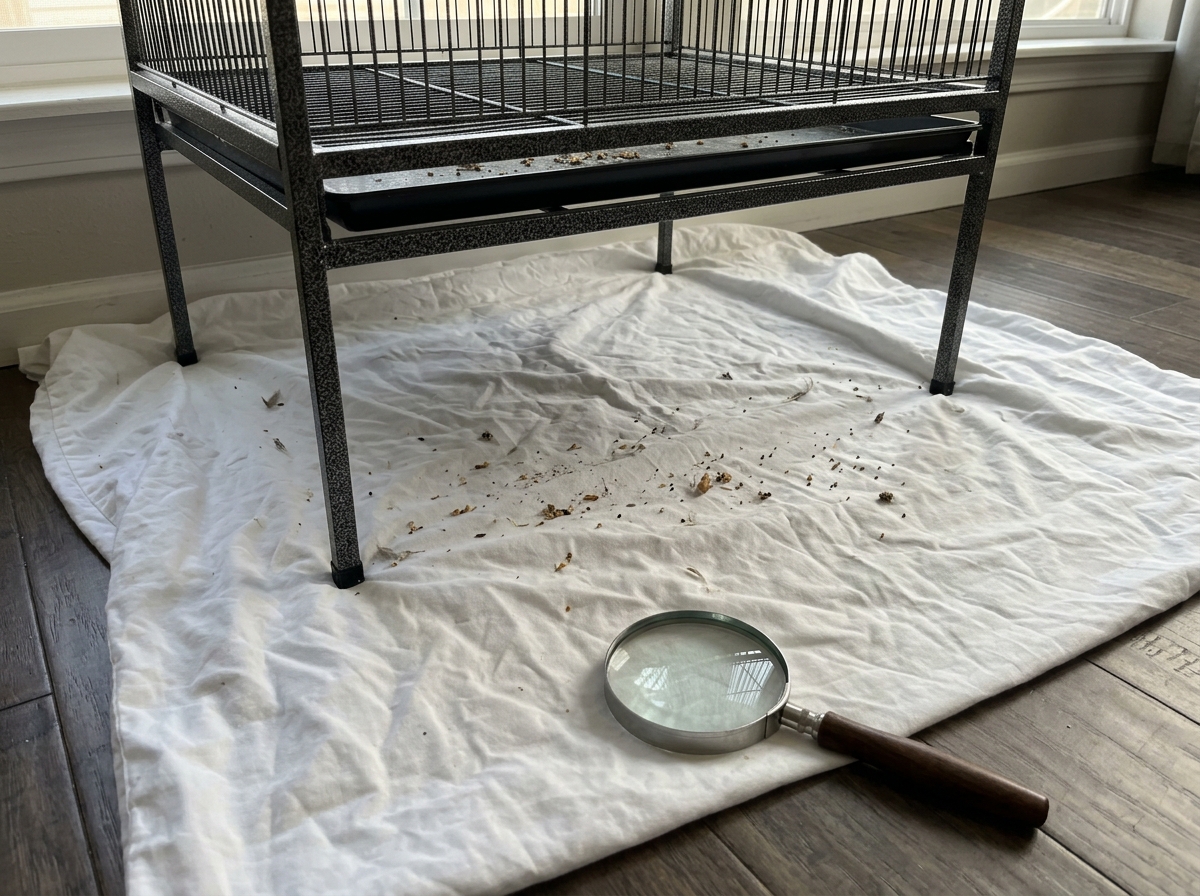
If you suspect mites, try the white sheet method: cover the cage with a white sheet overnight, including the bottom. In the morning, check the sheet for tiny moving specks. Some mite species retreat off the bird during the day, so you're more likely to catch them at night or just after. This is a practical at-home confirmation step before committing to any treatment.
Observe carefully and document what you see
Take photos of the spots in good light and note their exact location (flight feathers, coverts, skin), size, shape, and whether they're on both wings equally. Note whether the spots are part of the feather or sitting on top of it. Check for other symptoms: feather loss in patches, scaling skin, crusty areas on the cere or feet, scratching behavior, and any changes in the bird's posture or appetite. This information will be useful for the vet.
Basic hygiene steps
- Remove the bird from the cage before cleaning to reduce chemical exposure; use wet wipes on cage surfaces rather than spray bottles when possible to minimize vapor
- Clean perches, food dishes, and cage bars thoroughly; lice cannot survive away from the host for long, but mites can persist in the environment
- If you have multiple birds, isolate any bird showing abnormal feather signs from the others until you know what you're dealing with
- Do not clean or scrape any skin lesion before a vet visit; surface pathology can be important for diagnosis and cleaning it removes evidence
Reduce stress
Stress can drive or worsen feather problems, including picking behavior. Keep the bird's environment calm and consistent. Avoid sudden changes to lighting, temperature, noise, or cage position. If you're dealing with a pet bird, make sure it has appropriate enrichment and social interaction for its species.
Prevention and monitoring for ongoing feather and skin issues
Once you've addressed the immediate concern, ongoing monitoring is what keeps problems from coming back or going unnoticed.
- Do a routine feather check every two weeks: look at the wings, vent area, head, and legs for any white speckling, crustiness, feather damage, or unusual texture.
- Monitor molt cycles: know when your bird typically molts and what normal molt looks like for that species. Symmetrical feather loss with normal behavior is expected. Anything asymmetrical, prolonged, or accompanied by behavior changes is not.
- Keep the cage clean: regular cleaning of the aviary or cage, nestboxes, and perches reduces the chance of mite reinfestation. Pay attention to crevices where mites can hide.
- Quarantine new birds: any new bird introduced to a household or aviary should be quarantined for at least 30 days and ideally examined by an avian vet before contact with existing birds.
- Maintain good nutrition: poor diet is a documented medical cause of feather picking and abnormal feather condition. Make sure the bird's diet is appropriate for its species.
- Schedule an annual avian vet check: even if the bird looks fine, a yearly examination gives you a baseline and catches early problems that are hard to see at home.
- Know your bird's normal baseline: the best way to catch something wrong early is knowing exactly what the bird looks like when it's healthy, including what its wing markings look like, how it holds itself, and what its normal energy level is.
White spots on wings are one of those things that can be completely harmless or the first sign of something that needs treatment. The goal isn't to panic, it's to look carefully, gather the right information, and act proportionally. Most of the time, a steady observation routine and a good relationship with an avian vet will give you everything you need to stay on top of it.
FAQ
Are white specks on a bird’s wings always a sign of mites or lice?
No. Many species have white markings that are part of the feather, with sharp, consistent edges and the same look on both wings. If the white is actually on top of the feather (dust-like, smearable, or flaking) or you see other signs like crusting skin or feather damage, then parasites or disease become more likely.
How can I tell if the white spots are on the feather itself or sitting on top?
Use bright, angled light and gently look at the texture. Feather-based patterning will be integrated into the feather structure, it will not wipe away, and it will match the feather’s edge and shape. Material on top often looks like residue or debris, may collect around feather bases, and can appear uneven across multiple feather types.
What’s the fastest at-home check to look for mites if I don’t want to guess?
Try the white sheet method overnight, including the cage floor. If you see tiny moving specks in the morning, that supports a mite/parasite presence and helps your vet because you can mention timing (night activity) and where debris or movement appears.
Do I need to treat immediately if I suspect parasites?
Not automatically. The article notes that parasites are commonly misidentified, and using the wrong product can worsen skin issues or delay correct treatment. If possible, collect photos and schedule an avian vet exam, especially if the spots are new, spreading, asymmetrical, or paired with scaling, crusts, or feather loss.
When should I consider it urgent rather than watch-and-wait?
Treat it as urgent if white changes are rapidly worsening across one or both wings after each molt, if you notice respiratory signs (especially in parrots), if there are warty or nodular lesions on unfeathered skin, if the bird seems lethargic, or if feather bases look clubbed, pinched, or stunted.
Can feather plucking cause white spots that look like spots from illness?
Yes. Plucking can lead to irregular feather loss and altered feather appearance, which can be misread as “spots.” The cause of plucking can be medical or behavioral, and determining which one usually requires a vet because you cannot reliably diagnose by appearance alone.
If only one wing has white spots, does that make parasites more or less likely?
Asymmetry makes you more suspicious for a localized issue such as trauma, picking stress behavior, localized dermatitis, or uneven parasite exposure. Many viral conditions and some feather-base problems can show more symmetrical patterns, so unequal distribution is useful information for a vet even if it does not confirm a diagnosis by itself.
Do PBFD or avian pox always start with white spots on the wings?
Not necessarily. PBFD typically shows progressive, symmetrical feather changes after molt, often involving stunted or pinched feather bases. Avian pox has skin lesion patterns that depend on the dry versus wet form, so wing spots alone are not enough to confirm either condition, especially without changes in molt-related feather quality or skin findings.
What photos and notes help a vet diagnose faster?
Take clear photos showing the entire bird and close-ups in good light. Record exact spot location (coverts, primaries, skin), whether they are integrated into feather color or appear as residue, and whether both wings match. Also note companion symptoms like scratching, posture changes, appetite changes, scaling skin, or crusting around the cere or feet.
How do I avoid harming the bird if I’m tempted to use sprays or powders?
Because the correct treatment depends on the exact cause, avoid applying products before you have better confirmation. Over-treatment is a known risk, and some treatments can irritate skin or interfere with proper evaluation. If you must act, prioritize containment of the problem information (photos, timing, at-home checks) and get veterinary guidance.
Could the “white spots” be related to molt rather than disease?
Yes. If you’re seeing pale or abnormal-looking feather areas that emerge after a new molt, that timing can point toward disease-related feather development in susceptible species. If the bird otherwise looks healthy and the pattern is stable across molts and feathers look normal in structure, species-typical plumage becomes more likely.
Next Article
Common Thrush Bird Symptoms: Mouth Thrush or Lesions Guide
Spot mouth thrush or lesions in a common thrush bird: symptoms, causes, lookalikes, and when to see an avian vet.