Feather problems in birds can mean anything from a normal seasonal molt to a serious illness that needs a vet today. The fastest way to sort this out is to look at three things at once: the pattern of feather loss or damage, what the skin underneath looks like, and whether your bird is acting sick in any other way. Once you have those three pieces of information, you can narrow down the cause quickly and decide what to do next.
Bird Feather Problems: Causes, Quick Checks, and Fixes

Marcus Webb
21 May 2026
Quick triage: what the feathers and skin can tell you right now
Before you do anything else, take two or three minutes to look your bird over carefully in good light. You are looking for a pattern, not just a single clue. Here is what to check:
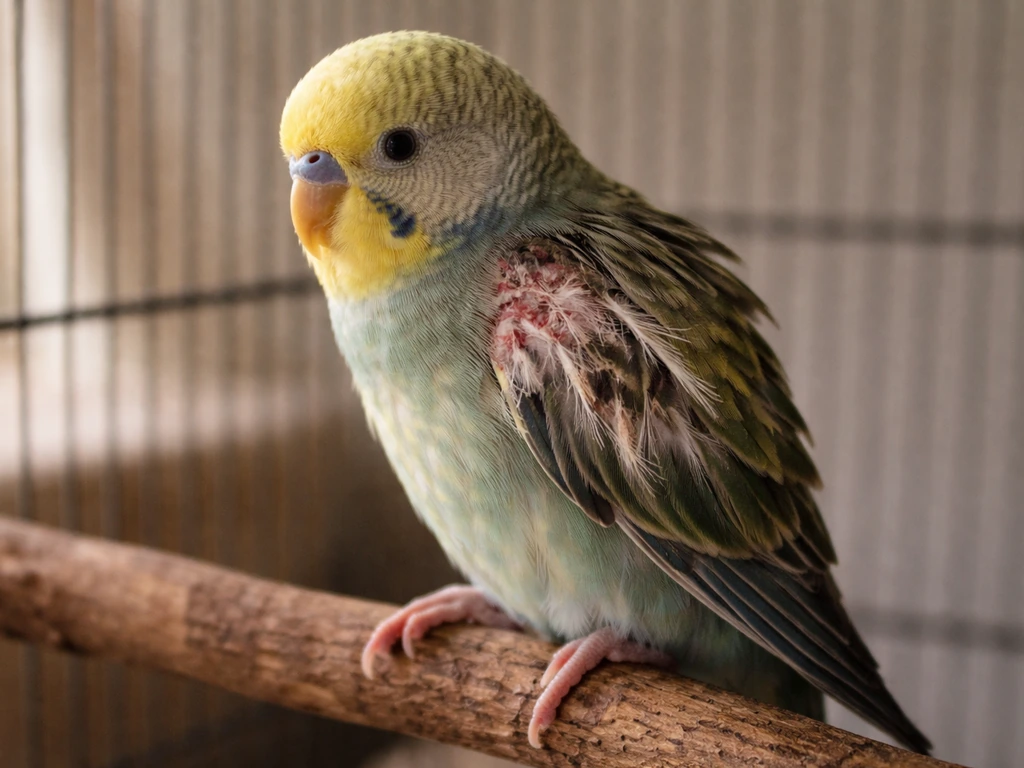
- Where is the feather loss? If it is only in areas the bird cannot reach with its beak (back of the head, back of the neck, upper back), something external like a parasite or a cage mate is far more likely than self-plucking.
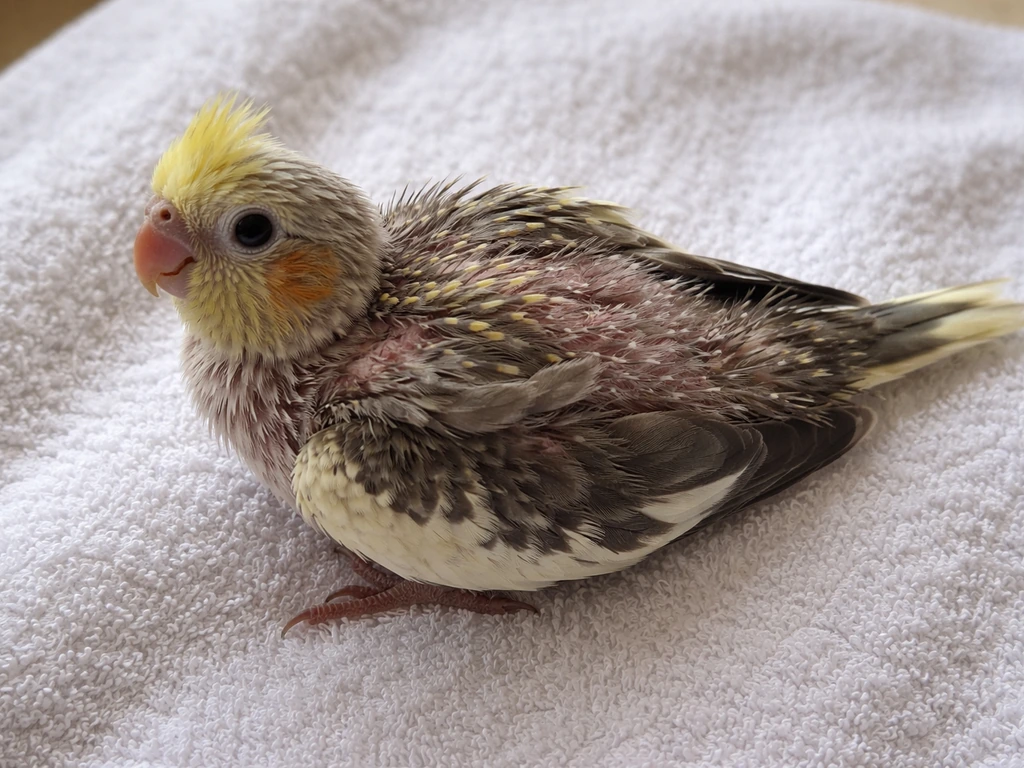
- Are there pin feathers (small, waxy-looking stubs emerging from the skin)? If yes, the bird is actively regrowing feathers, which is a good sign.
- Are the pin feathers themselves abnormal? Constricted, clubbed, or stunted pin feathers, or pin feathers with blood visible in the shaft, point toward mite involvement rather than simple molt.
- What does the skin look like? Redness, flaking, crusty growths, or raised wart-like lesions on bare skin areas (face, legs, feet) are disease warning signs.
- Is the bird plucking, chewing, or scratching at itself? Self-directed behavior suggests either a medical irritant (parasites, skin infection, systemic illness) or a behavioral trigger.
- Are there any other symptoms? Weight loss, lethargy, changes in droppings, open-mouth breathing, or tail bobbing alongside feather issues raise the urgency level immediately.
If you see open-mouth breathing, tail bobbing, active bleeding from a feather, or a bird that cannot perch or stand, stop reading and contact an avian emergency vet right now. Those are not feather problems at that point, they are emergencies. A blood feather (a new feather still filled with blood) that is actively bleeding and not stopping within about two to three minutes also needs urgent care.
Normal molting vs. sick feather loss: the key differences
Molt is the normal process of old feathers being shed and replaced by new ones. It happens in most birds one to two times a year, and it can look alarming if you have not seen it before. The good news is that normal molt has a very recognizable profile once you know what to look for.
During a healthy molt, feather loss is gradual and symmetrical. You will see new pin feathers coming in at the same time old ones are falling out. Pin feathers look like small white or gray pointed stubs, sometimes described as looking like a quill or a tiny white spike. The bird stays active, eats normally, and does not look sick. Mild scruffiness or irritability is normal because pin feathers are sensitive to touch. A bird that is molting but is otherwise bright-eyed, eating well, and producing normal droppings is almost certainly fine.
Disease-related feather loss looks different. The feather loss tends to be patchy or asymmetrical. New feathers may not be growing in to replace what is lost, or the pin feathers that do emerge look abnormal. The bird often shows other signs of illness at the same time: reduced appetite, loose droppings, weight loss, or behavioral changes. Sudden, rapid feather loss with no replacement growth is a red flag. So is feather loss that starts in one concentrated bald patch and spreads outward over days.
| Feature | Normal Molt | Disease-Related Feather Loss |
|---|---|---|
| Pattern | Gradual, symmetrical | Patchy, asymmetrical, or sudden |
| Pin feathers present? | Yes, normal-looking stubs | Absent, or abnormal (constricted, clubbed, bloody shaft) |
| Bird's general health | Active, eating, normal droppings | Lethargic, reduced appetite, abnormal droppings |
| Skin appearance | Normal, no lesions | Red, flaky, crusty, or lesions present |
| Duration | Weeks, gradual resolution | Ongoing or worsening without clear end |
| Self-trauma | Rarely, mild irritability | Frequent scratching, plucking, or chewing |
Common causes: parasites, infections, and systemic illness
Mites and lice
Parasites are one of the first things people suspect, and while mites are less common in indoor pet birds than many owners think, they do occur and they do cause real problems. There are several types worth knowing about.
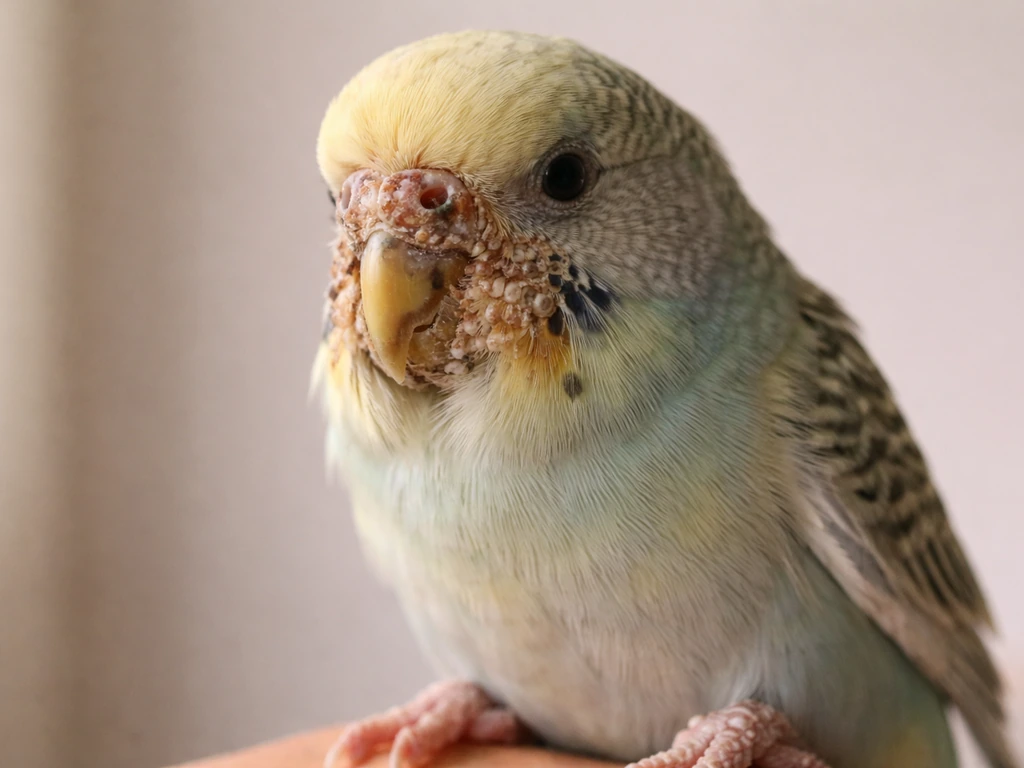
Scaly face and leg mites (Knemidocoptes) cause crusty, honeycombed-looking growths on the beak, cere, legs, and feet. If a bird beak sign is seen in your bird, treat it as a possible mite-related condition and get veterinary guidance promptly. The beak can become deformed if the infestation is left untreated. If you notice crusty or wart-like changes on the beak along with feather abnormalities, that can point to diseases such as mites or PBFD bird beak appearance in which disease. Diagnosis is confirmed by skin scrapings examined under a microscope, and treatment involves veterinary-prescribed antiparasitic medication, typically repeated about two weeks later to account for the parasite's life cycle. Early treatment genuinely matters here because it reduces the chance of permanent beak or claw deformity.
Depluming mites burrow into the skin and can cause bare patches that typically start on the back and spread to the wings, neck, and head. These mites are very small and cannot be seen with the naked eye, so do not assume your bird is mite-free just because you cannot spot anything. Lice are more visible but are shy of light and will scurry under feathers when you part them. Lice cause itching, feather damage, stress, and in heavy infestations can lead to anemia and weight loss. Young lice mature in about 10 to 15 days, and adults live roughly three weeks, which is why repeat treatments at timed intervals are necessary to break the cycle.
Bacterial and fungal skin infections
Bacterial folliculitis (infection at the base of the feather) and fungal skin infections including ringworm and yeast (such as Malassezia) can all cause feather damage and skin changes. These conditions are more likely to develop around existing skin injuries, areas of chronic dampness, or in immunocompromised birds. Signs include redness, scaling, and sometimes a smell. blank" rel="noopener noreferrer">Candidiasis is more commonly seen internally in young or immunocompromised birds, often presenting with crop problems and white plaques in the mouth rather than purely as a feather issue. Candidiasis can also show up as crop problems along with mouth plaques. If there are skin lesions alongside feather loss, a vet visit for swabs or scrapings is the right move.
Viral disease: avian pox and PBFD
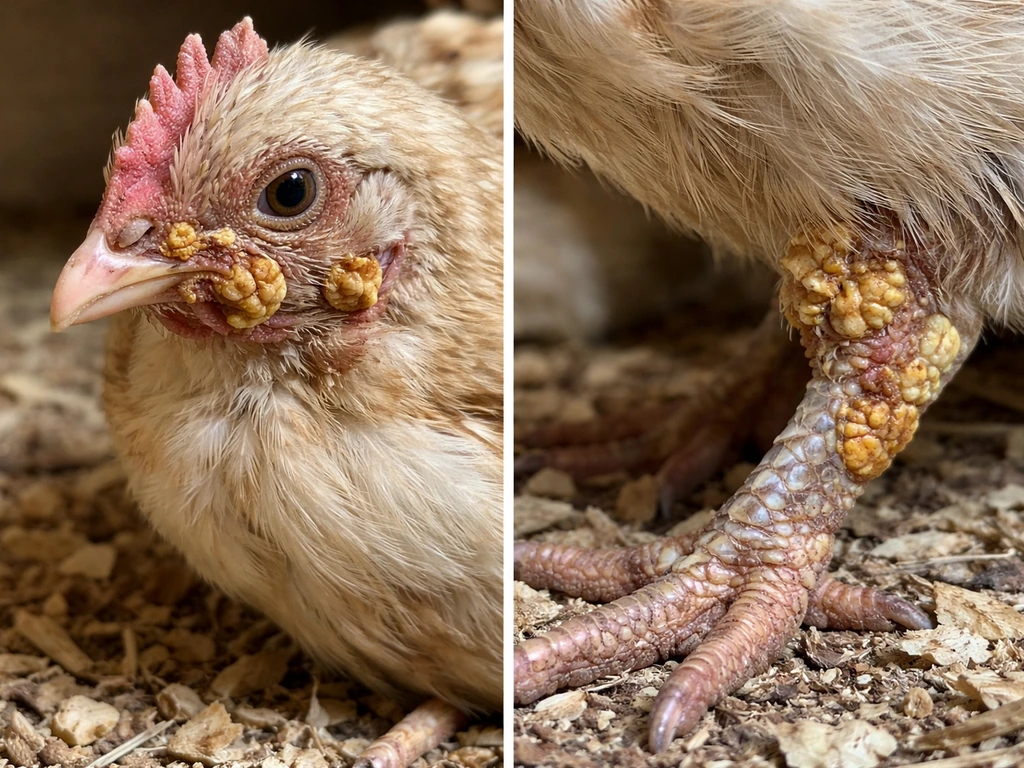
Avian poxvirus causes tan or yellow wart-like growths on the bare skin of the face, feet, and legs. Another mouth issue can come from different bird problems, including causes related to the esophagus bird beak esophagus causes. There is also a wet form that causes lesions inside the mouth and respiratory tract. If you see this pattern, contact a vet immediately and quarantine the bird. Pox is contagious and can spread to other birds. Psittacine Beak and Feather Disease (PBFD) is a viral illness that causes progressive feather abnormalities, including loss of powder down, abnormal feather structure, and beak changes. It is one of the more serious diagnoses on this list and requires veterinary confirmation.
Systemic illness and nutritional deficiency
Feather quality is a good overall indicator of internal health. Systemic illnesses affecting the liver, kidneys, or thyroid can all show up in the feathers before other symptoms become obvious. Nutritional deficiency, especially vitamin A deficiency from an all-seed diet, is a very common underlying factor in poor feather condition. Vitamin A deficiency develops slowly over months because birds store fat-soluble vitamins, so the connection between a poor diet and deteriorating feathers is not always obvious. Because some diseases affect how the eyes and feathers develop, vision changes can also point to a bird disease that causes blindness Birds store fat-soluble vitamins. Blood panels are genuinely useful here because they can flag liver or kidney issues, signs of infection, and nutrient deficiencies simultaneously.
Feather plucking: behavioral or medical?
Feather plucking is one of the most frustrating problems to solve because it can be caused by medical issues (parasites, skin irritation, systemic illness, pain, reproductive disease, hypothyroidism) or by behavioral and psychological triggers (stress, boredom, inadequate social interaction, low humidity). In the wild, bird population decline causes can also include stress-related feather loss from poor habitat conditions feather plucking. The medical causes must be ruled out or treated first. Feather plucking guidance from PetMD notes diagnosis requires ruling out medical causes and recommends blood panels to help assess liver or kidney status, infection signs, and nutrient deficiencies blank" rel="noopener noreferrer">The medical causes must be ruled out or treated first. Only after that should you focus purely on environmental enrichment and behavioral strategies. A vet visit with a full workup, including blood panels, is the right starting point if your bird is actively plucking.
Feather-specific patterns: what different types of damage usually mean
The specific way feathers are damaged or missing is one of the best diagnostic clues you have before a vet visit. Here is a practical breakdown:
| Pattern | What it suggests | Urgency |
|---|---|---|
| Bald patch in area bird cannot reach (back of head, upper back) | Parasite, cage mate over-preening, or mite infestation | Vet within a few days |
| Broken or chewed feathers in areas bird CAN reach | Self-plucking (medical or behavioral cause) | Vet evaluation recommended |
| Abnormal pin feathers (constricted, clubbed, blood in shaft) | Mite involvement or PBFD | Vet soon, within a few days |
| Bare patches spreading from back outward | Depluming mites | Vet visit, skin scraping needed |
| Crusty growths on beak, cere, legs, feet | Scaly face/leg mites (Knemidocoptes) | Vet visit, early treatment prevents deformity |
| Wart-like lesions on bare facial/leg skin | Avian poxvirus | Vet immediately, quarantine bird |
| Feather discoloration (stress bars, dull color, odd patterning) | Nutritional deficiency, illness during growth, or chronic stress | Vet evaluation, diet review |
| Overall dull, brittle, or powder-free plumage | Poor nutrition, systemic illness, PBFD | Vet evaluation |
| Widespread sudden feather loss with no pin feathers growing | Systemic illness, PBFD, or severe mite burden | Vet soon |
Stress bars are horizontal lines across a feather that formed when the feather was growing during a period of illness, malnutrition, or significant stress. They show you that something was wrong weeks ago when that feather was developing, not necessarily right now. But if you are seeing them consistently across many feathers, it points to a chronic underlying problem worth investigating.
Immediate at-home steps that are safe (and what to avoid)
There are several things you can do at home right now that are genuinely helpful and safe while you assess the situation or wait for a vet appointment. There are also several things you should not do, and these matter just as much.
Safe steps to take today
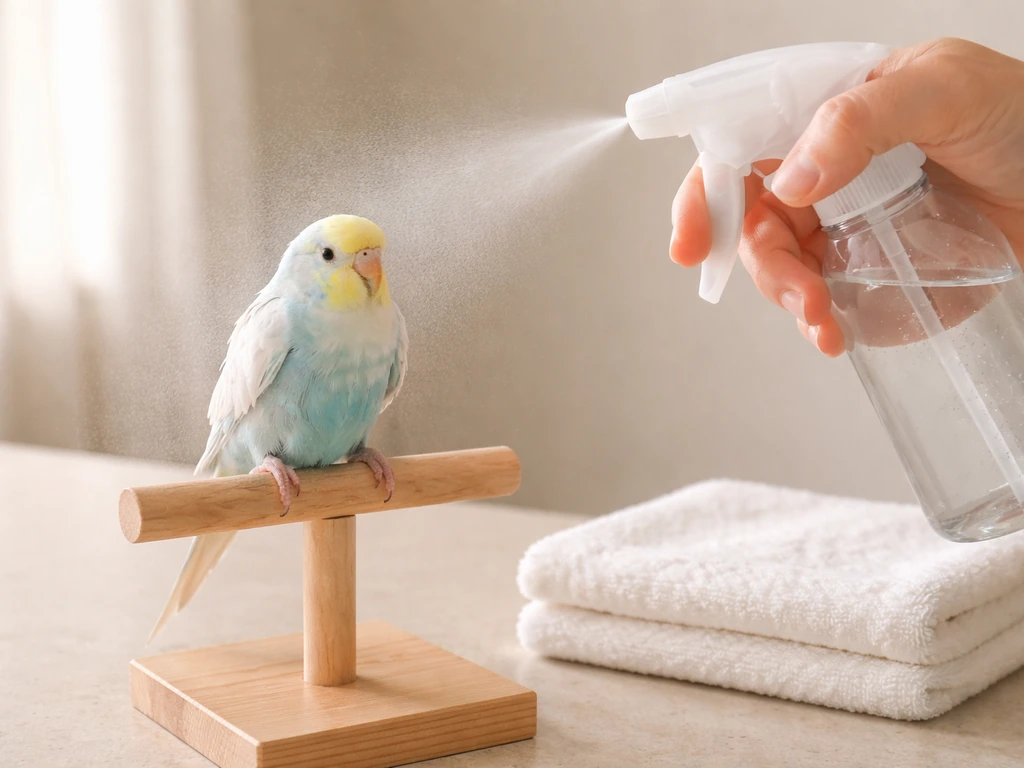
- Offer a gentle bath or misting with plain water. Regular bathing supports skin and feather health, and many birds find it calming. Use room-temperature water and let the bird dry in a warm room. Cockatiels and similar small birds typically take 30 to 90 minutes to dry fully depending on humidity, so make sure the environment is warm enough.
- Check and improve humidity. Low humidity dries out skin and feathers and can drive or worsen plucking. Aim for 40 to 60 percent relative humidity for most companion birds.
- Review the diet immediately. If your bird is on an all-seed diet, switch toward a high-quality pelleted base with fresh vegetables, especially dark leafy greens and orange/yellow vegetables rich in beta-carotene (a vitamin A precursor). Do not make drastic overnight changes, but start introducing better foods today.
- Reduce obvious stressors. Move the cage away from drafts, loud TVs, or other pets. Maintain a consistent daily routine for feeding and interaction. Increased, calm social time can reduce anxiety-driven plucking once medical causes are addressed.
- Clean the cage and environment. Wash perches, toys, and food and water dishes with hot water and a bird-safe disinfectant. If you suspect parasites, wash all fabric cage liners or covers and inspect for signs of mites (tiny moving dots, or reddish-brown specks on white paper placed under the cage overnight).
- Separate the bird from others if you see lesions, wart-like growths, or believe the issue is contagious. This is especially important for suspected poxvirus or PBFD.
What not to do
- Do not use soaps, shampoos, essential oils, vinegar mixes, or human wipes on your bird. Tea tree oil (melaleuca) is specifically toxic to birds. Even oils promoted as natural or safe for animals are not safe for birds without direct veterinary guidance due to birds' sensitive respiratory and skin systems.
- Do not apply any over-the-counter parasite treatments without veterinary guidance. The wrong product can be toxic to birds, and you need the right diagnosis to use the right treatment.
- Do not try to pull out a damaged or blood feather yourself unless you have been specifically instructed by a vet. A bleeding blood feather needs professional assessment.
- Do not assume the problem is behavioral and skip the vet workup. Medical causes of feather plucking are common and need to be ruled out before behavioral interventions make sense.
- Do not use detergents or soaps for routine bathing. These should only be considered as a last resort for contamination situations (oil, grease, glue) and only under veterinary guidance.
Treatment and vet decision guide based on likely cause
Not every feather problem needs the same response, and knowing when to call the vet immediately versus when to schedule a routine appointment versus when to monitor at home is genuinely useful. Here is a practical breakdown by cause.
Parasites (mites and lice)
Treatment requires veterinary-prescribed antiparasitic medication. The specific drug and method depend on the type of parasite, and diagnosis usually needs skin scrapings or microscopic examination. Do not buy and apply over-the-counter products without knowing what you are treating. Treatment needs to be repeated at the right interval to catch newly hatched parasites (typically two weeks apart for many mite treatments). The environment also needs to be cleaned thoroughly.
Bacterial or fungal skin infections
These need a vet diagnosis with appropriate swabs or scrapings so the right treatment is prescribed. Antibiotics treat bacterial infections; antifungals treat fungal infections. Using the wrong one does nothing, and delaying treatment can allow infections to become entrenched or systemic. At home, keep the area clean and dry and do not apply anything topically without veterinary instruction.
Viral disease (pox, PBFD)
There is no specific antiviral cure for avian pox or PBFD. Avian pox is managed with supportive care, prevention of secondary bacterial infections, and strict quarantine. PBFD is progressive and managed by supporting the bird's immune system, nutrition, and quality of life while preventing spread. Both conditions need veterinary confirmation via biopsy, PCR testing, or histopathology. Contact your vet immediately if you suspect either of these.
Nutritional deficiency
Diet improvement is the treatment, but blood panels can confirm what is deficient and rule out concurrent illness. A vet can also advise on whether a short course of supplementation is appropriate. Avoid adding loose vitamin supplements to water without guidance, as fat-soluble vitamins can build to toxic levels if overdone.
Feather plucking (behavioral after medical causes ruled out)
Once medical causes have been treated or ruled out, the focus shifts to environmental enrichment, interaction schedules, and reducing anxiety. Increasing foraging opportunities, providing varied toys, maintaining a consistent daily routine, and ensuring adequate social interaction all help. Some birds benefit from referral to an avian behaviorist or prescription medications in severe cases. Follow up with your vet as the situation evolves because responses and triggers can change over time.
When to seek immediate veterinary care
- Active bleeding from a feather that does not stop within two to three minutes
- Open-mouth breathing, tail bobbing, gasping, or any signs of respiratory distress
- Sudden complete feather loss across large areas
- Wart-like lesions on the face, beak, or feet (possible poxvirus)
- Beak deformity alongside crusty facial or leg growths
- Lethargy, refusal to eat, or inability to perch alongside any feather problem
- Visible weight loss (breast bone becoming prominent) with feather changes
- Diarrhea, abnormal droppings, or crop swelling alongside feather issues
- Rapid spread of bald patches over days
Prevention and long-term feather health plan
Most chronic feather problems are preventable with consistent husbandry. A few habits go a long way.
Nutrition as a foundation
A high-quality pelleted diet as the base, supplemented with fresh vegetables and limited fruit, covers the nutritional gaps that all-seed diets create. Vitamin A deficiency is particularly common and takes months to show up because of fat-soluble storage, so it is easy to overlook until feather and immune problems are already present. Dark leafy greens and orange vegetables provide beta-carotene that the bird converts to vitamin A. Annual bloodwork is a practical way to catch deficiencies before they cause visible problems.
Bathing, humidity, and environment
Regular bathing with plain water, two to three times per week for most species, keeps skin and feathers in good condition and can reduce the dander buildup that irritates birds and their owners alike. Maintaining humidity between 40 and 60 percent prevents the dry skin and feather brittleness that can trigger plucking. Keep the cage away from drafts, cooking fumes, and air fresheners, all of which stress birds' respiratory and skin systems.
Quarantine new birds
Any new bird introduced to a household should be quarantined for a minimum of 30 days, ideally with a vet health check, before contact with existing birds. Parasites, poxvirus, and PBFD can all be introduced by apparently healthy-looking birds that are carrying the disease or parasite subclinically.
Routine parasite checks
For indoor pet birds with no contact with wild birds or new arrivals, routine year-round antiparasitic treatment is generally not necessary or recommended. However, birds with outdoor exposure or contact with new birds should be checked regularly. A simple check involves placing a white paper sheet under the cage overnight and inspecting it in the morning for tiny moving specks, which can indicate red mites. If you spot anything suspicious, take a sample to your vet rather than guessing.
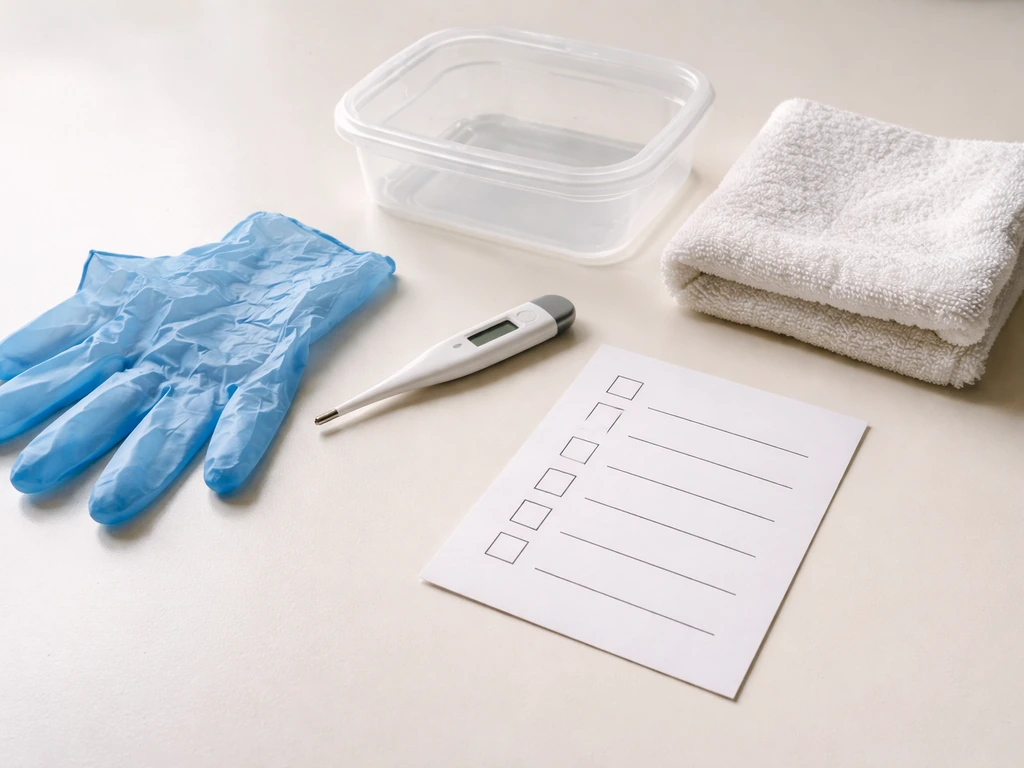
Monthly monitoring checklist
- Check feather coverage: any new bald patches or areas of thinning?
- Inspect pin feathers during normal handling: are they normal in appearance?
- Check skin on the face, cere, legs, and feet for any crusty, scaly, or raised lesions
- Weigh your bird on a gram scale: consistent weight loss is an early illness sign
- Review droppings for changes in consistency, color, or volume
- Assess behavior: is the bird as active, vocal, and interested in food as usual?
- Check cage paper for signs of mites overnight
- Confirm diet is varied and not reverting to mostly seeds
Feather problems rarely exist in isolation. Changes in the feathers are often the first visible sign that something bigger is going on internally, whether that is a nutritional gap, a developing infection, or an early parasitic infestation. Staying observant and catching changes early is genuinely the most effective thing you can do for your bird's long-term health. If you are ever unsure whether what you are seeing is normal molt or something more serious, a short vet visit is always the right call. If you are seeing bird death, it is important to consider serious underlying causes like infection, parasites, or nutritional problems rather than assuming it is sudden coincidence bird death causes.
FAQ
My bird has a few broken or missing feathers, but it is acting normal. Is that still a bird feather problem?
Yes, but context matters. If feather loss is small and localized, and the skin looks normal with no redness, crusting, or active bleeding, it can be from minor trauma, grooming, or a mild phase of molt. Recheck the same spots in 7 to 10 days, because true disease often spreads or produces new abnormal pin feathers rather than staying isolated.
How can I tell if feather loss is from rubbing or injury versus illness?
Look at the edges. Injuries usually create irregular breaks or bare spots where the bird can repeatedly reach, and nearby feathers are otherwise normal. Illness more often causes patchy, asymmetrical loss with skin changes like scaling, redness, or odor, and you may also see other systemic signs such as quieter behavior or reduced droppings.
What does “new pin feathers” mean, and when should I worry about them?
Pin feathers are the growing feather shafts still encased, often appearing as small stubs. They are expected during molt, and a bird should still eat, perch, and produce normal droppings. Worry if pins are crooked, very slow to emerge, repeatedly fail to develop, or look abnormal along with worsening skin lesions.
My bird is shedding a lot, but it is not symmetrical. Does that automatically mean disease?
Not automatically, but it raises the odds. Many birds molt unevenly at first, yet healthy molt still trends toward gradual replacement over the following weeks. If bald patches keep enlarging, no new growth appears, or the bird shows itch, lethargy, or weight change, treat it as disease until a vet rules it out.
Should I treat for mites or lice immediately when I see feather problems?
Avoid guessing with over-the-counter products. Different parasites and skin conditions need different medications and schedules, and wrong treatments can waste time while infections worsen. A better next step is to collect photos and, if you suspect parasites, ask your vet for skin scrapings or a targeted diagnostic plan.
I see small moving specks under the cage on paper. What should I do next?
Do not rely only on the overnight paper test. Bring the sample if possible and contact your avian vet for confirmation and a timed treatment plan, because red mites also hide in cage seams and can cause anemia in heavy infestations. Meanwhile, avoid using unsupervised sprays on the bird, and follow the cleaning routine your vet recommends for the cage area.
How do I handle cleaning the cage when I suspect parasites?
Focus on what the life cycle can survive. Wash removable items with hot water when appropriate, discard heavily soiled soft materials, and scrub cage surfaces thoroughly. Also clean perches, toys, and under-tray areas, because mites and lice often persist in cracks and fabric. Always use bird-safe products only, and let everything dry completely before the bird returns.
Can low humidity really contribute to feather plucking or feather brittleness?
Yes. Dry air can irritate skin and make feathers feel uncomfortable, which can kick off or worsen plucking in susceptible birds. Measure humidity if you can and aim for roughly the range your article recommends (around 40 to 60 percent). Also ensure bathing opportunities are safe for your species, because some birds benefit from consistent misting or shallow bathing rather than only humidity changes.
My bird plucks, but I cannot see mites. What should I check first?
Rule out medical causes even if mites are not visible. Check for skin redness or crusting, consider bloodwork to evaluate liver, kidney, thyroid, and nutrient status, and ask your vet about pain or reproductive issues depending on species and age. Behavior work helps most after medical problems have been addressed or excluded.
Are stress bars a sign I caused the problem?
Not necessarily. Stress bars indicate that something affected feather development weeks ago, it could be illness, diet deficiency, temperature swings, or environmental changes. Try to identify major changes from the prior month or two (diet switch, relocation, new people or pets, remodeling fumes), but avoid blaming yourself, focus on current triggers and medical confirmation.
If my bird has skin scaling or redness, should I use an antifungal or antibiotic cream?
No, not without a diagnosis. Skin infections require the correct medication based on whether the issue is bacterial, fungal, or related to mites, and topical products can also irritate skin or interfere with treatment. Ask for swabs or scrapings first, and keep the area clean and dry until you have veterinary guidance.
How quickly should I expect improvement after starting treatment for mites or lice?
Improvement is usually not immediate. You may see less active itching and fewer new damaged feathers over time, but repeat treatments are often needed to interrupt the life cycle. Ask your vet what timeline to expect for your specific parasite, because delays can happen if eggs survive and the second dose is mistimed.
Can diet alone fix bird feather problems?
Diet can improve feather quality and address deficiencies, but it is rarely the only fix when there is active infection, parasites, or a chronic systemic problem. If feather loss is progressive, accompanied by skin lesions, abnormal droppings, or lethargy, prioritize diagnosis and treatment while upgrading the diet.
Is it safe to add vitamins to the water to improve feathers?
Usually not without guidance. Adding loose supplements to water can lead to excessive intake of fat-soluble vitamins, especially vitamin A, which can become toxic. If supplementation is needed, it is typically dosed based on weight and confirmed deficiencies, ideally guided by bloodwork or a clear veterinary plan.
How do I decide between routine vet care versus urgent care?
Use your bird’s overall condition as the trigger. Seek urgent or emergency help if you see breathing difficulty, active bleeding, inability to perch or stand, sudden severe decline, or any rapid worsening. For non-urgent cases, schedule a prompt appointment if feather loss is spreading, pins are abnormal, skin lesions are present, or the bird is not eating normally.
My bird had feather problems before, will it happen again even if I fix everything?
It can, especially if the underlying cause was never fully corrected (ongoing diet gaps, chronic dryness, unresolved medical conditions, persistent stressors). Track diet, humidity, bathing routine, and any environmental changes, and request follow-up checks if the feather pattern resumes. For recurring plucking, consistent long-term enrichment and medical re-evaluation may be needed.
Next Article
Bird Death Causes: Quick Triage Chart and Next Steps
Bird death causes triage chart to match symptoms and timeline, then take safe steps for pet or wild birds.