When people search for "bird nest spruce problems," they're usually dealing with one of a handful of real, fixable situations: nestlings that look sick or weak, a nest that seems to have failed, young birds on the ground, or an adult bird acting strangely near a spruce. This guide walks you through how to figure out what's actually happening, what's safe to do right now, and exactly when to call in professional help.
Bird Nest Spruce Problems: Symptoms and Safe Next Steps

Marcus Webb
21 Apr 2026
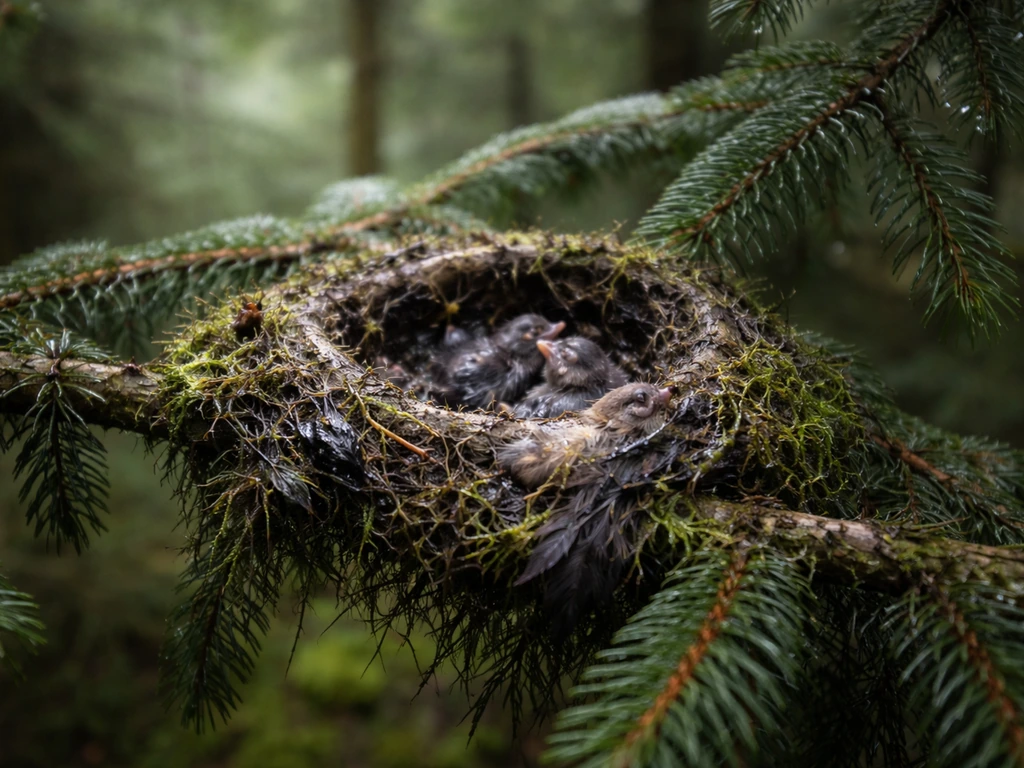
What 'spruce nest problems' usually means

Spruce trees are popular nesting sites for many wild bird species because of their dense branching and cover. But that same dense, moist environment creates specific risks. The most common nest-related problems you'll run into with spruce-nesting birds fall into a few clear categories.
- Damp and cold exposure: Spruce canopies trap moisture and block sunlight, so nests inside them stay wetter and cooler than nests in open trees. Nestlings that get wet and cold can deteriorate fast.
- Mold and fungal growth: Wet, compacted nest material in a shaded spruce is ideal for mold. Aspergillus fungus in particular can produce airborne spores that young birds inhale, leading to serious respiratory illness.
- Parasite infestation: Mites and lice thrive in old or damp nesting material. Large numbers of blood-sucking mites can cause anemia and death in young birds, and heavy infestations can drive parents to abandon eggs or nestlings entirely.
- Nest disruption or failure: Wind, predators, overcrowding on a branch, or structural collapse can cause a nest to fail, leaving nestlings on the ground or exposed.
- Contaminated nest materials: If the tree or surrounding area has been treated with chemicals, or if the bird collected materials near a pollutant source, the nest itself can be a source of irritation or toxicity.
- Respiratory irritants from the environment: Spruce pollen season, nearby mold sources, or high humidity can act as ongoing respiratory irritants for nestlings with underdeveloped immune systems.
The trickiest part is that several of these problems produce overlapping symptoms in the birds themselves. That's why your first job is to observe carefully before doing anything.
Quick safety check: when to avoid the nest and seek help
Before you get closer to any nest, pause and run through this mental checklist. Some situations require immediate professional contact rather than any hands-on action from you.
- Is the nest still active with parents present? If you can see or hear a parent bird nearby, keep well back. Approaching too often causes stress and can cause parents to abandon the nest. Most active nests should not be touched.
- Is there a predator nearby (cat, dog, crow)? If a nestling has been caught or bitten by a pet, that bird needs a licensed wildlife rehabilitator immediately, regardless of how it looks. Bacteria from a bite wound can be fatal within hours even if there's no visible injury.
- Is the nest on the ground due to a fall? Don't assume the parents have abandoned it. Watch from a distance of at least 30 feet for 30 to 60 minutes before concluding the parents are not coming back.
- Are there obvious chemicals or strong odors near the tree? Evacuate any bird in your care and get professional guidance before handling the nest further.
- Is it a protected species or a nest in an area where disturbance is illegal? In the U.S., it is illegal in most circumstances to disturb an active wild bird nest or its contents. When in doubt, call a wildlife rehabilitator or your state wildlife agency before touching anything.
Symptoms to look for in nestlings and fledglings
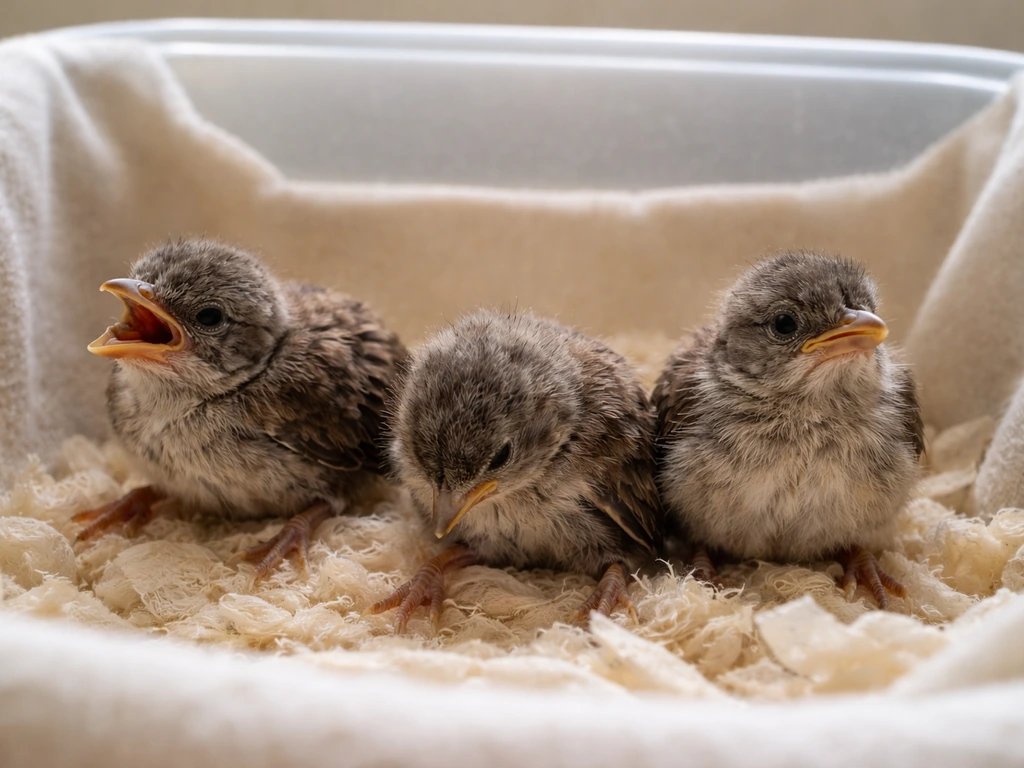
If you're watching nestlings or have a bird in temporary care, knowing what healthy looks like makes it much easier to spot trouble. Here are the specific signs that tell you something is wrong, broken down by body system.
Respiratory signs
Respiratory problems are one of the most serious things you can see in a young bird, and they're especially common when the nest environment is damp or moldy. Watch for open-mouth breathing (a bird breathing with its beak open and not vocalizing), tail bobbing with each breath, wheezing, rattling, clicking, or gasping sounds. Any of these signals that the bird is working hard to breathe. Tail bobbing, in particular, is a consistent sign that a bird is in real respiratory distress, not just temporarily startled.
Open-mouth breathing in a hot environment has a different cause than in a cool one. If the bird is hot and panting, that's a temperature problem. If the bird is in a normal or cool environment and still breathing open-mouthed, that points toward respiratory disease, fungal infection, or obstruction.
Feeding and digestive signs
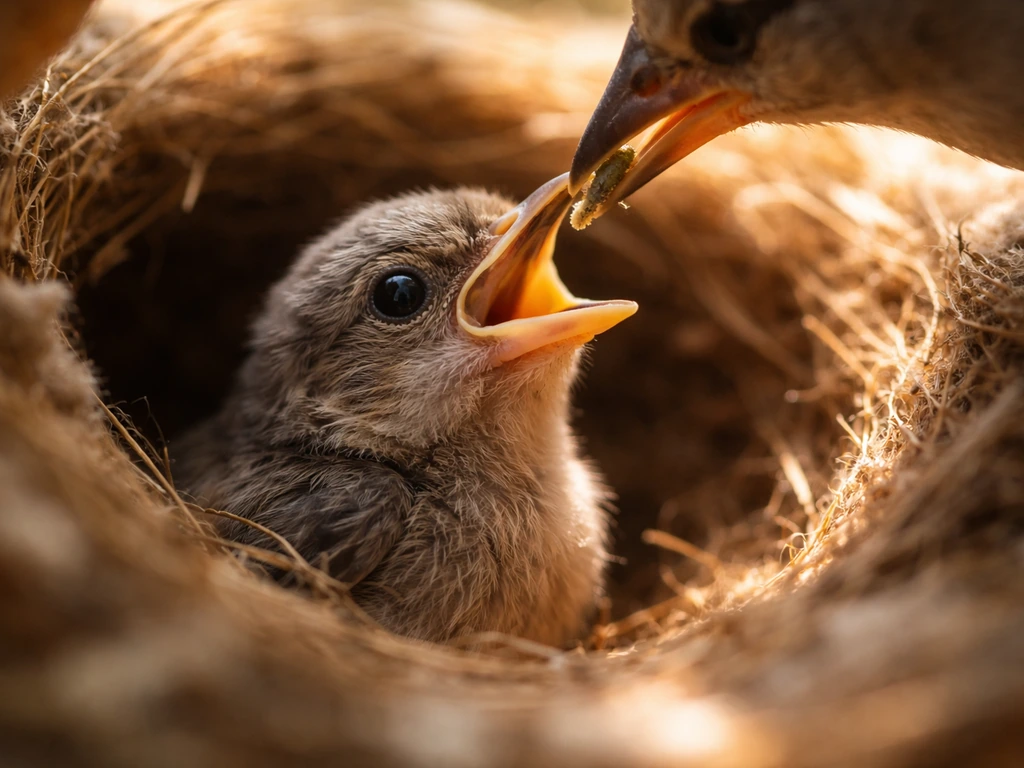
Healthy nestlings beg loudly and swallow feedings quickly. Concerning signs include refusing food, appearing to gag or have difficulty swallowing, slow crop emptying (in species where you can feel the crop), or watery, discolored, or foul-smelling droppings. Greenish or yellowish urates (the white part of the droppings turning yellow or green) can signal systemic illness.
Behavioral and physical signs
Lethargy is a major red flag. A nestling that is limp, unresponsive, or too weak to hold its head up is in serious trouble. Other warning signs include eyes that are closed or partially closed, swollen or crusty eyes, visible bleeding or wounds, feathers that look wet, matted, or falling out in patches, and pale or bluish color around the mouth or feet. A fledgling that is fully feathered but cannot stand or fly after being on the ground for more than an hour should be assessed by a rehabilitator.
Nest environment vs. disease vs. parasites: figuring out which one you're dealing with
Not every sick-looking nestling has an infectious disease. Distinguishing between a nest environment problem, a contagious illness, and a parasite infestation helps you decide what to do next and how urgently.
| Issue type | Key signs in the bird | Key signs in the nest/environment | Urgency |
|---|---|---|---|
| Damp/cold exposure (hypothermia) | Cold to the touch, lethargic, not begging, weak | Wet nest material, shaded location, recent rain | High — warmth needed quickly |
| Overheating | Open-mouth breathing, neck stretched out flat, feels hot | Direct sun exposure, enclosed area | High — cooling needed quickly |
| Aspergillosis (fungal respiratory) | Wheezing, tail bobbing, open-mouth breathing, lethargy | Moldy or very damp, compacted nest material | High — vet/rehab contact needed |
| Mite/lice infestation | Restlessness, anemia (pale skin), feather loss or damage, weakness | Visible tiny moving specks in nest, parent avoidance of nest | Medium-high — especially if nestlings are pale or very weak |
| Bacterial/viral respiratory infection | Similar to aspergillosis — wheezing, discharge, lethargy | No obvious nest material problem; may affect multiple birds | High — vet/rehab contact needed |
| Nest disruption/fall | May be healthy if found quickly; injury if impacted | Nest on ground, damaged, or missing from tree | Varies — assess and watch before acting |
Aspergillosis deserves a specific mention here because spruce nest conditions are a near-perfect setup for it. Knowing the bird canker symptoms can also help you separate that concern from other respiratory illnesses in nestlings Aspergillosis. The Aspergillus fungus grows in damp, decomposing organic material, which old spruce nest material absolutely can be. Nestlings inhale the spores and develop respiratory illness that looks similar to other infections. CDC describes aspergillosis as an infection caused by blank" rel="noopener noreferrer">breathing Aspergillus mold spores. You can't diagnose it visually, but if the nest was wet and moldy and the bird is breathing hard, that combination is a strong signal to get a wildlife professional involved fast.
Parasite infestations can be harder to spot. Look very carefully at the nest material itself. If you see tiny, fast-moving specks, especially in large numbers, that's a mite problem. Heavy infestations can cause parents to leave the nest, leave nestlings weak from blood loss, and re-infest birds repeatedly if the nest material isn't replaced. Unlike some conditions that require a vet to diagnose, a mite infestation in a nest box is something you can often see and address, but do it carefully and only when it's safe to act.
What to do today: step-by-step triage
Here's a practical sequence to follow when you're facing a bird nest spruce problem right now. If you are specifically dealing with bird nest fern problems instead of spruce, the same triage approach still helps you sort out respiratory illness, parasites, and nest-condition issues quickly bird nest spruce problems. Work through the steps in order.
- Observe from a distance first. Stay at least 30 feet away and watch for 30 to 60 minutes. Are parents coming and going? Is the nest still intact? Is the bird you're concerned about actually being fed? Most situations look worse than they are from a distance.
- Assess the bird's condition without handling if possible. Does it look alert? Is it breathing normally? Is it feathered (fledgling) or naked/downy (nestling)? A feathered fledgling on the ground near a spruce is often a normal part of learning to fly and likely doesn't need intervention.
- If a nestling is truly on the ground and the nest is visible and accessible, you can gently place it back. The myth that parent birds will reject a chick because you touched it is not true. But do this only if the nest is clearly intact and reachable without major disturbance to the tree.
- If the bird is cold, wet, or clearly weak, place it in a small cardboard box lined with a soft cloth (not terry cloth, which can catch toes). Add a heat source beneath one half of the box only, like a heating pad on the lowest setting, so the bird can move away from the heat if it gets too warm. Do not cover the air holes.
- Do not give food or water. This is one of the most common mistakes people make. Giving water to a bird that cannot swallow properly can cause it to aspirate and die. Do not try to feed any formula or food unless a licensed rehabilitator has specifically directed you to do so.
- Keep the bird in a warm, dark, quiet place away from pets, children, and loud noises. Do not keep it near other birds, as birds can transmit illness to each other.
- Call a licensed wildlife rehabilitator as soon as possible. Even if the bird seems stable, a wild nestling or fledgling needs professional care within hours, not days. You can find a local rehabilitator through your state wildlife agency or national wildlife rehab directories.
- If you suspect the nest box or nest site has a mite infestation and the birds have already fledged, remove the old nest material completely. Scrape the sides and bottom of any nest box to remove droppings and debris, and let it dry fully before the next season. Do not apply any pesticide inside or near an active nest.
When to contact an avian vet or wildlife rehab urgently
Some situations can't wait. Contact a licensed wildlife rehabilitator or avian vet immediately if you observe any of the following.
- The bird is gasping, gurgling, or making wheezing or clicking sounds with each breath
- The bird is breathing open-mouthed in a normal-temperature environment
- Tail is bobbing visibly and rhythmically with every breath
- The bird is completely limp or unresponsive
- Eyes are closed, swollen, crusty, or weeping
- There is visible bleeding, a wound, or a suspected broken bone
- The bird has been caught or touched by a cat, dog, or other animal (even if it looks uninjured)
- Multiple birds in the same nest are sick or dying
- The bird is a featherless nestling (eyes closed) found on the ground with no nest visible or reachable
- The bird shows signs of overheating: neck stretched flat, very hot to touch, unresponsive
You don't need to diagnose the problem yourself before calling. Wildlife rehabilitators are trained to triage over the phone. Describe what you see, where you found the bird, and the condition of the nest or tree. They'll tell you exactly what to do next and whether to bring the bird in right away. If you suspect a bird found in a likely-rehab situation, the American Bird Conservancy advises against providing food or water and recommends contacting a wildlife rehabilitator for guidance.
It's also worth knowing that respiratory signs like open-mouth breathing and tail bobbing are not specific to one disease. They show up in aspergillosis, bacterial respiratory infections, parasitic infestations severe enough to cause anemia, and even severe cold stress. That overlap is exactly why professional assessment matters. You can't treat the right thing if you don't know what you're treating, and the wrong intervention can make things worse.
Prevention for next nesting season
If birds nest in or near your spruce regularly, there are practical steps you can take after the current brood fledges to reduce the risk of these problems repeating next year.
Clean out nest boxes and old nests after each brood
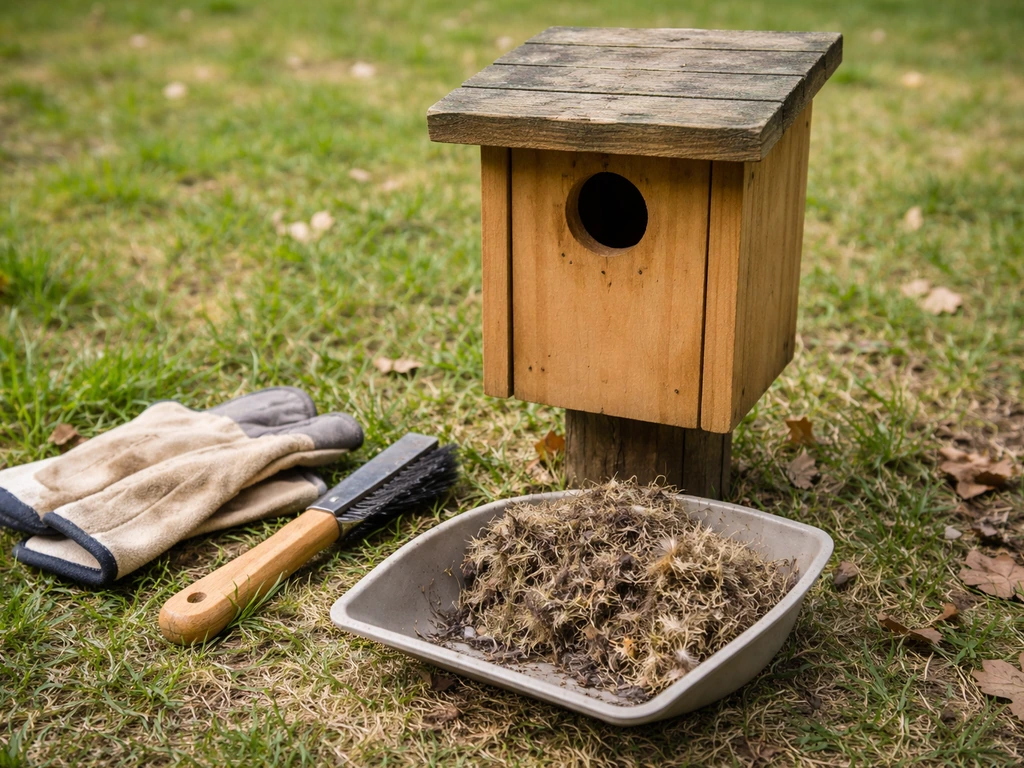
Old nest material is genuinely dirty. It contains droppings, dead skin cells, feather debris, and often parasites like mites. After the last brood of the season has fledged and left, remove all old nesting material from any nest box near the spruce. Scrape the sides and bottom of the box, let it dry fully in the sun, and add a small amount of clean, dry grass or similar natural material to encourage future use. Never clean a box while an active nest is inside.
Manage moisture and airflow around the nest site
If you have any say in where nest boxes are positioned near a spruce, face the entrance hole away from prevailing rain (typically northeast or east in North America) and make sure there's enough canopy gap above the box to allow some sunlight and airflow. Dense, unbroken spruce canopy is the biggest driver of the damp conditions that lead to mold and parasite problems.
Monitor for mites early in the season
A quick check of nest box contents (wearing gloves) about a week after eggs hatch can catch a mite infestation before it becomes severe. If you see more than a handful of mites, or the nestlings look pale and restless, that's the point to act. In active nests, placing a clean nest box nearby and carefully transferring the nestlings (with gloved hands) is an option some conservationists use when infestation is severe, but this step is best done with guidance from a wildlife professional rather than on your own.
Reduce fungal risk with post-season hygiene
Because Aspergillus spores can persist in nest material and re-infect the next season's birds, a thorough post-season cleanout is one of the most effective prevention steps you can take. Don't just empty the box; scrape and dry it. If you've had a nest with a known mold problem, a dilute bleach solution (one part bleach to nine parts water) on the interior surfaces, followed by thorough rinsing and complete drying before the next season, will reduce fungal load significantly.
Keep a simple nest log
Noting when eggs were laid, when they hatched, how many nestlings fledged, and any problems you observed gives you a baseline for spotting patterns. If the same nest site produces sick or failed broods two seasons in a row, that's a strong signal to move the nest box, improve drainage, or thin the surrounding spruce canopy. Simple records beat guesswork every time.
Nest health is closely connected to other aspects of bird health you might be tracking. If you're also noticing issues with feeding behavior, crop problems, or beak abnormalities in birds around the same area, those symptoms can sometimes trace back to the same environmental source, whether that's contaminated water, food, or chronic respiratory irritants from the nest environment. Beak abnormalities are one of the key bird beak problems to watch for during nest triage. Keeping an eye on the whole picture, not just the nest, gives you the best chance of catching problems early.
FAQ
How do I decide whether bird nest spruce problems are urgent enough for immediate help?
If you can see the nestlings breathing with an open beak, tail bobbing, wheezing, or gasping, treat it as urgent and do not wait for a “milder day.” Call a licensed wildlife rehabilitator or avian vet right away, because delayed care can turn respiratory distress or heavy parasite anemia into a nonrecoverable situation.
Is open-mouth breathing always a disease sign, or could it be heat?
It depends on timing and conditions, not just the symptoms. A warm weather panting bird can be temperature stress, but open-mouth breathing in cool or normal temperatures plus a wet or moldy nest material strongly suggests respiratory disease, so prioritize professional triage over guessing.
Can I feed or medicate nestlings if I suspect bird nest spruce problems?
Do not give food, water, or medications unless a rehabilitator tells you to. With nestlings, you can accidentally aspirate fluid, injure a crop, or delay transport. If you must handle them briefly, keep them in a quiet, warm, secure container, then call for instructions.
What droppings or digestive clues matter most when checking nestlings?
Look at droppings quality and body posture together. Watery or foul-smelling droppings, discolored or foul urates, and slow crop emptying (when you can feel the crop) plus lethargy suggest systemic illness, which is a stronger reason to call than droppings that are just temporarily abnormal after a feeding change.
If I spot mites in the nest, does that rule out aspergillosis or other respiratory illness?
Yes, especially in spruce nests where respiratory symptoms overlap. Severe mites can cause anemia and weakness that resembles infection, and aspergillosis can look similar to other breathing disorders. That is why a professional assessment matters even when you think you “know” the cause.
My fledgling fell out near the spruce, how long should I wait before getting help?
A fledgling that is fully feathered but cannot stand or fly after more than an hour on the ground should be evaluated promptly by a wildlife rehabilitator. In contrast, some fledglings cannot fly well on day one but can still stand and coordinate, so use the ability to stand and righting response as a quick filter for urgency.
Should I put a baby bird back into the spruce nest if it falls out?
If you find a nestling on the ground with wet, dirty feathers or visible bleeding, do not put it back into the nest yourself unless a rehabilitator directs you. Even if parents return, placing a compromised bird can expose it to the same damp nest conditions that caused the problem.
What’s the safest way to handle a possible mite problem in an active nest?
If you see tiny fast-moving specks in nest material, that points to mites, but the safe move is prevention of re-infestation and professional guidance if numbers are high. In active nests, avoid broad treatments at home, because wrong interventions can further stress nestlings and repeatedly expose them to the damp substrate.
How should I clean the nest box after bird nest spruce problems, without hurting the next brood?
Take control of the environment, not the bird. After the brood leaves, remove old nesting material and let the box or nest structure fully dry in sun before refilling with clean, dry material. Never clean while birds are present, because disturbance can cause nest abandonment and additional exposure.
Which nest-box placement changes reduce damp, moldy conditions the most?
Positioning and airflow help reduce damp conditions that fuel mold and parasites. If you can adjust boxes, aim the entrance hole away from prevailing rain and ensure canopy gap for light and airflow. This is often more effective than “spot cleaning” because it changes how quickly the interior dries.
How often should I inspect an active spruce nest box for mites?
Check is timing-sensitive. A quick gloved inspection about a week after eggs hatch can reveal mite buildup early, but avoid frequent disturbances. If you find heavy mite activity or pale, restless nestlings, contact a professional rather than escalating DIY changes.
If there was a moldy nest last year, how should I prepare for the next nesting season?
Yes, if you had a season with significant mold or aspergillosis risk, expect spores to persist. Thorough scraping and drying after the brood leaves matters, and using a dilute bleach solution on interior surfaces, followed by full rinsing and drying, can reduce fungal load for the next season.
What kind of record-keeping helps identify patterns in bird nest spruce problems?
Keep records that tie symptoms to dates and outcomes. Note egg-laying timing, hatch date, how many fledged, and what problems you observed. Two consecutive “failed or sick” broods at the same site is a strong trigger to improve drainage, move the box, or thin nearby canopy.
What should I do if I’m seeing crop or beak problems in birds around the same spruce?
If you notice other issues nearby, treat it as a linked environmental triage, not separate problems. Feeding behavior changes, crop problems, or beak abnormalities can align with contaminated water or chronic respiratory irritants from the same damp nesting area, so document all observations when you call a rehabilitator.
Next Article
Bird Nest Fern Problems: Diagnose and Fix Yellow or Rotting Leaves
Fix yellow, brown, or mushy fronds on bird nest fern with quick diagnosis, crown checks, watering and drainage tips, pes