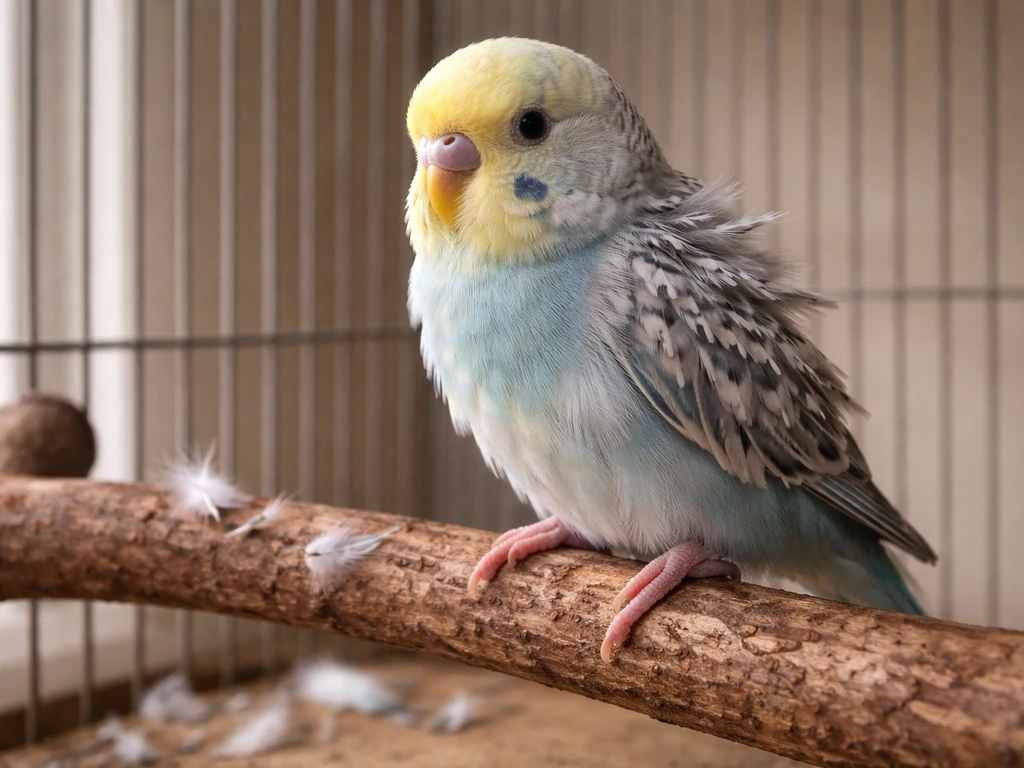
A bird with a sprained or soft-tissue leg injury will typically limp, avoid putting full weight on the affected leg, hold the foot up, or suddenly start spending a lot of time on the cage floor. The joint may feel warm or look slightly swollen. The bird will still grip when it wants to but may do so weakly or unevenly. That combination of clues, limping plus reluctance to perch plus mild swelling with no obvious bone deformity, points toward a soft-tissue injury like a sprain, tendon strain, or ligament irritation rather than a fracture or something more serious. But birds hide pain well, so what looks mild on the surface can sometimes be more significant underneath.
Bird Sprained Leg Symptoms: What to Look for and Next Steps

Marcus Webb
27 Apr 2026
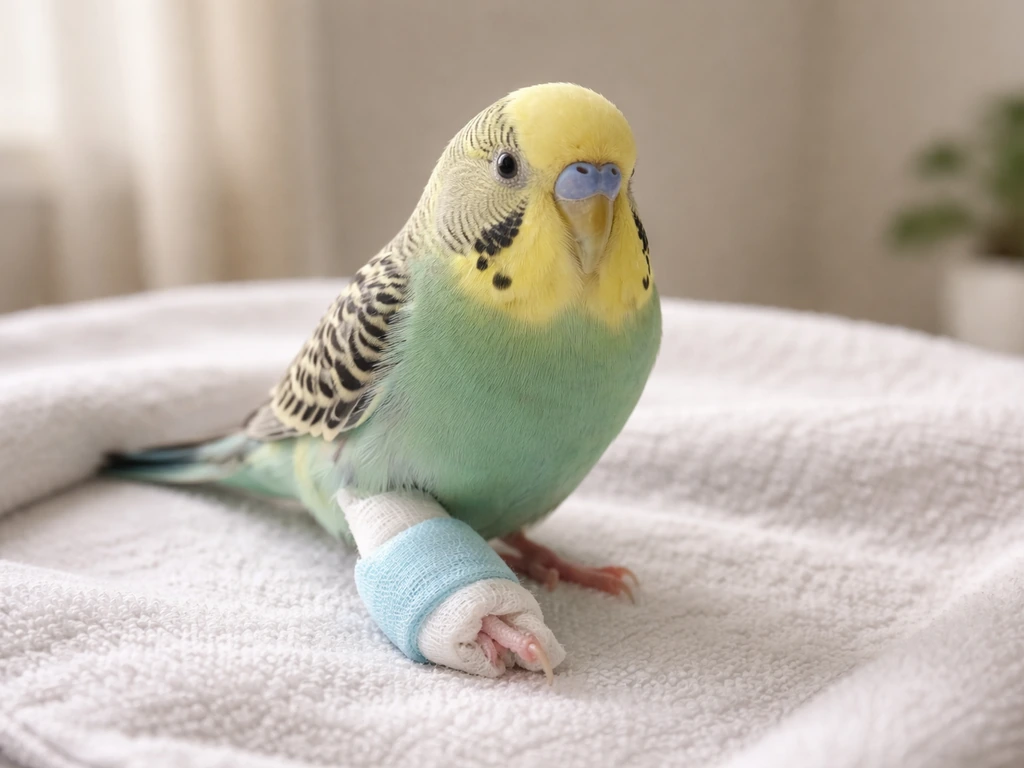
How a sprained leg actually looks in birds
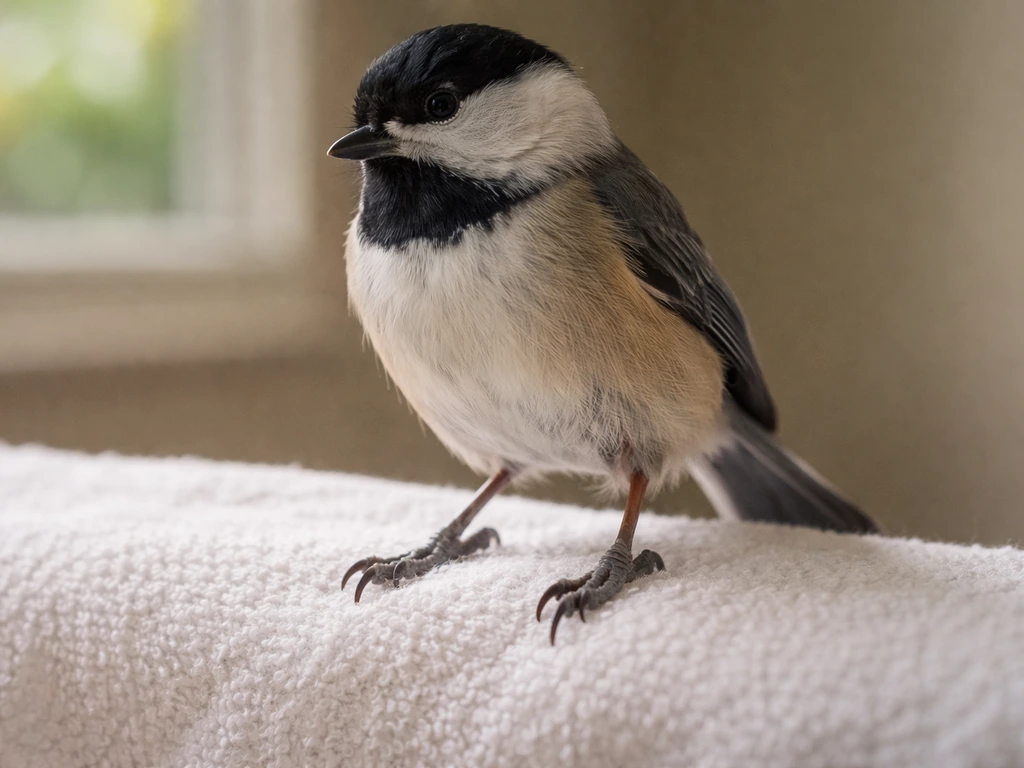
Birds do not tell you something hurts, so you have to read their behavior. With a soft-tissue leg injury, the first thing most owners notice is a change in how the bird moves or positions itself. The bird may limp visibly when walking along a perch, favor one side, or hold one foot slightly raised and tucked close to the body. It may shift its weight constantly, grip a perch but refuse to hop or climb, or simply sit lower than usual.
Another common clue is a sudden change in where the bird spends its time. A bird that normally sleeps high on its favorite perch and is now sitting on the cage floor or on the lowest bar is telling you something is wrong. This happens because perching requires grip strength and leg stability, and a sore leg makes that effort uncomfortable.
At the injury site, you might see mild puffiness or swelling around the ankle (hock joint) or the toes, and the area can feel slightly warmer than the other leg when you gently touch it. Bruising can appear but is harder to see under feathers. The leg itself should still look straight with no visible angle, twist, or dangling quality, those signs point toward something more serious than a sprain.
- Limping or uneven gait on a perch
- Holding one foot raised or tucked
- Reduced grip strength on the affected side
- Reluctance or refusal to hop, climb, or fly down to land
- Spending unusual time on the cage floor
- Mild swelling or warmth at the joint
- Flinching or vocalizing when the leg is gently handled
- General lethargy or less interest in activity
What you can check at home without making things worse
The goal of a home check is information gathering, not diagnosis. You are looking for obvious red flags and assessing general severity, not probing or pressing on the injury. Keep the bird calm throughout; stress itself can be dangerous in an already injured bird.
Start by observing the bird from a short distance before you touch anything. Watch how it sits, whether it uses both legs, and whether it can grip and move on the perch. Look at the overall posture: a bird that is fluffed up, eyes half-closed, or breathing with its tail bobbing is showing signs of systemic distress that go beyond a leg injury.
If the bird is reasonably stable, you can do a very gentle visual and light-touch check. Hold the bird gently in a soft towel wrap so it cannot flap or struggle. Look at both legs side by side and compare them. Check for swelling, skin breaks, bleeding, bone protrusions, or any abnormal angle. Gently observe whether the toes can flex. Do not attempt to straighten, pull, or manipulate the leg, and do not squeeze the joint. If the bird screams, bites hard out of character, or struggles intensely when you get near the leg, stop and treat it as more serious until a vet can assess it.
- Observe posture and movement from a distance before handling
- Check both legs visually for comparison: look for swelling, wounds, or abnormal angles
- Wrap the bird gently in a towel to minimize struggling during any physical check
- Note whether the bird can grip at all, even weakly
- Check for open wounds, bleeding, or bone visible through the skin
- Stop immediately if the bird shows extreme pain responses and go straight to a vet
When it's probably not just a sprain
A sprain involves stretched or mildly damaged soft tissue, and the leg should still look structurally normal even when it hurts. If you are seeing anything beyond mild swelling and a limp, you need to consider other causes before assuming it will get better on its own.
Fracture or dislocation
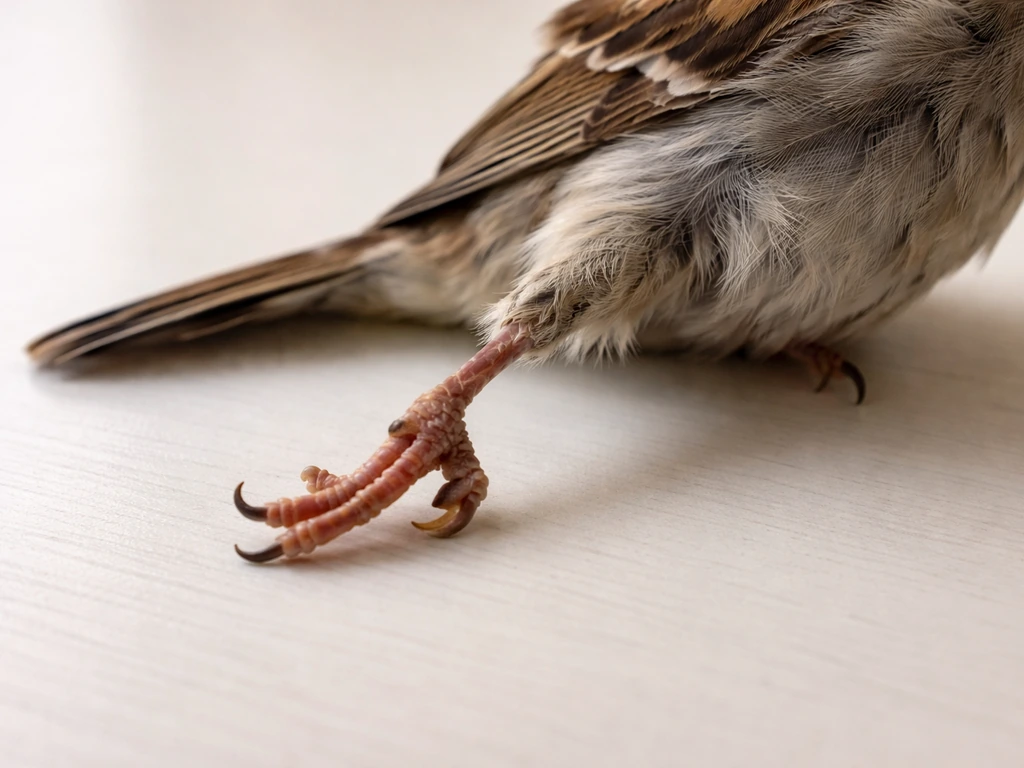
A fractured leg often looks obviously wrong: the limb may hang at an unnatural angle, dangle loosely, or swing with no apparent muscular control. The bird will almost certainly not put any weight on it. Falls from cage tops or collisions with windows and ceiling fans are common causes of fractures in pet birds. If you suspect a break, do not try to splint it yourself; improper immobilization can cause additional damage and serious stress. Fractures require imaging and professional stabilization.
Tendon or ligament rupture
A complete tendon or ligament rupture causes joint instability, meaning the joint moves in ways it should not, or the bird has no functional grip at all on that side. Partial tears can look similar to a sprain at first but tend not to improve the way a mild strain would. These injuries need veterinary assessment to determine severity.
Infection or abscess
Bumblefoot (pododermatitis) and joint infections can cause significant lameness and swelling that look like injury at first. In advanced bumblefoot (pododermatitis), VCA notes that birds often develop marked lameness and may hold the affected foot up constantly advanced stages commonly show marked lameness and holding the affected foot up constantly. If you see redness, crusty or scabby tissue on the bottom of the foot, or a firm swelling that feels different from soft edema, infection is likely involved. This does not resolve with rest alone.
Gout
Articular gout causes firm, white or chalky deposits around joints, especially in the feet and toes. It can be mistaken for swelling from injury but the deposits have a distinct firm, grainy texture and the condition is tied to kidney issues and diet rather than trauma. It requires veterinary treatment, not rest.
Neurological problems
This is where the distinction from a simple sprain becomes critical. Neurological issues can cause leg weakness, dragging, or loss of coordination that looks like lameness but has nothing to do with the leg itself. Watch for tremors, head tilt, seizures, leg dragging, or the bird falling off its perch repeatedly. Broken neck symptoms in birds can include head tilt, abnormal posture, weakness, trouble balancing, or sudden changes in behavior, so prompt veterinary care is important if you notice any of these signs. If both legs seem affected at the same time, or the problem appeared alongside other neurological signs, do not wait. These symptoms need urgent veterinary evaluation.
It is also worth comparing what you are seeing against other types of physical trauma, especially if the bird had a recent collision or fall. A bird that hit a wall or window may have injuries beyond the leg, including internal injuries or a wing problem, that need evaluation alongside the leg concern.
What to do right now: rest, support, and cage setup
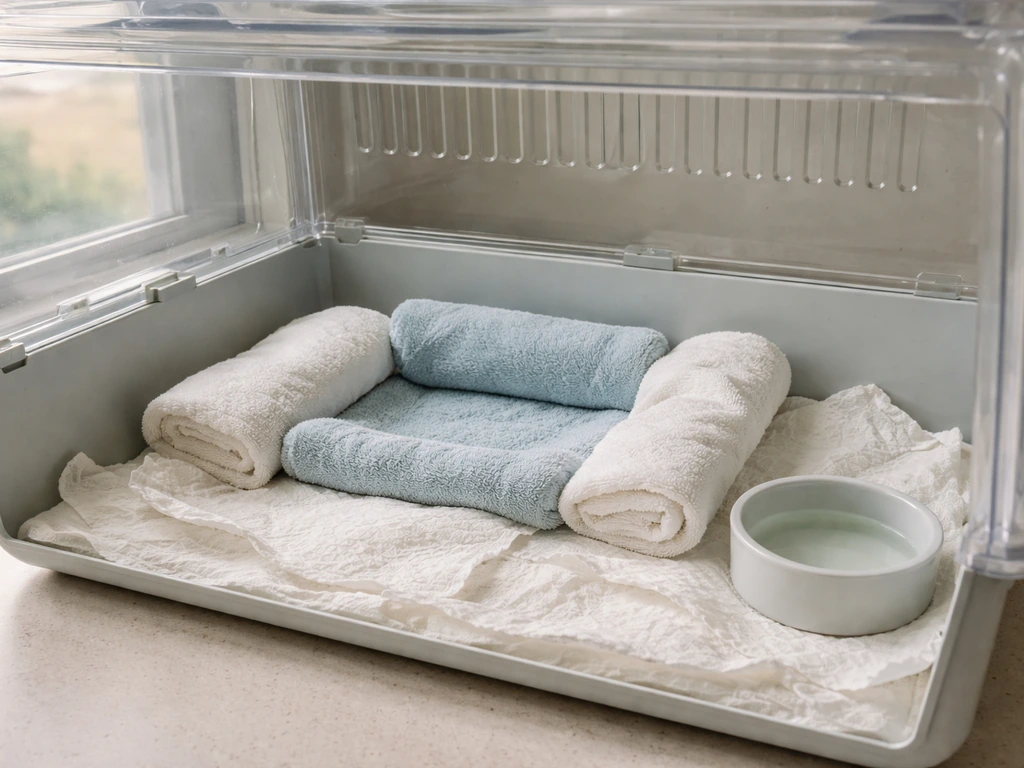
The most important first step is to reduce the bird's ability to worsen the injury by jumping, climbing, or falling. Move the bird to a smaller, lower enclosure or hospital-style setup if you have one. A smaller carrier or cage limits the distance it can fall if it loses its grip.
Remove high perches or all perches temporarily if the bird cannot grip safely. Place a thick folded towel or non-slip mat on the cage floor so the bird has a padded, stable surface to rest on. Keep food and water dishes at floor level so the bird does not have to climb or strain to reach them. A bird that cannot perch reliably should not have to work for its basic needs.
Place the enclosure somewhere warm and quiet. Heat is genuinely supportive for injured birds, and a comfortable ambient temperature around 85 to 90 degrees Fahrenheit is often recommended for injured or unwell birds in a hospital setup. Cover three sides of the cage or carrier with a light cloth to reduce visual stress without blocking airflow. Keep other pets away and minimize household noise and activity near the bird.
Do not try to splint the leg at home. Immobilizing a bird limb incorrectly can cut off circulation, cause further soft tissue damage, or add so much stress that it creates a bigger problem than the original injury. If you genuinely suspect a fracture, gentle wrapping of the whole bird in a soft towel for transport to the vet is reasonable as a temporary measure, but do not attempt to tape or wrap the leg itself without professional guidance.
Pain management: what helps and what to keep away
Do not give your bird any human pain medication. This is one of the most important rules in avian first aid. Medications like ibuprofen, acetaminophen, and aspirin are toxic to birds even in tiny doses. The fact that a medication is safe for you, your dog, or your cat does not make it safe for a bird. The metabolic differences are significant.
Meloxicam is the NSAID that avian veterinarians most commonly use for pain and inflammation in birds. It can be genuinely helpful for soft-tissue injuries, but it is a prescription medication that needs to be dosed carefully based on the individual bird's weight, health status, and kidney and liver function. Even meloxicam carries risks in dehydrated birds or those with underlying organ issues. You need a vet to prescribe and dose it properly.
For now, before you can get to a vet, the most useful pain management you can offer is environmental: warmth, quiet, low stress, padded floor, and no forced activity. Reducing the bird's need to move and bear weight on the injured leg is itself a form of supportive care.
When to call an avian vet urgently
Some situations cannot wait. If you see any of the following, contact an avian veterinarian the same day, or go to an emergency exotic animal clinic if your regular vet is unavailable. Lafeber’s Do’s and Don’ts of Avian First Aid emphasizes that first aid is initial care and not a substitute for qualified avian veterinary treatment THE AVIAN FIRST AID PDF.
- The bird cannot perch at all and is lying on the cage floor
- The leg hangs at an abnormal angle, dangles, or looks twisted
- There is an open wound, visible bone, or active bleeding
- Marked, rapidly worsening swelling in the leg or foot
- Signs of neurological involvement: tremors, dragging legs, head tilt, seizures, or falling repeatedly
- Trouble breathing, tail bobbing, or labored respiration alongside the leg issue
- Severe weakness, inability to hold itself upright, or a fluffed hunched posture that does not improve
- The bird has stopped eating or drinking
- Both legs appear affected
- The condition is clearly getting worse rather than stable over a few hours
At the vet, expect a physical examination that includes watching the bird move and perch, assessing posture and body condition, and hands-on evaluation of the leg and joint stability. The vet will likely recommend radiographs (X-rays) to check for fractures and joint abnormalities that are not visible from the outside. Depending on findings, they may also check for infection, gout, or systemic illness. If a fracture is confirmed, the vet may apply a splint or bandage using proper technique, or discuss surgical options for more complex breaks. For soft-tissue injuries, prescription anti-inflammatory medication, rest guidance, and a follow-up plan are the usual outcomes.
Recovery, monitoring, and preventing repeat injuries
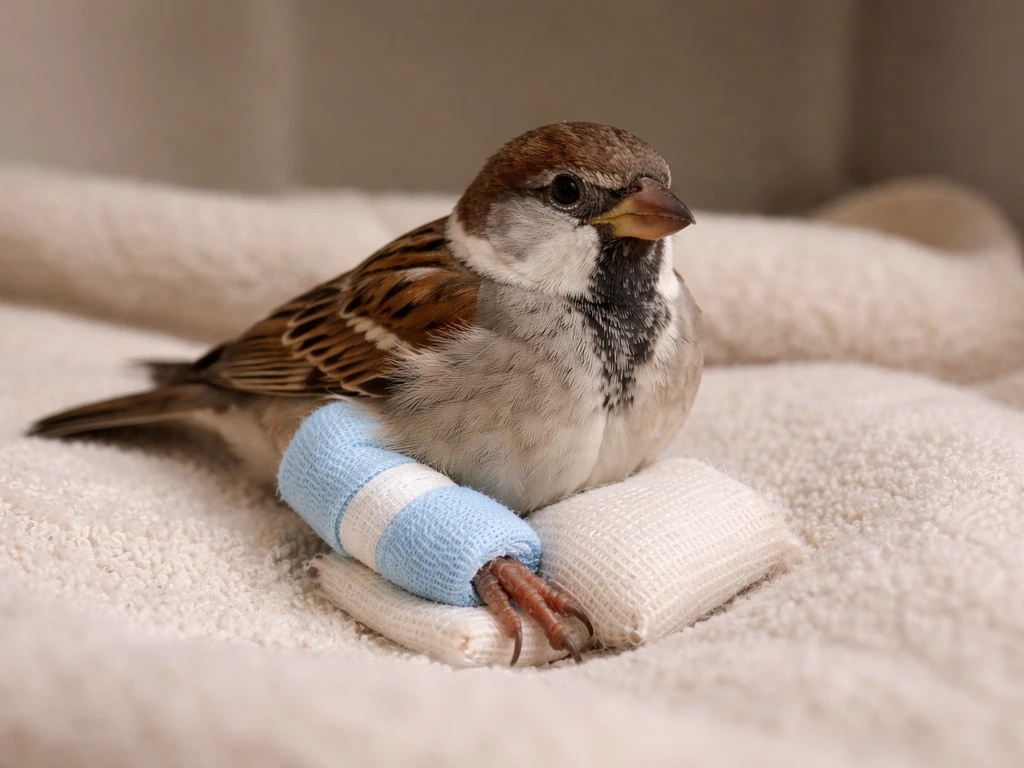
Mild soft-tissue injuries in birds can improve meaningfully within one to two weeks with proper rest and a supportive environment. More significant injuries, including fractures, tend to show substantial healing within three to four weeks with appropriate care, though recovery varies by species, age, overall health, and injury severity. The key benchmark is whether the bird is gradually using the leg more, bearing weight again, and returning to normal perching behavior.
Monitor the bird daily during recovery. You are looking for improvement in weight-bearing, grip strength, and willingness to perch at normal heights. You are also watching for anything that suggests the condition is worsening rather than improving: increased swelling, new reluctance to use the leg, changes in droppings, reduced appetite, or the bird seeming quieter and more withdrawn. Also note any bird molting symptoms, such as abnormal feather loss or skin changes, since shedding can sometimes coincide with illness or stress during recovery. If your bird is also showing signs of a broken wing, you can compare wing position, movement, and pain behaviors to the bird broken wing symptoms guide bird molting symptoms. If it is not clearly improving within a few days, or if it deteriorates at any point, go back to the vet.
Reducing the risk of future leg injuries
Many bird leg injuries come from falls, collisions, or getting a foot caught. If you are trying to prevent bird leg problems, start by looking at how your bird moves on perches and where falls or collisions could happen. You can significantly lower that risk with a few practical changes to the bird's environment.
- Use perches of varied, appropriate diameter for the species so the foot wraps comfortably without over-gripping
- Avoid slippery or wobbly perch surfaces that increase the risk of falls
- Keep the cage away from ceiling fans, open windows, and other flight hazards
- Check the cage regularly for gaps, wire loops, or toys where a foot or leg band could get caught
- Remove leg bands if advised by your vet, as they can catch or constrict, especially if a bird becomes frightened and struggles
- Handle the bird calmly and support the feet and body fully to avoid drops during out-of-cage time
- Do not place perches directly over hard cage floors with no soft landing; add a padded lower level
- Supervise out-of-cage time to prevent flying into walls, windows, or other birds
Once your bird has recovered, it is worth thinking about whether anything in its cage or routine made the injury more likely in the first place. A lot of leg injuries in pet birds are preventable with small setup adjustments. Getting the perch height, diameter, texture, and placement right goes a long way toward keeping a bird stable and safe during normal daily activity.
FAQ
How long should I wait before I call a vet if my bird still won’t use the leg?
Yes. If your bird is actively avoiding weight on one leg for more than 24 hours, seems to be getting quieter overall, or the limp is not clearly trending better by day 2 to 3, you should contact an avian vet. Soft-tissue strains usually show gradual improvement within several days, even if they remain sore.
What if the leg looks straight, but my bird keeps limping or holding a foot up?
Try to base the decision on function, not only on appearance. A straight-looking leg can still be painful, but a sprain should not create an obvious new deformity, dangling, or loss of grip. If the bird cannot grip the perch normally on that side, assume more than a simple sprain and get veterinary assessment.
Can I test the injury by gently moving the toes or bending the ankle?
Avoid checking range of motion. Instead, observe while the bird chooses to perch and move, and compare toe curling and grip strength between sides from a distance. Light visual inspection is fine, but flexing toes, pulling the foot, or squeezing the hock can convert a mild injury into a worse tear.
My bird seems very uncomfortable. Can I give a human pain reliever or leftover vet medicine?
Do not give them. Human NSAIDs (like ibuprofen) and acetaminophen are not safe for birds, and even small doses can be toxic. If you need medication, ask an avian veterinarian specifically about an appropriate bird dose, and mention hydration status and any kidney or liver concerns.
How can I tell if it is a sprain versus a tendon or ligament rupture?
Look for stability signs. If the joint feels unstable, the bird’s gait suddenly worsens, or the perch-hold is dramatically weaker, that points toward tendon or ligament injury rather than a mild sprain. Unstable joints usually require imaging and a formal plan, because rest alone may not restore function.
Could this be infection or gout instead of an injury, even if it started after a fall?
Yes, infections and gout can mimic trauma early. Bumblefoot often involves redness, crusting, or a firm swollen area on the bottom of the foot (sometimes with a different feel than soft swelling). Gout can appear as firm chalky deposits around joints. Either way, these usually require veterinary treatment, not just rest.
What is the safest way to move or transport my bird if a fracture is possible?
For transport, focus on preventing slipping rather than fixing the leg. Wrap the bird gently for calm transport in a soft towel only if needed, but do not tape, bind, or immobilize the limb itself. Use a low, stable carrier surface so the bird cannot re-injure itself by jumping or reaching.
What symptoms would suggest this is not just a leg sprain?
If you suspect neurological involvement, treat it as urgent. Seek same-day care if you see tremors, seizures, repeated falling, leg dragging, abnormal posture, or coordination problems, especially if the symptoms appear suddenly or affect more than one limb.
What daily signs mean the injury is worsening rather than slowly healing?
If the bird is on a lower, padded setup and still fluffs, sits low, or stops eating, that can indicate more than local pain. Monitor appetite, droppings, and breathing effort, and call the vet promptly if appetite drops, droppings change, swelling increases, or the bird seems progressively more withdrawn.
How should I adjust food, water, and perches during recovery so my bird can rest without re-injuring the leg?
Update your environment if it is not supporting recovery. If your bird cannot reach food and water without straining or climbing, lower dishes further or switch to hand-feeding only if advised by your vet. Also remove slippery footing, reduce perch height, and ensure there is a safe resting area the bird can choose without making the leg bear weight repeatedly.
My bird grips the perch sometimes, so does that mean it is not too serious?
Yes, behavior can mislead. A bird might keep gripping but still avoid perching or hopping, because perching demands repeated micro-loading at the joints. If perching height and willingness to climb are decreasing, treat that as an important functional decline even when the swelling looks mild.
What specific cage or perch changes can help prevent future bird leg injuries?
After recovery, reassess perch design. Choose perches with an appropriate diameter for your bird species, use textured surfaces that allow secure grip, and ensure perches are not positioned so the bird can fall far or land badly if it slips. Also check for hazards like loose cage bars, toys that encourage awkward landing, and high-risk collision spots near windows.
Next Article
Bird Molting Symptoms: How to Tell Normal Molt vs Illness
Learn bird molting symptoms to spot normal molt stages, recognize illness overlap, and use an at-home checklist for vet