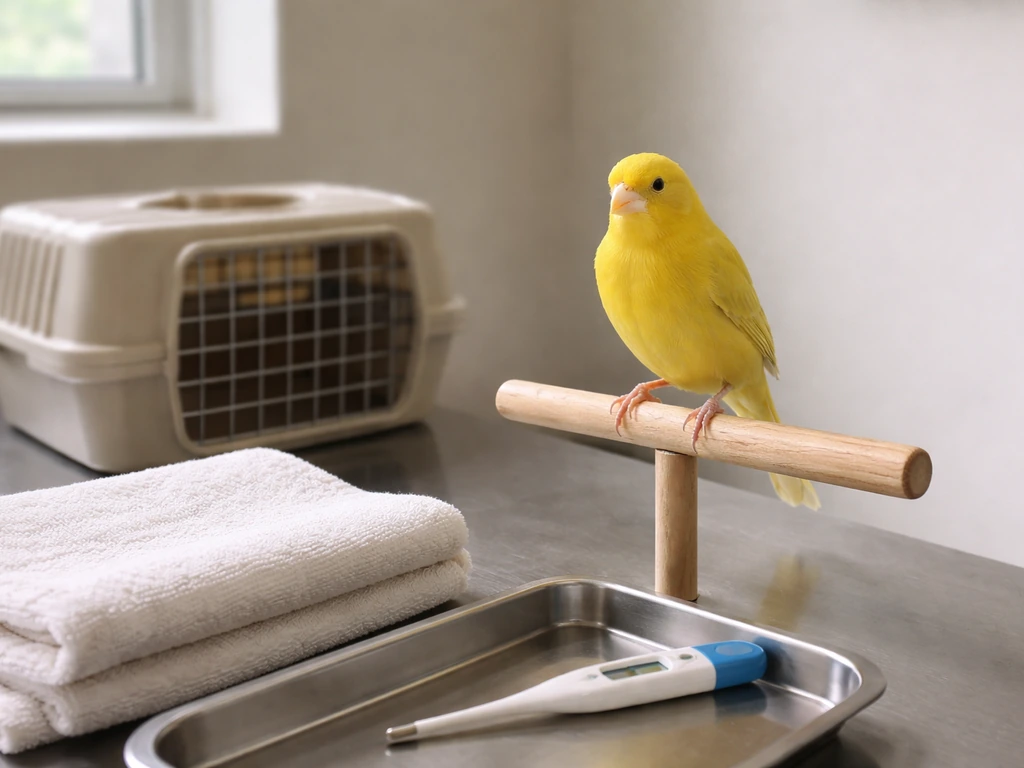
A bird in shock is in immediate danger. Shock in birds means the body's circulation has broken down to the point where vital organs are not getting enough oxygen, and without intervention, that can become fatal within hours or even minutes. The most visible signs are a bird that is huddled, fluffed, cold to the touch, barely responsive, breathing rapidly or shallowly, and sitting on the bottom of the cage. If you are seeing those signs right now, keep the bird warm and quiet, minimize handling, and get to an avian vet as fast as you can.
Bird Shock Symptoms: How to Spot and Respond Fast

Marcus Webb
30 Apr 2026
What shock actually means in birds (and why it's a true emergency)

The word 'shock' gets used loosely, but medically it refers to circulatory failure. The heart and blood vessels can no longer deliver enough oxygen-rich blood to tissues and organs. Cells start to suffocate, organ systems begin to fail, and the process can cascade quickly. Birds are especially vulnerable because their metabolism runs fast, their body reserves are small, and they are prey animals hardwired to hide weakness until they physically cannot anymore.
By the time a bird looks obviously sick, it has usually been struggling for a while. That means what looks like sudden collapse can actually be the end stage of something that has been building for hours. Shock is not one disease; it is a final common pathway triggered by many different causes including blood loss, severe infection, poisoning, trauma, extreme temperature, dehydration, or a major internal event like organ failure. Identifying the cause matters for treatment, but the immediate priority is stabilizing the bird first.
Common bird shock symptoms to look for right now
Shock affects the whole body, so the symptoms show up across multiple systems at once. That combination of signs appearing together is one of the clearest indicators you are dealing with something serious rather than a bird that is just tired or cold. If the bird has had an injury or rough handling, those bird trauma symptoms can show up as part of the same emergency pattern bird shock symptoms.
Posture and behavior
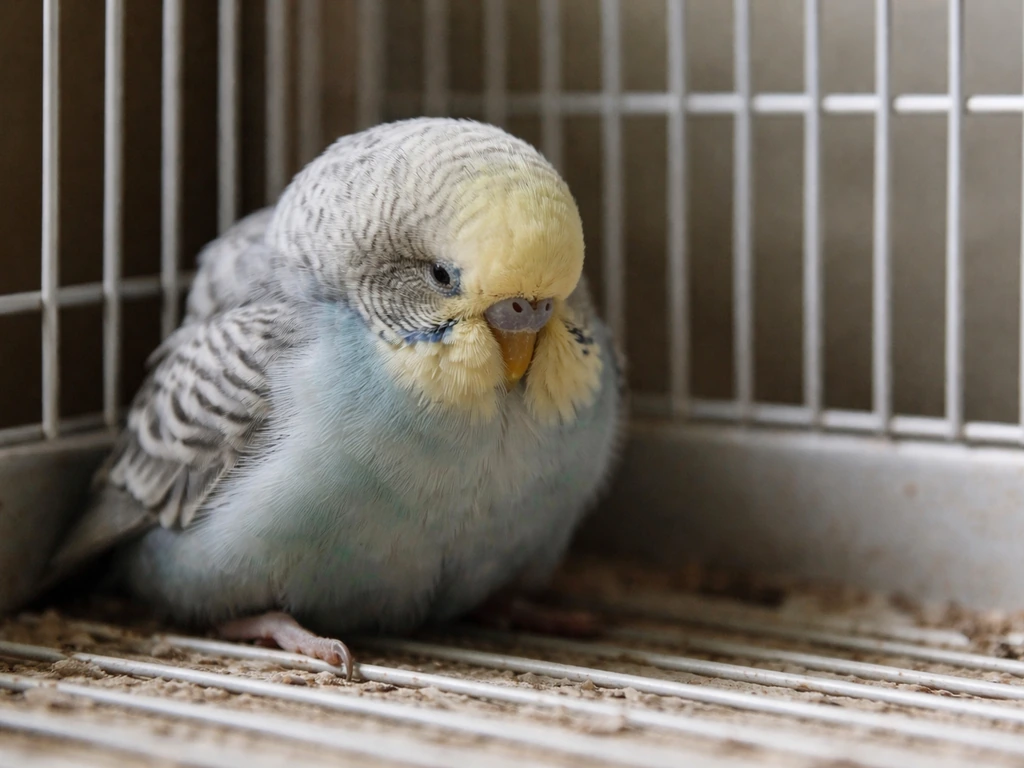
- Huddling on the cage floor or in a corner, not on a perch
- Feathers puffed up and held tight to the body
- Head tucked toward the chest or drooping forward
- Eyes partially or fully closed during daylight hours
- No flight response when approached, or minimal reaction to touch
- Complete stillness with no normal vocalizing or movement
Breathing and circulation
- Rapid, shallow, or labored breathing (visible tail-bobbing with each breath is a red flag)
- Open-mouth breathing in a bird that is not overheated
- Pale, bluish, or grayish color around the beak, cere, or visible mucous membranes (normal is pink in most species)
- Cold feet, legs, and body surface, even in a warm room
- Weak or thready pulse if you can gently feel the pectoral area
Neurological and physical state
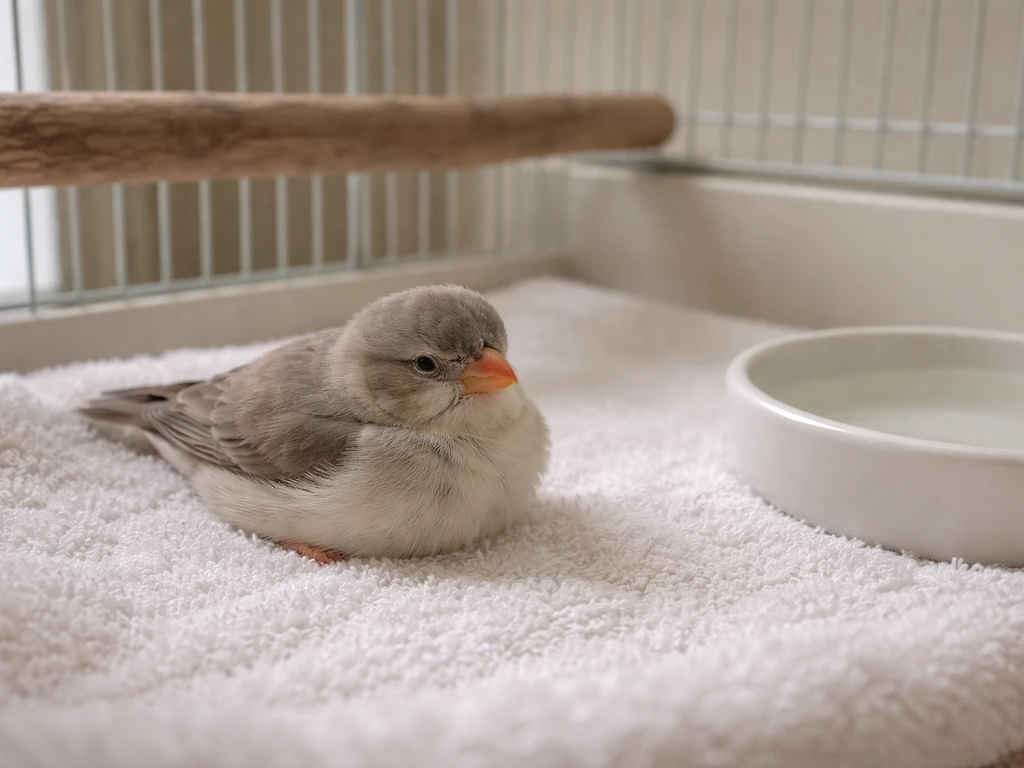
- Extreme weakness, inability to grip a perch or stand
- Trembling or fine muscle tremors
- No interest in food or water
- Rapid worsening over the course of an hour or less
- Uncoordinated movement or falling to one side
Small birds like finches and canaries deteriorate faster than larger parrots because they have less body mass to buffer any insult. A budgie or lovebird showing three or four of these signs at once is in critical condition. A larger bird like an Amazon or macaw may have a slightly wider window, but not much. Wild birds found on the ground showing these signs are in just as much danger.
How to tell shock apart from emergencies that look similar
Several serious avian conditions can mimic shock or can exist alongside it. Getting this distinction right helps you describe the situation accurately to a vet and prioritize correctly. Many of these conditions, including trauma, neurological problems, and internal bleeding, are covered in depth in related articles on this site. Neurological problems can be one of those serious underlying causes, so watch for any changes in coordination, weakness, or abnormal behavior.
| Condition | Key distinguishing signs | Overlap with shock |
|---|---|---|
| Respiratory distress / infection | Wheezing, clicking, nasal discharge, wet breathing sounds, sneezing | Both involve labored breathing and lethargy, but shock shows cold body and collapse whereas pure respiratory cases may still be perched and alert |
| Toxin / poisoning | Sudden onset, possible vomiting or regurgitation, seizure-like activity, dilated pupils, strong smell on bird or in environment | Both can cause rapid collapse; poisoning often has a very abrupt start and may include convulsions not typical of other shock causes |
| Trauma (impact, cat attack, fall) | Visible wounds, blood, broken feathers, asymmetric limb use, head tilt after impact | Trauma commonly leads directly to shock; the two often occur together |
| Heat stress / hyperthermia | Panting, wings held away from body, hot skin surface, happened in a warm or sunny environment | Unlike shock, the bird is hot not cold; heat stress can progress to circulatory collapse |
| Severe bacterial or viral infection | Gradual decline over days, possible diarrhea, weight loss, discharge, previous illness history | End-stage infection produces shock; early infection looks less collapsed and more subtly 'off' |
| Neurological episode / seizure | Sudden falling, paddling, eye flickering, loss of consciousness that may recover briefly, head tilt | Seizures can look like collapse but tend to have episodic quality; shock is a sustained, worsening decline |
| Severe dehydration | Wrinkled, tented skin, sunken eyes, dry droppings, prolonged duration without water | Both cause weakness and collapse; dehydration is slower in onset and lacks the circulatory collapse seen in acute shock |
If you see head tilt, loss of balance, or convulsive movements, that points more toward neurological or head injury causes. If there is visible bleeding or evidence of a cat or dog attack, internal bleeding and trauma are likely co-occurring with shock. These distinctions matter for the vet but do not delay getting there.
Immediate at-home triage: what you can safely do right now
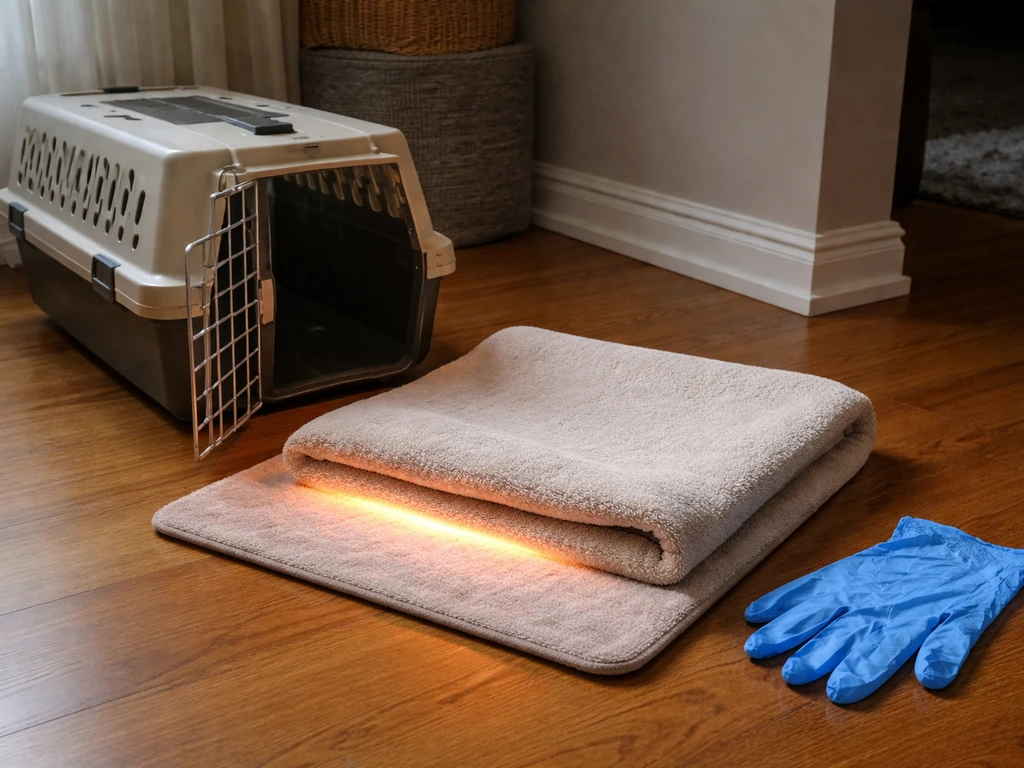
The goal of at-home care is to stop the situation from getting worse while you arrange transport to a vet. The Merck Veterinary Manual for traumatic injury of pet birds advises placing the bird in a warm, oxygenated incubator immediately and observing for respiratory distress and active bleeding arrange transport to a vet. You are not treating shock at home; you are buying time. Keep this simple and focused.
- Minimize handling. Every time you pick up a shock bird, you add stress that can push it over the edge. Handle only when necessary and move slowly and quietly.
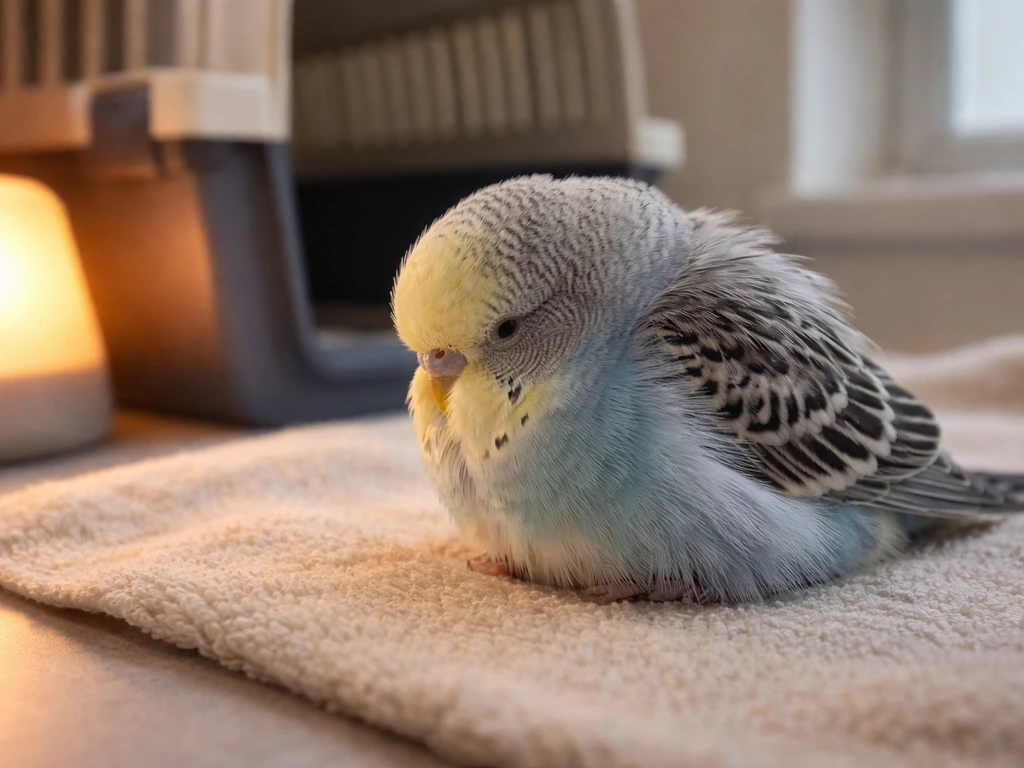
- Provide gentle warmth. Place the bird in a small, well-ventilated box or carrier lined with a soft cloth. Set a heating pad on its lowest setting under one half of the box only, so the bird can move away if it gets too warm. Target around 85 to 90 degrees Fahrenheit (29 to 32 Celsius) for a cold, collapsed bird. Do not use heat lamps at close range; they can overheat the bird quickly.
- Darken the environment. A dark, quiet space reduces fear and lowers metabolic demand. Cover the carrier with a light cloth and keep the area away from noise, other pets, and activity.
- Do not force food or water. Trying to drip water into the beak of a bird that cannot swallow properly causes aspiration and makes things worse. If the bird is conscious, alert, and able to hold its head up, you can place a shallow water dish nearby, but do not force it.
- Check the environment for hazards. Look for open windows, ceiling fans, other pets, fumes from non-stick cookware, candles, aerosols, cleaning products, or toxic plants. Remove the bird from any possible source of ongoing harm.
- Note everything you observe. Write down when you first noticed symptoms, what the bird was doing, any possible exposures, what it has eaten recently, and how symptoms have changed. This information is critical for the vet.
- Call an avian vet immediately. Even while you are stabilizing the bird, have someone call ahead so the clinic can prepare. Do not wait to see if the bird improves on its own.
What not to do is just as important. For [poisoning first aid](https://www. vet. cornell.
edu/departments-centers-and-institutes/riney-canine-health-center/canine-health-information/first-aid-poisonous-substances), Cornell University College of Veterinary Medicine (Canine Health Information) notes that making a pet vomit may not always be the right action, and recommends contacting poison control or veterinary help for specific first-aid guidance. Do not give human medications, do not submerge the bird in water to warm it, do not leave it alone with other birds or pets, and do not place it in a cage where it can fall from a perch and injure itself further.
LaFeber’s Avian First Aid PDF also cautions to use heating pads or heat sources carefully and not to use a lamp, since it can burn skin and dry mucus Do’s & Don’ts of Avian First Aid.
When to go to an emergency avian vet (and how urgent is urgent)
The honest answer is that a bird showing full shock symptoms needs emergency care now, not in the morning, not after you watch it for an hour. These are the signs that mean you leave immediately:
- Sitting on the cage floor and not responding normally to your presence
- Visible breathing difficulty: open-mouth breathing, tail bobbing, labored effort
- Cold body, pale or blue coloring around the beak or skin
- Complete loss of grip strength or inability to stand
- Active bleeding or obvious physical injury
- Suspected poisoning or toxin exposure
- Rapid worsening over 30 to 60 minutes
- Loss of consciousness or seizure-like activity
If the bird is still perched, is alert and responsive, is eating and drinking normally, and is breathing without effort, you have a little more time. A bird that is just slightly quieter than usual or eating slightly less warrants a same-day urgent call to your vet, not necessarily a midnight emergency run. But any combination of the warning signs above moves it into emergency territory.
For wild birds found collapsed on the ground: contact a licensed wildlife rehabilitator rather than taking the bird home for extended care. Your role is stabilization and handoff. Many areas have 24-hour wildlife hotlines that can direct you to the nearest rehabilitator.
What the vet will likely do and what to tell them
When you arrive at the vet, the first priority is stabilization: oxygen therapy, warmth via an incubator, and IV or intraosseous fluids to restore circulation and oxygen delivery to tissues. The vet will assess mucous membrane color, breathing effort, temperature, and responsiveness. Depending on suspected cause, they may take blood for a panel, do imaging to check for internal bleeding or fractures, or run cultures if infection is suspected.
You can help a lot by being ready with specific information. Vets working fast need clear facts, not approximations.
- Exact timeline: when symptoms started and how quickly they progressed
- What the bird was doing immediately before symptoms appeared (flying into a window, contact with another animal, etc.)
- Diet and recent food and water intake, including any new foods introduced
- Any potential exposures: non-stick cookware fumes, cleaning products, candles, essential oils, plants, pesticides, other animals
- Medications or supplements the bird is currently receiving
- Any recent changes to environment, temperature, or housing
- Whether other birds in the same household are showing similar signs
- The bird's normal weight if you know it (this helps assess dehydration and general condition)
Treatment for shock depends heavily on the cause. Fluid therapy, warming, corticosteroids, antibiotics for septic shock, or surgical intervention for trauma may all be on the table. The vet will guide you based on what they find, but your observations from home are genuinely valuable diagnostic information, not just background.
How to reduce the risk of shock in your birds going forward
Many shock events are preventable. The most common triggers in pet birds are household toxin exposure, physical trauma from flying into windows or contact with other animals, temperature extremes, and chronic illness that was not caught early. Addressing those categories covers most of the risk.
Toxin and environment safety
- Never use polytetrafluoroethylene (PTFE) non-stick cookware in a home with birds; the fumes are rapidly lethal
- Avoid aerosol sprays, scented candles, incense, and air fresheners in or near bird areas
- Keep birds away from any area where cleaning products, paint, or chemical fumes are present
- Check houseplants for toxicity; many common plants including avocado, lilies, and certain philodendrons are dangerous to birds
Physical safety and trauma prevention
- Apply window decals or UV-reflective film to large glass surfaces where birds fly free
- Never leave birds unsupervised with dogs, cats, or other animals, even briefly
- Keep ceiling fans off when birds are out of their cage
- Ensure cage bar spacing is appropriate for the species so the bird cannot get a wing or foot trapped
Health monitoring and routine care
- Schedule annual wellness exams with an avian vet; many conditions that lead to shock, such as liver disease or infection, are detectable early
- Weigh your bird weekly on a gram scale; unexplained weight loss of 10 percent or more is a significant early warning sign
- Learn what is normal for your bird: droppings, activity level, appetite, vocalization, and feather condition
- Keep an emergency avian vet number saved before you need it; searching in a crisis wastes critical time
- For wild bird feeders, clean feeders regularly to reduce disease transmission, and remove feeders temporarily if you notice sick birds visiting
Knowing your bird's normal baseline is the single most powerful tool you have. Most owners who catch problems early do it not because they knew medicine, but because they knew their bird well enough to notice something was off before it became critical. That early recognition, followed by fast action, is what saves lives.
FAQ
Can a bird’s “shock symptoms” actually be low temperature or simple fatigue?
Yes. Cold exposure and exhaustion can look similar at first, but true shock usually comes with a combination like fluffed posture plus weak or barely responsive behavior, rapid or shallow breathing, and reduced warmth at the same time. If the bird is not improving after gentle warming, or if breathing effort seems off, treat it as an emergency.
What should I do if my bird is in shock but still perched?
Minimize movement and keep the bird supported on a stable surface or in a small, secure box so it cannot fall. Use a warm, controlled heat source from below or around the container, not direct heat on the skin. Watch breathing rate and response level while you arrange immediate transport.
Is it ever safe to give a bird water or food while it is showing bird shock symptoms?
Only if it is alert enough to swallow normally. Do not force feeding or use a syringe when the bird is breathing rapidly, very unresponsive, or seems weak because aspiration can worsen oxygen problems. If it is not actively drinking, skip fluids-by-mouth and focus on warmth and vet transport.
How warm should I make the bird during stabilization?
Aim for gentle warmth, not overheating. A practical approach is a warm container or heating pad set to a low setting with a barrier so the bird cannot contact hot surfaces directly. Stop if the bird seems distressed or you notice worsening breathing effort, then get to a vet immediately.
Can I use a heating lamp, hot water bottle, or microwave heat pad to warm a shocked bird?
Avoid direct, intense heat sources like heating lamps or hot water bottles because they can overheat or create burns, especially when the bird is unresponsive. Indirect, controlled warmth with a barrier is safer. The goal is steady warmth until you reach a clinic.
Should I try to check the bird’s pulse, breathing, or mucous membrane color at home?
You can look, but do not delay transport. Note what you can observe quickly, such as breathing effort (effortful versus easy), whether the bird is responsive, and whether mucous membranes look very pale or bluish. Avoid aggressive handling to “measure” pulse or force open the beak.
What if the bird is breathing rapidly but otherwise seems alert?
Rapid breathing can still be an emergency sign, especially when paired with fluffed posture, cold body, weakness, or sitting low. If breathing looks labored or the bird cannot settle, contact an avian vet now for emergency guidance rather than waiting for additional symptoms.
How do I transport a bird safely to prevent the shock from worsening?
Use a ventilated, escape-proof container lined with paper towel, keep it quiet, and reduce vibration. Place the bird so it cannot fall, and provide gentle warmth from the side or beneath the container. Limit handling, and do not add other birds or pets during transport.
Should I separate a shocked bird from other pets before transport?
Yes. Separate it immediately to reduce stress and prevent spread of infectious causes. Also keep other animals away because additional handling or confrontation increases respiratory demand and can worsen circulation problems.
What information should I tell the vet to help diagnose bird shock symptoms faster?
Provide a short timeline (when you first noticed changes), suspected trigger (possible toxin exposure, trauma, window strike, cat or dog contact, temperature extremes), baseline behavior and appetite, and the exact symptom cluster you’re seeing now (fluffed, cold, response level, breathing pattern). If possible, mention any meds or substances the bird may have been exposed to.
Does the cause matter if I’m already treating as an emergency?
It does. Stabilization is the immediate step, but the underlying trigger determines whether the clinic prioritizes blood loss control, infection management, toxin decontamination, antibiotics, imaging for fractures, or neurological evaluation. Your observations about trauma, abnormal coordination, or visible bleeding help them choose the right workup.
What are common mistakes owners make when dealing with bird shock symptoms?
Major errors include giving human medication, attempting forced feeding, submerging the bird in water, using direct intense heat, and waiting long periods for “watch and see.” Another frequent issue is transporting without warmth or without minimizing stress, which can further reduce effective circulation.
For wild birds found collapsed, should I always contact a rehabilitator?
In most cases, yes. Wildlife need specialized care and legal considerations, and collapses can be due to trauma, poisoning, or severe infection that worsens quickly. If there is immediate danger, stabilize with gentle warmth and quiet while you contact a licensed wildlife hotline or rehabilitator for instructions.
Next Article
Canary Bird Health Problems: Same-Day Triage Guide
Same-day triage for canary bird health problems: symptom clusters, noninfectious vs infectious clues, and when to call a