"Bird catcher spots" is not a formal veterinary diagnosis. It's a colloquial phrase horse owners use to describe patchy, spotty, or blotchy skin lesions that appear on a horse's coat, and it causes a surprising amount of confusion because the term means different things to different people. If you've searched this phrase hoping to solve a skin problem on your horse today, the good news is that the most likely causes are well understood, fairly easy to triage at home, and very treatable once you know what you're dealing with.
What Causes Bird Catcher Spots on Horses and What to Do

Marcus Webb
23 Mar 2026
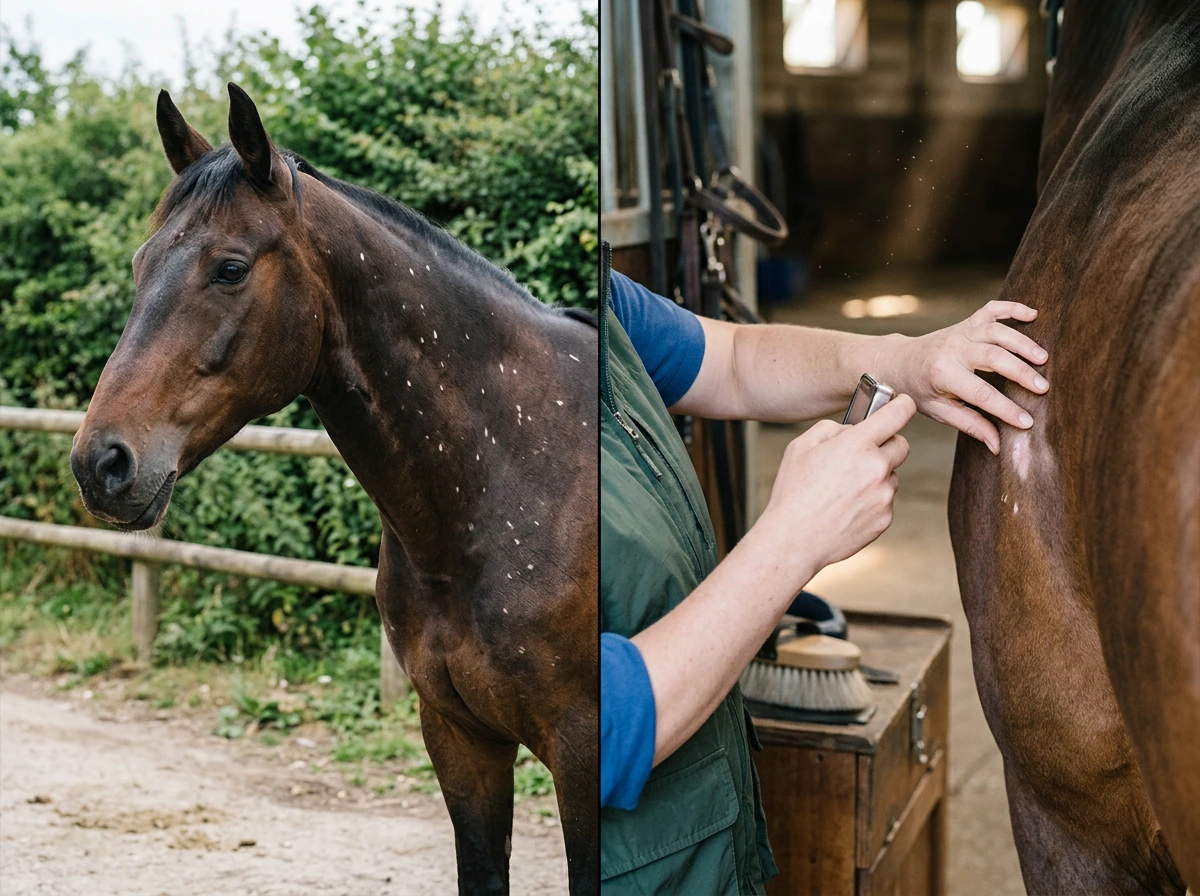
What "bird catcher spots" actually look like, and why the term confuses people
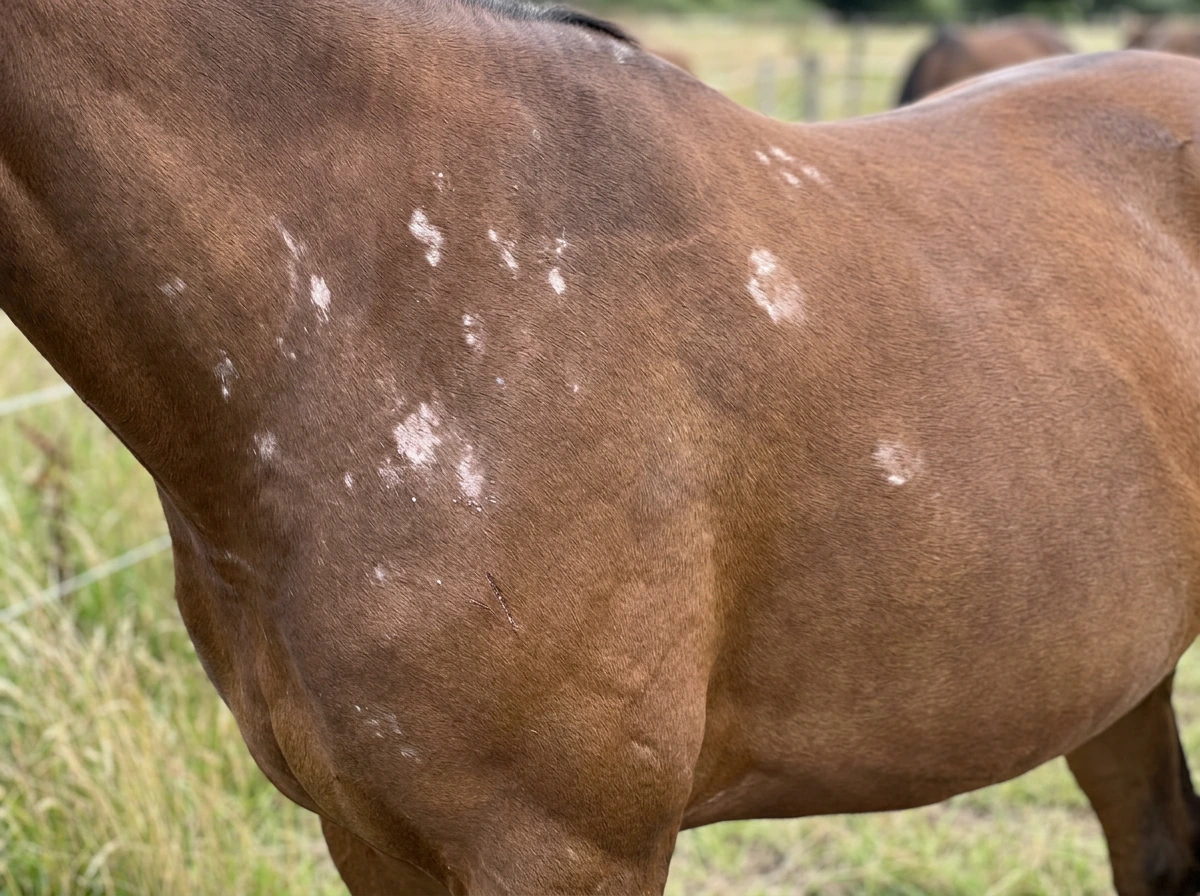
The phrase "bird catcher spots" most commonly refers to small, scattered depigmented or hypopigmented patches on a horse's skin, sometimes called "acquired leukoderma" or "vitiligo-like spots." In other contexts, horse owners use the same phrase to describe any patchy, spotty lesion pattern, including raised papules, crusty scabs, or bald patches. This loose usage means two horse owners can say "bird catcher spots" and be describing completely different problems.
The confusion deepens because some people genuinely wonder if wild birds, poultry, or shared environments with birds could be causing the spots. That's actually a reasonable question, and we'll address the bird-related angle directly below. But in most cases, when a horse develops patchy spotty lesions, the cause is closer to home: insects, mites, fungal infections, or contact irritation from tack, blankets, or bedding. If the spots seem to correlate with birds around the barn, a related consideration is whether mites from a common yellowthroat bird could be contributing to the pattern. But in most cases, when a horse develops patchy spotty lesions, the cause is closer to home: insects, mites, fungal infections, or contact irritation from tack, blankets, or bedding.
Visually, the lesions people describe as "bird catcher spots" tend to fall into a few patterns: small raised bumps or papules, crusty or scabby patches with or without hair loss, flat depigmented areas where the skin has lost color but looks otherwise normal, or weeping, excoriated patches from rubbing. The location on the body, the presence or absence of itching, and the season of onset are your biggest clues about what's actually going on.
The most common causes of patchy skin lesions in horses
Before you can treat the problem, you need to know which category you're probably in. Here are the main causes to consider.
Insect bite hypersensitivity (the most common culprit)
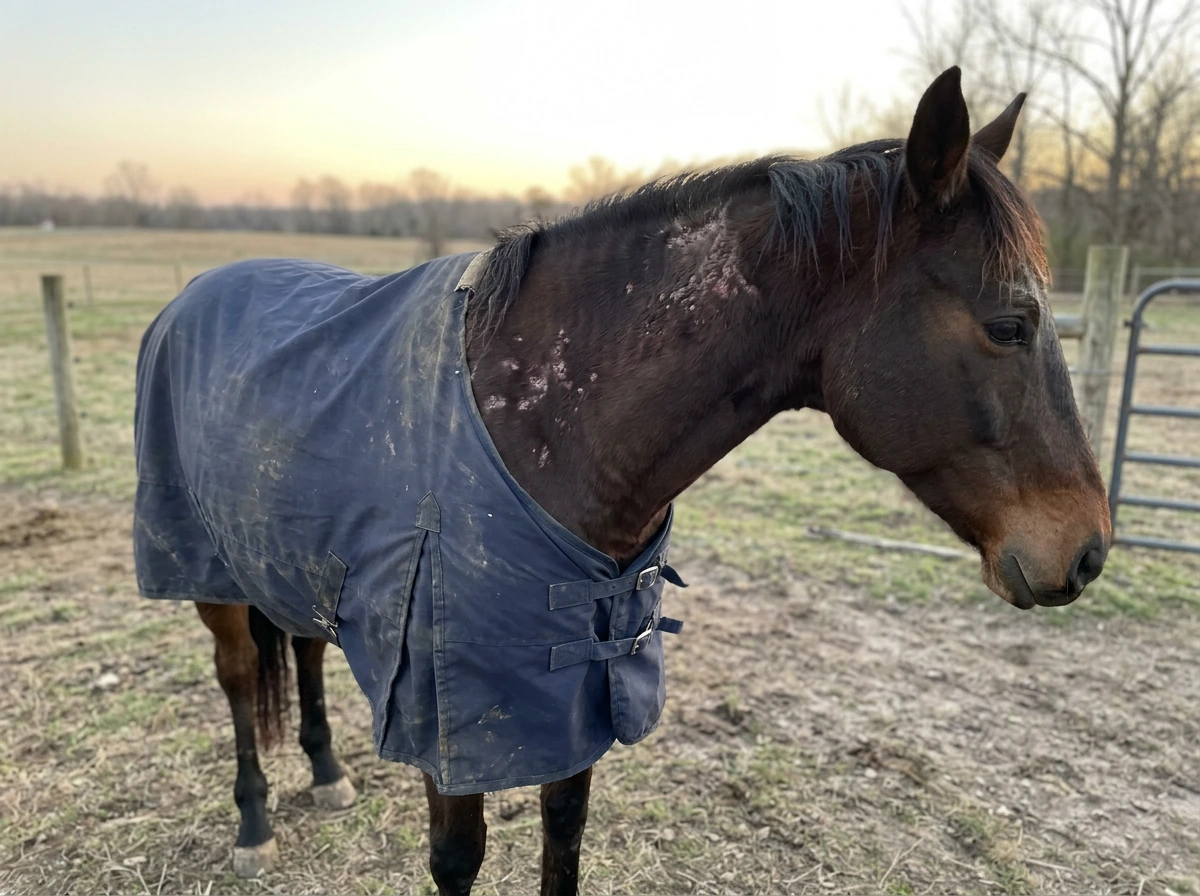
Insect bite hypersensitivity (IBH), also known as sweet itch, summer eczema, or Queensland itch, is an allergic reaction to the saliva of biting insects, most commonly tiny midges of the genus Culicoides. This is probably the single most frequent cause of the spotty, crusty, itchy lesion pattern that people call "bird catcher spots." The horse isn't reacting to the bite itself so much as to the insect's saliva injected during feeding, which triggers an immune overreaction.
IBH typically shows up as intense itching first, followed by crusted papules, hair loss, and eventually thickened or excoriated skin. Classic affected areas include the base of the mane, withers, tail head, rump, poll, ears, and the ventral abdomen (belly). You may see what's called a "rat tail" effect where the horse has rubbed out large sections of mane or tail hair. The lesion location actually shifts depending on which insect species is doing the biting, since different Culicoides species feed on different body areas.
Mange mites and other ectoparasites
Mites, including chorioptic mange mites (which prefer the lower legs and fetlocks), sarcoptic mange mites (which can spread across the body), and psoroptic mites (which favor the mane, tail, and ears), all cause intensely itchy, crusty, scabby patches that can look spotted or blotchy. Chorioptic mange is the most common in horses and causes "stamping" behavior at the lower leg. Mite infestations tend to be contagious between horses and can also spread via shared grooming equipment, blankets, or bedding.
Contact irritation and allergic contact dermatitis
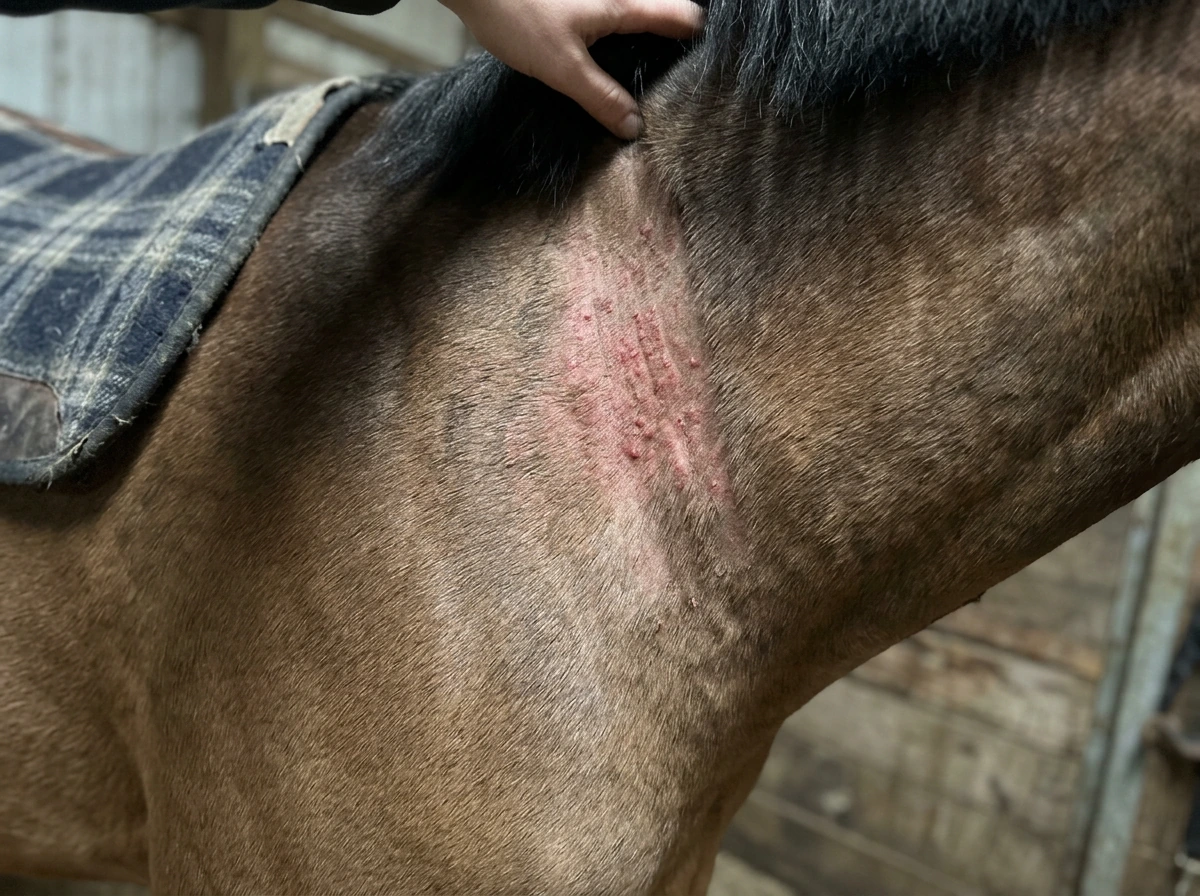
Horses can react to a surprisingly wide range of things they touch: blankets, saddle pads, synthetic girth liners, fly sprays, shampoos, liniments, new bedding materials, or even pasture plants. Contact dermatitis typically produces lesions that mirror exactly where the irritant touched the skin, so you might see a rectangular patch under a saddle, a stripe along a girth line, or spotty marks where a blanket rubbed. There's often mild to moderate itching but less intense than IBH.
Fungal infections (ringworm and related)
Dermatophytosis (ringworm) is a fungal infection that creates circular or irregular patches of hair loss with scaling and crust. Despite the name, there's no worm involved. It spreads easily between horses and from horses to humans, so it's worth suspecting if multiple animals in a group develop lesions. Ringworm lesions are classically round, but they can merge into irregular blotchy patterns that look spotted. They're often less itchy than mite or insect-related conditions.
Bacterial skin infections (rain rot and folliculitis)
Rain rot (dermatophilosis), caused by the bacterium Dermatophilus congolensis, produces crusty, matted, "paintbrush" tufts of hair that lift off to reveal raw skin underneath. It thrives in wet conditions and is common on the back, rump, and topline. Bacterial folliculitis (infection of hair follicles) produces small pustules that can rupture and crust over into spotty lesions. Both conditions are contagious and can spread through shared tack or grooming tools.
Can birds actually cause these spots? The honest answer
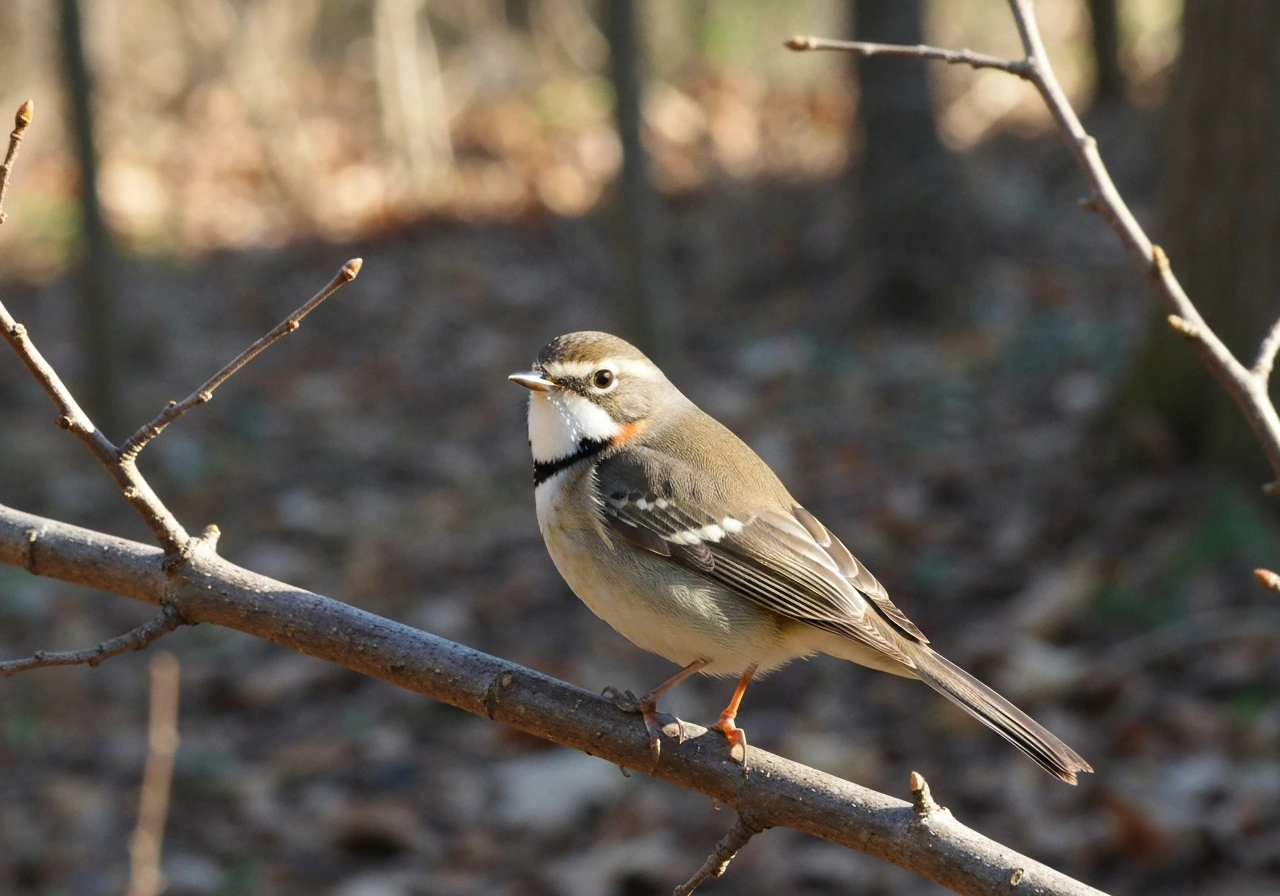
Since this site focuses on avian health, it's worth being direct about the bird connection. Wild birds or poultry sharing a barn or pasture with horses can, in theory, introduce certain ectoparasites into the environment, including mites carried by a <a data-article-id="92D97D47-05A1-493F-B93F-39F9C38777B2"><a data-article-id="92D97D47-05A1-493F-B93F-39F9C38777B2"><a data-article-id="92D97D47-05A1-493F-B93F-39F9C38777B2"><a data-article-id="92D97D47-05A1-493F-B93F-39F9C38777B2">common yellowthroat bird</a></a></a></a>. Northern fowl mites and chicken mites (Dermanyssus gallinae) are known to leave their primary bird hosts and bite other warm-blooded animals, including horses and humans, especially when bird populations are high or nests are disturbed. Wild birds or poultry sharing a barn or pasture with horses can, in theory, introduce certain ectoparasites into the environment, including mites carried by a common yellowthroat bird. If you have chickens, pigeons, starlings, or other birds nesting in or near your barn, and your horse is developing itchy lesions, this is a legitimate avenue to investigate. common white throat bird
However, bird-sourced mites causing significant horse skin disease is relatively uncommon compared to the usual equine culprits listed above. Bird mite infestations in horses tend to be seasonal, short-lived, and self-limiting once the bird source is removed or the nesting season ends. So if birds are sharing your horse's space, include that in your triage but don't stop there.
How to tell what's causing it: environment, timing, and exposure patterns
The context around the spots tells you almost as much as the spots themselves. Ask yourself these questions and the answers will narrow your list considerably.
- What season is it? IBH and insect-related problems peak in warm, humid months (late spring through fall). Rain rot flares after prolonged wet weather. Mite infestations can occur year-round but are often worse in winter when horses are stabled more.
- When did the spots appear? A sudden onset after introducing a new blanket, shampoo, or fly spray points toward contact irritation. A gradual worsening over weeks fits mites or IBH better.
- Is the horse itching intensely? Severe, obsessive rubbing and itching strongly suggests IBH or mite infestation. Fungal and mild bacterial lesions are often less itchy.
- Where exactly are the lesions? Mane, tail base, and withers: think IBH first. Lower legs: consider chorioptic mange. Under tack or blanket lines: contact irritation. Widespread random distribution: fungal or bacterial.
- Are other horses affected? If multiple horses have similar spots, think infectious causes: ringworm, rain rot, or mites spreading via shared equipment.
- Are there birds in the barn? Nesting pigeons, starlings, or chickens increase the chance that bird-source mites or contamination are a contributing factor.
- Has anything changed recently? New bedding (straw can harbor mites), new pasture access, new grooming products, new horses introduced to the herd?
Comparing the most likely causes at a glance
| Cause | Typical Location | Itching Level | Season/Trigger | Contagious? |
|---|---|---|---|---|
| Insect bite hypersensitivity (IBH) | Mane, tail head, withers, belly, ears | Intense | Warm/humid months, dusk/dawn | No (allergic reaction) |
| Chorioptic mange mites | Lower legs, fetlocks | Intense | Year-round, worse in winter stabling | Yes |
| Sarcoptic/psoroptic mites | Widespread or mane/tail/ears | Intense | Year-round | Yes |
| Bird-source mites (fowl/chicken mites) | Random, often neck/face/trunk | Moderate to intense | Spring/summer, near nesting birds | Via environment |
| Contact dermatitis | Matches contact area (girth, blanket, saddle) | Mild to moderate | After new product or equipment | No |
| Ringworm (fungal) | Random circular patches, can merge | Mild | Year-round, wet/crowded conditions | Yes (including to humans) |
| Rain rot (bacterial) | Back, rump, topline | Mild | After prolonged wet weather | Yes |
If you're choosing which cause to investigate first, start with IBH or mites if itching is intense and you're in a warm season. Start with contact irritation if the lesion shape mirrors a piece of tack or the onset followed a product change. Start with ringworm or rain rot if multiple horses are affected or you've had a wet stretch of weather.
What you can safely check at home right now
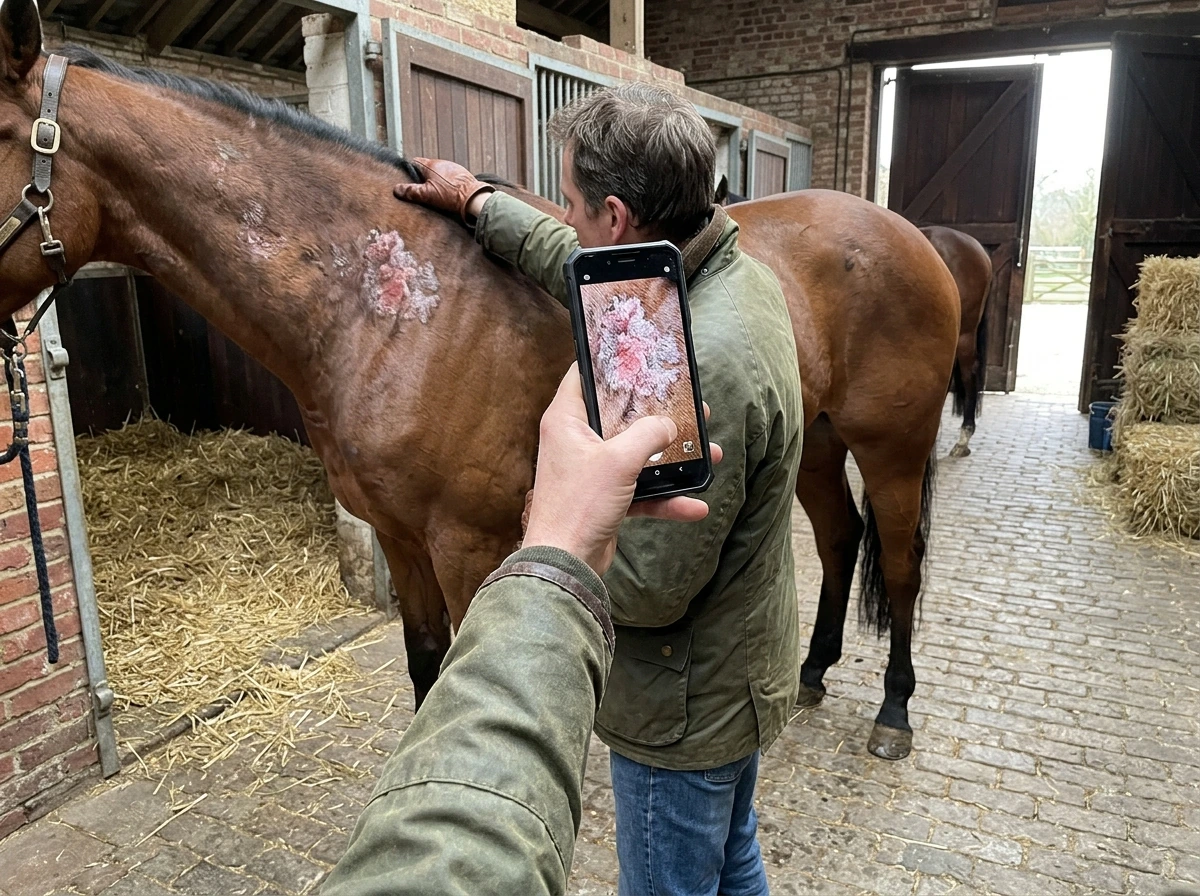
You don't need a vet to do a solid first assessment. Here's a practical triage routine you can run today.
- Photograph everything before you touch it. Get close-up shots of the lesions in good natural light, including a wider photo showing where on the body they appear. Photograph both sides of the horse to compare. These photos are genuinely useful when you call a vet later.
- Map the distribution on paper or mentally. Draw a rough outline of a horse and mark where every lesion is. Note whether they follow any pattern: a line (girth?), a patch (saddle?), scattered randomly, clustered at the mane or tail base.
- Assess the itching level. Has the horse been rubbing, biting, or stomping? Are there signs of self-trauma like broken hairs, bare patches, raw skin, or scabs from rubbing? Intense itching is a key diagnostic clue.
- Examine the lesion surface without picking or squeezing. Look at each spot: is it raised or flat, crusty or weeping, does it have a center of pus, is the hair broken at the base or falling out cleanly? Note whether the skin underneath looks normal, red, or thickened.
- Check for scale, crust, and the "paintbrush" sign. If you can gently part the hair and see small crusts with matted tufts that lift away, that's rain rot territory. If you see fine scale without much crust, think fungal.
- Review everything the horse has contacted in the past two to four weeks. New blanket, new fly spray, new shampoo, new bedding, new barn mate, new pasture. Write the list down.
- Check the environment for birds. Look in the rafters, hay storage, and any dark corners for active nests or heavy bird droppings near where the horse stands. This takes five minutes and is worth doing.
- Note the timeline. When did you first notice the spots? Have they spread, stayed the same, or gotten better on their own? Are they worse at certain times of day?
One important caution: don't apply any new products to the lesions before you've documented them and have a working theory about the cause. Adding a topical treatment to an unknown problem can mask diagnostic clues, and if the horse is reacting to a contact irritant, adding another product makes things worse.
When to call the vet, and what to expect
Some situations need a vet today, and some can wait a few days while you gather information. Here's how to tell the difference.
Call urgently if you see any of these
- Rapid spread of lesions across the body over hours or a day or two
- Open, weeping wounds or large raw areas from self-trauma
- Signs of systemic illness: fever, lethargy, loss of appetite, or swollen lymph nodes alongside the skin lesions
- Facial swelling, hives, or difficulty breathing (possible systemic allergic reaction)
- Lesions that look ulcerated, have a foul odor, or show deep tissue involvement
- Multiple horses suddenly developing lesions (potential contagious outbreak)
- A human in contact with the horse has developed itchy skin lesions (ringworm can transmit to people)
For a non-urgent vet appointment, bring your photographs, your written timeline, your list of recent environmental changes, and a note of which body areas are affected and how itchy the horse has been. This genuinely shortens the appointment and helps the vet reach a diagnosis faster.
The vet is likely to do a physical exam of all lesions, take a detailed history (your prepared notes help here), and possibly perform a skin scraping to look for mites under a microscope, a fungal culture or Wood's lamp exam to check for ringworm, or a cytology smear from a pustule to check for bacteria. In some cases, especially if IBH is suspected and the horse has a long history of seasonal symptoms, an intradermal allergy test or referral to a dermatologist may be recommended. If a bacterial infection is confirmed, a culture and sensitivity test tells the vet which antibiotic will actually work.
Treatment options matched to the likely cause
Treatment works best when it's matched to the cause, so use your triage information to guide what you do first while waiting for veterinary confirmation if needed.
For insect bite hypersensitivity
The immediate priority is reducing insect exposure: stable the horse at dawn and dusk when Culicoides midges are most active, use fine-mesh fly rugs that cover the neck and belly, and apply insect repellent products appropriate for horses. Antihistamines and corticosteroids (prescribed by a vet) can reduce the allergic response. For crusted lesions, gentle cleaning with a mild antiseptic wash, followed by a soothing topical such as a fragrance-free cream or aloe-based product, helps while the underlying trigger is managed. Long-term, allergen-specific immunotherapy is an option for severe cases.
For mite infestations
Mite treatment requires an acaricidal (mite-killing) product prescribed by your vet, typically applied topically across the whole body, not just lesion areas. All horses in contact with the affected animal should be treated at the same time. Bedding should be completely removed and replaced, and shared tack, blankets, and grooming tools should be thoroughly cleaned and, where possible, treated or replaced. A second treatment round two to three weeks later kills newly hatched mites that survived the first treatment.
For contact irritation
Remove the suspected irritant immediately and don't reintroduce it. Gently clean the affected area with cool water and a very mild, fragrance-free wash. In most cases, contact irritation resolves on its own once the trigger is gone, within one to two weeks. Severe reactions with significant swelling or oozing may need a short course of anti-inflammatory treatment from a vet. If you're not sure which product caused the reaction, reintroduce suspected items one at a time, with at least a week between each, and watch for recurrence.
For ringworm (fungal infection)
Antifungal washes (such as enilconazole or miconazole-based products, as directed by your vet) applied to the affected areas are the standard treatment. Isolate affected horses from healthy ones. All equipment that has touched the affected horse, including brushes, saddle pads, and blankets, should be disinfected or quarantined. Handlers should wear gloves and wash hands thoroughly. Ringworm is self-limiting and often resolves in six to twelve weeks even without treatment, but antifungal therapy speeds recovery and reduces environmental contamination.
For rain rot and bacterial skin infections
Gently soften and remove crusts with a warm antiseptic wash, working carefully to avoid breaking healthy skin. Keep the horse dry and out of prolonged rain or wet conditions. Mild cases often resolve with topical antiseptic treatment and improved management. Severe or widespread cases may need systemic antibiotics prescribed by your vet. Again, isolate affected horses and disinfect shared equipment.
If bird-source mites are involved
Remove or exclude the bird population from the barn area and eliminate active nests (check local regulations regarding bird species before disturbing nests). Thoroughly clean and treat the barn environment, especially roosting and nesting areas, with an appropriate insecticide or acaricide. Treat the horse as you would for any mite infestation. Bird mite infestations in horses typically resolve once the bird source is removed, but the environment needs thorough decontamination to prevent rebound.
Preventing spots from coming back
Once you've solved the immediate problem, a few consistent habits go a long way toward keeping it from returning.
- Control insect populations around the barn: remove standing water within 50 meters of the stable, use fans in stalls (midges are weak fliers and can't handle airflow), and maintain clean manure management to reduce breeding sites.
- Use species-appropriate fly rugs and repellents from the start of insect season rather than waiting for symptoms to appear.
- Inspect and clean all tack, blankets, and grooming tools regularly. Don't share equipment between horses without cleaning in between.
- Keep bedding clean and dry, replacing it fully rather than just adding on top, particularly if mites have been a previous issue.
- Inspect new horses for any skin lesions before introducing them to your herd and consider a brief quarantine period.
- Audit barn bird activity each spring before nesting season starts. Exclude birds from roosting in stall areas by sealing gaps, using bird netting in rafters, or installing deterrents.
- Keep a simple log of any skin issues: date of onset, which horse, location of lesions, recent environmental changes. If the problem is seasonal or recurring, this log becomes very useful diagnostic information.
- After solving a contact irritation episode, reintroduce new products one at a time with observation periods in between, especially if your horse has a history of skin sensitivity.
The bottom line is that "bird catcher spots" as a term is genuinely ambiguous, but the underlying conditions that cause patchy skin lesions in horses are well understood and manageable. Your fastest path to solving it today is a clear-eyed look at where the spots are, how itchy the horse is, what season you're in, and what's changed recently in the horse's environment. That information, combined with good photos and a written timeline, gives you (and your vet, if needed) everything required to get to the right answer quickly.
FAQ
How can I tell if “bird catcher spots” are more likely sweet itch (IBH) versus mites?
Start with timing and behavior. IBH usually begins with intense itching during warm months, then you see crusted papules and rubbed-out mane or tail (“rat tail”) at typical sites like withers, base of mane, poll, and tail head. Mites often cause itching plus crusty scabs on specific patterns, with chorioptic mange classically linked to lower legs and fetlocks (stamping). If your horse is actively itchy at dawn or dusk and has seasonal flare-ups, prioritize IBH, but if multiple horses develop similar crusting, mites move higher on the list.
What should I do before the vet visit to avoid making the diagnosis harder?
Do not start multiple new products on the lesions. Instead, take close-up photos in good light (including an overall shot showing body location), note onset date, itch level (none, mild, intense), and any recent changes (bedding, saddle pads, fly spray, pasture). If you need to clean, use cool water and a very mild, fragrance-free wash only. If you have to use anything, document exactly what you applied and when.
Is ringworm (dermatophytosis) usually itchy, and when should I suspect it over mites or contact irritation?
Ringworm is often less itchy than mite or insect hypersensitivity. Suspect it when you see scaling with patchy hair loss (round or irregular), especially if more than one horse is affected or if you recently had wet or crowded conditions. Because ringworm spreads to people, handle the horse with gloves and avoid sharing brushes, saddle pads, or grooming towels until you know the cause.
Can I use the same treatment for all spotty skin lesions if I’m unsure of the cause?
Usually no. The common “one product” approach can backfire because different causes respond to different strategies. For example, insect allergy requires trigger control and often anti-inflammatory management, mites require a true acaricide for the whole body and repeat dosing, and ringworm needs antifungal treatment and environmental control. If you are unsure, focus on triage (photos, itch, distribution, recent changes) and only do gentle cleaning while you decide the most likely category.
What if only one horse has the spots, could it still be contagious?
Yes. Some causes are contagious even when only one animal shows symptoms initially. Mites can spread through shared grooming tools, bedding, or blankets, and ringworm can be patchy at first. Also, one horse may be more exposed or more susceptible, so the “only one horse” pattern does not rule out contagious disease, it just shifts how you prioritize your first steps.
What’s the safest way to clean crusts without worsening infection or damaging skin?
Work gently and avoid aggressive scraping. Use a warm antiseptic wash as directed by your vet or, for an interim step, cool water with a mild fragrance-free cleanser. Soften crusts instead of forcing them off, and aim to remove debris while leaving intact healthy skin. If the skin becomes raw, very weepy, or you see rapid spreading, stop home debridement and call your vet.
How soon should I expect improvement once I start the right treatment?
If the cause is insect bite hypersensitivity and you reduce midge exposure, itch often eases within days, but skin changes and thickened areas can take longer. With mites, you typically need a whole-body acaricide and a repeat dose, so improvement should be noticeable after the treatment window, not after a single application. If there is no meaningful reduction in itch or spread within about a week of a cause-appropriate plan, reassess your category and consider veterinary testing.
Why do my “bird catcher spots” keep coming back even after the lesions improve?
Rebound usually means the trigger or reservoir remains. For IBH, continued midge exposure (especially at dawn and dusk, or inadequate fly coverage) can restart the cycle. For mites and fungal disease, incomplete treatment of all in-contact horses, missed repeat dosing, or contaminated tack and bedding can cause recurrence. For contact irritation, the irritant may still be present indirectly (for example, a saddle pad liner material, bedding product, or plant in turnout), so the pattern may “mirror” where the horse rubs.
Should I treat all horses and share grooming tools the same way?
If mites, ringworm, rain rot, or bacterial folliculitis are even plausible, treat as contagious. That means isolating affected horses, avoiding shared grooming tools, and cleaning or quarantining brushes, saddle pads, blankets, and bedding. For mite infestations specifically, horses in contact should be treated at the same time, and bedding should be fully replaced and handled as part of the decontamination plan.
What signs mean I should call a vet urgently rather than waiting a few days?
Call promptly if you see spreading raw or oozing skin, facial or eye-area involvement, significant swelling, fever or depression, or rapid worsening over 24 to 48 hours. Also seek urgent advice if the horse appears very painful, cannot rest, or the lesions involve large areas and the horse is severely uncomfortable despite basic environmental changes.
Could the bird angle be real in my situation, and how do I check without overreacting?
It can be legitimate when birds nest in or near the barn and your horse develops itchy lesions during nesting periods. Look for bird roosting or droppings on tack storage areas, stall tops, or barn beams, and note whether itch and lesions appear seasonally. Even if birds are involved, still evaluate the usual equine causes first, because bird-sourced mites are generally less common and are more likely to be short-lived once the nesting source is removed.
Next Article
Common White Throat Bird: Identify Signs and Get Help Now
Learn if a common white throat bird means a species trait or illness, spot red flags, and know when vet care is urgent.