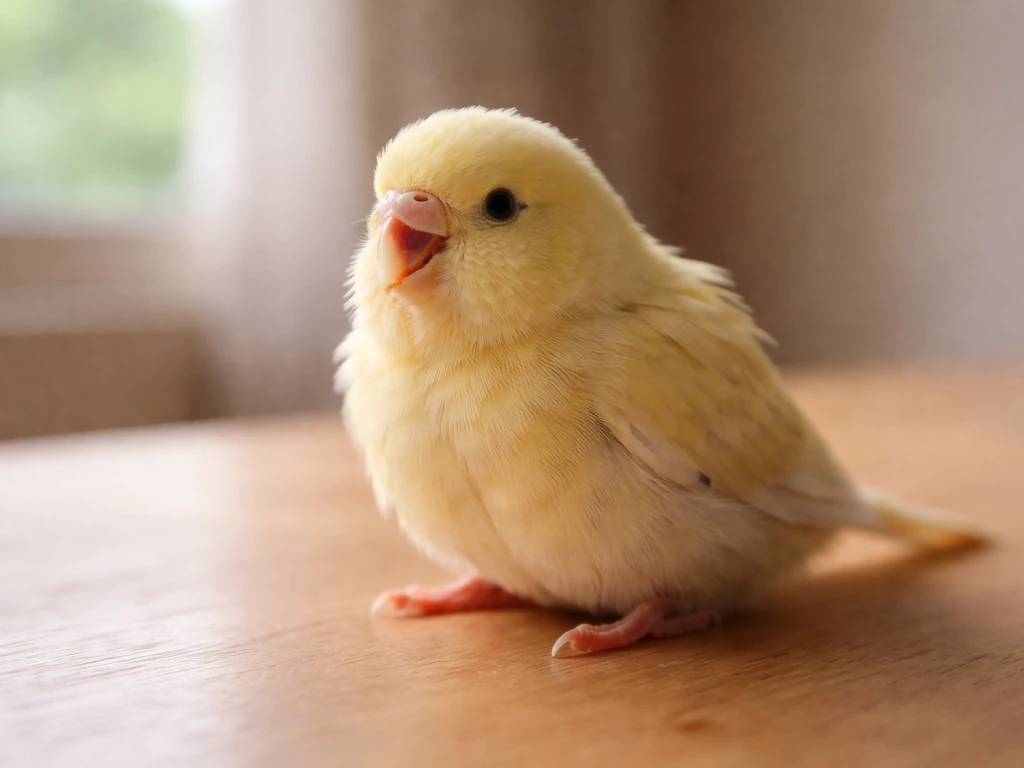
A bird with a respiratory infection will usually show at least one of these signs: breathing with its beak open, bobbing its tail up and down with each breath, making clicking or wheezing sounds, sitting fluffed up and low on the perch, or having crusty or wet nostrils. Any of those signs means something is wrong with the airway or lungs, and most of them count as urgent. You don't need to be a bird expert to spot them. You just need to know what to look for and what to do next. If your bird is showing breathing trouble, focus on getting veterinary help promptly.
How to Tell If Your Bird Has a Respiratory Infection

Marcus Webb
16 May 2026
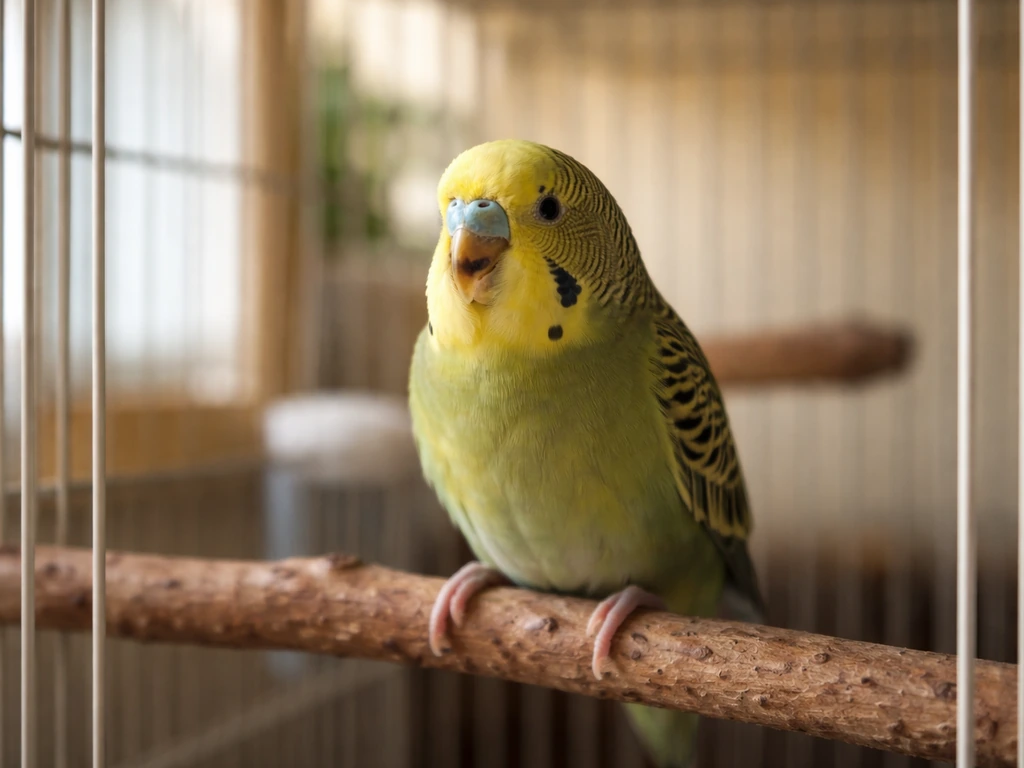
Quick signs of respiratory infection in birds
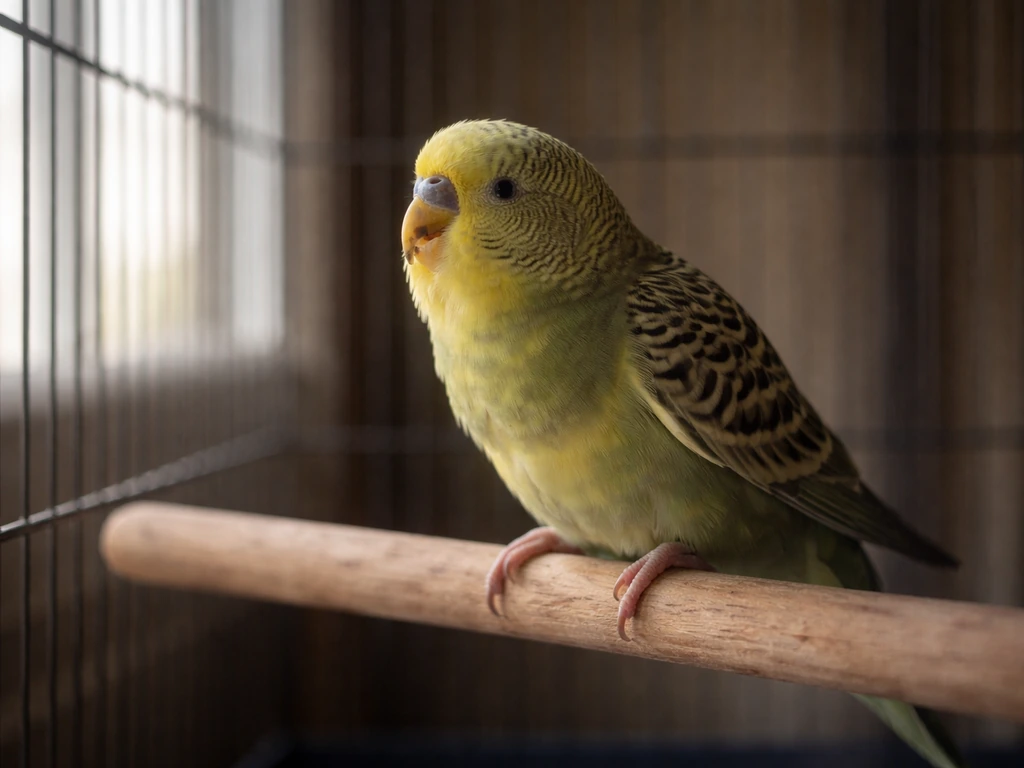
These are the signs that most reliably point to a respiratory problem. Some are obvious even from across the room. Others are subtle and easier to miss if you don't know what normal looks like for your bird.
- Open-mouth breathing at rest (not during or right after intense activity)
- Tail bobbing: the tail moves visibly up and down with every breath
- Audible breathing: clicking, wheezing, rattling, or gurgling sounds
- Flared nostrils or wet, crusty, or blocked nasal openings
- Watery or colored discharge from the nostrils or eyes
- Frequent sneezing, especially with discharge
- Voice changes: loss of song, altered call, or new raspiness
- Sitting fluffed up, low on the perch, or on the cage floor
- Reduced appetite or complete food refusal
- Lethargy, reluctance to move, or eyes partially closed during the day
- Wing pumping or increased visible chest movement with each breath
Not every sick bird will show all of these at once. A bird in the early stages of infection might only sneeze more than usual and look a little quieter. That's worth watching closely. A bird showing open-mouth breathing, tail bobbing, and lethargy together is in serious distress and needs veterinary care the same day, ideally within hours. LafeberVet also describes classic dyspnea signs in birds such as open-mouth breathing, increased sternal motion, and tail bobbing open-mouth breathing, tail bobbing, and lethargy.
How to do a safe at-home breathing and health check
The most important rule here: observe first, handle second. Restraining a bird that's already struggling to breathe can push it into a crisis. Start your check from a distance before you even open the cage.
Step-by-step observation checklist
- Sit or stand about 3 to 6 feet from the cage and watch quietly for 2 to 3 minutes before the bird reacts to your presence.
- Count breaths for 15 seconds and multiply by 4. Small birds (under 300 g, like budgies or cockatiels) normally breathe 30 to 60 times per minute at rest. Larger birds (400 to 1,000 g, like medium parrots) normally breathe 15 to 30 times per minute.
- Watch the tail: it should stay relatively still during normal breathing. Rhythmic up-and-down movement with each breath is not normal.
- Watch the chest and keel (breastbone area): some movement is normal, but exaggerated heaving or pumping is not.
- Listen for any sounds during breathing. Quiet or near-silent breathing is normal. Clicking, rattling, or wheezing is not.
- Check whether the beak is open or closed. A healthy bird at rest breathes through its nostrils with its beak closed.
- Look at the nostrils from a comfortable distance. They should be clean, symmetrical, and dry. Wet, crusty, or asymmetric nostrils are a red flag.
- Check posture: is the bird upright on its perch? Is it fluffed? Is it on the cage floor? Sitting low or fluffed up during the day is a warning sign.
- Only after the distance check, if the bird seems stable and calm, look closer at the face, eyes, and nasal area. Do not force an exam if the bird is distressed.
If your bird is clearly in respiratory distress during your observation, stop the at-home check there. Keep the environment warm and calm, and get to an avian vet. Trying to examine a bird that's already struggling to breathe makes things worse.
Breathing posture and sound clues: what's normal vs. not
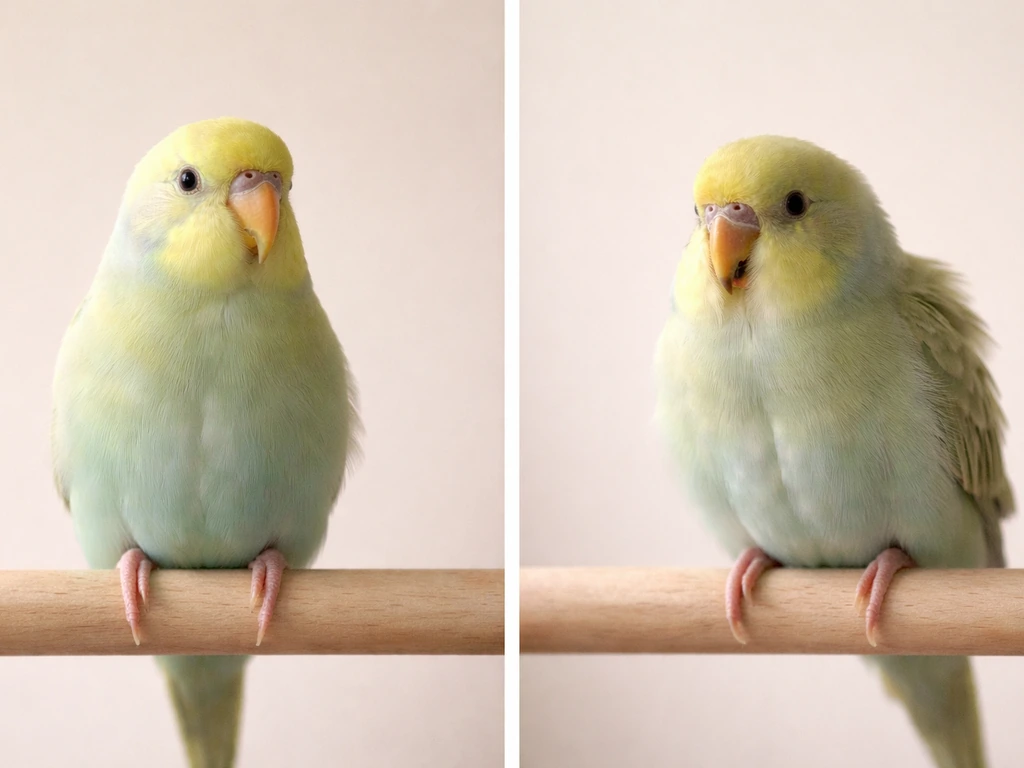
Healthy birds breathe quietly, smoothly, and mostly invisibly. You should barely be able to tell they're breathing unless you're watching closely. The moment breathing becomes something you can hear from across the room, or something you can see by watching the tail or chest move dramatically, something has changed.
| What you observe | Normal | Possible problem |
|---|---|---|
| Breathing sounds | Near-silent | Clicking, wheezing, rattling, gurgling |
| Beak position at rest | Closed, breathing through nostrils | Open-mouth breathing |
| Tail movement | Still or very slight movement | Visible up-and-down bob with each breath |
| Chest/keel movement | Subtle rise and fall | Exaggerated heaving or pumping |
| Breathing rate (small birds) | 30–60 breaths/min at rest | Significantly above range or labored |
| Breathing rate (large birds) | 15–30 breaths/min at rest | Significantly above range or labored |
| Perch position | Upright, alert, uses both feet | Hunched, fluffed, floor-sitting, unsteady |
| Wing position | Held naturally against body | Drooping, or used to prop up while breathing |
blank" rel="noopener noreferrer">Tail bobbing is one of the most reliable visual signs of respiratory distress in birds. It happens because the bird is recruiting extra muscles to move air in and out. If you see it, don't wait to see if it resolves on its own. The same goes for open-mouth breathing at rest. Both of these signs mean the bird is working harder than it should to breathe.
Some healthy birds will breathe open-mouthed briefly after flying hard or being handled. That's normal. What's not normal is open-mouth breathing while sitting quietly on a perch, or that continues for more than a minute or two after activity has stopped.
Discharge, eyes, and nasal blockage: patterns to look for
The face tells you a lot. Healthy nostrils are clean, dry, and symmetric. Healthy eyes are bright, fully open, and free of crust or discharge. Any deviation from that is worth taking seriously.
Nasal discharge and blocked nostrils
Watery discharge from one or both nostrils can be an early sign of respiratory infection. As infection progresses, the discharge often becomes thicker and may dry into crusts around the nares. Plugged or blocked nostrils are a clear signal of more significant disease. Some infections, like avian metapneumovirus, cause mucopurulent (thick, cloudy) nasal discharge along with swollen sinuses around the eyes. If you can see that the area below or in front of the eye looks puffy or swollen, that's a sinus issue and needs veterinary attention.
Eye discharge and conjunctivitis
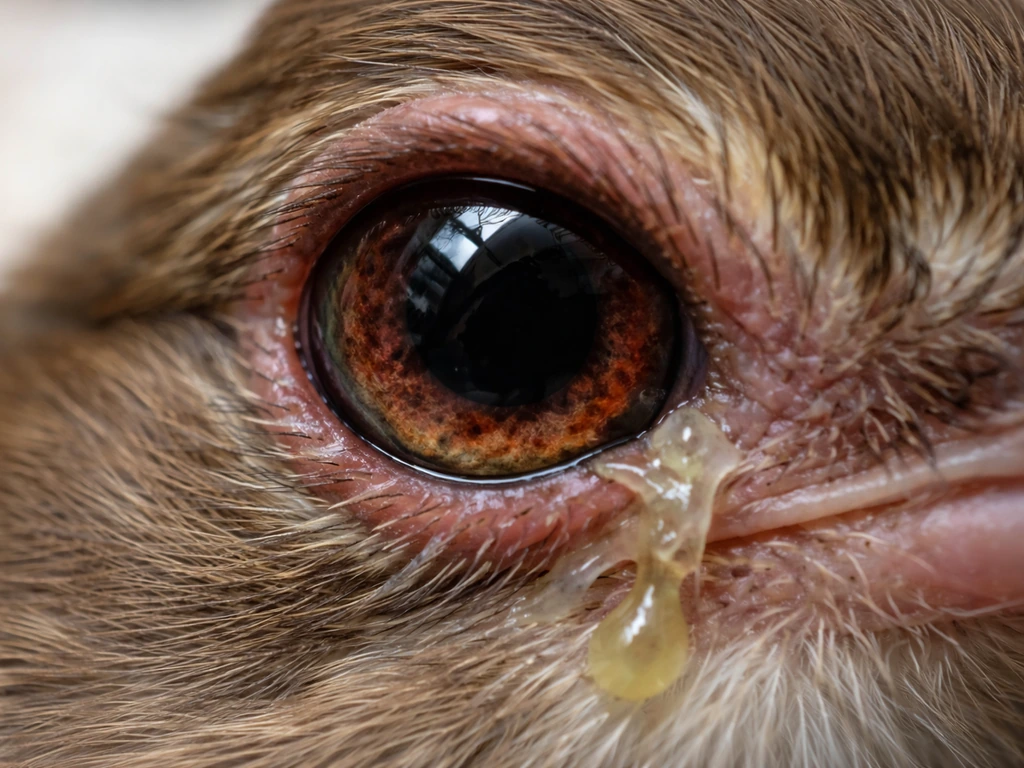
Watery or mucoid eye discharge, redness around the eye, or swollen eyelids often accompany respiratory infections, especially those caused by bacteria like Chlamydia psittaci (the organism behind psittacosis, which also has human health implications). Conjunctivitis showing up alongside respiratory signs should always prompt a vet visit, not a wait-and-see approach.
Sneezing patterns
Occasional sneezing in birds is normal, especially if dust or a new powder is in the environment. What's not normal is frequent sneezing, sneezing that produces visible discharge, or sneezing paired with other respiratory signs like tail bobbing or breathing sounds. Frequent sneezing combined with discharge almost always signals something infectious or inflammatory going on in the upper airway.
When it's urgent: red-flag symptoms and severity guidance
Not every respiratory symptom is a same-hour emergency, but several absolutely are. Here's how to think about severity.
Get to a vet immediately (same day, within hours)
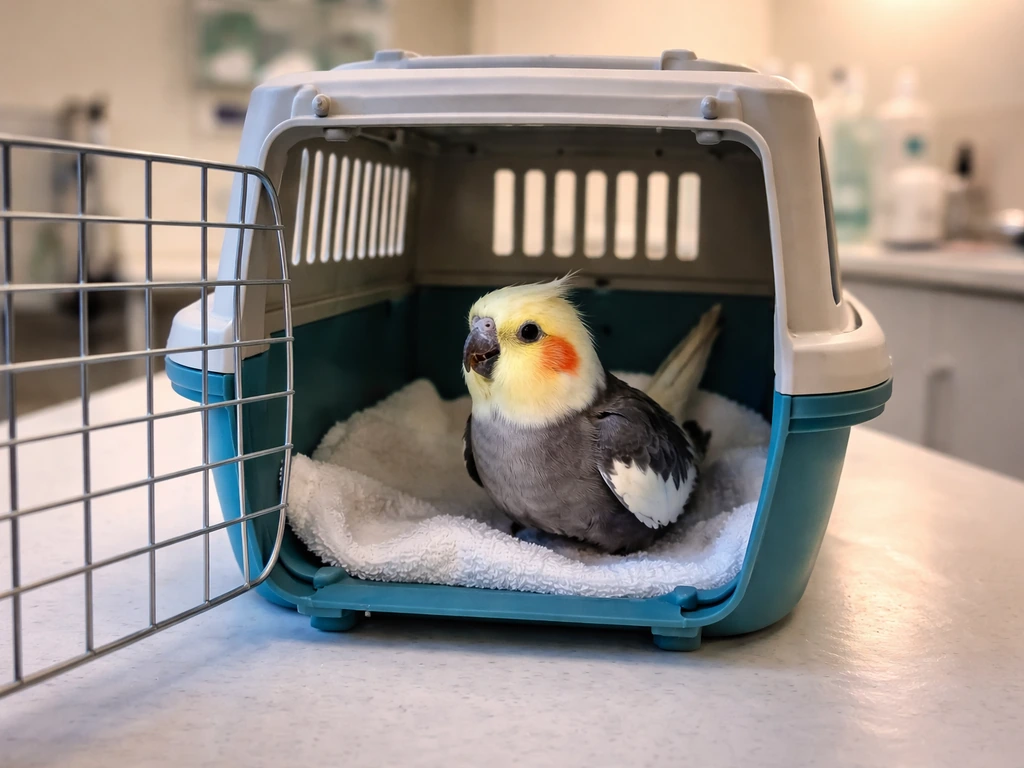
- Open-mouth breathing at rest
- Tail bobbing with every breath
- Audible wheezing, clicking, or rattling sounds
- Blue or purple tint to the skin around the beak or feet (cyanosis)
- Bird is on the cage floor and can't perch
- Wing pumping or extreme visible chest effort
- Extreme lethargy: bird doesn't react to your approach or to sounds
- No food or water intake for more than 24 hours
Any emergency-level sign listed above means the bird's oxygen supply is compromised. These are not symptoms to monitor overnight. Birds deteriorate quickly once they reach this point, and the window for effective treatment narrows fast. Respiratory distress in birds should be treated as an emergency.
Schedule a same-day or next-day appointment
- Persistent nasal or eye discharge with no other emergency signs
- Frequent sneezing over more than 24 hours
- Voice changes or unusual quietness lasting more than a day
- Reduced appetite combined with mild fluffing
- Slightly labored breathing that comes and goes
Monitor closely but seek advice
- Occasional sneezing with no discharge and no other signs
- Mild behavior change after a recent environmental change (new cleaning product, dusty bag of seed, candle use)
Even in the 'monitor' category, calling your avian vet for a phone consultation is worthwhile. Birds are prey animals and instinctively hide illness. By the time symptoms are obvious, the disease has often been progressing for a while.
What could be causing it, and what that means for next steps
Knowing the possible cause matters because it shapes what the vet will test for and how urgently you need to act. Respiratory infections in birds can come from several sources.
Bacterial infections
These are among the most common causes of respiratory illness in pet birds. Chlamydia psittaci (psittacosis) is one of the most important because it can spread to humans, causing a flu-like illness. Signs include nasal and eye discharge, conjunctivitis, listlessness, and breathing difficulty. If you suspect psittacosis, mention it to your vet right away and wash your hands carefully after handling the bird or its cage.
Fungal infections (aspergillosis)
Aspergillus is a mold found in the environment, and birds with weakened immune systems or poor ventilation are most at risk. Aspergillosis tends to cause progressive respiratory signs: gasping, open-mouth breathing, tail bobbing, and in more advanced cases, extreme lethargy and weight loss. It's particularly common in raptors, African grey parrots, and penguins in captivity, but any bird can be affected. The tricky part is that it often develops slowly and can look like general illness before the respiratory signs become obvious.
Viral infections
Avian metapneumovirus, avian influenza, and other viruses can all affect the respiratory tract. Viral infections often cause sudden onset of signs including nasal discharge, sneezing, coughing, and swollen sinuses. Avian influenza in particular is a public health concern and warrants immediate veterinary involvement if suspected, especially in wild birds or birds with unknown exposure history.
Environmental and irritant causes
Not every bird breathing oddly has an infection. Non-stick cookware fumes (PTFE toxicity), scented candles, aerosol sprays, cigarette smoke, dust from new bedding, and even strong cleaning products can all irritate or damage a bird's airway. If symptoms started right after an environmental change, remove the bird to clean air immediately and ventilate the room. Aspiration of food or liquid into the airway is another non-infectious cause. The key difference: environmental causes usually have a clear trigger and may improve once the bird is moved to clean air. Infections tend to persist or worsen.
A note on wild birds
Wild birds with respiratory symptoms need different handling. Don't attempt extensive home care. If you find a wild bird breathing with difficulty or unable to stand, the right move is to contact a licensed wildlife rehabilitator in your area. Tufts and Cornell both advise exactly this. Keep the bird in a dark, quiet, ventilated container in the meantime. Avoid handling it more than necessary, and be aware that some wild bird diseases (including avian influenza) carry human health risks, so basic hygiene and avoiding direct contact with mucus or discharge matters.
What to do while waiting for a vet
The goal while waiting is to reduce the bird's stress and support its body without making things worse. Here's what actually helps.
- Keep the bird warm: aim for an ambient temperature around 80 to 85°F (27 to 29°C) near the bird. A warm, draft-free room or a heat lamp set at a safe distance works. Don't overheat the cage.
- Minimize handling: every time you restrain or disturb a bird in respiratory distress, you increase its oxygen demand. Only handle when absolutely necessary.
- Remove aerosol sources: no candles, air fresheners, cooking sprays, cleaning products, or cigarette smoke near the bird.
- Add humidity if possible: a humidifier nearby (not aimed directly at the cage) can help ease an irritated airway, especially in dry environments.
- Ensure fresh water access: dehydration makes recovery harder. Keep water easily accessible at floor level if the bird isn't perching well.
- Lower perches or add food/water at floor level: a bird too weak to perch shouldn't be expected to reach food at normal height.
- Skip over-the-counter human or pet medications: no Vicks, no children's cold remedies, no antibiotics from a feed store. These can be toxic or mask symptoms your vet needs to assess.
- Note what you've observed: write down when symptoms started, what they look like, any recent environmental changes, and what the bird has eaten. This helps the vet a lot.
If you're getting veterinary guidance over the phone before arriving, they may advise placing the bird in a small, warm, humidified enclosure. Follow their specific instructions over the general guidance above.
What the vet will check and test for
Knowing what's coming helps you prepare and understand the recommendations you receive. Here's what a typical avian vet workup looks like for a bird with respiratory signs.
Physical exam first
A good avian vet will observe your bird before touching it, checking respiratory rate, posture, and effort from a distance, just like the at-home check described earlier. Then they'll assess body condition, check the choana (the slit in the roof of the mouth), look at the nares and eyes, listen to air sac sounds, and palpate the body. The hands-off initial observation isn't them being lazy. It's standard practice because handling a distressed bird too quickly can cause it to crash.
Diagnostics they might run
- Complete blood count (CBC): a standard starting point for most sick birds, giving information about infection, inflammation, and overall health status
- Choanal or tracheal swabs: used for bacterial culture, PCR testing (for psittacosis, avian influenza, aspergillosis, and others), or cytology to look at cells under a microscope
- Whole-body radiographs (X-rays): can reveal air sac changes, granulomas, syringeal masses, lung opacity, or other structural problems
- Endoscopy: allows direct visualization of the trachea and lower airway, and can be used to collect samples (exudate, tissue) for culture and cytology
- PCR panels: some labs offer avian respiratory panels that screen for multiple pathogens simultaneously from a single swab
- Serological testing: blood tests for specific diseases like chlamydiosis, often used alongside PCR
Not every bird will need every test. A vet might start with a CBC and swabs and go from there depending on what they find. If aspergillosis is suspected, radiographs and potentially endoscopy become more important. If psittacosis is on the table, a combination of PCR and serology is often used. Bacterial culture is typically only recommended when cytology has already suggested a bacterial component, not as a first-line shotgun test.
Your action plan in plain terms
If you've read this far and you're still not sure what to do, here's the short version.
- Observe your bird from a distance for 2 to 3 minutes without disturbing it.
- Check for the key signs: open-mouth breathing, tail bobbing, breathing sounds, discharge, posture, and energy level.
- If you see any red-flag signs (open-mouth breathing, tail bobbing, wheezing, extreme lethargy, cyanosis, or inability to perch), treat it as urgent and contact an avian vet today.
- If signs are milder (persistent sneezing, mild discharge, slight quietness), schedule a vet visit within 24 to 48 hours and monitor closely in the meantime.
- While waiting: keep the bird warm, quiet, and away from aerosols. Make food and water easy to reach. Skip all home medications.
- Write down your observations, timeline, and any environmental changes to share with the vet.
- For wild birds: contain safely, minimize handling, and contact a licensed wildlife rehabilitator rather than attempting home treatment.
Respiratory infections in birds can escalate quickly, but they're also very treatable when caught early. The biggest mistake most people make is waiting too long because the bird 'seems okay enough.' Trust what you're seeing. If the breathing looks or sounds wrong, it probably is, and an avian vet is the right next call. Bird respiratory problems can have many causes, so a vet assessment is important when signs appear.
FAQ
If my bird seems only mildly off, can it still have a respiratory infection?
Yes. A bird can have an early respiratory infection with only “small” changes such as quieter breathing, increased sneezing, or a slight change in activity level. Track it at least a few hours, and if the frequency increases or any discharge, tail bobbing, or breathing sounds appear, treat it as infectious until a vet rules it out.
What should I use as my main signs if my bird is eating and acting mostly normal?
Avoid judging solely by “normal cage noise” or by whether your bird still eats. Birds often hide illness, so focus on breathing effort and airflow signs (open-mouth breathing at rest, tail bobbing, audible clicking or wheezing) and any nostril or eye discharge. If breathing looks more visible or audible than usual for your specific bird, that is the priority indicator.
How can I tell whether my bird’s breathing rate is actually abnormal?
Subtle breathing-rate changes can be hard to assess by casual watching. Instead, measure for a short interval from a distance (for example, 30 to 60 seconds) and count obvious chest or tail movements. If breathing becomes progressively faster, more effortful, or continues to increase when the bird is at rest and warm, that supports respiratory disease and warrants a same-day call.
My bird opens its beak sometimes. How do I know when it’s normal versus not?
Breathing with the beak open after flying hard or being handled can be normal briefly, but “normal” should match your bird’s usual recovery pattern. As a rule of thumb, open-mouth breathing while sitting quietly, or lasting more than a minute or two after the bird has fully settled, is not typical and should trigger veterinary guidance promptly.
Can a respiratory infection happen without crusty nostrils or visible discharge?
Yes, a bird can have a respiratory infection without obvious nostril crusts. Watery discharge, watery eyes, or increased sneezing can be an early sign even when the nares look mostly clean. Also watch for asymmetry (one nostril running more than the other) and for any new swelling around the eyes that may suggest sinus involvement.
If I only hear clicking or wheezing, is it still an emergency?
Don’t assume clicking, wheezing, or rattling must be “just a cold.” Those sounds can reflect airway obstruction, fluid, or lung involvement, and the correct urgency is usually based on breathing effort (tail bobbing, open-mouth breathing at rest) rather than the sound type alone. If you can hear breathing from across the room, treat it as urgent and contact an avian vet immediately.
Could stress or temperature changes make my bird look like it has breathing trouble?
Stress, excitement, or being cold can temporarily increase breathing effort, so verify the baseline by observing the bird when it is quiet, warm, and not interacting with you. If the breathing effort is present during calm rest, or worsens over time, that points to illness more than stress.
How can I tell whether this is irritation from something in the environment versus an infection?
Environmental irritants can mimic infection, especially if symptoms start soon after a change (new bedding powder, cleaning products, scented items, smoke, aerosols). A practical check is timing: if symptoms improve within 24 hours after moving to clean air and removing the suspected trigger, irritation becomes more likely. If symptoms persist or worsen despite clean-air steps, treat it as infection risk and get a vet assessment.
My bird suddenly started breathing strangely right after eating or drinking. What should I suspect?
If your bird has sudden breathing trouble with no prior gradual symptoms, consider aspiration (food or liquid into the airway) and toxic exposure (smoke or fumes) alongside infection. With aspiration, signs often appear around feeding or drinking and can include coughing or sudden distress. Either way, rapid veterinary guidance is important because the cause affects testing and treatment.
What should I do differently if the bird is wild and struggling to breathe?
Wild birds need different handling because of risk and legal and safety factors. Keep distance, avoid extensive home treatment, and contact a licensed wildlife rehabilitator. If you suspect avian influenza risk in a wild bird, emphasize hygiene (handwashing, avoid direct contact with discharge) and follow local guidance while waiting for help.
If I suspect psittacosis, what extra precautions should I take before the vet visit?
Yes. If you suspect psittacosis or your bird has conjunctivitis plus nasal discharge and breathing difficulty, mention it to the vet before the visit. Use careful hand hygiene after handling the bird or cage, and limit close face-to-face contact until you have veterinary guidance.
When is it too risky to wait until morning, and what should I do instead?
Don’t delay for “overnight monitoring” when breathing effort is compromised. A practical decision aid is this: if you see or hear breathing trouble at rest (tail bobbing, open-mouth breathing, audible wheeze or clicking), contact an avian vet the same day, ideally within hours, and stop at-home handling that could worsen distress.
Next Article
Bird Respiratory Problems: Symptoms, Causes, and Next Steps
Spot bird respiratory infection symptoms, tell causes from stress or injury, and know when to seek urgent avian vet care