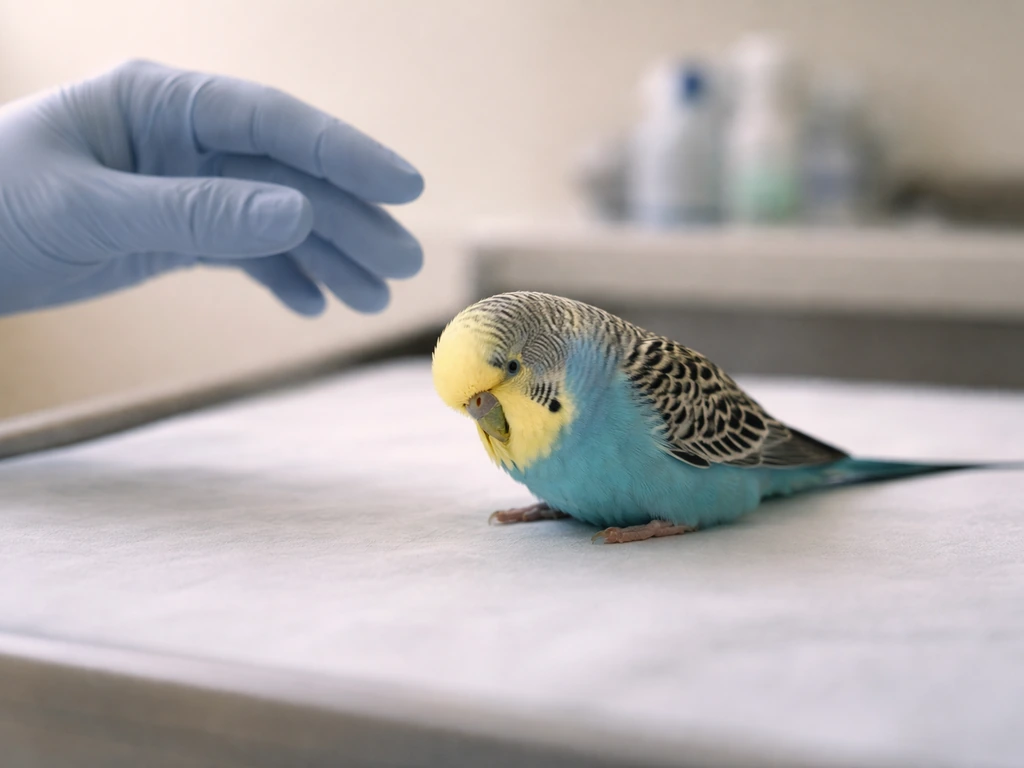
Internal bleeding in birds is a genuine emergency, but it's also one of the hardest things to spot because there's usually nothing visible. The signs you're most likely to see are sudden extreme weakness, a bird sitting puffed on the cage floor, pale or bluish skin around the face or feet, rapid shallow breathing, and cold extremities. If your bird just had a trauma (window strike, cat attack, fall, or rough handling) and is now showing any of those signs, treat it as internal bleeding until a vet proves otherwise.
Bird Internal Bleeding Symptoms: What to Do Now

Marcus Webb
9 Jun 2026
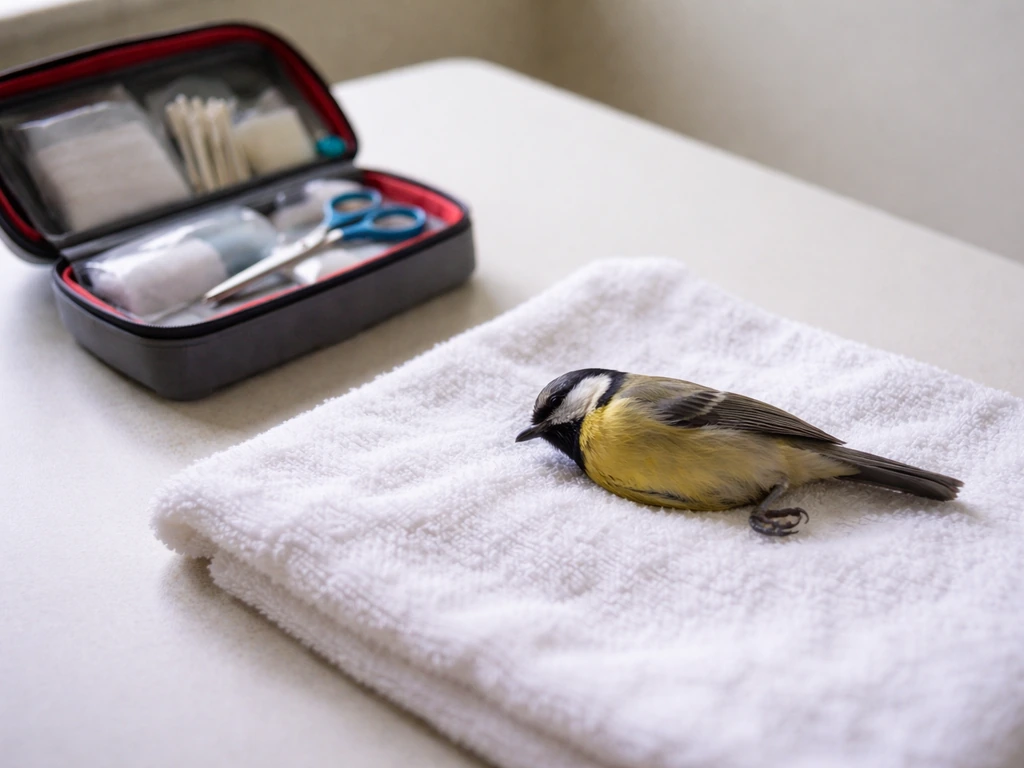
Quick reality check: internal bleeding vs common look-alikes
The frustrating truth is that internal bleeding looks almost identical to several other serious conditions on the outside. Respiratory infections, poisoning, egg binding, neurological problems, and shock from trauma all share the same basic picture: a weak, puffed-up bird that doesn't want to move. That overlap means you can't diagnose internal bleeding from symptoms alone, and neither can your vet without diagnostics. What you can do is recognize the pattern and act fast.
| Condition | Overlapping signs | Key differentiators |
|---|---|---|
| Internal bleeding | Weakness, pale skin, rapid breathing, collapse | Recent trauma or toxin exposure; no fever; rapid deterioration |
| Respiratory infection | Labored breathing, lethargy, tail bobbing | Usually gradual onset; nasal discharge; clicking or wheezing sounds |
| Anticoagulant poisoning | Bleeding from multiple sites, bruising, weakness | No obvious trauma; exposure to rodent bait suspected; blood in droppings |
| Egg binding | Straining, weakness, tail held low, labored breathing | Hen bird; visible swelling near vent; no trauma history |
| Liver disease | Distended abdomen, dark tarry droppings, weakness | Chronic course; yellow tinge to skin in some species |
| Shock from trauma | Collapse, cold extremities, rapid heart rate | Direct injury event preceded symptoms; may have both internal and external bleeding |
The biggest look-alike to rule out immediately is respiratory disease, because labored breathing is so central to both. The other major one is anticoagulant rodenticide poisoning, where a bird has eaten a mouse or a poisoned insect and is now bleeding internally from a clotting failure rather than a wound. Both of those need a vet urgently, just like true trauma-induced internal bleeding does.
Bird symptoms that can point to internal bleeding
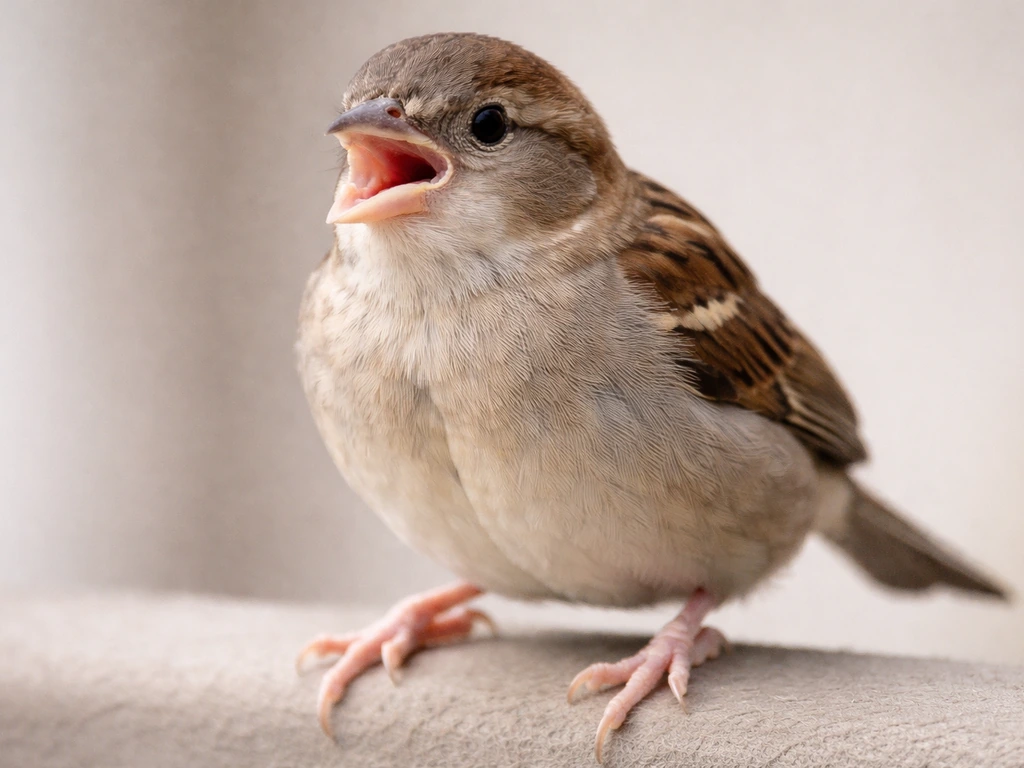
The clinical signs of significant blood loss in birds have been well described in avian emergency medicine. They reflect what happens when the body is losing red blood cells and circulatory volume faster than it can compensate. Here's what to look for:
- Pallor of the skin, feet, nails, or any visible mucous membranes (gums in larger parrots, cere area, bare facial skin)
- Delayed capillary refill: if you press the skin briefly and it takes more than 2 seconds to return to color, that's a concern
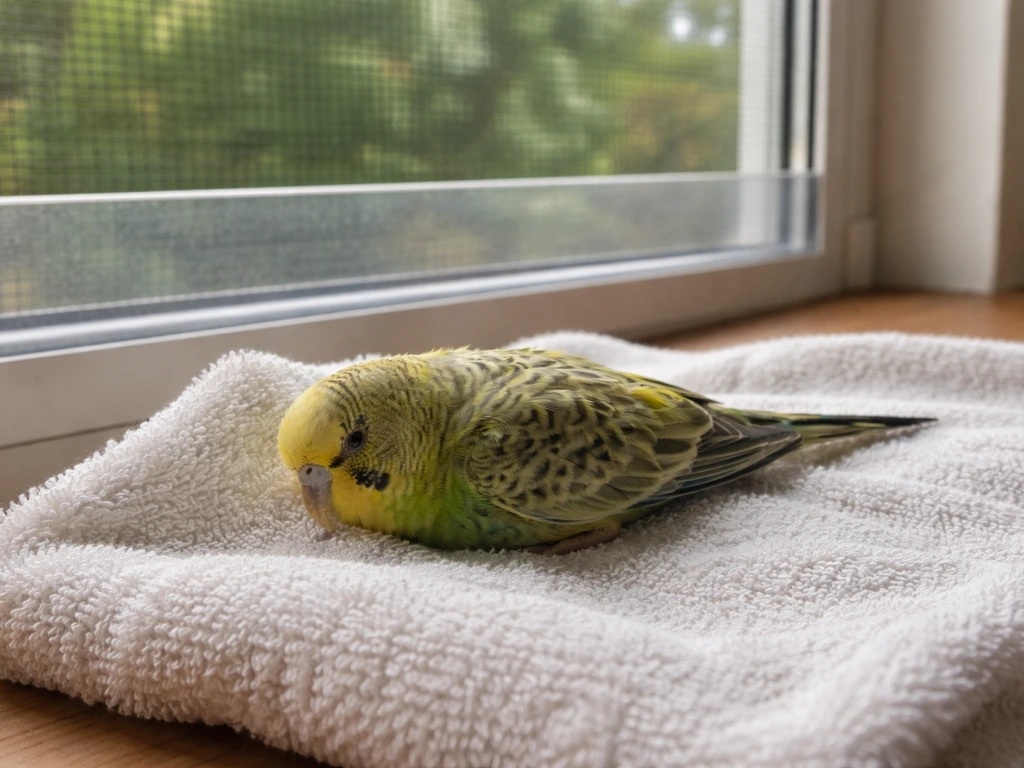
- Extreme weakness or sudden inability to perch, with the bird sitting flat on the cage floor
- Generalized fear response out of proportion to the situation, which can indicate the bird is in distress or early shock
- Thin or watery appearance to blood if you can see it in the peripheral veins (visible through bare skin on legs in some species)
- Dark, tarry, or bloody droppings, which can indicate bleeding in the gastrointestinal tract
- Blood visible at the vent, nares (nostrils), or mouth without an obvious external wound
- Sudden swelling or bruising over the abdomen, chest, or crop area
- Cold feet or legs, even in a warm environment
Not every bird will show all of these. A small bird like a finch or budgie can deteriorate extremely quickly, so even one or two of these signs in the right context (recent trauma, known toxin exposure) should be enough to move you to action now.
Respiratory and weakness red flags that overlap with bleeding
Two symptoms that trip people up the most are labored breathing and weakness, because they're so nonspecific. With internal bleeding, both happen for a specific reason: the bird is losing red blood cells, so tissues aren't getting enough oxygen. The body compensates by increasing heart rate and breathing rate. What you'll typically see is rapid, shallow breathing and a bird that tires immediately with any handling or movement.
Dyspnea, which is the clinical term for difficulty breathing, is especially pronounced during restraint in birds with significant blood loss. If you pick up a bird and it seems to struggle disproportionately to breathe or goes limp quickly, that's a serious sign. This is also why minimizing handling is one of the first rules of bird emergency care.
The weakness pattern with internal bleeding tends to come on fast, especially after trauma. A bird that was active an hour ago and is now sitting puffed on the bottom of the cage is much more alarming than one that has been gradually declining over days. Sudden onset matters. It's also worth noting that shock-like behavior and neurological signs can overlap with bleeding, particularly after a head injury or severe trauma. Bird shock symptoms often include sudden weakness, rapid shallow breathing, and pale or bluish skin, which means you should treat it as an emergency until a vet rules out internal bleeding. If you're seeing tremors, head tilting, or loss of coordination alongside weakness, those symptoms deserve attention in their own right. Bird head injury symptoms can overlap with internal bleeding, so any sudden weakness after trauma should be treated as an emergency.
External signs to check (even if you suspect internal)
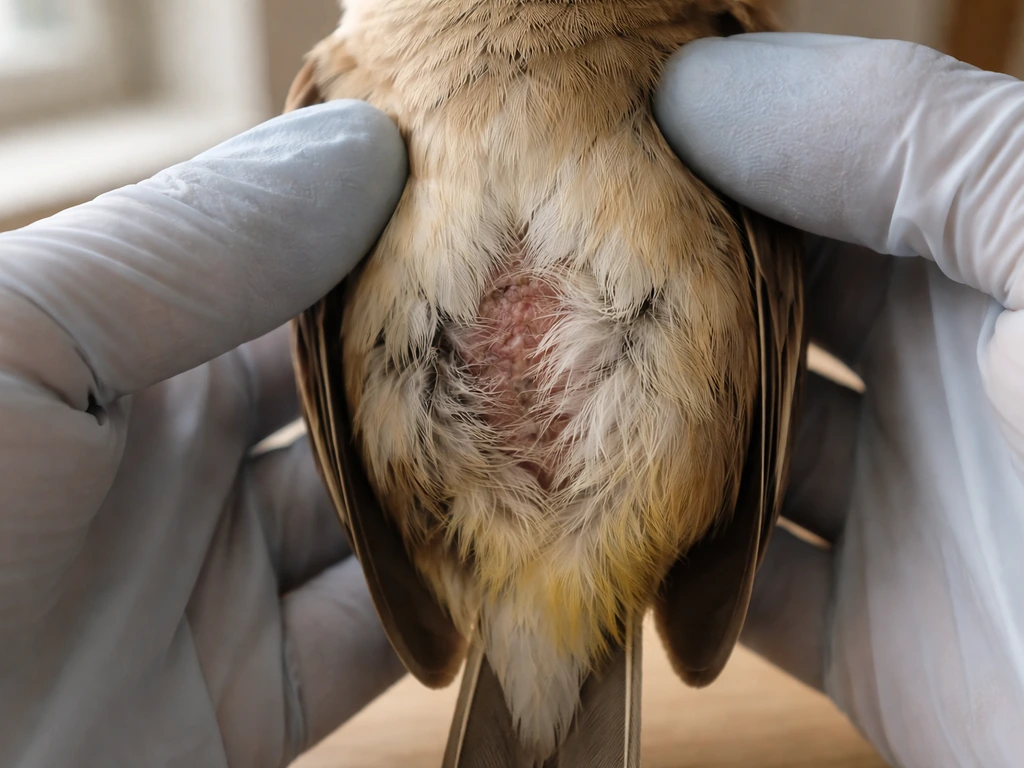
Before you assume everything is happening inside, do a careful visual check of the outside of the bird. You want to do this without excessive handling, so work quickly and gently with good lighting.
- Check the feathers for matting or wetness, especially around the abdomen, vent, and chest. Blood-soaked feathers can hide significant wounds.
- Look at the vent closely. Bleeding at or around the vent can indicate cloacal injury, internal reproductive tract bleeding, or gastrointestinal hemorrhage.
- Examine the nares (nostrils) and mouth for blood. Even a small amount can indicate internal hemorrhage tracking upward.
- Feel very gently along the keel (breastbone) and abdomen for swelling, firmness, or asymmetry. A distended abdomen can signal internal bleeding or organ involvement.
- Check the wings for drooping, unusual angles, or swelling at the joints. Wing fractures can bleed significantly internally.
- Look at the legs and feet for bruising, swelling, or pale coloration.
- Check the tail and lower back for any signs of impact or deformity.
- Look around the eye area and face for bruising or petechiae (tiny pinpoint hemorrhages), which can suggest systemic clotting problems.
If you find an external wound that is actively bleeding, apply gentle direct pressure with a clean cloth or gauze and do not remove it until you're at the vet. Do not use styptic powder on body wounds (only on broken blood feathers or toenails) and do not apply any ointments or sprays. If a blood feather is broken and bleeding, carefully removing it is sometimes recommended, but when a bird is already showing signs of blood loss, leave it alone and get moving.
High-risk situations and what to do immediately
There are specific situations where internal bleeding should be your working assumption until proven otherwise. In avian emergency medicine, the rule is straightforward: if a bird has had a recent trauma and hemorrhage isn't visible, internal hemorrhage is assumed to be ongoing until diagnostics rule it out. Don't wait for the bird to get worse.
Situations that put internal bleeding high on the list
- Window or glass strike, especially if the bird was stunned or lost consciousness
- Cat, dog, or raptor attack (even if wounds look minor, puncture wounds cause deep tissue damage and bacterial contamination)
- Fall from height or impact with a hard surface
- Being stepped on or caught in a door
- Known or suspected exposure to anticoagulant rodenticides (rat or mouse poison), either directly or through eating a poisoned rodent
- Severe egg-laying complications in hens
- Any sudden deterioration in a bird with known liver disease, cancer, or clotting disorder
What to do right now, step by step
- Separate the bird from cage mates immediately to prevent stress and further injury.
- Place the bird in a small, secure, well-ventilated container lined with a soft cloth. A cardboard box with ventilation holes works fine.
- Keep the bird warm: 85 to 90 degrees Fahrenheit (29 to 32 degrees Celsius) is the target for a bird in shock or crisis. A heating pad on LOW under half the box, or a heat lamp at safe distance, will do this. Always allow a cooler side so the bird can self-regulate.
- Minimize handling. Do not hold or pet the bird repeatedly. Every handling episode in a compromised bird costs it energy and oxygen it doesn't have.
- Do not offer food or water if the bird is unconscious or unable to hold its head up. Aspiration is a real risk.
- Call an avian vet or exotic animal emergency hospital immediately. Describe the trauma history, how long ago it happened, and what symptoms you're seeing now.
- Transport as calmly and smoothly as possible, keeping the container covered to reduce stress, and maintaining warmth during transit.
Time matters significantly here. Anticoagulant rodenticide poisoning, as one example, works by depleting clotting factors over 24 to 64 hours after exposure. By the time a bird is showing collapse and active bleeding, those reserves are nearly gone. Earlier intervention gives the vet much more to work with.
How veterinarians confirm internal bleeding in birds
Your vet will start with stabilization first, diagnostics second. If the bird is in shock, they'll work to address that before doing anything else. Once the bird is stable enough, here's what the diagnostic workup typically looks like:
- Physical exam and history: The vet will ask about any trauma events, toxin exposure, diet, and how quickly symptoms developed. A thorough hands-on exam checks for pallor, abdominal distension, bruising, and pain responses.
- Blood work: A complete blood count (CBC) checks packed cell volume (PCV) and hematocrit to quantify how much blood the bird has lost. A chemistry panel checks organ function, especially liver and kidneys.
- Clotting tests: Prothrombin time (PT) and partial thromboplastin time (PTT) reveal whether the blood is clotting normally. These are critical if rodenticide poisoning or liver disease is suspected.
- Radiographs (X-rays): X-rays can show fluid accumulation in the body cavities, fractured bones causing internal bleeding, abnormal organ enlargement, or foreign objects.
- Ultrasound: More sensitive than X-rays for detecting free fluid (blood) in the coelom (body cavity). Ultrasound can also guide the vet in identifying which organ or structure is the source.
- Cytology or fluid analysis: If fluid is present in the coelom, the vet may take a small sample with a fine needle to confirm it is blood rather than ascites or infection.
- Endoscopy: In some cases, minimally invasive internal viewing helps locate a bleeding site that imaging doesn't fully clarify.
The combination of a recent trauma history, clinical signs of blood loss, low PCV on blood work, and fluid visible on imaging is usually sufficient to confirm significant internal hemorrhage. The goal of diagnostics beyond that is to find the cause, because treatment depends heavily on whether this is trauma-induced, toxin-induced, or related to disease.
Treatment and recovery expectations: what vets do and what you can safely do at home
What the vet will do
Treatment for internal bleeding in birds is focused first on stabilizing circulation and oxygen delivery. Severely anemic birds or birds in circulatory shock need volume expansion and, in serious cases, red blood cell replacement to restore tissue oxygenation. In practice this means:
- Oxygen supplementation, often in an oxygen cage, to support breathing and tissue oxygenation
- Intravenous or intraosseous fluids to expand circulatory volume
- Blood transfusion if the bird's packed cell volume has dropped to critical levels (typically below 15 to 20% in most species)
- Vitamin K1 injections if anticoagulant rodenticide poisoning is confirmed or strongly suspected, continued for several weeks depending on the specific rodenticide involved
- Surgical intervention if a specific bleeding source (ruptured vessel, internal wound) is identified and accessible
- Hospitalization and monitoring for at least several hours, often longer, to watch for re-bleeding or delayed deterioration
- Treatment of any underlying cause: infection, reproductive tract disease, liver disease, or tumor
Recovery: what to expect realistically
Recovery from internal bleeding depends heavily on the underlying cause, how much blood was lost, and how quickly treatment started. A bird with mild internal bleeding from a minor trauma that receives prompt care has a reasonable prognosis. A bird that has lost a large volume of blood, has a clotting disorder from rodenticide exposure, or has an underlying cancer has a more guarded outlook. SpectrumCare notes that pet bird blood loss can also be caused by clotting problems, along with other serious causes such as trauma, severe organ disease, toxin exposure, reproductive tract disease, liver disease, cancers, and idiopathic causes clotting disorders from rodenticide exposure. Your vet will give you a more specific prognosis once they have the diagnostic picture.
During recovery at home (after discharge), the priorities are rest, warmth, reduced stress, and following medication schedules precisely. If Vitamin K1 is prescribed, complete the full course even if the bird looks normal, because clotting factor depletion can persist for weeks with some rodenticides. Offer easy-to-eat soft foods if the bird's appetite is reduced, and watch for any recurrence of weakness, bleeding, or labored breathing.
What not to do at home
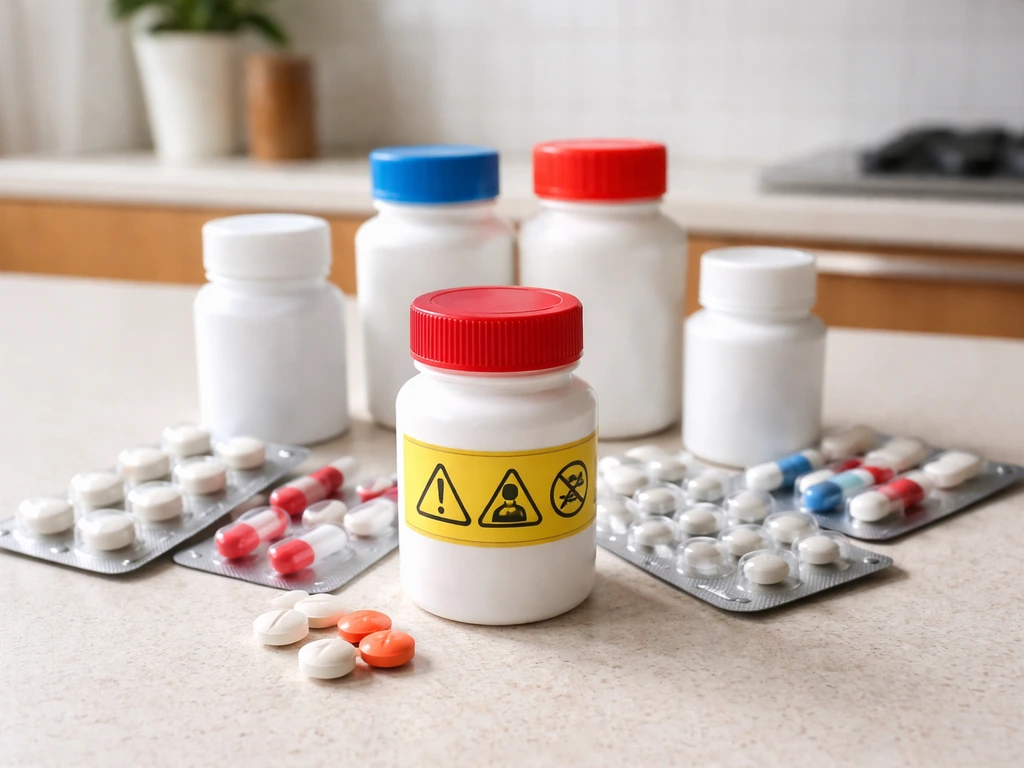
- Do not give aspirin, ibuprofen, or any human pain medications. These are toxic to birds and some specifically impair clotting, which will make internal bleeding dramatically worse.
- Do not delay going to the vet because the bird 'seems okay right now.' Internal bleeding can be slow and then suddenly catastrophic. A bird that looks stable at 8 AM after a window strike can be critical by noon.
- Do not force fluids orally into a bird that is weak or unable to swallow normally. Aspiration pneumonia can kill a compromised bird.
- Do not repeatedly handle or stress the bird to check on it. Every unnecessary disturbance is a physiological cost the bird cannot afford in this state.
- Do not apply pressure bandages tightly around the body or chest. You risk compromising already-strained breathing.
- Do not use heat lamp temperatures above 90 to 95 degrees Fahrenheit without monitoring closely. Overheating a stressed bird can be as dangerous as cold.
When to go to the vet right now, no waiting
Use this as your threshold. If any of the following are true, you should already be on your way to an avian vet or exotic animal emergency clinic:
- The bird had any trauma in the last 24 to 48 hours and is now weak, pale, or breathing abnormally
- You see blood at the vent, mouth, or nares with no obvious external wound
- The bird is on the cage floor, unable to perch, or unresponsive to normal stimuli
- The abdomen looks swollen or feels firm
- You suspect any rodenticide exposure, even if the bird seems okay right now
- The bird's droppings are dark, tarry, or bloody
- Skin, feet, or bare facial areas look pale, gray, or bluish
- The bird has been in contact with a cat, even briefly (cat saliva contains bacteria that cause fatal sepsis in birds within hours, independent of any wound)
Internal bleeding isn't something you can watch and wait on at home. The supportive care you provide before reaching the vet, keeping the bird warm, calm, and minimally handled, genuinely improves its chances. But that care buys time for transport; it doesn't replace treatment. Get moving, and let the vet take it from there.
FAQ
How fast can bird internal bleeding symptoms worsen after an injury?
In small species, deterioration can be very rapid, sometimes within minutes to a few hours. Sudden weakness, repeated collapse when handled, or rapid shallow breathing that appears soon after a window strike, fall, or rough handling should be treated as urgent even if the bird seemed normal earlier.
My bird is breathing fast, but it’s not puffed up. Could this still be internal bleeding?
Yes. Rapid breathing and weakness can occur without obvious puffing, and breathing effort can overlap with respiratory infection and shock. If the rapid breathing started after trauma or toxin risk, and the bird tires quickly during brief handling, assume internal bleeding until a vet rules it out.
What do pale or bluish skin around the beak or feet mean right now?
Pale or bluish coloration often reflects poor oxygen delivery or circulation problems from significant blood loss. Treat it as an emergency, keep the bird warm, and minimize handling while arranging immediate avian or exotic urgent care.
Can I tell internal bleeding from poisoning if there’s no visible wound?
Not reliably from appearance alone. Anticoagulant rodenticide poisoning can present with internal bleeding even when you never see an injury, and symptoms can lag 24 to 64 hours after exposure. If there is any chance the bird ate a mouse, insect bait, or ingested contaminated food, tell the vet immediately.
What should I do if I suspect rodenticide exposure but I do not know how much time has passed?
Go by urgency, not by timing. Because clotting factor depletion can progress over days, it is still appropriate to treat the situation as time-critical, especially if weakness or labored breathing is present. Bring any bait packaging or note the date you think exposure occurred.
Is there anything I should give at home for bird internal bleeding symptoms?
Do not give human pain relievers, aspirin, or anticoagulant-related medications. The main home actions are warmth, quiet, and minimal handling, plus fast transport. If you are told by a clinic to do specific steps, follow their directions, but avoid adding anything that could interfere with clotting or diagnostics.
Should I apply pressure or treat an external wound if I find one, even if I’m worried about internal bleeding?
If there is active external bleeding, apply gentle direct pressure with clean gauze or a cloth and keep the bird calm and warm. Avoid removing clotting material repeatedly at home. The presence of an external wound does not rule out internal bleeding, especially after trauma.
My bird has a broken blood feather. Does that explain everything?
It might explain bleeding at one site, but it does not fully rule out systemic internal bleeding after trauma or toxin exposure. If the bird shows signs like sudden weakness, pale or bluish skin, or labored breathing, treat it as internal bleeding emergency and do not delay transport to investigate the feather further.
When I pick up the bird, it seems to struggle to breathe, then goes limp. Is that a specific pattern?
Yes, that “disproportionate breathing struggle during restraint plus quick limpness” can reflect significant blood loss and reduced oxygenation. Minimize handling, keep it warm, and head to an avian emergency clinic without waiting for it to “settle.”
Could internal bleeding be confused with neurological signs like tremors or head tilting?
They can overlap, especially after head injury or severe trauma. If neurological signs appear alongside sudden weakness or rapid shallow breathing, treat the whole presentation as emergency-level and do not focus only on the neurological cause.
What information should I bring to the vet to improve diagnosis of bird internal bleeding symptoms?
Bring the timeline of events (when the injury or possible toxin exposure happened), the bird’s species and approximate weight, any changes in appetite or behavior, and whether the cage environment had rodent bait or potential contaminants. This helps the vet prioritize trauma versus anticoagulant poisoning versus disease workup.
After the vet discharges my bird, what are the most common warning signs of recurrence at home?
Watch for return of weakness, renewed labored breathing, increased puffing or spending long periods on the cage floor, and visible bleeding. If Vitamin K1 was prescribed, do not stop early, because clotting factor recovery can take weeks depending on the rodenticide and exposure details.
Next Article
Bird Neurological Problem: Symptoms, Causes, and What to Do
Step-by-step guide to bird neurological symptoms, causes, urgent red flags, and safe at-home actions plus vet tests and