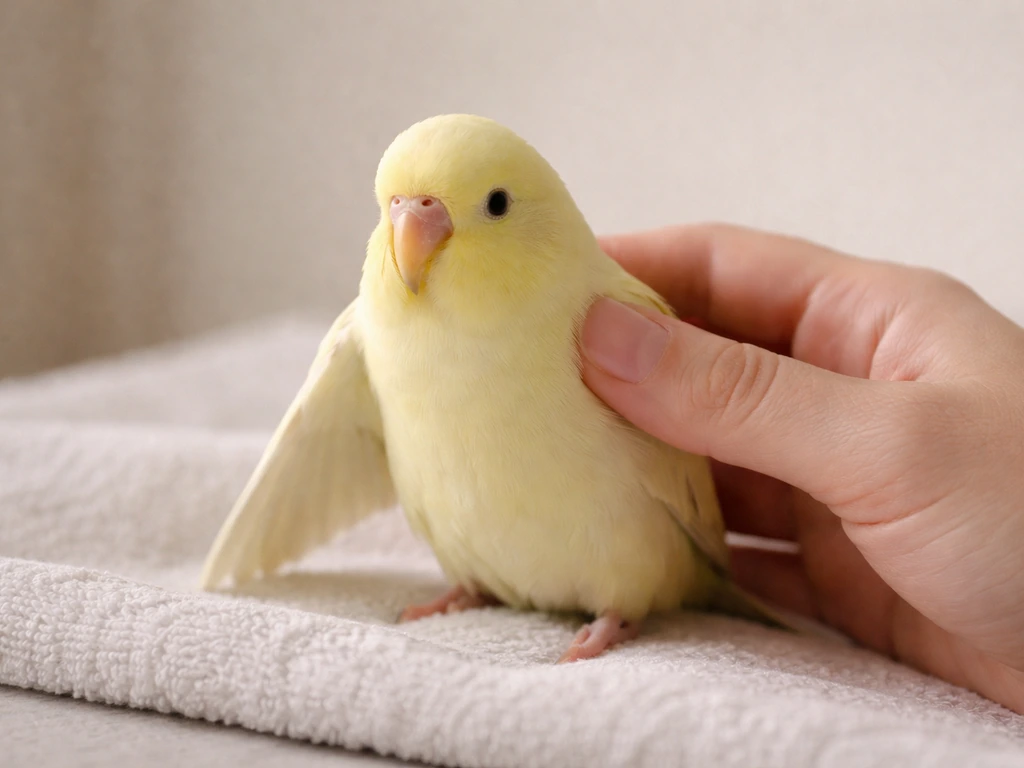
If your bird is limping, sitting on the cage floor, or refusing to put weight on a leg, something is wrong and it needs your attention today. Bird leg problems range from a simple sprain or pressure sore to gout, fractures, nerve damage, or a mite infestation, and the signs often overlap. The good news is that most causes are identifiable with a calm visual check, and knowing what you're looking at helps you decide whether this is a same-day emergency or a vet appointment you can schedule for this week.
Bird Leg Problems: Causes, Symptoms, and What to Do Now

Marcus Webb
2 Jun 2026
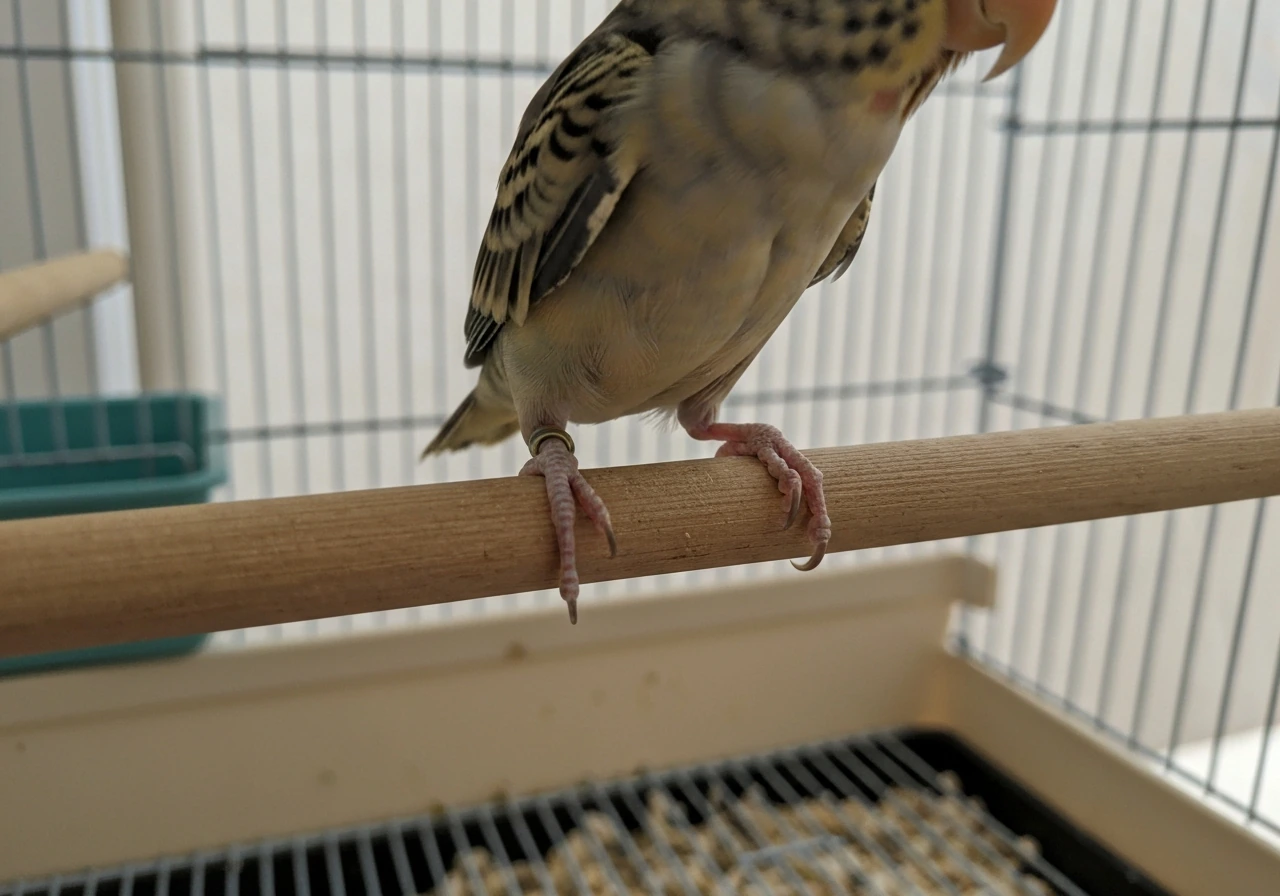
Common signs of bird leg problems
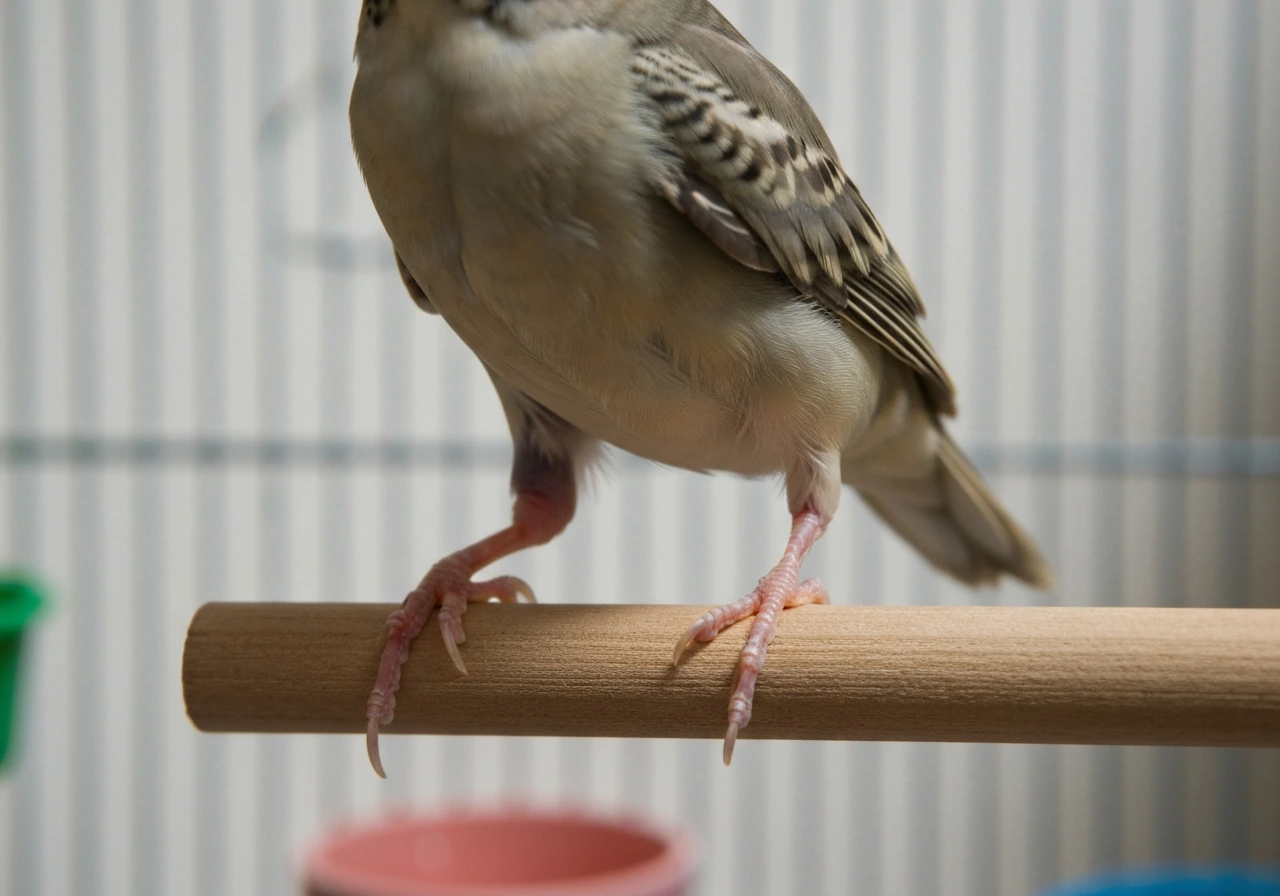
Birds are instinctively wired to hide weakness, so by the time you notice something is off, the problem has often been developing for a while. Watch for these signs closely:
- Limping or favoring one leg, or shifting weight to one side repeatedly
- Swelling, redness, or warmth around the foot, ankle, or leg joints
- Inability to grip a perch properly or dropping from the perch
- Sitting on the cage floor instead of perching (a significant red flag)
- Dragging one leg or holding a leg up against the body
- Visible lumps, lesions, crusting, or scaly buildup on the feet or legs
- Abnormal toe position, curled or splayed toes, or deformed joints
- Fluffed feathers and general lethargy alongside leg symptoms
- Paralysis or complete inability to bear weight on one or both legs
- Bleeding, open wounds, or raw areas on the foot pads
One thing worth knowing: if your bird is lame on one leg and has been for a while, the other leg can develop its own problems. When a bird compensates by putting all its weight on the healthy leg, that leg gets overloaded and can develop pressure sores or infection on the foot pad. So even if one leg looks fine, check both.
Quick at-home triage: what to check today
Before you call a vet or panic, do a calm visual inspection. You don't need to handle the bird roughly or force any joints. Here's a practical sequence to work through:
- Observe posture first without handling: Is the bird perching or on the floor? Is it bearing weight on both legs? Is one leg held up or dragged?
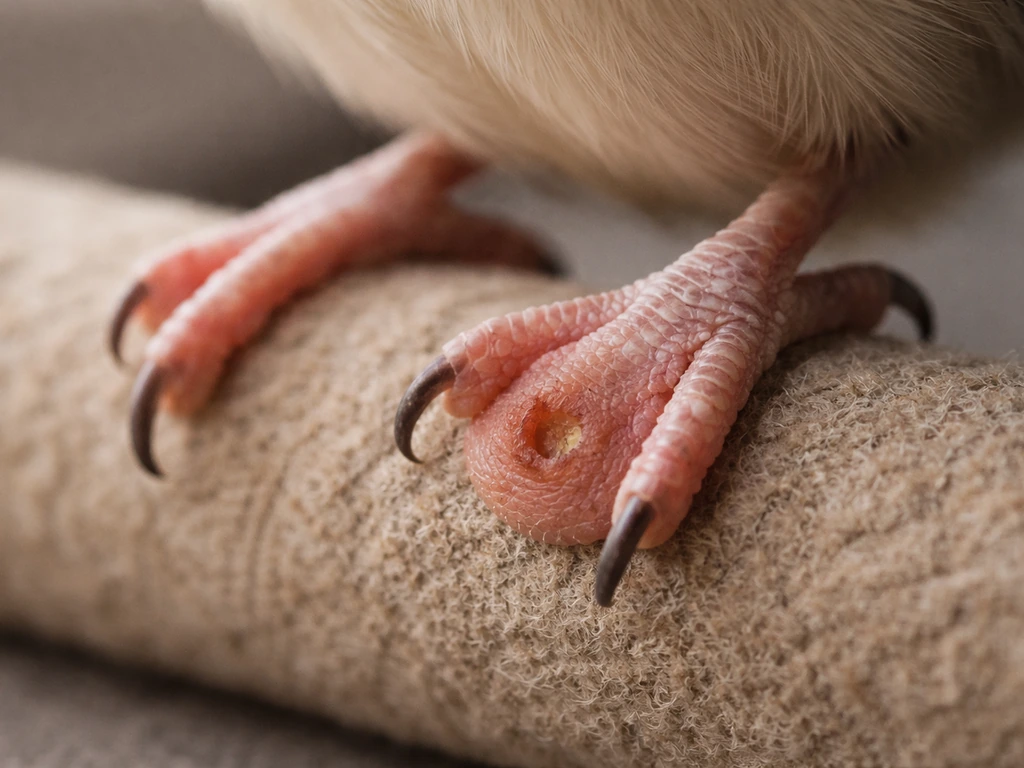
- Look at the foot pads: Check for redness, swelling, sores, scabs, or any raw or ulcerated skin on the bottom of the feet. These are classic early signs of bumblefoot (pododermatitis).
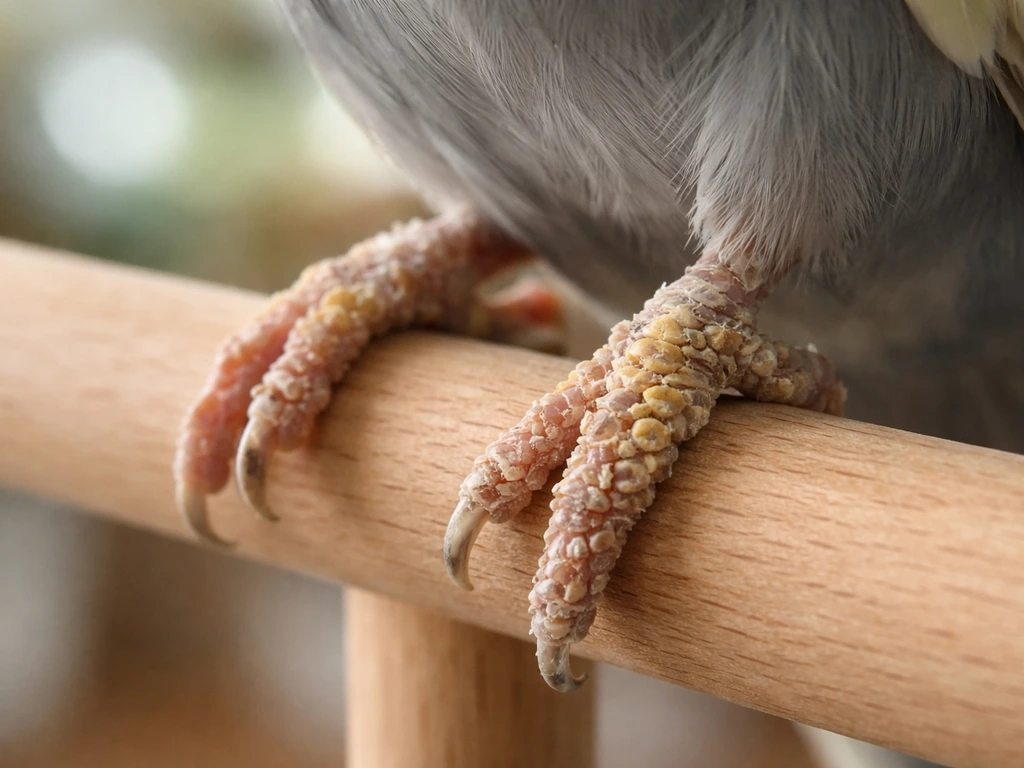
- Check for crusting or scaling: Crusty, scaly buildup on the legs, feet, or toes (especially a honeycomb-like or tassel appearance on the digits) suggests scaly leg mites.
- Feel gently for heat and swelling: Using a light touch, compare both legs and feet. Warmth and swelling in a joint points toward infection, gout, or injury.
- Check toe and joint alignment: Are the toes curling abnormally? Is there a visible bump or lump at a joint? Joint lumps with a chalky appearance may indicate articular gout.
- Assess grip strength: If the bird steps onto your finger, does it grip with both feet equally? A weak or absent grip on one side is a meaningful sign.
- Watch the bird walk and move: Even a few seconds of observation helps. A bird dragging a leg, falling, or unable to right itself needs urgent attention.
- Check the perches: Are they the right diameter? Rough, dirty, or too-thin/too-thick perches can cause or worsen foot problems.
Don't try to force a range-of-motion check by bending limbs yourself. If there's a fracture or dislocation, forcing the joint will cause serious pain and potentially more damage. Gentle observation is enough at this stage.
Most likely causes and how to tell them apart
Here's a rundown of the most common reasons birds develop leg problems, with the signs that point toward each cause.
Injury, fractures, and sprains
Trauma is one of the most common causes of sudden leg problems in birds. A fracture or dislocation usually comes on suddenly after a fall, collision, or scare in the cage. The bird will often refuse to bear weight on the leg at all, and you may see swelling or an abnormal angle at the bone or joint. Sprains and strains are less severe but still cause lameness and localized swelling. Bird sprained leg symptoms overlap significantly with fractures on visual inspection, which is why imaging matters. If the onset was sudden and the bird won't use the leg at all, treat it as a potential fracture until proven otherwise.
Bumblefoot (pododermatitis)
Bumblefoot is an inflammation and infection of the plantar (bottom) skin of the foot. It typically starts on the weight-bearing areas and progresses from redness and thickening of the skin to open sores and ulceration that allow bacteria deep into the tissue. Early bumblefoot shows as mild redness or a small hyperkeratotic (thickened, dry) patch. Advanced bumblefoot involves visible swelling, scabs, and sometimes lameness. Risk factors include hard or inappropriate perches, obesity, vitamin A deficiency, and any condition that makes the bird put extra pressure on one foot. The USDA APHIS identifies bumblefoot as a veterinary condition requiring prompt care, not something to wait out.
Gout
Avian gout involves the buildup of uric acid (urate) deposits in the body. Articular gout, the type that affects the legs, deposits urates into the synovial capsules and tendon sheaths of the joints. You'll often see swollen, firm, sometimes chalky-white nodules at the toe or ankle joints. The bird may be reluctant to move or grip and will often sit low or on the cage floor. Gout is related to kidney dysfunction, high-protein diets, or dehydration, and it's more common in older birds. This is a medical problem requiring diagnosis and management by a vet, not just a perch issue.
Arthritis
Arthritis in birds causes chronic joint inflammation, stiffness, and pain that tends to worsen gradually. It's more common in older or overweight birds. The bird may be slower to move, reluctant to step up, and stiff in the morning. Joints can be mildly swollen and warm. Arthritis also increases pressure on foot pads, which is why arthritic birds are at higher risk for secondary bumblefoot.
Scaly leg mites (knemidocoptiasis)
Scaly leg mites (Knemidocoptes species) burrow into the skin of the legs and feet, producing a characteristic crusty, honeycombed, or tassel-like buildup on the digits and scales of the leg. In some passerine species, the condition is called 'tassel foot.' The crusting can look dramatic and is usually not painful in early stages, but the legs can become deformed if left untreated. Diagnosis is confirmed by a vet using skin scrapings examined under a microscope. Do not attempt to peel or scrape the crusts yourself, and do not apply over-the-counter mite treatments without veterinary guidance. Anti-mite drugs like ivermectin can be toxic in birds if used at the wrong dose or via the wrong route.
Tendon and nerve problems
Tendon issues can cause a bird's toes to curl abnormally or a leg to appear functional but weak. Nerve damage or compression can show up as weakness, dragging, or paralysis of one leg with no obvious external injury. Neurologic causes can include vitamin B deficiency, infections, tumors pressing on nerves, or toxin exposure. These cases often don't have obvious external signs, which is why the symptom picture (sudden vs. gradual, one leg vs. both) matters a lot.
Infections and pressure sores
Bacterial and fungal infections can affect the skin and underlying tissue of the legs and feet, often entering through small cuts or existing skin damage. Pressure sores develop when birds spend too long on hard or inappropriate surfaces, and they can quickly become infected. These usually present as warm, red, swollen areas, sometimes with discharge.
| Cause | Key signs | Onset |
|---|---|---|
| Fracture/dislocation | Sudden non-weight-bearing, abnormal angle, swelling | Sudden |
| Sprain/strain | Limping, swelling, some weight-bearing still possible | Sudden or after exertion |
| Bumblefoot | Red/swollen foot pads, scabs, sores on bottom of foot | Gradual |
| Gout (articular) | Firm chalky joint swellings, stiffness, reluctance to move | Gradual |
| Arthritis | Chronic stiffness, slow movement, mild joint swelling | Gradual |
| Scaly leg mites | Crusty, honeycombed, or tassel-like scaling on legs/toes | Gradual |
| Nerve/tendon issue | Dragging, weakness, abnormal toe curl, no obvious external injury | Variable |
| Infection/pressure sore | Warmth, redness, swelling, possible discharge | Variable |
When it's an emergency vs. when to book a vet visit soon
Some leg problems are urgent; others can wait a day or two for a scheduled appointment. Here's how to tell the difference.
Go to an avian vet immediately if you see any of these
- Sudden paralysis or complete inability to use one or both legs
- The bird is dragging a leg and cannot right itself or stand
- Active bleeding that doesn't stop with gentle pressure within a few minutes
- A visibly broken or dislocated limb with an abnormal angle
- The bird has fallen from the perch and cannot get back up
- Complete collapse, inability to stand at all, combined with other signs like labored breathing or loss of consciousness
- Severe swelling with what looks like an open wound or exposed tissue
- The bird is totally unresponsive or barely moving
Sudden paralysis or weakness in a leg is always an emergency. If you notice a sudden head tilt, trouble balancing, or unusual weakness, take it seriously as a possible bird broken neck symptoms situation and contact an avian vet immediately. The window for effective treatment on neurologic issues, fractures, and serious infections is narrow.
Book a vet visit within a few days if you notice
- Limping or favoring one leg for more than 24-48 hours without improvement
- Mild to moderate swelling or warmth in a foot or joint
- Early bumblefoot signs: redness, small sores, or thickened skin on foot pads
- Crusty, scaly buildup on the legs or toes suggesting mites
- Gradually worsening grip strength or reluctance to perch
- Firm lumps at the joints that could indicate gout
- Any leg problem in a very young bird, a very old bird, or a bird that's also not eating
When you call to book the appointment, mention the specific symptoms and how long they've been present. Many avian vets will triage by phone and tell you if the bird needs to be seen same-day. Look for a vet who has specific avian experience, ideally board-certified in avian practice. Bring photos or short video clips of the abnormal gait, the foot, and the leg. Also bring notes on what changed (and when), the bird's diet, the perch types in the cage, and any other behavioral changes you've noticed.
Supportive care and safe home treatment steps
While you're waiting for a vet appointment or deciding whether a problem is urgent, there are things you can do right now to keep the bird stable and prevent the situation from getting worse.
Stabilize the environment first
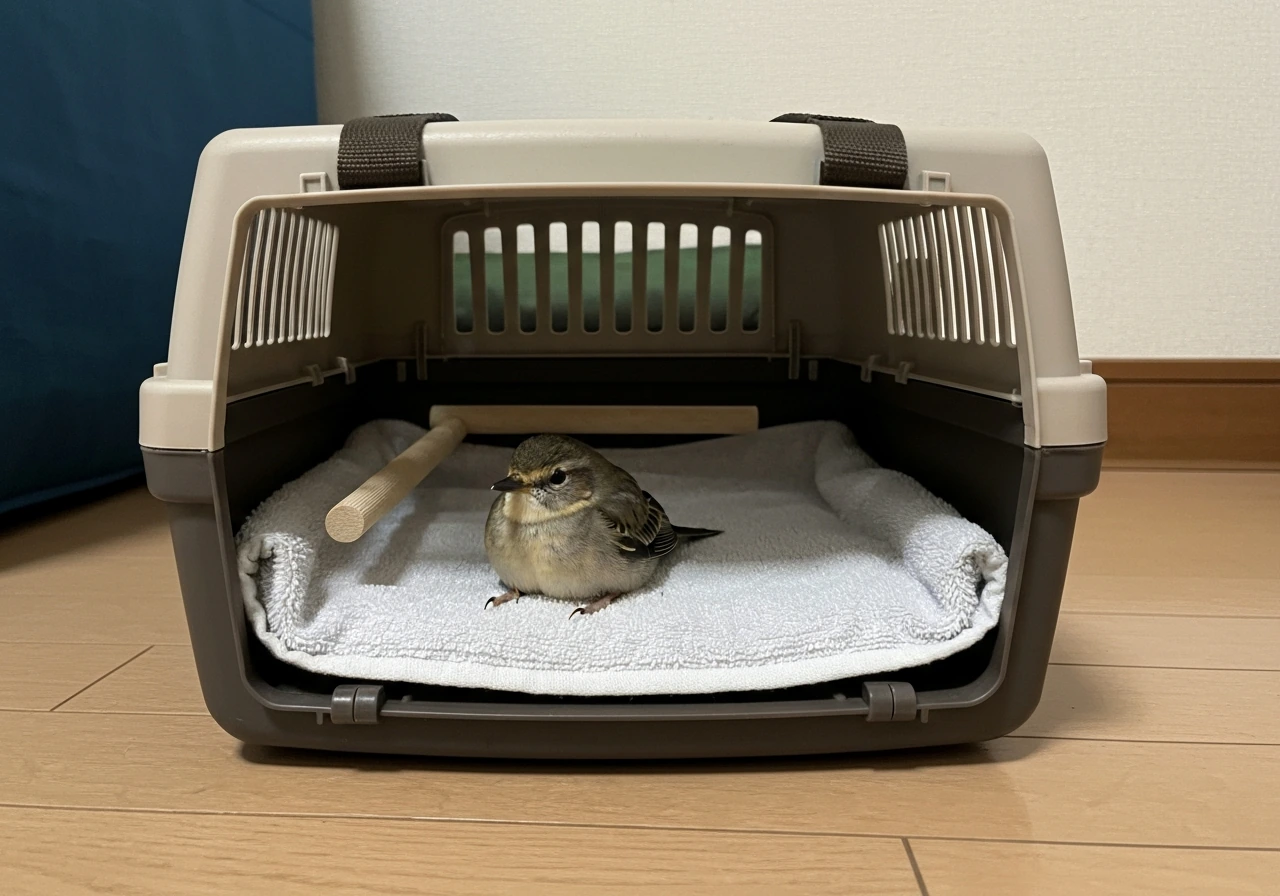
- Move the bird to a smaller, lower cage or a carrier so it can't fall far if it loses grip on a perch.
- Lower all perches, or remove them entirely if the bird can't grip, and line the floor with a soft towel or padded surface.
- Keep the bird warm (around 85-90°F for a compromised bird) in a quiet, draft-free space. A heating pad on low under half the carrier works well.
- Provide food and water at floor level so the bird doesn't have to climb or grip to access them.
- Minimize handling and stress. Stress alone can worsen a sick bird's condition rapidly.
For bleeding or open wounds
Apply gentle, steady pressure with a clean cloth or gauze to any bleeding area. Do not apply styptic powder to large or deep wounds. Do not bandage the foot tightly yourself unless you have avian first aid training, as an improperly placed bandage can cut off circulation. Clean, light pressure and prompt vet care are the right steps here.
What not to do at home
- Do not give human pain medications (ibuprofen, aspirin, acetaminophen): these are toxic to birds.
- Do not attempt to splint or bandage a leg yourself without veterinary guidance.
- Do not apply over-the-counter mite treatments or antiparasitic drugs: dosing errors can be fatal in birds.
- Do not try to drain swellings or scrape crusts off legs: this risks infection and injury.
- Do not force the bird to walk or exercise on a bad leg.
Veterinary diagnosis and typical treatments
When you bring the bird in, a good avian vet will do a full physical exam and use a combination of diagnostic tools depending on what they find. Here's what to expect:
How vets diagnose bird leg problems
- Physical examination: palpating the bones, joints, and soft tissue; checking grip strength and nerve response; evaluating posture and gait.
- Radiographs (X-rays): essential for fractures, dislocations, bone infections, articular gout, and assessing the degree of bumblefoot involvement in deeper tissue.
- Skin scrapings and microscopy: used to identify scaly leg mites (Knemidocoptes). The vet will examine the scraping under a microscope to confirm mite presence.
- Bacterial culture and sensitivity: for infected wounds, bumblefoot, or abscesses, to identify the specific bacteria and which antibiotics will work.
- Blood work: useful for diagnosing gout (uric acid levels), kidney disease, infections, and general health assessment.
Typical treatments by cause
- Fractures: stabilization with splinting or pinning under anesthesia; strict cage rest; pain management with vet-prescribed medications.
- Bumblefoot: cleaning and debridement of the wound (often under anesthesia), lancing and draining abscesses if present, bandaging with padded dressings, antibiotics based on culture results, and addressing underlying risk factors like diet and perch type.
- Gout: management focuses on addressing kidney health, dietary adjustments (usually reducing protein), hydration support, and vet-prescribed medications to help manage urate levels. There is no permanent cure for gout, but it can be managed.
- Scaly leg mites: vet-prescribed antiparasitic treatment (commonly ivermectin or similar, at the correct dose and route for the species); self-treating is risky because the same drug can be fatal at the wrong dose or via the wrong route in small birds.
- Arthritis: anti-inflammatory medications prescribed by the vet, environmental modifications, perch changes, and weight management.
- Nerve/tendon injuries: depending on the cause, treatment may include physical therapy, nutritional supplementation, anti-inflammatories, or surgical referral.
- Infections and abscesses: antibiotics or antifungals based on culture results, wound management, and supportive care.
For bumblefoot in particular, outcomes are much better when it's caught early. Advanced cases involving deep tissue or bone infection require more aggressive treatment and have a longer recovery. Radiographs are often a key part of deciding how far the infection has spread.
Prevention: perches, foot health, housing, hygiene, and monitoring
Most leg problems in pet birds are preventable or at least catchable early if you pay attention to a few key areas.
Perch setup matters more than most owners realize
The single biggest risk factor for bumblefoot, and a major contributor to arthritis and gout flare-ups, is poor perch selection. Birds need perches of varied diameters so that their feet don't always grip the same way. The bird's foot should wrap about two-thirds of the way around the perch. Rope, cork, and natural wood perches at different heights are ideal. Birds prone to foot problems do better on padded perches or platforms covered in foam or artificial grass-like material, which reduces friction and pressure on the foot pads. Avoid sandpaper-covered perches entirely. They don't wear nails effectively and they abrade the foot pads, creating entry points for bacteria.
Hygiene and regular foot checks
Keep the cage clean and perches free of accumulated droppings, which harbor bacteria and fungi. Check your bird's feet every week. What you're looking for: early redness or thickening of the foot pad skin (hyperkeratosis), any flaking or baldness of foot skin, early scaling on the legs, and any changes in how the bird grips or moves. Catching bumblefoot or mites at the earliest stage makes a significant difference in how quickly and easily they can be treated.
Diet and weight
Obesity is a direct risk factor for bumblefoot and puts extra stress on arthritic joints. A balanced, species-appropriate diet keeps weight in check and also provides adequate vitamin A, which is essential for healthy skin on the feet. Vitamin A deficiency is a known risk factor for pododermatitis. If you're not sure whether your bird's diet is right, that's worth discussing at your next vet visit.
Monitor birds with chronic conditions more closely
Birds with arthritis, a history of gout, prior leg injuries, or any condition that causes them to favor one leg need extra foot monitoring. A bird that limps consistently on one side is loading its other foot abnormally, and that healthy foot can develop pressure sores and infection over time. Check both feet, not just the obviously affected one. Regular vet checkups (at least annually, more often for birds with known health issues) help catch slow-developing problems before they become serious.
Leg problems don't exist in isolation. A bird with molt-related stress, a broken wing, or any systemic illness may also show changes in how it holds or uses its legs. Bird molting symptoms can sometimes overlap with leg changes, so it helps to note when the moult started and whether any new lumps, stiffness, or lameness show up molt-related stress. If you're already managing another health issue in your bird and you notice leg changes, mention it to your vet right away rather than assuming it's unrelated.
FAQ
How do I decide if my bird needs same-day care for bird leg problems, even if it seems “mild”?
Same-day care is recommended if the bird will not bear weight, the leg looks deformed or very swollen, there is spreading redness/warmth, pus or a foul odor is present, or the weakness is sudden. Also treat any leg problem that is worsening hour by hour as urgent, because fractures, serious infections, and neurologic problems have a short treatment window.
Can I wait 24 to 48 hours if my bird is only limping a little?
It may be reasonable to wait only if the limp is mild, the bird is still using the leg normally for stepping, there is no swelling or open skin, and there is clear improvement or no change over the next day. If the bird is sitting low, increasing reluctance to step up, or the foot pad looks red or thicker, plan a veterinary visit sooner rather than later.
What’s the safest way to examine the foot pad and toes at home?
Use bright light and observe while the bird is standing naturally. Look for changes in color (red, pale, gray), thickened dry patches, flaking or bald areas, swelling, and any toe curling or scabbed skin. Avoid picking at crusts and avoid stretching joints or toes, because forcing movement can worsen fractures, dislocations, or inflamed tissue.
My bird’s toe looks curled, but there is no obvious injury. What should I suspect?
Toe curling can happen with tendon strain or neurologic compression. Because external signs may be minimal in neurologic causes, treat this as more than a simple sprain if it is one-sided, newly progressive, or paired with dragging/weak grip. A vet exam and, when indicated, imaging or neurologic assessment are important before you assume it is “just posture.”
Is bumblefoot the same as a callus or “sore” from perches?
Early bumblefoot can look like mild redness or a small thickened, dry patch, which can be mistaken for a callus. The key difference is progression, if it is not improving after perch adjustments, or if you see skin breakdown, scabbing, discharge, or increasing limping. Any open area should be treated as veterinary priority because bacteria can enter deeper tissue.
What should I change immediately in the cage if my bird has foot pad or leg issues?
Provide soft, stable footing such as padded perches or platforms covered with a low-friction surface, and reduce climbing/stepping distances. Keep perches varied in diameter but remove abrasive surfaces like sandpaper. Also keep the cage cleaner than usual to reduce bacterial load on any irritated skin.
Can I use over-the-counter ointments or disinfectants for bird leg problems?
Avoid random topical antibiotics or over-the-counter mite products unless a veterinarian instructs you. Many treatments can irritate tissue, interfere with proper diagnosis, or be ineffective against deeper infection. If there is an open area, focus on keeping the area clean and reducing pressure, then get veterinary guidance for what is safe to apply.
Are ice packs, heat, or soaking recommended for limping birds?
Do not apply heat or cold directly in a way that could burn or chill the skin. For soaking, avoid it unless your avian vet specifically recommends it, because prolonged moisture can worsen skin conditions and introduce contaminants. In the meantime, prioritize pressure reduction and clean, dry surfaces.
What first aid should I do if there is bleeding or a suspected wound?
Use a clean cloth or gauze to apply gentle, steady pressure until bleeding slows. Do not tightly wrap the foot unless you have avian first aid training, because circulation can be cut off. If the wound is deep, extensive, or the bird keeps bleeding, arrange urgent veterinary care.
If one leg is affected long-term, why should I check the other leg too?
When a bird compensates by loading the healthier leg, that foot pad and toes take more repetitive pressure. Over time this can trigger secondary pressure sores or infection on the “good” side. Check both legs and feet during every observation and during any treatment period.
Could vitamin A or diet cause bird leg problems?
Yes. Vitamin A deficiency is linked with pododermatitis risk and can contribute to skin problems on the feet. Diet can also influence gout risk if there is a pattern of excessive protein and if hydration is poor. If you are unsure about the balance of pellets, seeds, and treats, discuss a diet review with your avian vet.
How quickly should scaly leg mite symptoms spread if left untreated?
They can progress over weeks, leading to crusting that becomes more extensive and may cause deformity. While early stages may look dramatic but not very painful, untreated mites can become harder to treat and may require longer therapy. If you see honeycombed or tassel-like crusting, schedule a veterinary diagnosis using skin scrapings rather than attempting to scrape at home.
What information should I bring to the vet visit for bird leg problems?
Bring clear photos or short videos showing the gait and the exact foot or joint appearance, plus a timeline of when symptoms started and whether they are improving or worsening. Also note perch types and sizes, any recent falls or cage changes, diet details, and any other symptoms such as reduced appetite, fluffed posture, or changes during molt.
If the vet suspects gout or kidney-related issues, what should I expect?
Expect evaluation of systemic factors, not only the joints, because urate buildup is connected to kidney function, dehydration, and diet. Treatment usually includes managing pain and inflammation and addressing the underlying metabolic issue, so your vet may recommend labs and a tailored hydration and diet plan.
Next Article
Bird Broken Wing Symptoms: What to Look For and What to Do
Spot bird broken wing symptoms fast, separate from other wing injuries, take safe at-home steps, and know vet care and r