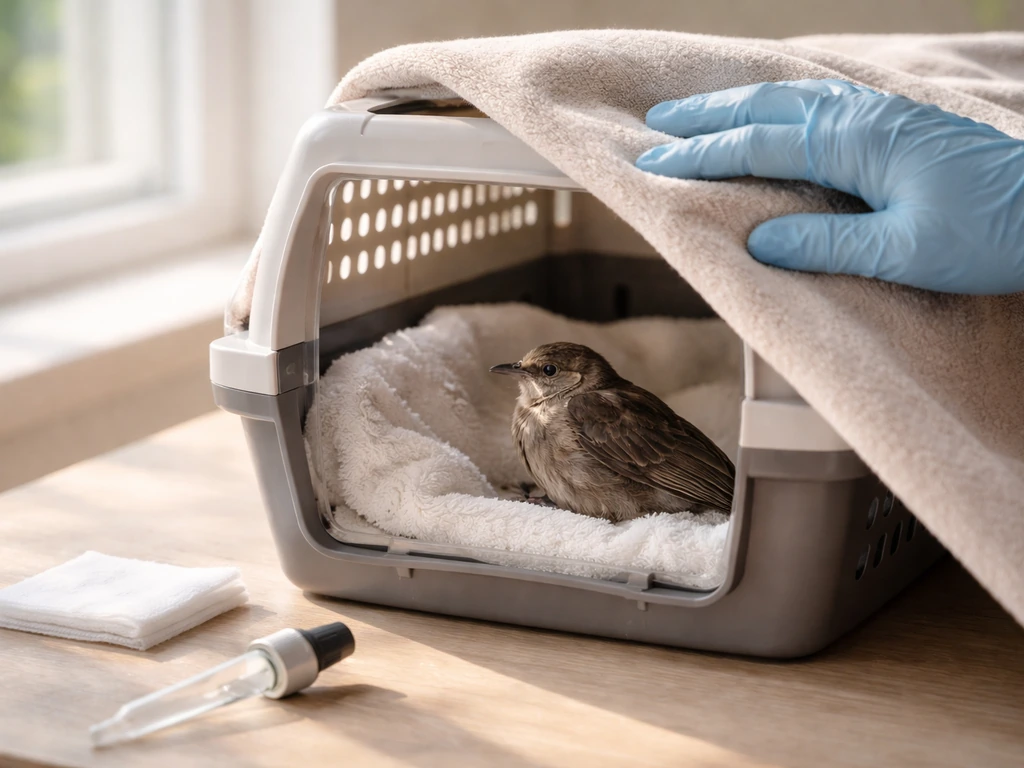
Yes, bird feathers can carry pathogens, and yes, contact with them does carry a real (though often low) risk of infection for people. The risk is not usually about the feather itself acting like a needle. It is more about what is on or around the feather: dried droppings, secretions, feather dust, and sometimes mites. Under the right conditions, handling a feather (especially a wild bird feather found on the ground) and then touching your face, or breathing in disturbed dust from a pile of feathers and debris, can expose you to bacteria, fungi, or parasites. That said, picking up a single feather outdoors and washing your hands afterward is a very different situation from shoveling out a pigeon-infested attic. Context and exposure level matter enormously.
Do Bird Feathers Carry Diseases? Risks and What to Do

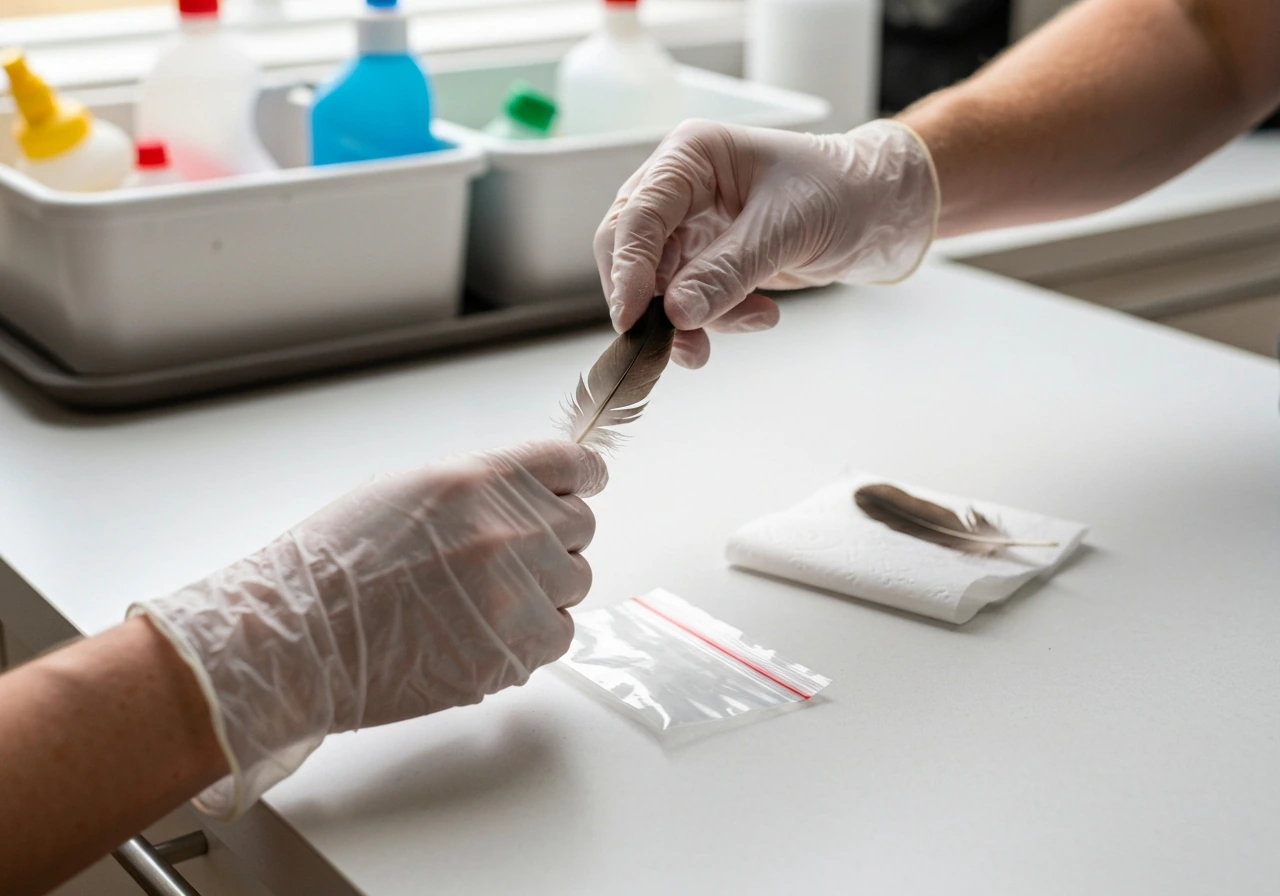
Can bird feathers actually carry disease?
The short answer is yes, with important caveats. The short answer is yes, with important caveats. Feathers themselves are not the primary vehicle for infection, but they can be contaminated with bacteria, fungi, or parasites from the bird's body, droppings, or nesting environment. are not the primary vehicle for infection, but they can be contaminated with bacteria, fungi, or parasites from the bird's body, droppings, or nesting environment. According to OSHA, blank" rel="noopener noreferrer">after a bird recovers from an infection like psittacosis, the causative bacteria can remain in the bird's blood, feathers, and droppings for many weeks. So even a feather from a bird that looked healthy could be carrying something.
The bigger concern is feather dust and dried material that clings to feathers. The CDC notes that the most common way people get infected with psittacosis is by breathing in dust that contains dried bird secretions or droppings, not by direct feather-to-skin transmission. Feathers found near nesting areas or in accumulated debris almost always have dried droppings mixed in, which is where most of the pathogen load sits.
Ectoparasites are another factor worth mentioning. Mites like Ornithonyssus sylviarum live in wild bird nests and can hitch a ride on feathers or nesting material. They are not disease agents in the same way bacteria and fungi are, but they can cause skin irritation and do indicate you are dealing with wild-bird-associated material that deserves careful handling.
How people actually get infected from feathers
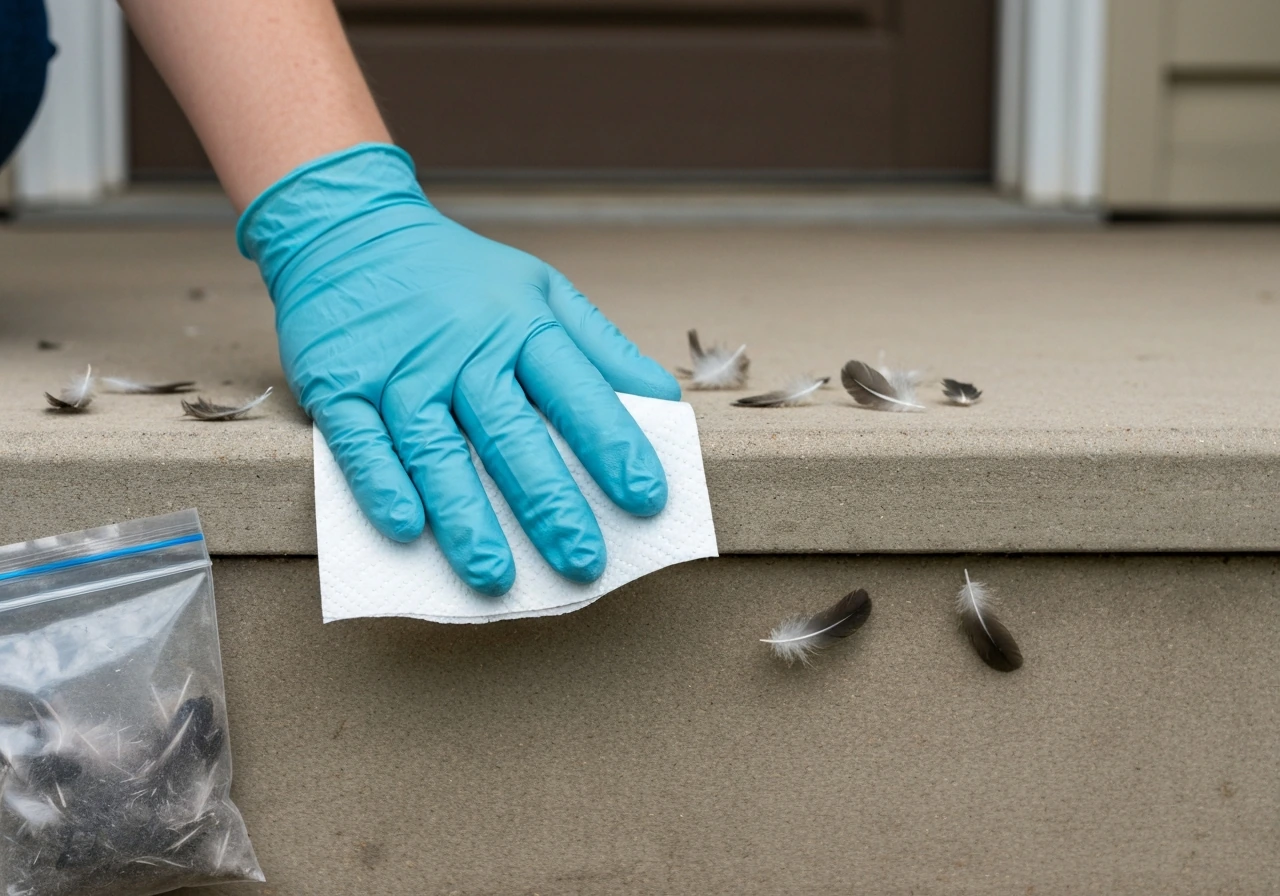
Transmission almost always involves one of three routes: inhalation of contaminated dust, touching your face or mouth after handling contaminated material, or (less commonly) contact with broken skin. Of these, inhalation is by far the most significant. When you pick up a feather, shake it, sweep up a pile of loose feathers, or disturb a bird-contaminated space, tiny dried particles become airborne. If those particles carry fungal spores or bacteria, breathing them in is enough to cause infection.
This is why cleanup method matters so much. Dry sweeping or vacuuming with a standard household vacuum actively aerosolizes particles rather than containing them. The CDC and WorkSafe both advise against dry sweeping, using a standard household vacuum, or using compressed air to clean up bird droppings and debris, for exactly this reason.
Direct skin contact with an intact feather and no open wounds carries relatively low risk as long as you wash your hands afterward. The risk rises when you have broken skin (a cut or abrasion), when you touch your face, or when you handle large amounts of feathers, debris, or nesting material without respiratory protection.
Wild bird feathers vs pet bird feathers: the risk is not the same
Wild bird feathers found on the ground carry more unpredictable risk than feathers shed by a healthy, well-cared-for pet bird. Wild birds can carry a wide range of pathogens, and a feather dropped outdoors may have been sitting in soil, near droppings, or in a nest shared with insects and fungi. You have no way of knowing the bird's health history or what the feather has come into contact with.
Pet birds in a clean, monitored home environment are a lower-risk scenario in general, but they are not zero risk. Birds with psittacosis, for example, can shed the bacteria in their droppings and respiratory secretions even when they show no visible signs of illness. The CDC confirms that both sick birds and infected birds without symptoms shed bacteria this way. So if your pet bird is not regularly seen by a vet, you cannot assume its feathers and cage dust are pathogen-free.
| Factor | Wild Bird Feathers | Pet Bird Feathers |
|---|---|---|
| Pathogen history | Unknown, unpredictable | Partially known if vet-monitored |
| Environmental contamination | High (soil, droppings, nesting debris) | Lower if cage is cleaned regularly |
| Ectoparasite risk (mites) | Higher, especially near nests | Low in well-maintained settings |
| Fungal spore exposure | Higher if feather is near soil/droppings | Lower but not zero |
| Overall risk level | Moderate to high with significant exposure | Low to moderate, higher if bird is unwell |
If you find a feather on the ground outdoors, treat it as potentially contaminated and handle it accordingly. Do not let children handle wild feathers casually, and do not bring them inside without cleaning. For pet birds, the most important protective step is routine veterinary care and keeping the cage area clean.
Diseases most commonly linked to feather and bird contact
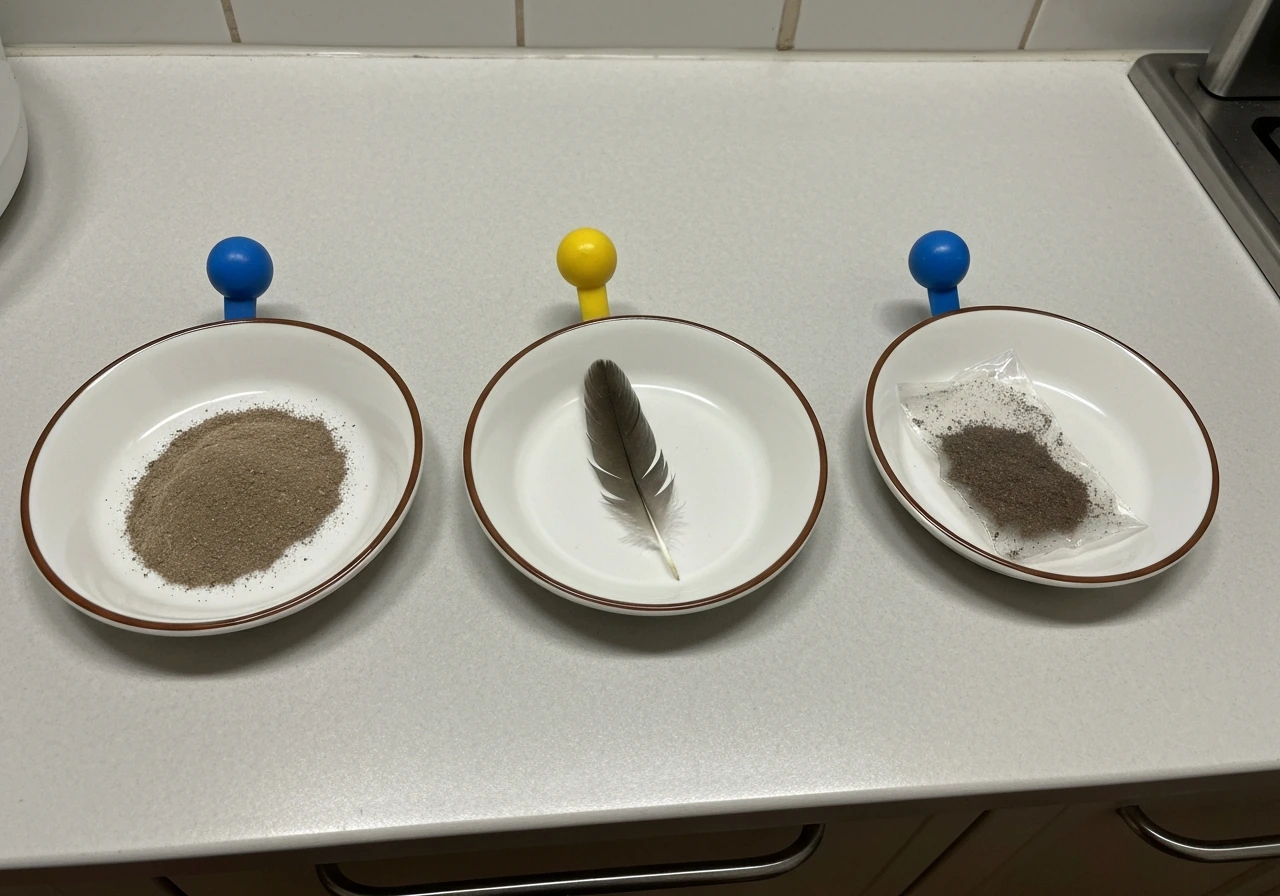
There are three disease categories that come up most consistently in research on bird-related human infections. All three involve inhalation as the primary transmission route, and all three have been linked to contact with bird feathers, droppings, dust, or nesting material.
Psittacosis (parrot fever)
Psittacosis is caused by the bacterium Chlamydia psittaci and is the disease most directly associated with feather and bird dust contact. It is found in parrots, parakeets, cockatiels, pigeons, and many other bird species. Infection typically happens by breathing in dust from dried droppings or secretions. The CDC notes the incubation period is typically 5 to 14 days, and the illness usually presents as an upper respiratory tract infection with fever, headache, muscle aches, and a dry cough. People at higher risk include pet bird owners, bird breeders, veterinary workers, and anyone who handles birds or cleans bird enclosures regularly.
Histoplasmosis
Histoplasmosis is a fungal infection caused by Histoplasma capsulatum, a fungus that thrives in soil enriched by bird or bat droppings. It is not transmitted directly from bird to person but from disturbing contaminated soil or debris. The CDC states that risk increases sharply when activities disturb soil containing bird droppings, because breathing in the fungal spores is how infection occurs. Cleaning out a barn, attic, or any space with accumulated bird droppings without proper protection is a classic high-risk scenario. Most healthy people who inhale a small number of spores experience no symptoms or mild flu-like illness, but larger exposures or immunocompromised status can lead to serious lung disease.
Cryptococcosis
Cryptococcosis is caused by the fungus Cryptococcus neoformans, which is found in soil and in pigeon droppings in particular. Like histoplasmosis, infection occurs by breathing in fungal spores, not through direct contact with a bird. NYC Health specifically lists cryptococcosis as one of the diseases associated with pigeon droppings. Healthy immune systems usually contain the infection, but people with compromised immunity (including those with HIV/AIDS or cancer, or those on immunosuppressive medications) are at significantly higher risk of serious illness. NYC Health explicitly advises that immunocompromised individuals should not clean up bird droppings at all.
How to handle, clean up, and dispose of feathers safely
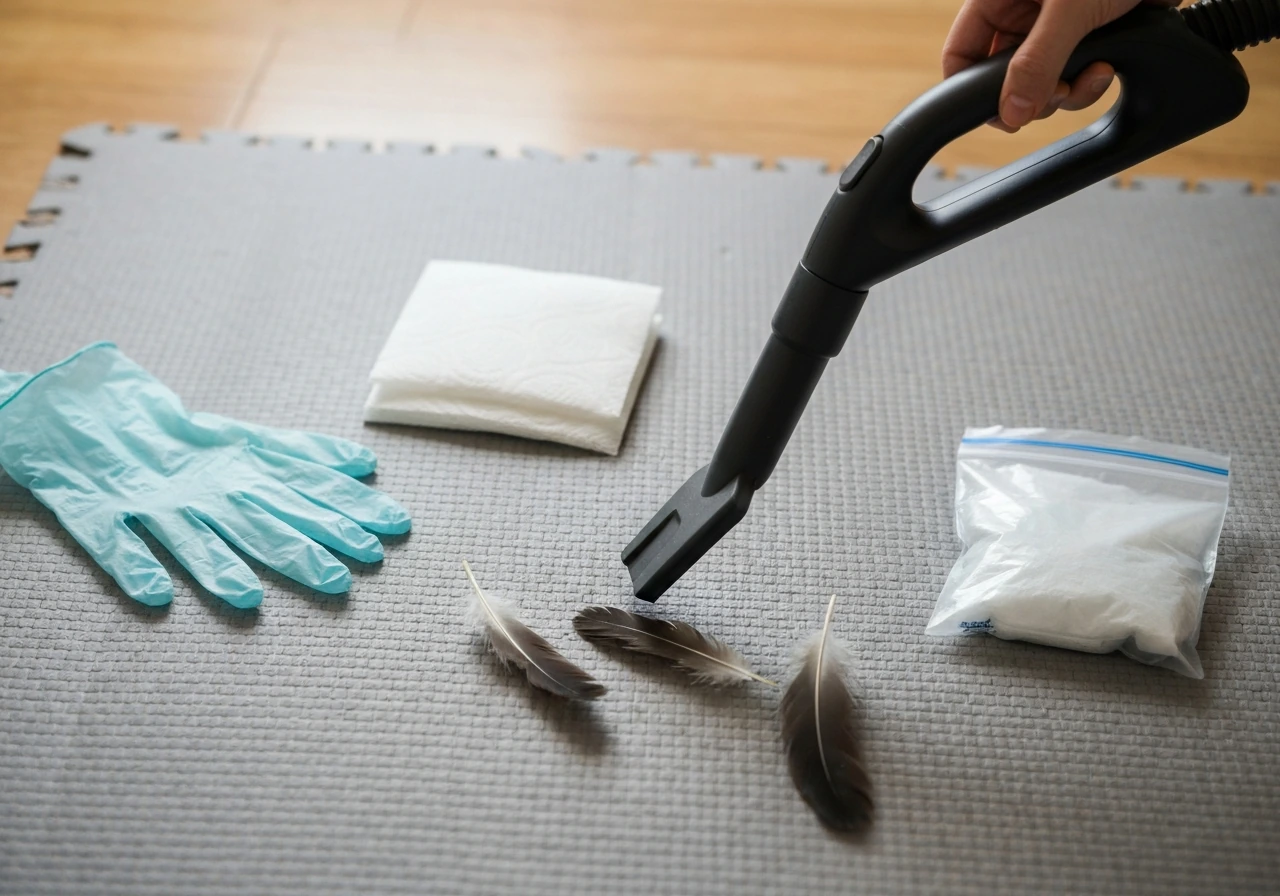
If you find a feather or need to clean an area with bird feathers, droppings, or nesting material, the single most important principle is: do not create dust. Here is a practical step-by-step approach.
- Put on gloves (disposable nitrile gloves are ideal) before touching feathers or any bird-associated debris.
- If there is more than a small amount of material, or if it is in an enclosed space, wear a properly fitted N95 or P100 particulate respirator. A surgical mask is not sufficient for fungal spore protection.
- Wet the material lightly with water or a diluted disinfectant before handling. This suppresses dust and reduces aerosol risk significantly. The CDC and WorkSafe both recommend this approach.
- Pick up feathers or debris carefully and place them directly into a sealed plastic bag. Do not shake feathers or debris.
- Do NOT dry-sweep, use compressed air, or use a standard household vacuum. These methods all aerosolize particles. Use a HEPA-filtered vacuum if mechanical collection is needed.
- Seal and dispose of the bag in your regular trash. Double-bagging is a reasonable extra step for larger accumulations.
- Wash your hands thoroughly with soap and water after removing gloves. Wash any exposed skin.
- If you were working in an enclosed space with heavy accumulation, shower and change clothes before entering other areas of your home.
For a single feather found outdoors, the process is much simpler: pick it up with a bag or gloved hand, seal it, and wash your hands. The precautions above are scaled for more significant exposures like cleaning out an attic, shed, or area with accumulated droppings and nesting material.
Warning signs: what to watch for in birds and in people
Signs of illness in birds
Birds can carry and shed pathogens even when they look fine, which is part of what makes this topic tricky. That said, visible signs of illness in a bird are always a reason to be more careful about contact and to get the bird to a vet. Watch for:
- Discharge from the eyes or nostrils
- Labored or noisy breathing
- Fluffed feathers combined with lethargy or reduced activity
- Loss of appetite or significant weight loss
- Loose, discolored, or unusual droppings
- Sneezing more than occasionally
- Sitting at the bottom of the cage rather than perching
Remember that birds are prey animals and instinctively hide illness. By the time symptoms are obvious, the bird may already be significantly unwell. Regular vet checks catch problems earlier and reduce the risk of undetected pathogen shedding in your home.
Symptoms in people after bird or feather exposure
If you have had significant contact with bird feathers, droppings, or nesting material and then develop any of the following within a few days to two weeks, take it seriously and mention the exposure to your doctor:
- Fever, chills, or sweating
- Persistent dry cough or chest tightness
- Headache and muscle aches that feel out of proportion to any obvious illness
- Shortness of breath, especially with minimal exertion
- Fatigue that does not improve with rest
- Skin rashes following contact with feathers or nesting material (may indicate mite exposure)
Psittacosis, for example, has an incubation period of 5 to 14 days and can look like a typical upper respiratory infection or atypical pneumonia. Histoplasmosis symptoms often resemble a mild flu. Neither is obviously bird-related unless you specifically mention the exposure to your healthcare provider.
When to call a vet or a doctor
For your bird: If your pet bird shows any of the warning signs listed above, schedule a vet appointment promptly rather than waiting to see if it improves. Avian illnesses can progress quickly, and birds that appear only mildly unwell in the morning can deteriorate fast. If you work with or have recently acquired a new bird and it develops respiratory symptoms, that warrants urgent veterinary attention.
For yourself: The CDC advises you to see a healthcare provider if you get sick after buying or handling a pet bird or live poultry. The same logic applies after significant exposure to wild bird feathers, droppings, or nesting material. Be specific with your doctor: tell them what you were exposed to, how (handling feathers, cleaning an enclosed space, etc.), and how long ago. This information directly shapes what tests they order. Many of these infections are treatable but require the right diagnosis first.
People with compromised immune systems (due to HIV/AIDS, cancer, organ transplant, or immunosuppressive medication) should be especially cautious and should not handle large amounts of bird-associated debris without consulting a healthcare provider first. The risk of cryptococcosis and histoplasmosis is meaningfully higher in this group, and what causes mild illness in a healthy adult can be serious in someone who is immunocompromised.
If you are a bird owner and want to understand related health risks more broadly, it is worth reading up on how bird-related respiratory conditions develop and what symptoms in birds are most associated with transmissible pathogens. The more you understand about both sides of the equation, the better positioned you are to protect yourself and your bird.
FAQ
If I touched a feather and it was just for a few seconds, do I still need to worry about diseases?
For a brief touch with no broken skin, the risk is usually low if you avoid touching your face afterward and wash hands promptly with soap and water. The concern rises if the feather was part of a pile or was shaken or swept, because airborne dust from dried droppings or secretions is the main exposure route.
Is it safe to shake out a feather, blanket, or jacket that has bird material on it?
In most cases, no. Shaking and dry beating can aerosolize dried droppings and feather dust, increasing inhalation exposure. If you must handle it, lightly bag it first, then clean with wet methods (or a properly ventilated, filtered process) and wash hands after.
What should I do if I already vacuumed up bird feathers with a regular household vacuum?
Treat it like a dust-creation event. Avoid reusing the vacuum for other cleaning until you have ventilated the space, emptied the canister or bag carefully outdoors or in a controlled way, and cleaned the exterior. Afterward, wash hands and consider a short re-entry delay to let aerosols settle.
Can bird feathers spread illness through pets, like my cat or dog bringing feathers inside?
Potentially, but the risk is usually about what the pet tracks in, mainly contaminated dust or droppings on paws or fur. If that happens, remove the pet from the area, wipe paws or fur if feasible, and clean the floor using methods that do not create dust, then wash hands.
Should I wear gloves and a mask when handling wild bird feathers?
Gloves help reduce hand-to-mouth risk, but the mask is about inhalation control. For small outdoor items, gloves plus careful handling and handwashing may be enough, but for piles, nesting material, or enclosed spaces, use respiratory protection and avoid any action that makes particles airborne.
Are mites on bird feathers contagious to people?
Mites are not typically the same type of direct pathogen exposure as bacteria or fungi, but they can cause skin irritation and indicate that the material came from a wild bird environment. If you develop itchy bumps after contact, wash exposed skin, avoid scratching, and consider medical advice if symptoms spread or persist.
Does it matter if the feather looks clean and dry, or if there are no visible droppings?
Visible cleanliness lowers risk but does not guarantee safety, especially for outdoor feathers. Droppings and secretions can cling in ways that are not obvious, and dried dust can still be present near nests. If there was any disturbance, treat it as potentially contaminated and avoid breathing debris.
How long should I wait before letting kids or other family members enter an area after cleaning bird droppings or feathers?
A practical approach is to ventilate the space and wait until dust has fully settled, especially after any contaminated debris was removed. If you disturbed a lot of material or used any tool that could aerosolize particles, extend the waiting time and limit re-entry until you can confirm the area is clean and dry.
If a pet bird seems healthy, can it still shed organisms through its feathers or cage dust?
Yes. Birds can shed certain organisms even without obvious symptoms, so “looking fine” is not a guarantee. If your bird is not under regular veterinary care, assume that cage dust and droppings could carry risk, and prioritize routine cleaning habits that avoid creating airborne dust.
What symptoms should trigger urgent medical attention after feather or droppings exposure?
Seek prompt care if you develop significant breathing symptoms like worsening cough, shortness of breath, high fever, chest pain, confusion, or symptoms that rapidly worsen within days to two weeks. Also seek help sooner if you are immunocompromised, because infections that are mild in healthier people can become serious.
What should I tell my doctor if I get sick after handling feathers or cleaning a nest?
Be specific about exposure timing and how it happened, for example, handling wild feathers on the ground, cleaning an attic or shed, sweeping, or using a vacuum. Mention whether there was dust, droppings, or nesting debris, and list any relevant risk factors like immunosuppressive medications or recent travel.
Is it safe for immunocompromised people to help with cleanup if it’s a small amount of feathers?
It may still be best to avoid handling dusty bird debris. If exposure is unavoidable, consult a clinician or caregiver guidance first, minimize aerosolization, and use appropriate respiratory protection and ventilation. Some infections associated with bird-contaminated environments can have a higher risk of severe disease in this group.
How can I clean up a small number of feathers indoors without creating dust?
Use containment first, like bagging or wetting in place to prevent particles from becoming airborne. Wipe surfaces with a damp method rather than dry sweeping, and after cleanup, wash hands and launder any contaminated fabrics. Avoid compressed air and dry sweeping for this reason.
Bird Trauma Symptoms: Signs, Triage, and First Aid Steps
Recognize bird trauma symptoms, triage urgency, and give safe first aid for bleeding, fractures, head injuries, and shoc