Medieval plague doctors wore bird-like masks because they believed bad-smelling air was literally making people sick, and they thought a long beak packed with herbs and spices would filter that air before it reached them. That's the short answer. But there's a lot more worth knowing here, especially if you care for birds today, because the underlying concern about airborne particles from birds turns out to be scientifically valid, even if their solution was completely wrong.
Why Did Doctors Wear Bird Masks and What It Means for Bird Health

Marcus Webb
23 Mar 2026
What the bird mask actually was
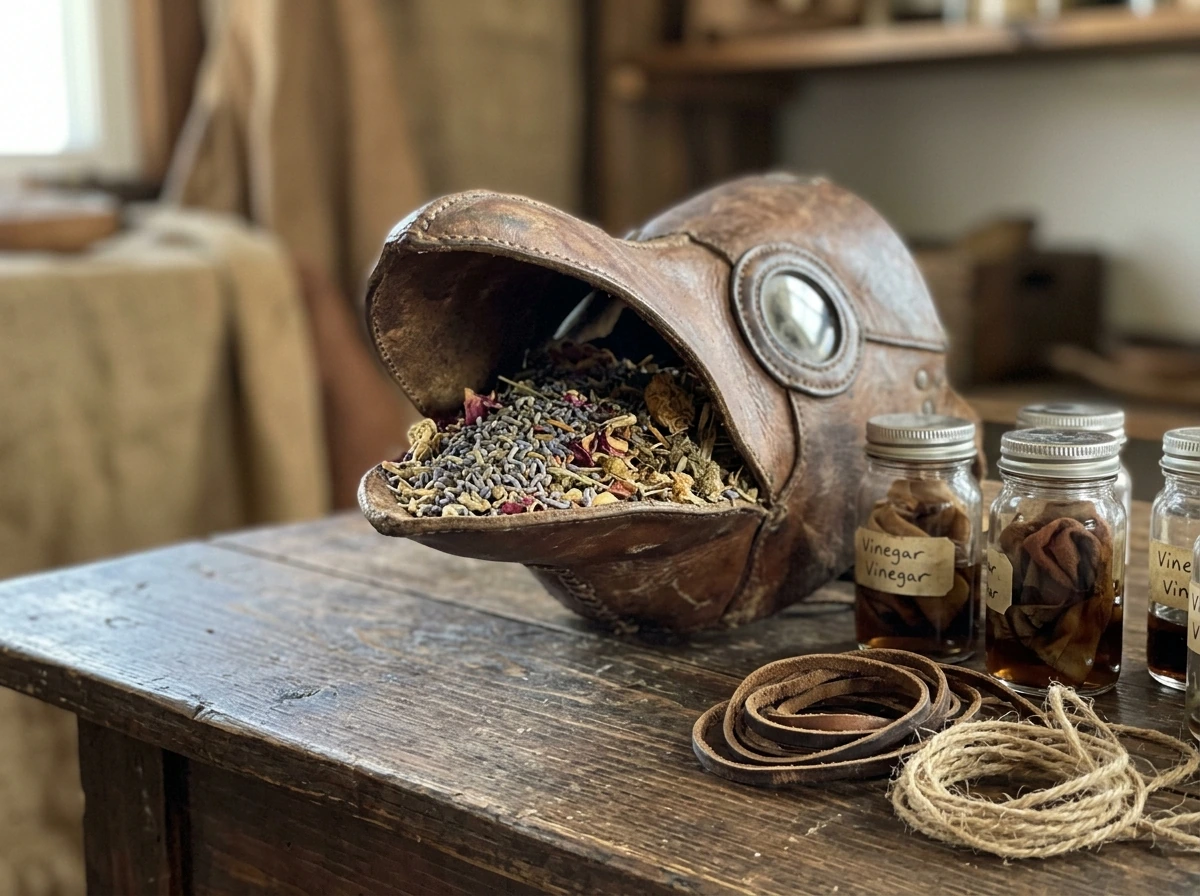
The iconic plague doctor look that you've probably seen in paintings, costumes, and Halloween displays was a full protective outfit that emerged in early modern Europe, most commonly associated with outbreaks like the Black Death and later plagues including the Marseille epidemic of 1720. The mask itself was made of leather, with circular glass openings for the eyes and a long curved beak projecting from the nose and mouth area. Doctors also wore a waxed linen robe, leather gloves, boots, and a wide-brimmed hat.
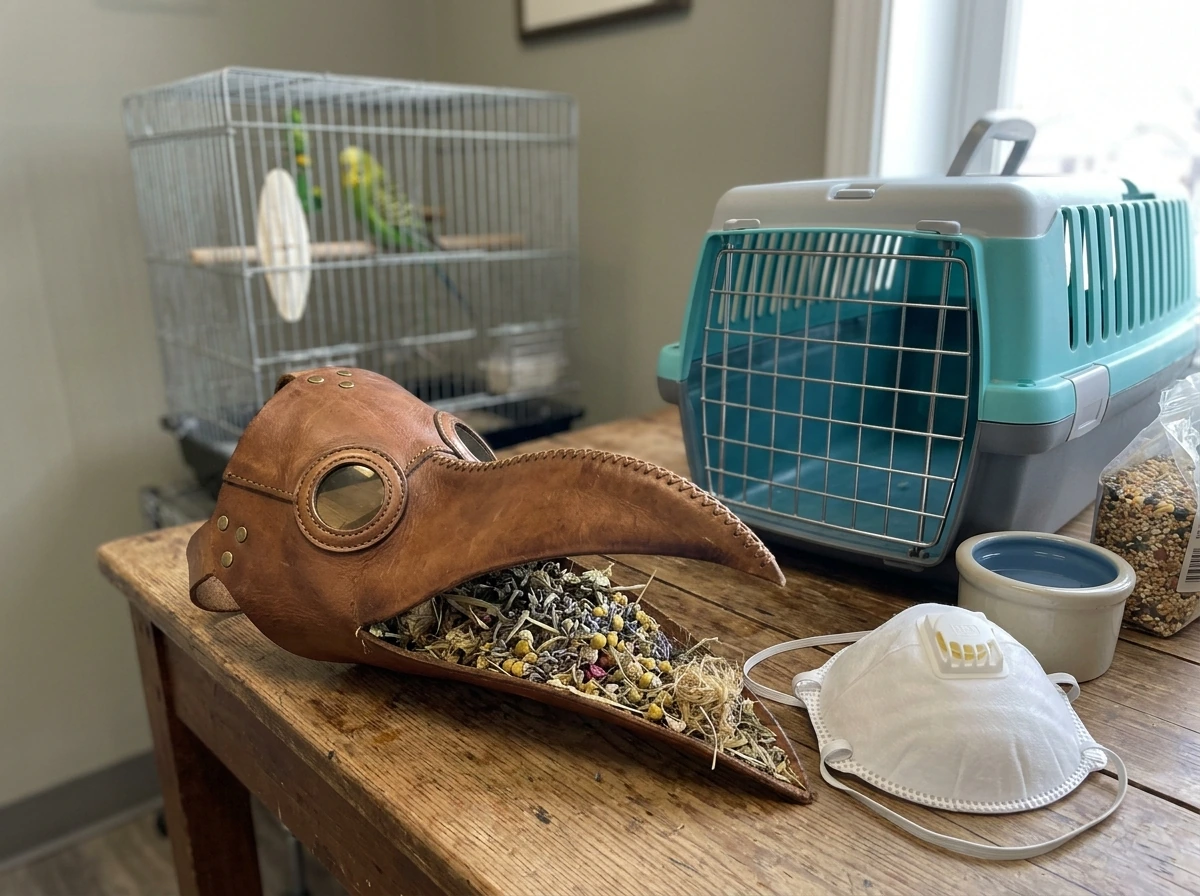
The beak wasn't decorative. It was a functional chamber. Doctors packed it with dried flowers and fragrant herbs, things like rose petals, carnations, lavender, peppermint, and sometimes garlic or rue. Some accounts also describe sponges soaked in vinegar held inside the mask or near the nose. The whole point was to create a scented barrier between the doctor's airways and the air around the patient.
References to beaked plague masks appear at least as early as 1373, when the physician Johannes Jacobi mentioned such a design in writing. By the time of large 18th-century outbreaks, the beaked mask with aromatic contents and crystal eyes had become a recognizable feature of plague physician imagery.
The theory behind the mask: miasma and 'bad air'
To understand why the mask design made sense to people at the time, you have to understand miasma theory. Before germ theory was established in the 19th century, the dominant explanation for epidemic disease was that it spread through corrupt, foul-smelling air called miasma. The thinking went: environments near rotting bodies, swamps, and waste smelled terrible, and those areas had more disease, so the smell itself must be the cause.
This wasn't fringe thinking. It was the mainstream medical consensus for centuries. Physicians, public officials, and community leaders all operated under this framework. If bad smells caused disease, then good smells (or at least a barrier against bad smells) should protect against it. That logic drove the entire design of the plague doctor costume.
The vinegar-soaked sponges and fragrant herbs stuffed into the beak were a sincere attempt at respiratory protection. Doctors genuinely believed they were guarding themselves against infection by filtering miasmatic air through pleasant-smelling materials. The museum object label for one such mask explicitly frames the beak contents as protection against 'bad air' believed to cause disease.
How the beak was supposed to work as a filter

The beak functioned like a primitive air purification chamber. The idea was that air inhaled by the doctor would first pass through the herbs, flowers, or vinegar-soaked material inside the beak before reaching the nose and mouth. The pleasant aroma was thought to counteract or neutralize the miasmatic poison in the surrounding air.
In addition to the scent-filtering concept, the mask also created a physical barrier between the doctor's face and the patient's environment. The glass eye covers protected the eyes, the leather construction covered the skin, and the beak extended the distance between the doctor's airways and the patient, adding a crude standoff layer. Combined with the waxed robe and gloves, the full outfit was, in its own way, an early attempt at full-body personal protective equipment.
The logic wasn't random. It was internally consistent with what people understood at the time. The problem is that miasma theory was wrong, and the mechanism it was designed around didn't actually address how plague and other infectious diseases spread.
What modern science says the masks could and couldn't do
The aromatic herbs and vinegar inside the beak provided essentially no protection against the actual pathogens driving plague outbreaks. Bubonic plague is caused by the bacterium Yersinia pestis, spread primarily through flea bites, not through inhaling bad air. The scented materials in the beak had no mechanism to block bacterial transmission, kill pathogens, or filter infectious particles.
That said, the physical barrier elements of the costume weren't entirely useless. The waxed robe, gloves, and boots would have reduced direct skin contact with infected materials and flea-carrying surfaces to some extent. And for pneumonic plague, which does spread through respiratory droplets, a tightly fitted leather mask over the nose and mouth might have offered some minimal barrier, though nothing approaching the filtration efficiency of a modern N95 respirator, which is engineered to achieve a very close facial fit and very efficient filtration of airborne particles.
So the mask was scientifically flawed at its core because it was built around a false theory of disease transmission. But the instinct to create a physical barrier over the face and airways, and to cover the body when treating infectious patients, was not wrong. That instinct, refined over centuries by germ theory and modern epidemiology, is the foundation of infection control today.
Why this matters for bird caretakers today
Here's where the historical story becomes genuinely relevant if you live with or care for birds. The plague doctors were wrong about miasma, but the concern about airborne particles causing respiratory illness from close contact with sick animals is very real. A peer-reviewed open-access article in PMC (“The ‘Plague Doctor’s Mask’ in the German Museum for the History of Medicine, Ingolstadt”) analyzes contemporary textual and image sources and discusses the role of the beak-like mask component in protective clothing used in plague times blank" rel="noopener noreferrer">peer-reviewed open-access article in PMC analyzing plague mask sources. You can't get diseases from a bird. For bird owners and caretakers, the main risk isn't bad air in any mystical sense. It's actual microscopic particles: dried droppings, respiratory secretions, dander, and feather dust that can carry real pathogens. You can't get diseases from a bird.
Psittacosis is one of the most relevant examples. Caused by the bacterium Chlamydia psittaci, it's a respiratory illness that humans can get from birds. The key idea is that you can't get diseases from just seeing a bird gif, but you can be exposed when you breathe in real dried secretions or droppings from actual birds you can't get diseases from a bird gif. blank" rel="noopener noreferrer">The CDC notes that a common route of infection is breathing in dust that contains dried bird secretions or droppings. When droppings and secretions dry out, they break into fine particles that can become airborne, and those particles can be inhaled. Virginia Tech's veterinary training materials similarly note that transmission can occur through inhaling dried respiratory secretions, feces, or dander, and also through feathers and eggs.
Avian influenza is another concern. Research has shown that avian influenza virus can persist in feather tissue and other samples for days after a bird's death, and there are questions in the scientific literature about whether airborne particles carrying the virus can travel meaningful distances. The CDC provides specific workplace PPE guidance for people who may be exposed to avian influenza, including recommendations around respiratory protection.
NIOSH also flags that animal dander and body wastes can trigger respiratory disorders in animal handlers, including coughing, chest tightness, wheezing, and shortness of breath, and recommends approved particulate respirators and face protection for higher-risk tasks.
Practical steps for safer bird handling
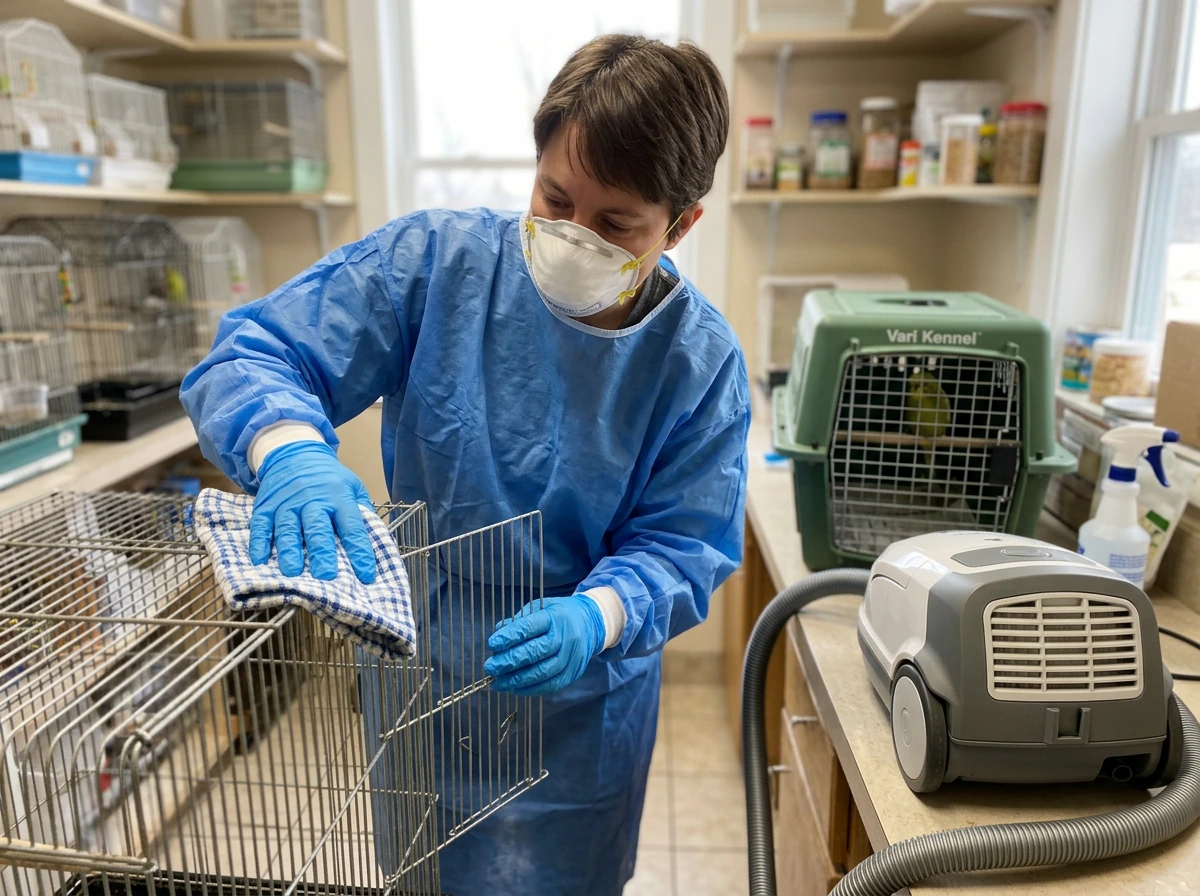
You don't need a medieval beak mask. You do need a few practical habits, especially if you're cleaning cages, handling sick birds, or working with large numbers of birds.
- Wear an N95 respirator (not just a cloth mask) when cleaning cages, scooping droppings, or working in dusty bird areas, especially with sick birds.
- Wet down cage surfaces and droppings before cleaning to reduce airborne dust, rather than dry-sweeping or blowing debris around.
- Wash hands thoroughly after handling birds, their cages, food dishes, or any materials that have contacted droppings or secretions.
- Ventilate bird areas well. Good airflow reduces the concentration of airborne dander, dust, and dried secretion particles.
- Avoid touching your face, nose, or mouth when handling birds or cleaning their environment.
- If you're immunocompromised, pregnant, elderly, or very young, take extra precautions and talk to a doctor about your specific risk level around birds.
Respiratory warning signs to watch for in your bird
Birds hide illness well. By the time a bird looks obviously sick, it often means things have progressed significantly. Respiratory symptoms are among the most urgent, so knowing what to look for is critical. These are the signs that should put you on alert immediately.
- Open-mouth breathing: a healthy bird at rest breathes with its beak closed. Open-mouth breathing at rest is a red flag.
- Tail bobbing with each breath: when a bird is working hard to breathe, the tail visibly bobs up and down in rhythm with respiration.
- Wheezing, clicking, or gasping sounds during breathing.
- Increased abdominal movement visible during breathing, suggesting labored respiration.
- Nasal discharge or crusty material around the nostrils.
- Fluffed-up feathers combined with lethargy and reduced movement (a general sign of illness that often accompanies respiratory distress).
- Voice changes or loss of vocalization in a normally vocal bird.
Respiratory distress in birds, particularly open-mouth breathing with tail bobbing, is considered an emergency by avian veterinary standards. Multiple veterinary sources treat this combination as a contact-vet-immediately situation, not a wait-and-see one.
When to call an avian vet and what to do right now
If your bird is showing any signs of respiratory distress, especially open-mouth breathing, wheezing, or visible tail bobbing while breathing, contact an avian vet today. Don't wait for a regular appointment slot. Call the clinic and describe what you're seeing. Respiratory conditions in birds can deteriorate quickly, and early intervention matters.
While you're arranging care, keep the bird warm and quiet. Stress worsens respiratory distress. Don't try to examine the bird repeatedly or handle it more than necessary. Minimize drafts. If you have other birds, separate the sick bird to reduce potential transmission while you figure out what's going on.
If you're not sure whether what you're seeing is serious, that uncertainty is itself a reason to call. Avian vets can often help you assess urgency over the phone based on what you describe. You can also look at our related guidance on recognizing specific bird illness symptoms and on zoonotic risks like psittacosis for more context on what your bird may be experiencing.
A quick reference: urgent vs. monitor-at-home signs
| Sign | Urgency Level | Recommended Action |
|---|---|---|
| Open-mouth breathing at rest | Emergency | Call avian vet immediately |
| Tail bobbing with each breath | Emergency | Call avian vet immediately |
| Wheezing or gasping sounds | Emergency | Call avian vet immediately |
| Nasal discharge (mild, one-sided) | Urgent (same day) | Contact avian vet for same-day appointment |
| Fluffed feathers with lethargy | Urgent (same day) | Contact avian vet for same-day appointment |
| Reduced appetite without other symptoms | Monitor closely | Watch for 24 hours, call if no improvement |
| Mild voice change, still active | Monitor closely | Watch for 24–48 hours, call if worsens |
The plague doctors were working with the best tools and theories they had, and they got the mechanism completely wrong but understood something important: proximity to illness and the air between you and a sick patient matters. For modern bird caretakers, that instinct holds up. Managing the air quality around your birds, using appropriate protection when cleaning, and knowing when a symptom is an emergency is exactly the kind of practical awareness those medieval physicians were reaching for, just with much better science behind it now.
FAQ
Did the bird beak masks actually protect doctors from plague or other infections?
No. The masks are often shown as if they provided real respiratory filtration, but the beak contents were mainly scented materials. They offered little to no protection against pathogens, and the tightness and filtration performance were nothing like modern respirators.
What parts of the plague doctor outfit were actually helpful for infection control?
Their waxed robe, gloves, boots, and face coverage likely reduced contact with contaminated surfaces and splashes, and they could help reduce exposure to infected dust or secretions in certain tasks. The main limitation was that they were not designed to block airborne microscopic particles effectively.
If the miasma theory was wrong, why is airborne risk still relevant for bird owners?
People could get infected from birds through inhaling dried contaminated particles, not through “miasma” or smell. That means ventilation, dust control during cleaning, and appropriate respiratory protection matter more than fragrance or masking the odor of droppings.
When cleaning bird cages, what situations create the biggest airborne exposure risk?
A key question is whether particles become airborne while you clean. Cleaning dry, crusted droppings and bedding can release fine dust, and that is a common route for respiratory infections like psittacosis. If you must clean, do it with methods that keep dust down (for example, dampening before removal) and consider respiratory protection for higher-risk situations.
If I notice respiratory trouble in my bird, how do I decide whether it is an emergency?
Open-mouth breathing with tail bobbing is the urgent “act now” sign highlighted in the article. If a bird is breathing hard, has wheezing, or is clearly struggling to breathe, call an avian vet immediately rather than waiting to see if symptoms pass.
Should I use extra precautions if multiple birds in my home look fine but I suspect something respiratory?
Yes, for respiratory concerns. Even if your bird is not visibly sick, wear protection and reduce dust when handling litter, doing deep cleans, or working around cages with ongoing respiratory disease. If multiple birds are affected, treat the environment as potentially contaminated until cleaned safely.
What should I use instead of a beak mask for protection against fine particles?
For respiratory protection, the most reliable approach is using a properly fitting, approved particulate respirator rated for fine particles, not a costume mask. Surgical-style masks or loose cloth coverings are not substitutes when dust and infectious aerosols are a concern.
Does “bad smell” from birds mean I’m at higher infection risk?
Don’t rely on smell as a risk indicator. Strong odors can be unpleasant, but infection risk is driven by microscopic material, such as dried droppings, respiratory secretions, dander, and feather dust that can become airborne.
Can I spread disease between cages or birds just by moving from one bird to another?
Handling sick birds can spread illness to other birds through contaminated hands, clothing, tools, and surfaces, not just through air. Use a dedicated set of gloves or tools if possible, wash hands thoroughly, and clean high-touch areas after care to reduce cross-transmission.
What changes should I make when cleaning after a bird dies?
If a bird dies, some avian viruses and other infectious agents may persist in tissue or samples for days, which can increase exposure during cleanup. Use appropriate PPE, avoid generating dust, and follow local veterinary or public health guidance for safe disposal and disinfection.
Next Article
Do Bird Feathers Carry Diseases? Risks and What to Do
Yes, bird feathers can carry germs, especially wild feathers; learn risks, symptoms, and safe cleanup steps.