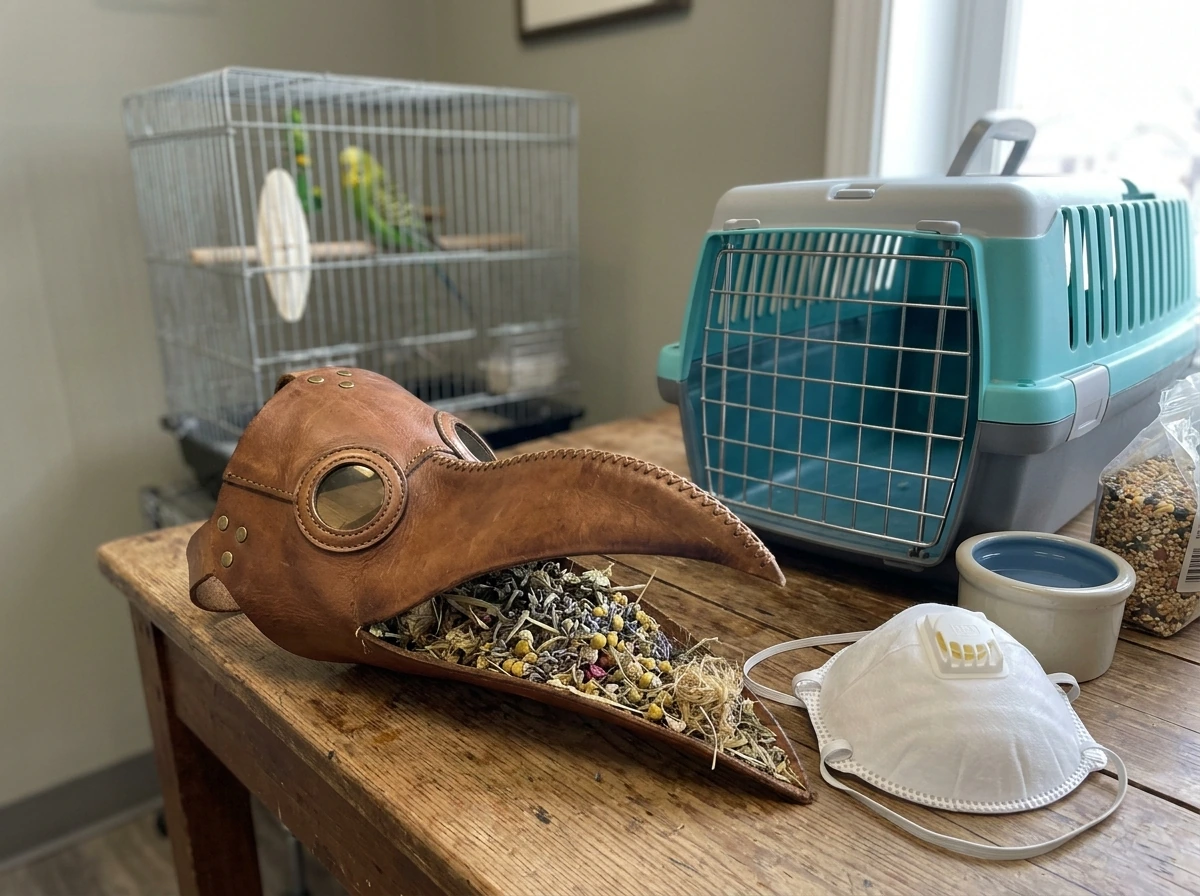
Plague doctors wore bird-like beaked masks because they believed bad smells caused disease. The beak was stuffed with herbs, spices, and aromatics to filter out what they called "miasma", the foul air they thought carried the plague. That's the short answer. But the fuller story is more interesting, and a bit more complicated, because the iconic image you've seen in Halloween costumes and history books is not quite as universal or as ancient as most people assume.
Why Did Plague Doctors Wear Bird Masks? What’s True

Marcus Webb
17 Apr 2026

Who plague doctors actually were
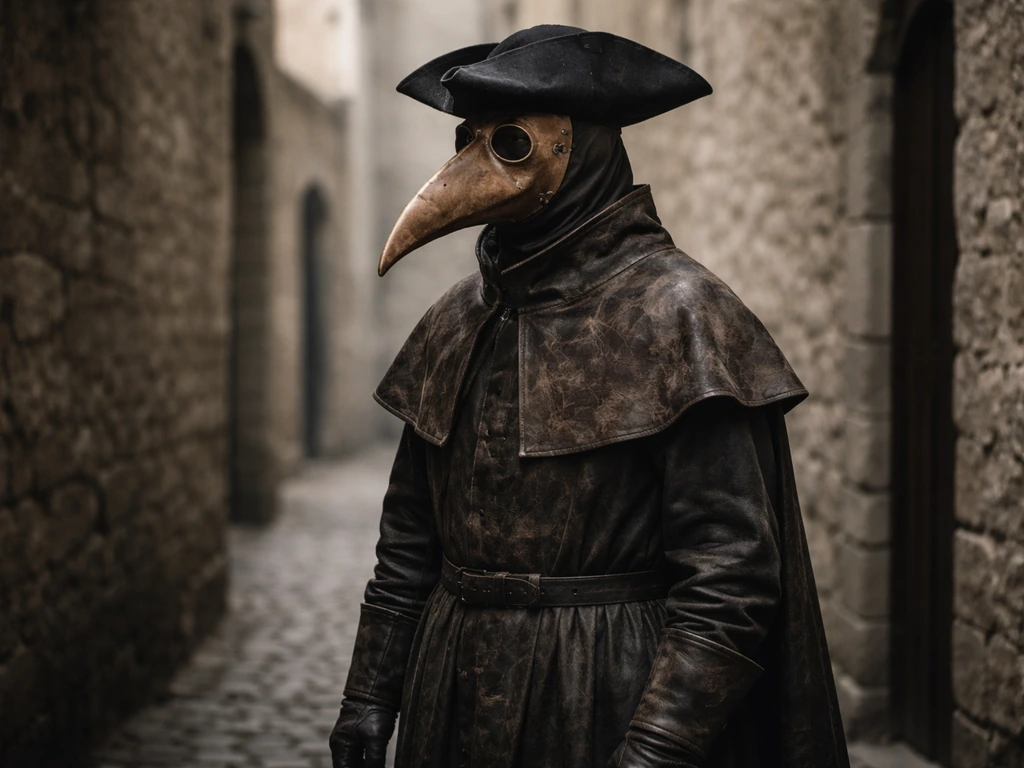
During major plague outbreaks in 17th-century Europe, cities and municipalities hired physicians specifically to treat plague victims. These weren't always the most qualified doctors available. In some regions they were "empirics", practitioners without formal medical training who filled a role that more established physicians often refused, given the extreme danger of the work. They were, in a real sense, the people willing to do a job nobody else wanted.
The earliest written reference to doctors using masks during plague appears in 1373, in the writings of Johannes Jacobi. But Jacobi doesn't describe what those masks looked like, so we can't trace the bird-beak shape back that far. The specific costume associated with plague doctors today came together much later.
Did plague doctors actually wear bird masks? Myth vs. evidence
This is where things get genuinely interesting. The beaked mask is real in the sense that it appears in period sources, but modern scholarship has raised serious questions about how widespread it actually was. A beaked-plague-doctor costume was not standard issue across every European plague outbreak. The image is partly historical, partly symbolic, and partly a cultural construction that grew over centuries.
The most important primary-source document behind the costume's design is linked to Charles de Lorme, a physician credited with proposing a protective outfit around the time of the 1619 Paris plague. His described design included a long beaked nose, a waxed robe, and specific protective elements meant to create a barrier between the doctor and the plague environment. This is the foundation of the iconic image.
The most widely circulated visual of the beaked plague doctor is an engraving called "Der Doctor Schnabel von Rom" (Doctor Beak of Rome), dated to around 1656 and associated with the publisher Paul Fürst. That image, showing a doctor in a long-beaked mask, a wide-brimmed hat, and a full-length robe, is where most people's mental picture comes from. It's a real historical artifact, but it's one depiction from one place and time, not universal documentation of a uniform worn everywhere.
Peer-reviewed scholarship, including work that specifically examines why doctors wore bird masks during plague, notes that the beaked costume is often misrepresented in modern retellings. Academic sources from Yale and Oxford have characterized the beaked mask as partly mythic and culturally legacied rather than uniformly documented. A Yale Scholarship Online chapter similarly examines the “myth and cultural legacy” of the plague doctor’s beaked mask and questions its historical authenticity and uniformity blank" rel="noopener noreferrer">mythic and culturally legacied rather than uniformly documented. So: the mask existed, appears in period sources, and was described by at least one physician. But the idea that every plague doctor everywhere wore one is an overstatement.
What the beak was actually designed to do
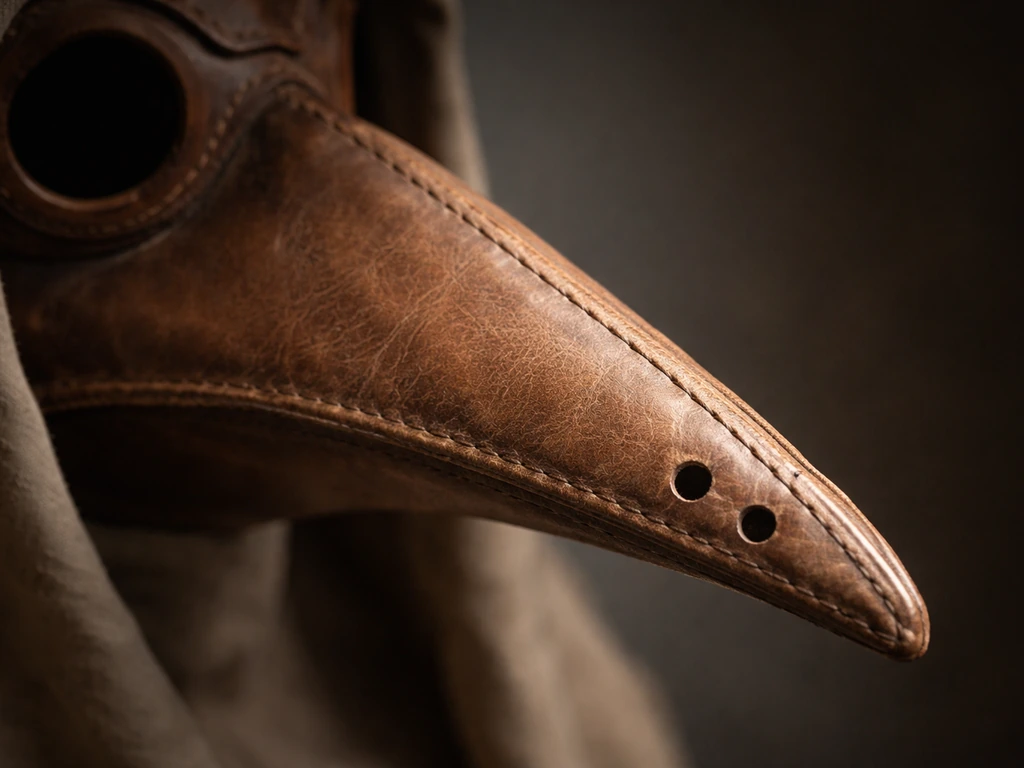
De Lorme's description is specific: the nose of the mask was "half a foot long," shaped like a beak, and filled with perfume or aromatic substances. There were only two small holes near the nostrils for breathing. The aromatics (herbs, spices, possibly vinegar-soaked materials) were placed further along the beak so that every breath drawn through it passed through or near the fragrant material.
The Wellcome Collection describes the outfit in plain terms: the waxed robe and beak stuffed with herbs were designed to "purify the pestilential air." Some period advice, consistent with these ideas, also recommended carrying a sponge soaked in vinegar during the 1665 London plague. The logic was all about smell: if bad smells caused disease, then filtering or overpowering those smells should prevent infection.
The beak shape wasn't decorative. It was a container. Think of it as an early, very misguided attempt at an air filter, built around the wrong theory of how disease spread.
Miasma theory and early infection control: the thinking behind the mask
The miasma theory held that disease arose from "bad air" produced by rotting organic matter, filth, and decomposition. The smell was not just a symptom of the dangerous environment, it was believed to be the actual mechanism of infection. If you breathed in enough foul air, you got sick. This theory was dominant in European medicine for centuries and directly shaped every protective measure plague doctors took.
This explains the whole outfit, not just the mask. The waxed or oiled leather robe was meant to prevent miasma from penetrating clothing and touching skin. The wide-brimmed hat kept infected air away from the face. The cane or stick doctors carried allowed them to examine patients without direct touch. Every element was designed around the central idea that physical contact with or breathing of contaminated air was the threat.
The contemporaneous record from Nathaniel Hodges, whose 1665 London plague account is one of the most detailed firsthand documents of the era, reflects this same framework. Preventative directions of the time were built around miasma and contact avoidance, not around pathogen transmission in the modern sense. This wasn't ignorance so much as working with the best available theory, one that was completely wrong about the mechanism but accidentally correct about some practical behaviors, like avoiding close contact with sick people.
Why the mask didn't actually protect against plague
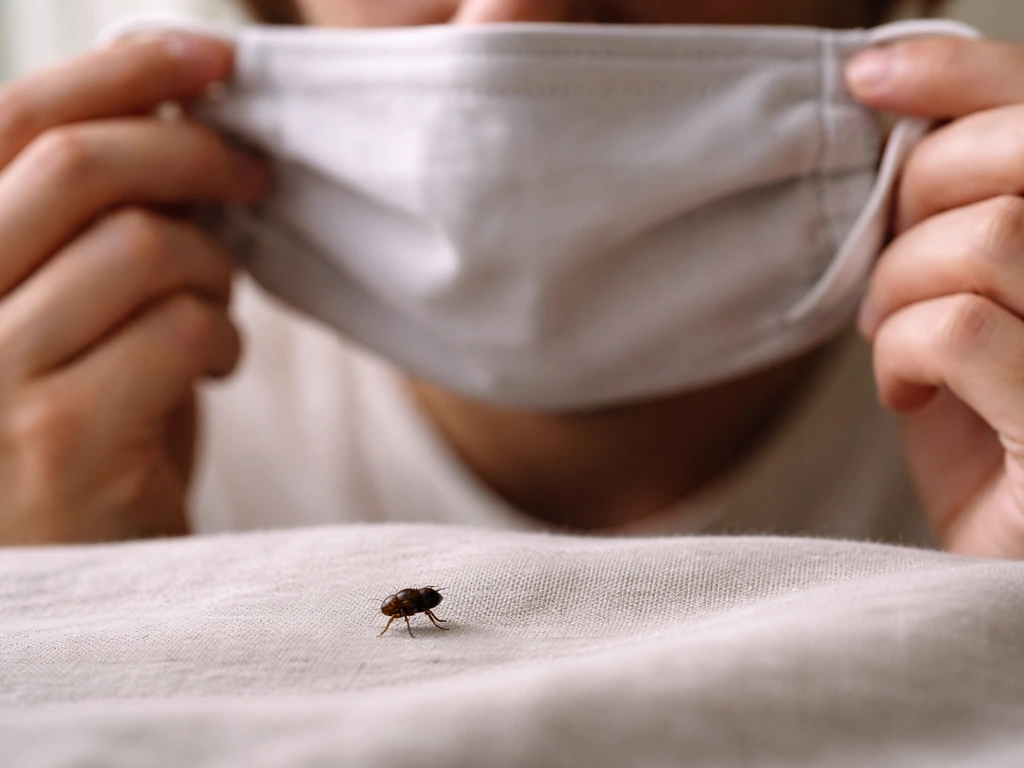
Plague is caused by Yersinia pestis. The most common form, bubonic plague, spreads primarily through the bites of infected fleas, not through breathing bad air. Pneumonic plague, the form that affects the lungs and can spread person to person, does involve respiratory droplets, but an aromatic beak stuffed with herbs would do essentially nothing to block respiratory droplets or aerosolized particles.
Modern understanding of plague transmission makes the mask's limitations clear. Blocking flea bites required covering skin, which the full robe actually helped with. But the beak itself, the most iconic part of the outfit, targeted the wrong threat entirely. The CDC and WHO both document plague transmission pathways that have nothing to do with odor and everything to do with biological vectors and droplet exposure.
It's worth noting, though, that plague doctors who wore the full outfit, including the robe that covered skin and eyes, may have accidentally gotten some protection against flea bites simply by covering their bodies. The right result, achieved partly by accident, through the wrong reasoning.
What this means for respiratory protection today
The plague doctor's mask is a useful illustration of why intent and mechanism both matter in protective equipment. A mask designed to smell nice does not filter pathogens. Modern respiratory protection works on a completely different principle: physical filtration of particles, not odor masking.
For genuine respiratory protection against infectious disease today, fit-tested N95 respirators (or higher) are the standard. OSHA, the CDC, and public health authorities in multiple countries specify NIOSH-certified N95 respirators as the minimum for aerosol-risk environments. The fit matters as much as the rating, because gaps around the face allow unfiltered air to bypass the mask entirely, something a fragrant-beak mask couldn't even begin to address.
| Feature | Plague Doctor's Beak Mask | Modern N95 Respirator |
|---|---|---|
| Design purpose | Filter/neutralize bad odors (miasma) | Physically block airborne particles |
| Protection mechanism | Aromatic substances in beak | Electrostatic and mechanical filtration |
| Pathogen protection | None (wrong theory) | Filters ≥95% of airborne particles when properly fit |
| Fit requirement | Not applicable | Fit testing required for effective use |
| Protection against plague | Incidental at best (skin coverage from robe) | Relevant for pneumonic plague droplet protection |
| Still used today | No | Yes, standard in healthcare and outbreak settings |
What bird owners and caretakers should take from this
If you're here because you care for birds, the plague doctor story has a genuinely relevant lesson. The mask's failure wasn't about effort or intention, it was about misunderstanding the actual transmission route. The same mistake shows up today when people assume that because something smells bad or dusty, a basic scarf or dust mask will protect them, and when people assume that because something doesn't smell dangerous, no protection is needed.
Bird environments can carry real respiratory risks. Feathers, dander, dried droppings, and contaminated dust can all carry particles that affect your lungs, and some bird-associated illnesses involve genuine pathogen risks. If you've ever wondered whether bird feathers carry diseases, the honest answer is that the risk depends heavily on the bird, the environment, and what you're doing, not simply on whether something smells or looks clean.
For avian influenza specifically, CDC, OSHA, and Washington State University occupational health guidance all recommend a fit-tested NIOSH N95 respirator (or higher) as the appropriate respiratory protection for workers handling birds in risk areas. Eye protection is also recommended. That's a very different approach from stuffing a beak-shaped container with lavender and hoping for the best.
King County's infection control guidance for live poultry businesses draws a practical distinction worth knowing: for routine dusty cleaning activities that stir up bird dander, a basic surgical or dust mask addresses nuisance particles. For actual infectious-aerosol risk from suspected avian influenza, you need a proper respirator. The difference matters, and it's exactly the kind of distinction the plague doctor's era had no framework for making.
One thing that comes up in bird owner communities is a false reassurance that bird exposure is essentially harmless. If you've seen the idea that you can't get diseases from a bird, treat that as a myth worth correcting carefully. Casual handling of healthy pet birds in clean conditions carries very low risk. But the plague doctor story is a good reminder that assuming something is safe because it smells fine or because it's always been done that way is not the same as understanding the actual mechanism of risk.
If you've come across a "you can't get diseases from a bird" gif circulating online, it reflects real casual handling culture among bird owners, but it oversimplifies a nuanced topic, just as the plague doctor's beak mask oversimplified protection against a disease whose transmission route wasn't yet understood. The practical takeaway is the same in both cases: understand the actual mechanism first, then choose your protection accordingly.
The bottom line on plague doctor masks
Plague doctors wore beaked masks because they believed bad smells caused disease, and the beak was a container for aromatics meant to purify the air they breathed. The design is most clearly documented in Charles de Lorme's 17th-century description and the 1656 Fürst engraving. Modern scholarship confirms the mask was real but questions how universally it was worn. It didn't protect against plague in any meaningful way because plague spreads through flea bites and respiratory droplets, not odors. And the broader lesson, whether you're thinking about historical epidemics or modern bird care, is that protective equipment only works when it's matched to the actual transmission route of the disease you're trying to avoid.
FAQ
Was the bird-beak mask the standard uniform for every plague doctor everywhere?
Not in the universal, standardized way people often assume. The beaked design is documented in specific writings and artworks, but period accounts and scholarship suggest it was not an across-the-board uniform for every plague outbreak, in every place, at every time.
Did the bird-beak mask actually filter germs or just change the smell?
The beak was mostly an aromatic reservoir, designed around miasma thinking, not a filtration chamber. Even if it changed the smell of air, it would not stop fleas or respiratory droplets because it did not provide real particle filtration or a seal.
How does the mask idea hold up for bubonic versus pneumonic plague transmission?
For bubonic plague, odor-based protection would not address the main threat, flea bites. For pneumonic plague, the risk involves breathing infected respiratory droplets, and an aromatic beak with only small breathing openings would not reliably block those particles, especially without a tight face seal.
What details from period descriptions show how the beak mask was supposed to work?
De Lorme’s description includes a beak filled with perfume or aromatics placed along the breathing path, with only small holes near the nostrils. That arrangement matters: it reinforces the goal of “purifying” air by scent, not controlling microbial exposure.
Why do modern images make it seem like the masks were older and more consistent than the sources show?
Beak-like masks can look similar across different epidemics and illustrations, and retellings sometimes blend them together. A better approach is to treat each outbreak and depiction separately, asking what document or artifact actually described the equipment.
If the beak mask was misguided, did any part of the full outfit offer real practical protection?
The waxed or oiled robe and the headgear mattered more for physical barriers, especially for reducing contact with contaminated material and for covering skin. While the mask’s beak likely targeted the wrong cause, the full outfit still may have reduced some exposures through clothing coverage and face shielding.
What’s the biggest practical mistake people make when they compare the beak mask to modern protection?
Yes, you can get a false sense of security from “protective-looking” items. As a rule of thumb, if the risk is particles or droplets, protection depends on filtration and fit, not odor cover-up.
Why does modern guidance emphasize fit-tested respirators instead of just wearing a mask-like item?
Fit testing is often the missing step. Even an N95-class respirator can fail if it leaks around the face, and the same principle explains why a historical costume approach cannot substitute for modern sealed filtration.
When caring for birds, when is a basic dust or surgical mask enough, and when do you need a respirator?
For birds, risk depends on exposure type. Dusty cleaning can create nuisance particles where a basic mask may reduce irritation, but handling situations involving suspected infectious aerosol risk require a proper respirator and eye protection.
Is it really true that you cannot get diseases from birds?
Because some bird-related illnesses and respiratory hazards involve real pathogens or contaminated aerosols, it is not safe to assume “no disease” from a pet bird in general terms. The actual risk depends on the bird species, environment cleanliness, and what you are doing (for example, cleaning droppings versus routine quiet contact).
Next Article
Why Did Doctors Wear Bird Masks and What It Means for Bird Health
Medieval doctors wore beaked masks to block foul air. Learn what it meant, its limits, and how to protect birds today.