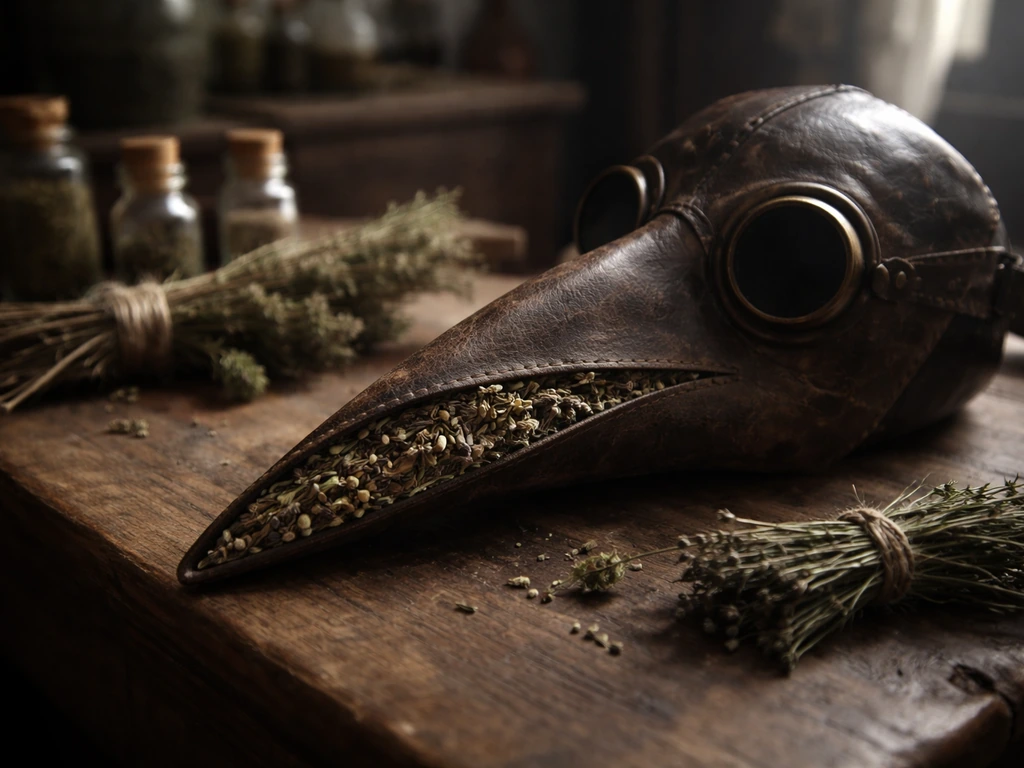
If your bird has crusty growths on its face, feet, or legs, or you're seeing white patches inside its mouth or throat, there's a real chance you're looking at avian pox. The phrase "birdy pox" comes from a classic Sesame Street episode, but the disease it playfully references is a genuine viral infection that affects wild and pet birds alike. It's caused by avipoxvirus, it can range from mild to life-threatening depending on which form your bird has, and the right response in the first 24 hours matters a lot.
Sesame Street Big Bird Has the Birdy Pox: Avian Pox Guide

Marcus Webb
15 Jun 2026
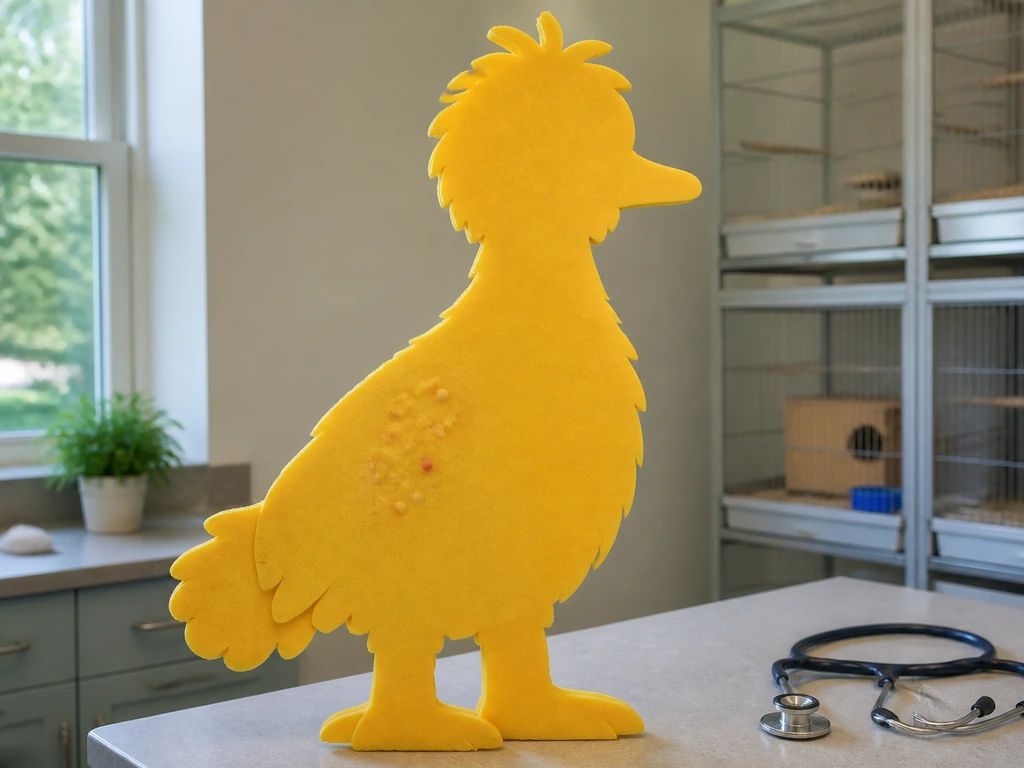
What "birdy pox" actually means in real birds
Avian pox is a viral disease caused by avipoxvirus, a group of large DNA viruses that infect a wide range of bird species, from backyard chickens and pigeons to songbirds, raptors, and parrots. It's one of the oldest known avian diseases and is found on every continent except Antarctica. The virus is slow-moving compared to something like avian influenza, but it's tough and persistent once it's in an environment.
There are two main forms. The cutaneous form (sometimes called "dry pox") produces raised, wart-like lesions on unfeathered skin: around the eyes, beak, feet, and legs. The diphtheritic form ("wet pox") causes white or yellowish plaques and ulcers inside the mouth, throat, larynx, or trachea. Some birds get both forms at once. The wet form is the more dangerous one because it can block the airway or make it impossible for a bird to eat and swallow.
Under a microscope, infected cells contain structures called Bollinger bodies, which are intracytoplasmic inclusion bodies that are a hallmark of poxvirus infection. A vet can confirm this on a biopsy or histology sample, but you don't need to know that to recognize the disease at home.
Recognize the symptoms: skin lesions vs. the mouth and throat form
Cutaneous (dry) pox: what to look for on the outside
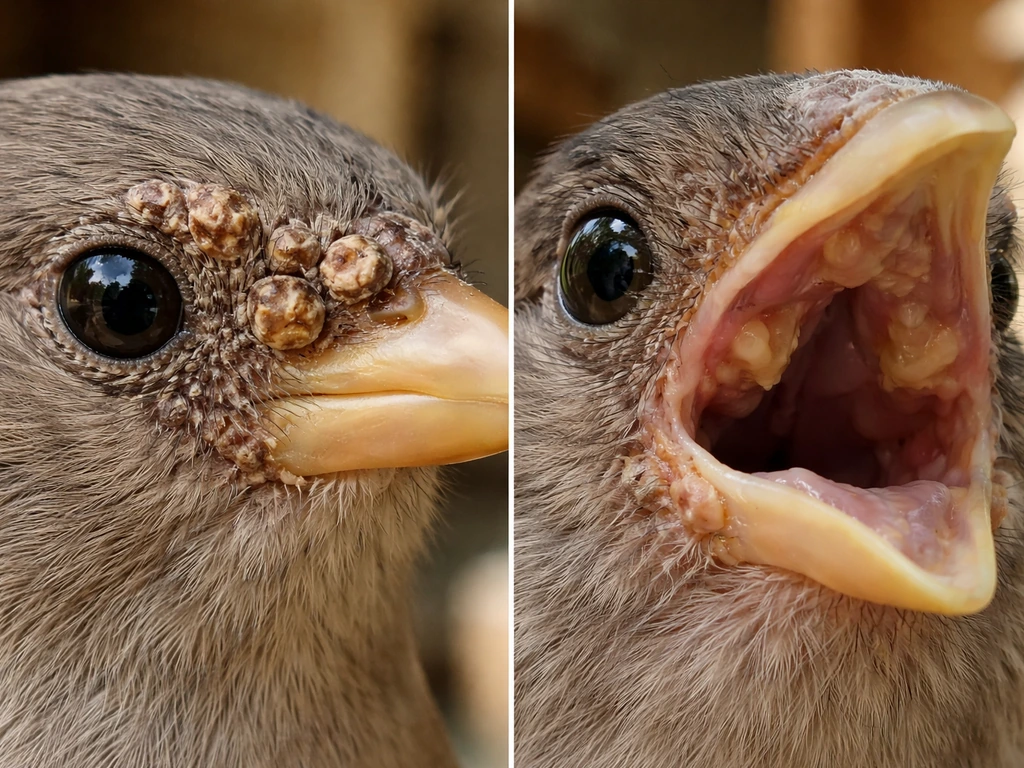
- Small, raised, wart-like bumps or nodules on bare skin, especially around the eyes, corners of the beak, cere (the fleshy part above the beak), and the legs and feet
- Lesions start pale or pinkish, then darken and become crusty or scab-like over days to weeks
- Swelling around the eye that may cause partial or full closure
- In some cases the lesions cluster and merge into larger, roughened patches
- The bird may scratch or rub the affected areas
Diphtheritic (wet) pox: the inside-the-mouth warning signs
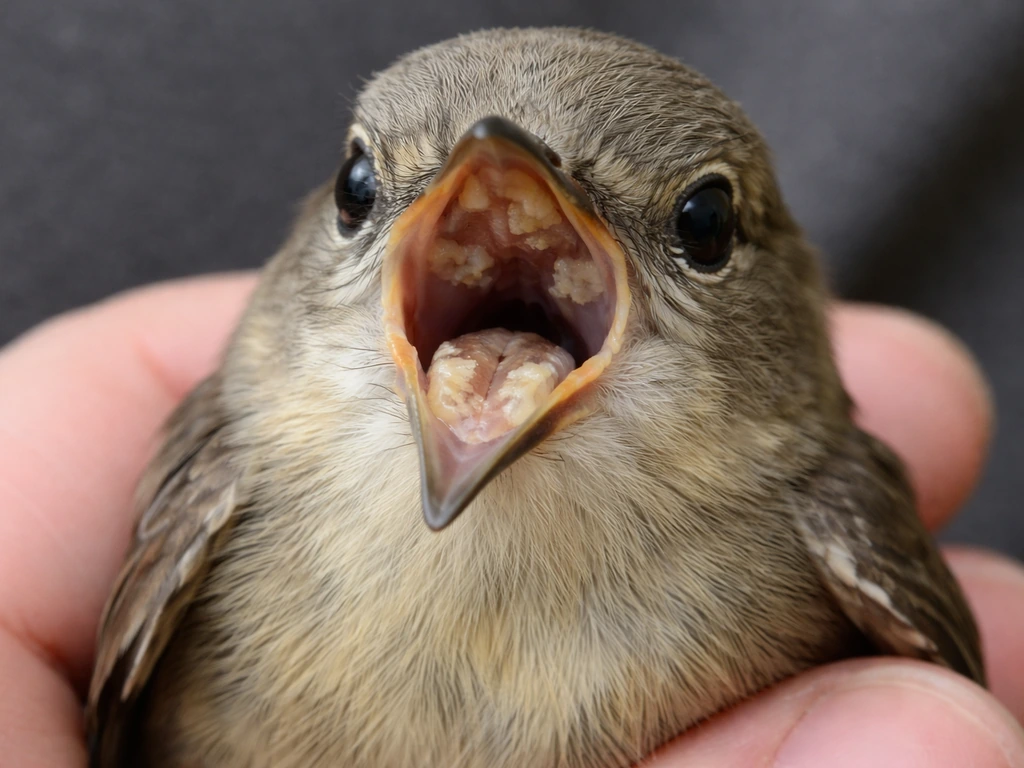
- White or yellowish plaques or pseudomembranes on the tongue, palate, throat, or inside of the beak
- Difficulty swallowing, head shaking, or repeated attempts to clear the throat
- Open-mouth breathing or wheezing if the trachea is involved
- Reduced appetite or complete refusal to eat
- Gurgling or labored breathing sounds
- Lethargy, fluffed feathers, and a hunched posture
The wet form can look similar to other respiratory infections, which is why distinguishing it from bacterial or fungal disease matters. If a bird is showing breathing difficulty, treat it as urgent regardless of the cause.
How bird pox spreads and what increases risk
Mosquitoes are the primary vector. A mosquito feeds on an infected bird while virus is circulating in the bird's blood (viremia) or picks up virus from secretions near active lesions, then carries it to the next bird it bites. This is why avian pox cases spike in warm, humid months when mosquito populations are high, and why birds in tropical or wetland environments are especially at risk.
But mosquitoes aren't the only route. Other biting insects, including midges, mites, and flies, can also carry and transmit the virus the same way. Direct bird-to-bird contact through infected secretions or lesion material is another route. Indirect contact matters too: shared feeders, birdbaths, and perches contaminated with virus from an infected bird can pass the infection along if a susceptible bird makes contact and the virus enters through broken skin, the eyes, or mucous membranes.
Risk goes up with crowding. A dense flock, a busy backyard feeder station, or a bird rescue with poor quarantine protocols creates ideal conditions for the virus to move quickly through a group. New birds introduced without quarantine are a common trigger for outbreaks in multi-bird households.
Quick at-home checks and what else it could be
Before assuming avian pox, it's worth running through a short checklist to separate it from other common conditions. Avian pox has a fairly distinctive presentation, but it can mimic a few other diseases.
| Condition | Key features | How it differs from avian pox |
|---|---|---|
| Avian pox (cutaneous) | Crusty wart-like lesions on bare skin, eyelids, feet | Lesions are external, dry, and raised; no respiratory signs unless wet form is also present |
| Avian pox (diphtheritic) | White/yellow plaques inside mouth and throat, breathing difficulty | Plaques are firmly attached; removing them causes bleeding underneath |
| Bacterial infection (e.g., staphylococcal) | Swelling, ulcers, or crusty skin lesions | Often softer, more inflammatory; responds to antibiotics unlike pox |
| Fungal infection (e.g., candidiasis) | White, cottage-cheese-like patches in mouth | Patches are thicker and softer; often in immunocompromised birds |
| Respiratory infection (bacterial/Mycoplasma) | Sneezing, nasal discharge, wheezing | Usually no skin lesions; nasal discharge is more prominent |
| Scaly face mite (Knemidocoptes) | Crusty, pitted lesions on beak and cere in budgies | Lesions have a honeycomb texture; mites visible under magnification |
A critical clue with the diphtheritic form: if you try to gently remove a white plaque from inside the mouth and it leaves a raw, bleeding surface underneath, that strongly suggests pox rather than a simple fungal overgrowth. Don't try to pull plaques off at home, but this is useful information if you accidentally dislodge one.
Also check for insect activity. If your bird has outdoor exposure or the enclosure has had mosquito or mite problems recently, that context points more strongly toward avian pox.
What to do right now: isolate, clean, and cut insect exposure
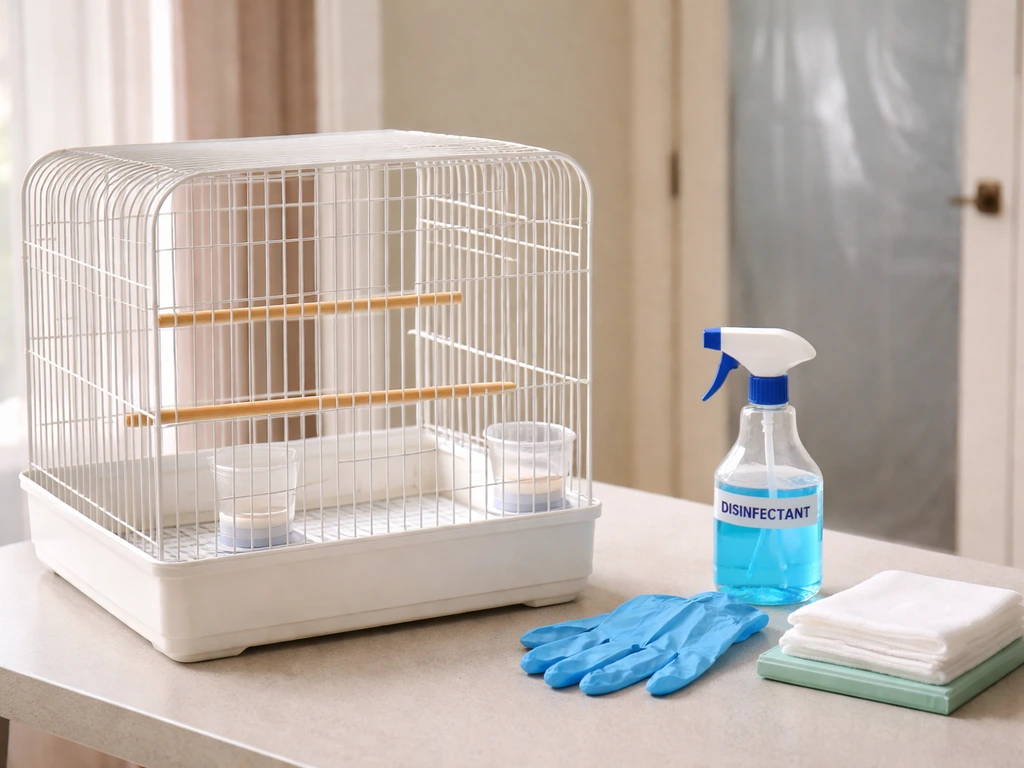
The moment you suspect avian pox, the first priority is isolation. Move the affected bird to a separate cage or room away from any other birds in your household. Use separate food and water dishes, separate tools, and wash your hands thoroughly between handling birds. Avian pox is not known to infect humans, so you don't need to worry about personal risk from handling your bird, but cross-contamination between birds is a real concern.
Clean and disinfect anything the sick bird has contacted. Feeders and water dishes can be disinfected with a 10% bleach solution (roughly one part bleach to nine parts water). If you have a backyard feeder station that multiple wild birds use, take the feeders and birdbaths down entirely for at least two weeks and disinfect them before putting them back out. This is the standard protocol recommended for controlling pox outbreaks at shared feeding stations.
Reduce insect access to the bird's environment as much as possible. For indoor birds, check window screens for gaps and consider moving the cage away from windows or doors that get left open. For outdoor aviaries, adding fine mesh screening can significantly reduce mosquito access. Because mosquitoes can spread bird pox, using a protective bird mask and reducing insect exposure during a plague season can lower risk bird mask during plague. If there are standing water sources near the aviary (birdbaths, plant trays, puddles), eliminate them, since mosquitoes breed in still water.
Do not try to remove or treat the lesions yourself with topical products not prescribed by a vet. Don't apply human antiseptics like hydrogen peroxide or iodine solutions to skin lesions without guidance. Supportive care at home means keeping the bird warm, calm, and hydrated, and making food as easy to access as possible if the bird is having trouble eating.
What a vet will do: diagnosis and treatment options
An avian vet can usually make a presumptive diagnosis of avian pox from a clinical exam alone, especially when the lesion appearance and history are consistent. For confirmation, they may take a small biopsy of a lesion and send it for histopathology, where lab analysis will look for those distinctive Bollinger bodies in infected cells. In some cases PCR testing can identify the specific poxvirus strain.
There's no antiviral drug that directly eliminates avipoxvirus, so treatment is supportive. For the cutaneous form in mild cases, this may mean just monitoring and keeping lesions clean while the bird's immune system works through the infection over several weeks. For more severe cases the vet may prescribe antibiotics to prevent secondary bacterial infections in open lesions, anti-inflammatory medications, and nutritional support.
The diphtheritic form often requires more hands-on management. A vet may carefully debride (remove) plaques from the mouth and throat under controlled conditions, ensure the airway is clear, and provide supportive nutrition through tube or syringe feeding if the bird can't eat on its own. Birds with tracheal involvement may need nebulization or oxygen support in severe cases.
Prognosis depends heavily on which form is present and how early treatment starts. Birds with mild cutaneous pox that are otherwise healthy often recover fully in three to five weeks. Birds with severe diphtheritic pox, especially those with tracheal blockage or secondary infections, have a more guarded prognosis, which is why getting veterinary involvement early makes a real difference.
Prevention: vaccination, quarantine, and insect control
Vaccines for avian pox do exist and are used routinely in commercial poultry, pigeons kept for racing or showing, and some captive bird collections. If you keep chickens, doves, or pigeons, ask your avian vet whether a pox vaccine is appropriate for your flock. For most pet songbirds and parrots, vaccines aren't standard, but your vet can advise based on your bird's species and risk level.
Quarantine is the most practical prevention tool for multi-bird households. Any new bird should be kept completely separate from your existing birds for a minimum of 30 days, ideally 45 days, before introduction. This applies to birds returning from shows, boarding, or any contact with unknown birds.
Insect control is the other major lever. For outdoor aviaries, fine mesh screening (1mm or smaller) is effective at keeping mosquitoes out. Eliminate standing water in the surrounding area. If you run a backyard feeding station, avoid overcrowding it with too many feeders in a small space, since high bird density makes disease transmission more efficient.
When it's an emergency and how to prepare for the vet visit

Call an avian vet the same day if your bird is showing any of these signs alongside the lesions you're seeing.
- Open-mouth breathing, gasping, or tail-bobbing with each breath
- Complete refusal to eat or drink for more than 12 to 24 hours
- Lesions around or inside the eye causing swelling so severe the eye is fully shut
- Rapid deterioration: the bird went from mildly off to severely lethargic in a short time
- White plaques inside the mouth or throat that are growing or multiplying quickly
- Any sign of secondary infection: foul smell, discharge from lesions, extreme swelling
Before you go to the vet, take photos of the lesions in good lighting, ideally from multiple angles. Note when you first noticed symptoms, whether the bird has had any outdoor exposure or contact with new birds recently, and whether there have been any mosquito or insect problems in the bird's environment. This information shortens the diagnostic process significantly.
Transport the bird in a familiar, covered carrier to reduce stress. Keep it warm during transit, since a sick bird losing body heat is already under strain. Bring any supplements or medications the bird is currently taking, as these can affect treatment decisions.
One thing worth knowing: avian pox does not infect humans or common household pets like cats and dogs. The concern is entirely about protecting other birds in your household and preventing the disease from spreading. If you've been handling the sick bird and then touching other birds, wash your hands and change clothes before contact with healthy birds.
If you've come across this topic while also wondering about risks from bird contact more broadly, questions like whether bird feathers can make you sick or whether shared feeding stations spread disease are genuinely related areas worth understanding, especially if you have multiple birds or a backyard feeding setup.
FAQ
How soon should I isolate my bird after I notice “birdy pox” signs?
Isolate immediately, ideally the same day. Even though avian pox spreads more slowly than some fast respiratory viruses, lesions and secretions can still contaminate shared surfaces (perches, dishes, hands). Delay makes it harder to prevent spread to other birds.
Can I keep the sick bird in the same room if it is separated by a cage barrier?
Prefer a separate room if possible. If you must use the same room, use a solid barrier between cages, dedicated dishes and tools for the sick bird only, and handle the healthy birds first. Handwashing and changing clothes between birds is still essential.
Is it safe to remove or scrape off the crusts or mouth plaques at home?
No. Don’t pull plaques, scabs, or crusts off at home because it can cause bleeding, pain, and secondary infection. If a plaque accidentally loosens, note it in photos and tell your vet what it looked like and where it came from.
My bird is eating but seems “off,” could it still be avian pox?
Yes. Cutaneous pox can be mild at first, and some birds remain bright for a while. Still treat it as suspicious if you see typical skin lesions (eyes, beak, feet, legs) or mouth/throat plaques, and watch closely for any breathing change.
What breathing signs mean I should treat this as an emergency?
Any open-mouth breathing, repeated straining, audible wheeze, tail-bobbing, head extension to breathe, or inability to swallow food are urgent. Those patterns can indicate airway involvement from the diphtheritic form, and waiting can reduce the chance of keeping the airway clear.
How long does avian pox remain contagious on surfaces and feeders?
Plan on at least weeks, and clean with the same discipline you’d use for a lingering outbreak. For shared feeders and birdbaths, removing them and disinfecting before restarting them for at least two weeks is a practical rule of thumb mentioned in standard outbreak protocols.
Do I need to disinfect the whole birdroom, or only the sick bird’s items?
Disinfect the sick bird’s items and high-touch surfaces in its area, including perches it contacts, door handles you use while handling it, and any tools you bring in and out. If other birds can reach the same airflow path or surfaces, broaden cleaning to that space too.
Should I worry about my cats or dogs catching it from my bird?
Avian pox is not known to infect humans or common household pets like cats and dogs. The practical risk is transfer of virus from your hands or contaminated surfaces between birds, so focus on cross-contamination control rather than pet disease.
Can the disease spread through shared towels, bird seed, or air filters?
Shared towels, seed, and tools can spread contamination if they get handled by you after touching the sick bird, or if dust and debris are transferred. Air spread is less of the concern than direct contamination, but you should still keep dedicated cleaning materials and avoid using the same cloths or gloves between birds.
Will antibiotics cure avian pox?
Antibiotics do not eliminate the viral infection. They may be prescribed to prevent or treat secondary bacterial infections in open lesions, especially for birds with significant skin breakdown or mouth sores.
If my bird survives, will it be immune long-term?
Often birds develop protection after recovery, but it is not a guarantee against future infection. Re-exposure can still occur, and future outbreaks may involve different poxvirus strains, so continue hygiene and quarantine practices for new birds.
Should I vaccinate my pet bird if I have a history of avian pox in the neighborhood?
Vaccine suitability depends strongly on the bird species, local outbreak risk, and the individual bird’s health status. For many pet songbirds and parrots vaccination is not routine, so ask an avian vet for a species-specific recommendation rather than assuming it is appropriate.
How should I quarantine a new bird, and does it include “silent” cases?
Quarantine should be complete separation from existing birds for at least 30 days, ideally 45 days. Also keep new birds in separate cages and with separate dishes and handling routines, because pox can be introduced even if the new bird is not visibly ill at first.
What’s the best way to take photos for the vet if my bird has mouth plaques?
Use good lighting, take close-ups and one wider shot for location, and avoid stressing the bird to the point of struggling. If possible, photograph from both sides and note the date you first noticed symptoms, since mouth/throat involvement can influence urgency and treatment decisions.
Could something else mimic avian pox, and how do I avoid the most common mistake?
Respiratory infections can look similar when the diphtheritic form involves the mouth and throat. The most common mistake is waiting because the bird is still breathing “okay” or trying home plaque removal, instead of isolating promptly and contacting an avian vet the same day if lesions and respiratory signs overlap.
Next Article
Why Bird Mask During Plague: History vs Bubonic Facts
Find why bird-like masks spread in bubonic plague myths, what causes it today, and how to help sick birds safely.