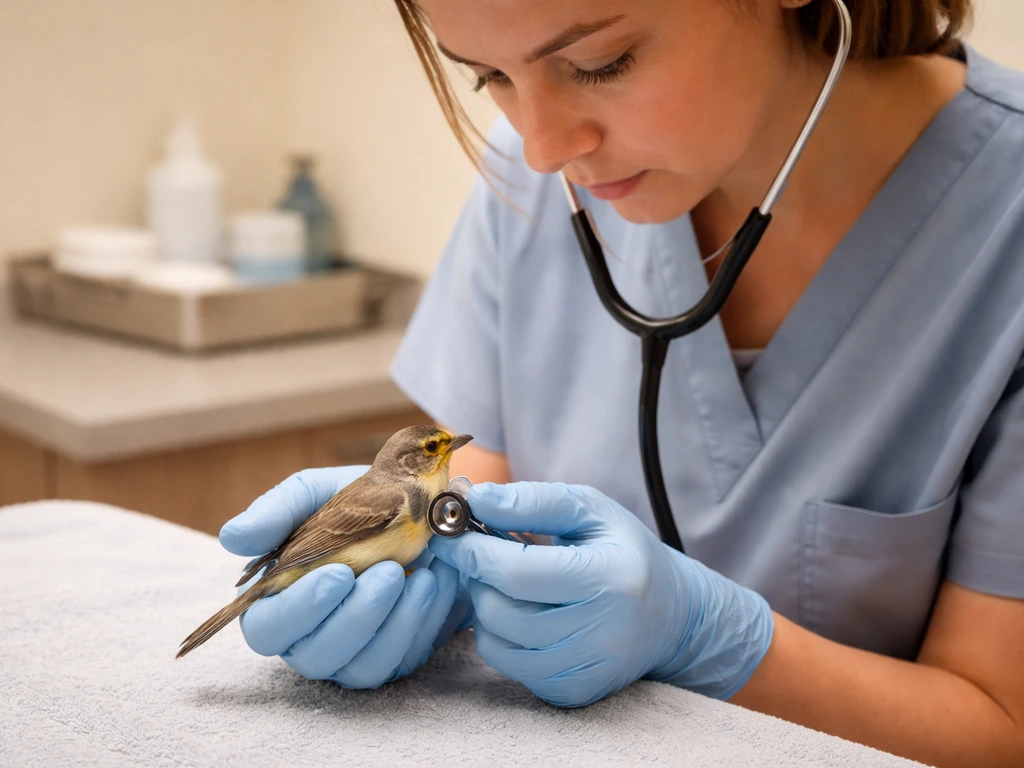
Bird behavior problems like biting, screaming, feather plucking, or withdrawal can have two very different root causes: a training or environment issue, or an underlying illness. The first thing to do is blank" rel="noopener noreferrer">compare what you're seeing right now to your bird's personal normal baseline, because a sudden shift in behavior is almost always more worrying than a longstanding quirk. If the change came on fast, or if it's paired with any physical sign like labored breathing, tail bobbing, fluffed feathers, or loss of appetite, treat it as a potential health problem until a vet says otherwise. If your bird is exhibiting scouse bird problems like new biting or excessive screaming, use the behavior change checklist and consider a vet check if anything seems off.
Bird Behavior Problems: Causes, Health Red Flags, and Fixes

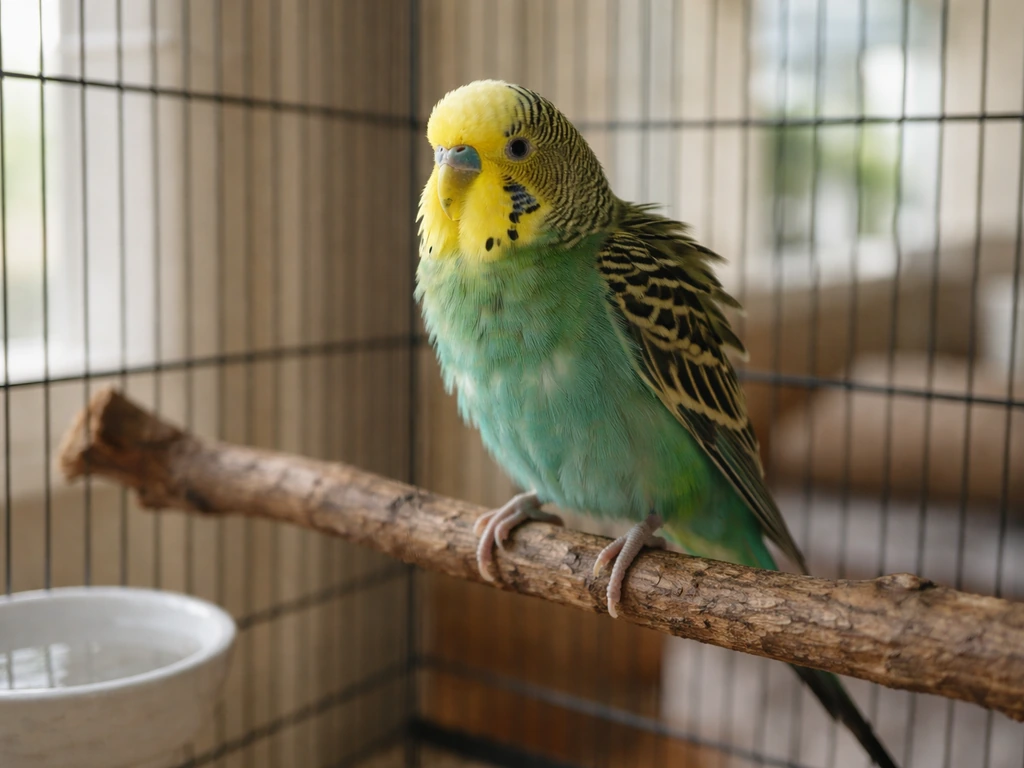
How to tell normal behavior from a real problem
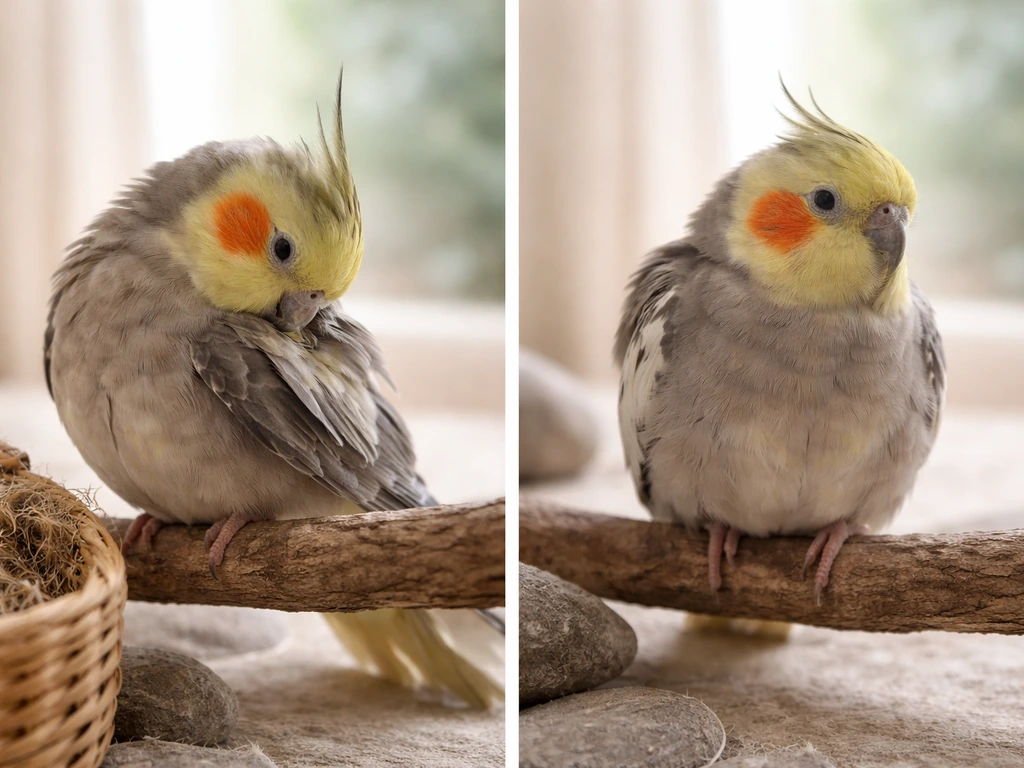
Birds mask illness well. By the time a bird looks obviously sick, it may have been unwell for days or even weeks. That's why behavior changes matter so much. A healthy bird that starts sleeping more, stops vocalizing in the morning, reduces its interaction with you, or suddenly becomes aggressive when it never was before, is telling you something is off.
Normal bird behavior includes regular preening, some chewing and investigation of objects, morning vocalizations, and the occasional nippy moment during play or when overstimulated. Context matters here too. A budgie holding its beak open with its head up is often showing dominance and may be about to bite, but that's a readable moment rather than a red flag. A bird that's been hand-tame for years and suddenly won't step up, or one that used to chatter all morning and now sits quietly, is showing you a baseline deviation worth paying attention to.
Ask yourself three questions: Is this behavior new or has it always been there? Did it start gradually or suddenly? Is there anything physical going on alongside it (changed droppings, weight loss, fluffing, or breathing changes)? Sudden onset plus physical changes pushes you toward illness. Gradual onset with no physical signs leans toward environment, boredom, or training issues.
Common behavior problems and what's behind them
Aggression and biting
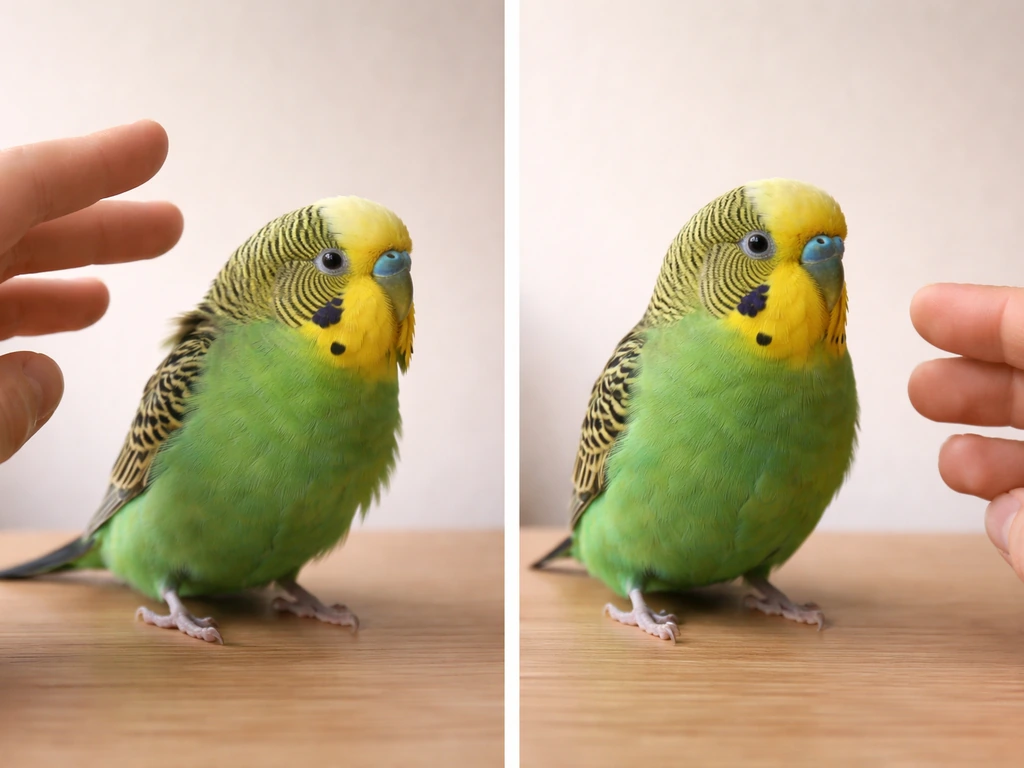
Biting is usually communication. Birds bite when they're scared, overstimulated, hormonal, or when they've learned that biting makes unwanted interactions stop. Hormonal phases, especially in spring, can turn a normally gentle bird into something that lunges every time you reach into the cage. Biting can also be a pain response. A bird that bites suddenly when you touch a specific area of its body, like its wings or abdomen, may be reacting to discomfort there.
Excessive screaming
All parrots and many other birds vocalize. A predictable burst of noise at dawn and dusk is normal flock-calling behavior. Screaming that goes on for extended periods, especially if it's a new pattern, can signal boredom, attention-seeking that's been accidentally reinforced, or anxiety. It can also be a sign that something is physically wrong. A bird making abnormal respiratory sounds, clicks, or wheezes alongside louder vocalizations needs a vet check, not a training fix.
Feather plucking and destructive behavior
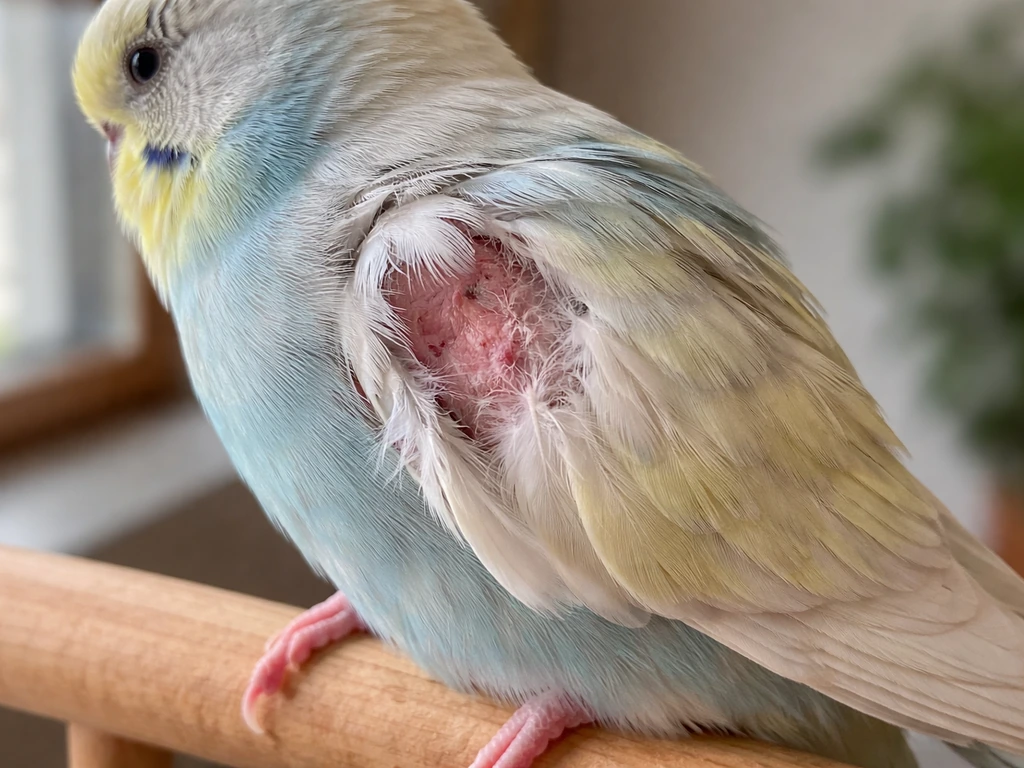
This is one of the most misunderstood bird behavior problems. Feather plucking ranges from mild over-preening to severe self-mutilation, and the cause can be behavioral (boredom, sexual frustration, stress, lack of stimulation) or fully medical (skin infections, musculoskeletal pain from injury or arthritis, heavy metal toxicity, organ dysfunction, malnutrition).
LafeberVet’s feather-destructive-behavior handout emphasizes that feather plucking can be driven by both medical and psychological factors, including boredom, lack of stimulation, and stress feather plucking can be caused by both behavioral factors and medical problems. Assuming it's just boredom without a vet check is a common mistake.
Because budgie bird feathers problems can come from medical issues as well as stress, always combine behavior observation with a vet check if plucking is ongoing. Blood tests, X-rays, and a physical exam are often needed to rule out a physical cause. If you notice lethargy or reduced appetite alongside the plucking, that raises the likelihood of an underlying illness.
Pacing and restlessness
A bird that paces repeatedly along its perch, bobs its head in stereotyped loops, or constantly moves without purpose is often stressed, under-stimulated, or confined in a space that's too small. Stereotypic behaviors like this can develop when birds don't have enough mental and physical activity. Environmental enrichment and more out-of-cage time usually help, but check that the bird isn't pacing due to discomfort, a toxin in the environment, or anxiety triggered by something nearby, like a predator scent or a mirror placement.
Withdrawal and reduced interaction
This is the one most owners miss. A bird sitting quietly in a corner, sleeping more than usual, perching on both feet instead of resting on one, or not eating its normal portion is showing early illness signals. Healthy, happy birds are generally engaged with their environment. A withdrawn bird that also has a slouched posture, half-closed eyes, or fluffed feathers needs to be evaluated by a vet, not just given more attention or a new toy.
When behavior problems are actually illness or pain
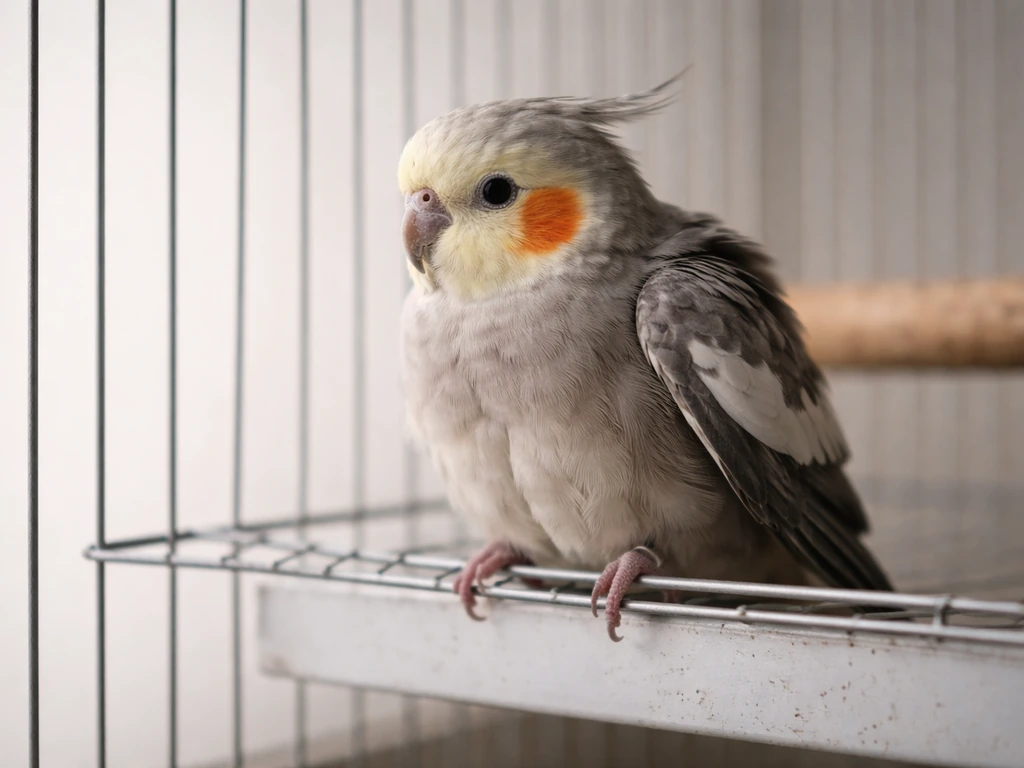
The connection between bird behavior problems and health is direct and important. Pain changes behavior. Illness changes behavior. And because birds instinctively hide weakness, the behavioral signal often arrives before any obvious physical sign does.
Aggression that appears suddenly in a previously calm bird can be a pain response. Feather plucking focused on one body area may signal localized discomfort. Reduced appetite paired with any behavioral change is a consistent illness indicator across species. Abnormal droppings alongside personality changes increase the concern further. Any bird that was behaviorally stable and has shifted without an obvious environmental reason needs illness ruled out first. For budgies, these behavior shifts are often the first clue of budgie bird health problems, so it's best to start with a health check.
This is especially relevant for budgies. Budgie sick symptoms, feather problems, and beak abnormalities can all present with behavioral changes first, which is why it's worth treating any sudden shift in behavior as potentially health-related until you have a reason to think otherwise. Beak abnormalities and budgie bird beak problems are also common early signs of illness, injury, or poor diet, so keep an eye on the color, shape, and how your bird uses its beak.
Respiratory and other health red flags that change behavior
Respiratory illness is a major behavioral driver in birds and it escalates fast. A bird that's breathing with effort will become quieter, less active, and may appear to be simply 'grumpy' or 'tired' before the breathing difficulty becomes obvious. For dyspnea, initial steps may include placing the bird in an oxygen cage or incubator in a dark, quiet room before an evaluation A bird that's breathing with effort. Know these signs and treat them as urgent.
- Open-mouth breathing at rest (not during or after exercise)
- Tail bobbing with each breath, or a rhythmic pumping motion of the tail while sitting still
- Wheezing, clicking, or noisy breathing
- Increased movement of the chest (sternal) area during breathing
- Discharge from the nostrils, eyes, or mouth
- Voice changes, such as a raspier or strained call
- Sitting low on the cage floor
- Fluffed feathers combined with closed or half-closed eyes
Any of those respiratory signs means a same-day or emergency vet call. Do not wait to see if it improves. Birds can go from visibly labored breathing to collapse quickly, and respiratory problems in birds are always treated as emergencies.
Toxic fume exposure is a specific danger worth knowing about. Nonstick cookware (Teflon and other PTFE-coated pans), aerosol sprays, scented candles, cigarette or vape smoke, and strong cleaning products all release fumes that can cause rapid respiratory distress in birds. In budgerigars, PTFE exposure as short as nine minutes has been shown to cause severe symptoms and death. If you've recently used any of these near your bird and it's now showing respiratory or behavioral changes, treat it as a poisoning emergency. Move the bird immediately to fresh air, away from the source, in a quiet, warm space, and get to a vet fast.
Step-by-step troubleshooting you can start today
If your bird isn't showing any emergency red flags and the behavior seems gradual or longstanding, work through this in order before assuming you need a training overhaul.
- Rule out illness first. Check for any physical signs: weight loss (weigh your bird on a small kitchen scale weekly if possible), change in droppings, reduced appetite, unusual posture, or any respiratory signs. If any are present, call an avian vet before doing anything else.
- Audit the environment. Is the cage large enough for normal movement? Is it placed in a draft, near a window with unpredictable outdoor predator activity, or in a noisy area? Is the temperature stable? Remove or neutralize anything that could be causing chronic low-level stress.
- Check the air quality. No nonstick pans near the kitchen. No aerosols, scented candles, or smoke in the home. Open windows for ventilation if you've recently cleaned or cooked.
- Look at the routine. Birds do well with predictability. Are sleep hours consistent? Is the bird getting 10 to 12 hours of darkness? Is out-of-cage time regular? Disruptions to routine are a common and underappreciated cause of stress behaviors.
- Identify triggers. Watch when the problem behavior happens. Is it always when a specific person approaches? At a certain time of day? When something new is in the room? Logging it for even two or three days will make the pattern obvious.
- Adjust enrichment. A bored bird will find its own entertainment, and that usually looks like a behavior problem. Rotate foraging toys, shredding materials, and puzzle feeders. Increase out-of-cage supervised time.
- Apply basic positive training. For biting and screaming, the most effective approach is differential reinforcement: reward the behavior you want (calmness, stepping up gently, quiet periods) and stop accidentally rewarding the unwanted behavior by responding to it with attention. Target training, where the bird learns to touch a stick with its beak on cue, is a practical tool that gives you a way to redirect the bird and build trust without confrontation.
What you can handle at home vs when to call a vet
| Situation | Action |
|---|---|
| Gradual biting or screaming with no physical signs, stable weight and droppings | At-home: adjust environment, enrichment, routine, apply positive training |
| Mild feather over-preening, no bare patches, no physical signs | At-home monitoring first, but book a vet check if it doesn't resolve in 1 to 2 weeks |
| Feather plucking with bare patches, skin irritation, or localized area focus | Vet visit needed to rule out medical cause before any behavioral intervention |
| Withdrawal, sleeping more, fluffed feathers, reduced appetite | Vet visit within 24 hours, sooner if worsening |
| Any respiratory sign: open-mouth breathing, tail bobbing, wheezing | Same-day emergency vet care |
| Suspected toxin/fume exposure with behavior or breathing changes | Immediate emergency vet care, move bird to fresh air now |
| Collapse, seizure, uncontrolled bleeding, inability to stand or perch | Emergency vet care immediately |
| Sudden personality change in a previously stable bird | Vet check within 24 to 48 hours to rule out illness or pain |
If you're unsure which category your bird falls into, call an avian vet and describe what you're seeing. Most will give you triage guidance over the phone. An avian vet (one who specializes in birds, not just any small animal vet) will also be better equipped to assess species-specific behavior and distinguish a medical issue from a behavioral one.
Preventing behavior problems before they start
Most bird behavior problems are preventable with a consistent environment and a realistic understanding of what your species needs. Here's what makes the biggest difference long-term.
- Establish a stable daily routine with consistent light/dark cycles (10 to 12 hours of sleep), regular feeding times, and predictable out-of-cage interaction
- Provide a cage that's large enough for the species, placed in a socially active part of the home but not in a chaotic or high-traffic spot
- Rotate enrichment items every few days so the bird isn't facing the same toys indefinitely
- Offer foraging opportunities every day: hide food in toys, wrap treats in paper, use puzzle feeders to make the bird work for part of its diet
- Keep air quality clean: no nonstick cookware, no aerosols or scented products, no smoke
- Weigh your bird weekly or biweekly on a gram scale and keep a simple log; weight loss is often the first measurable sign that something is wrong
- Schedule a well-bird check with an avian vet at least once a year, even if the bird seems healthy, so you have a baseline on file
- Learn your bird's individual baseline: its normal vocalization patterns, typical activity level, droppings appearance, and posture so you can recognize deviation fast
The earlier you catch a change from normal, the more options you have. Birds that are caught early in a health decline respond much better to treatment than those brought in when symptoms are advanced. Behavioral monitoring is one of the most practical health tools you have as a bird owner, because behavior changes before anything else does.
FAQ
What’s the fastest way to tell if bird behavior problems are illness-related instead of boredom or training?
Use a two-step screen: first, check whether the change is sudden versus gradual, then check for any paired physical cue (fluffed posture, altered droppings, reduced appetite, breathing noise, tail bobbing, or changes in how the bird perches). Sudden plus any physical cue should trigger a vet call, even if the bird still seems “mostly normal.”
My bird is yelling more at certain times, is that always a problem?
Not necessarily. Dawn and dusk flock-calling is typical, but prolonged new screaming patterns, especially if they start after changes to routine, social access, or lighting, are more concerning. If the bird also becomes less responsive, breathes with effort, or stops eating, treat it as medical until ruled out.
Can hormones cause aggression year-round, or do I still need a vet check?
Hormonal aggression can be seasonal and it may be predictable, but it should not come with illness indicators. If aggression is paired with fluffed feathers, weight loss, appetite changes, abnormal droppings, or pain reactions when touched, rule out pain or sickness rather than assuming it’s only hormonal.
What if my bird bites only when I touch one body area?
That pattern often points to localized pain or injury (for example, wings or abdomen) rather than general fear. Avoid pressing that area, reduce handling temporarily, and arrange an avian vet exam, especially if the biting is new or getting worse.
Is feather plucking always a sign of stress or boredom?
No. Plucking can be behavioral, but it can also be driven by infection, pain (including arthritis or injury), organ or nutritional issues, or toxin exposure. If plucking is ongoing, spreading, or accompanied by lethargy or reduced appetite, prioritize a medical workup rather than only adding enrichment.
When my bird withdraws or sleeps more, how do I decide between “needs rest” and “needs an urgent exam”?
If the bird is staying quietly in a corner with half-closed eyes, fluffed posture, reduced eating, or slouched alignment, treat it as illness and seek a vet evaluation. Birds can hide illness, so “more tired than usual” that persists or worsens over hours is not something to wait out.
Could stereotypic pacing or head-bobbing be a medical issue instead of stress?
Yes. Stereotypies can come from boredom or confinement, but pacing can also be linked to discomfort, toxin exposure, or anxiety triggered by something in the environment. If the behavior is new, intense, or paired with other signs (reduced appetite, breathing changes, altered droppings), get a vet assessment first.
What are the most dangerous household causes of bird behavior problems that I can prevent?
PTFE nonstick fumes, aerosols, scented candles, cigarette or vape smoke, and strong cleaners are major risks because birds can deteriorate rapidly. If you used any of these and your bird shows respiratory distress or sudden behavior changes, move the bird to fresh air immediately and seek emergency care.
Should I change my bird’s diet or remove supplements before the vet visit if I suspect illness?
If you suspect illness, avoid big, multiple diet changes right before the appointment. Keep current seed/pellet and fresh foods consistent for accurate assessment, unless there’s an obvious and immediate cause like contamination. If a specific food is newly introduced, stop that one item and tell the vet what was changed and when.
My bird seems “better” after I adjust its environment, does that mean it’s not medical?
A temporary improvement does not always rule out illness. Some medical problems fluctuate, and birds may react to lower stimulation. If behavior changes return, worsen, or show any recurring physical signs, schedule an avian vet exam even if you’ve made supportive changes.
How should I describe bird behavior problems to a vet for faster triage?
Include the exact timing (when it started), whether it was sudden or gradual, the “before baseline” (what the bird used to do), and every physical cue you’ve noticed (dropping changes, appetite, posture, breathing sounds, fluffed feathers). Also mention any recent exposures (cleaners, aerosols, nonstick cookware) and any handling changes that preceded the behavior shift.
When is “same-day” versus “emergency” appropriate?
Same-day is appropriate for any respiratory-related change, abnormal respiratory sounds, clicks or wheezes, or faster breathing changes. Emergency is appropriate if breathing looks labored, the bird is collapsing or severely lethargic, or there was recent fume exposure plus new respiratory or behavioral distress.
If I’m unsure whether the issue is training or illness, what’s the safest first step?
Pause aggressive retraining or punishment-based changes and start with observation and risk elimination. Then contact an avian vet for triage guidance, especially if the change is sudden or any physical signs are present. If the vet says it’s behavioral, you can then adjust routines gradually instead of guessing.
Scouse Bird Problems: Symptoms, Causes, and Step-by-Step Fixes
Step-by-step guide to scouse bird problems: spot symptoms, rule out causes, take safe home steps, know when to vet.