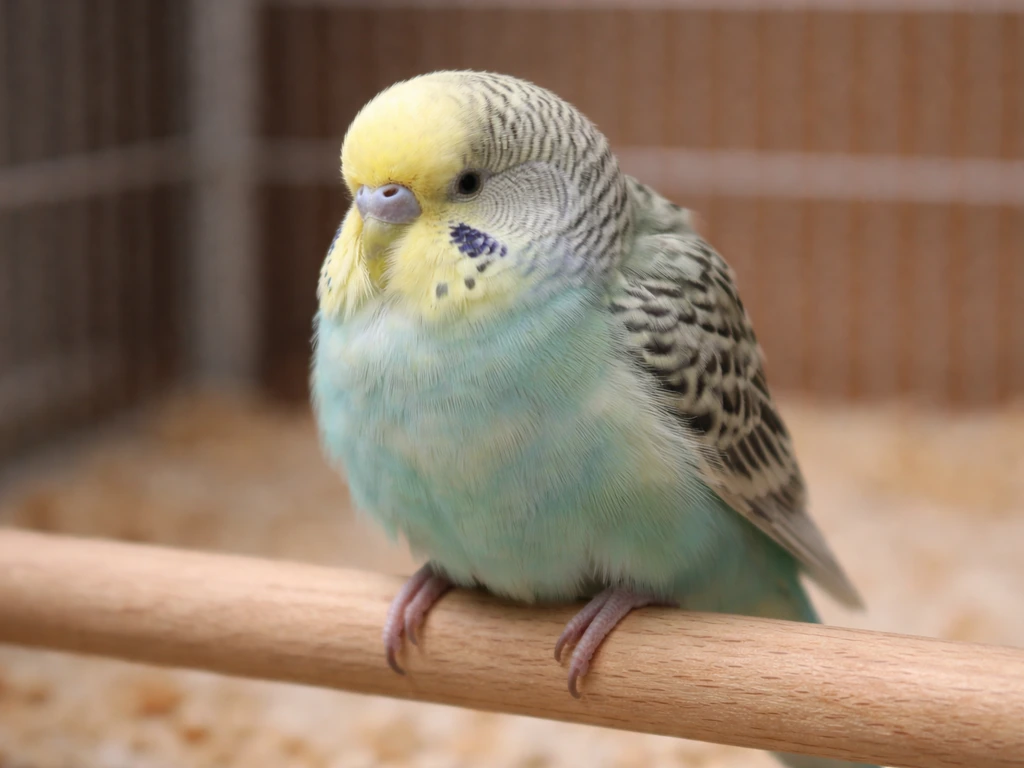
If your budgie's feathers look broken, missing, dull, fluffed, scruffy, or they're actively picking at themselves, the first thing to figure out is whether this is a normal moult or a sign of a health problem. Normal moulting is gradual, symmetrical, and your bird still acts lively and eats well. Real problems look different: patchy bald spots, malformed or chewed feathers, constant picking, or feathers that just never grow back properly. Most cases are fixable once you know the cause, but a few need a vet visit sooner rather than later.
Budgie Bird Feathers Problem: Diagnose and Fix Quickly

Marcus Webb
27 May 2026
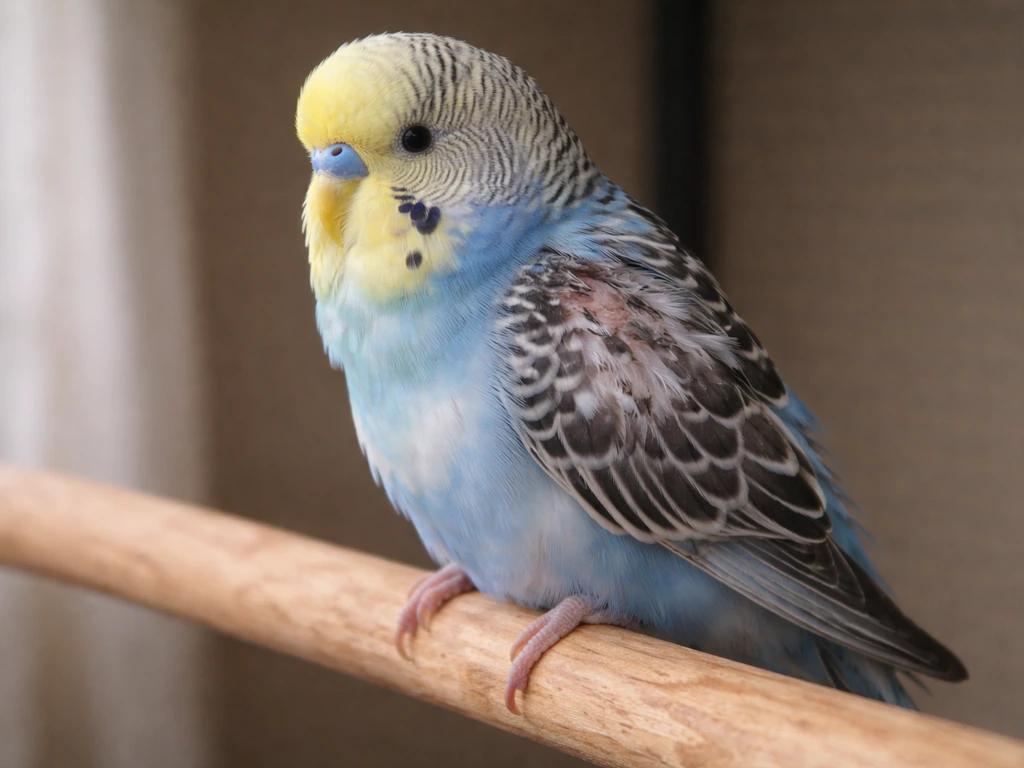
Signs that tell you something is actually wrong
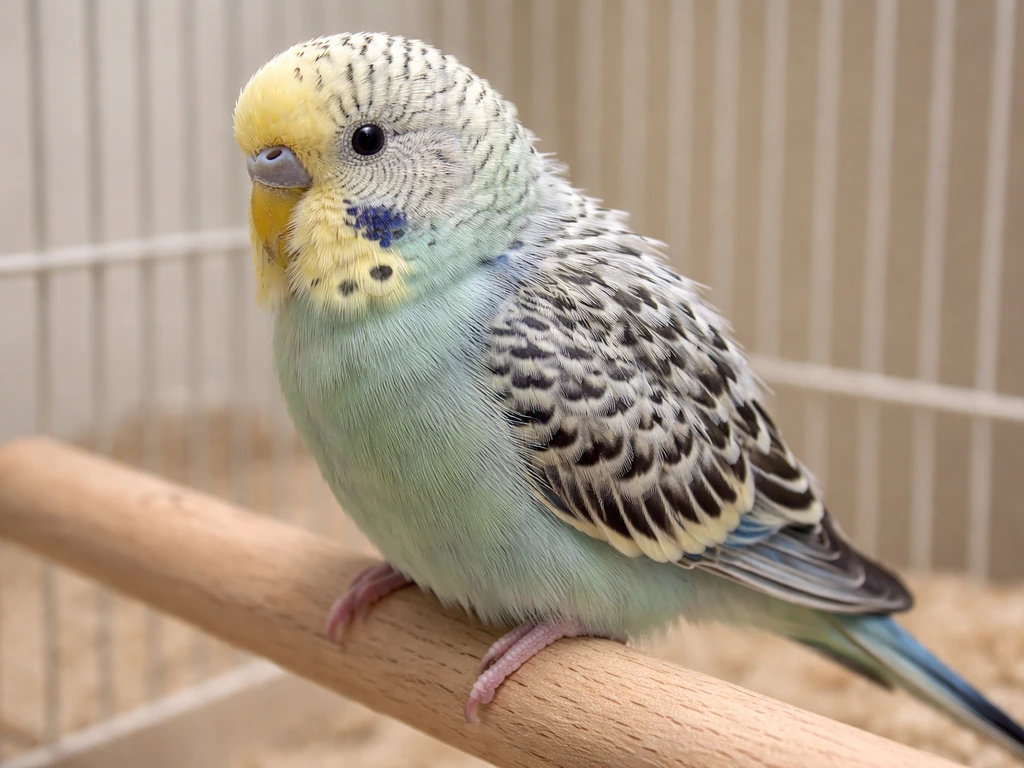
Normal moulting leaves behind a healthy-looking bird. The feathers come in evenly, you see small pin feathers (little waxy-tipped quills) pushing through, and your budgie carries on with normal behaviour. The first moult usually happens around 12 to 14 weeks of age, so young birds losing their baby plumage around that age are completely fine.
The signs that something is actually wrong are a different picture entirely. Watch for any of these:
- Bald patches, especially on areas the bird can reach itself, like the chest, inner wings, or legs
- Feathers that look chewed, frayed, or broken off close to the skin
- Ragged tips on otherwise intact feathers (a sign of chewing rather than normal wear)
- Feathers that grow in twisted, discoloured, or deformed
- Persistent fluffed-up posture when the room is warm (this often signals chills, fever, or systemic illness)
- Dull, flat, or faded colouring that used to be vibrant
- Any bald spots on the top of the head, which the bird physically cannot reach itself
- Crusty or scaly skin around the beak, eyes, or legs alongside feather changes
- A bird that obsessively picks, chews, or pulls at its own feathers
Balding or feather damage that is not explained by normal grooming is not something to wait on. It is worth investigating the same week you notice it, not in a few months.
Normal moult vs a real feather problem: how to tell the difference
The easiest way to tell them apart is to look at the whole bird, not just the feathers. A budgie going through a healthy moult is alert, eating, chirping, and moving around normally. You will see pin feathers coming in across different parts of the body at the same time, and the pattern is fairly even on both sides.
A sick or stressed bird looks different. It sits low on the perch, fluffs up for warmth, loses interest in food, and the feather loss tends to be patchy or concentrated in one area. If you also notice appetite changes, lethargy, or other budgie bird sick symptoms, that can point to illness rather than normal moult. If the pin feathers coming in during what looks like a moult appear abnormal, like short stubs that bleed easily, or feathers that pop out already misshapen, that is not a moult issue. That is a red flag for something systemic going on.
| Feature | Normal Moult | Health Problem |
|---|---|---|
| Bird's behaviour | Active, eating, vocalising normally | Lethargic, fluffed, quiet, appetite changes |
| Pattern of feather loss | Even, both sides, gradual | Patchy, one-sided, or rapid |
| Feather appearance during regrowth | Clean pin feathers, waxy tip, grow in normally | Twisted, discoloured, broken, or fail to grow back |
| Skin condition | Normal under feathers | Red, irritated, crusty, or scaly skin visible |
| Bird picking at feathers | Occasional preening | Repeated, intense chewing or pulling |
| Location of bald areas | Temporary gaps anywhere during moult | Head top (unreachable), chest, inner wings persistently |
Diet and husbandry problems that wreck feather quality
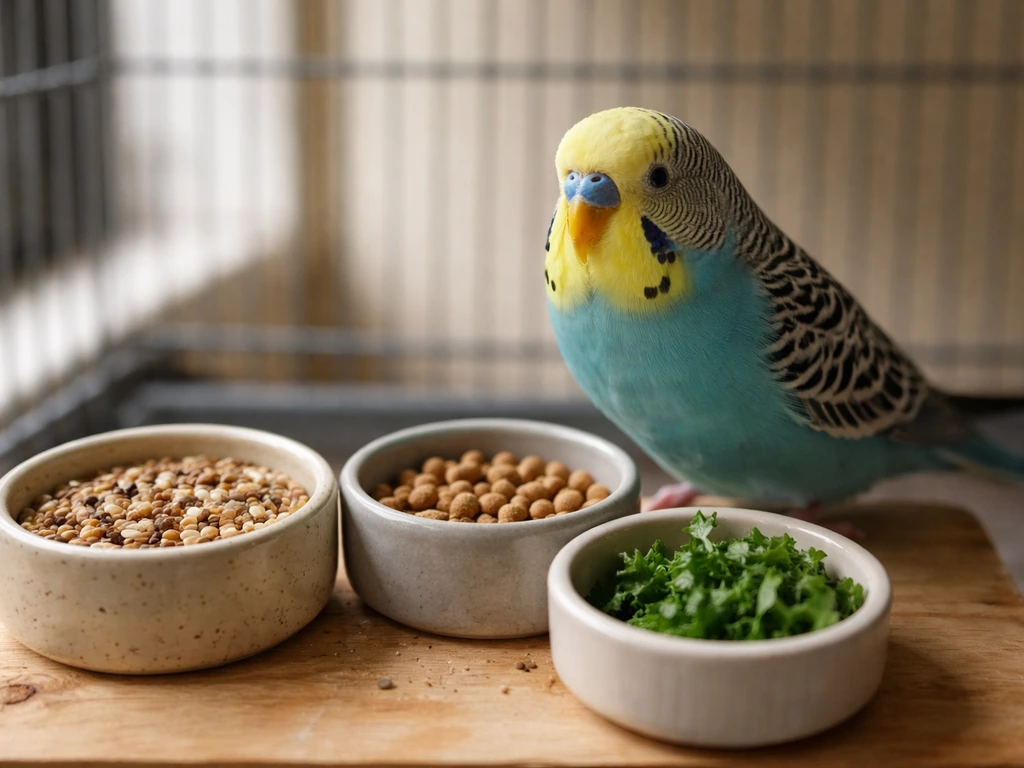
A seed-only diet is one of the most common reasons budgies end up with poor feathers. Seeds are high in fat and carbohydrates but low in the vitamins and amino acids that feathers actually need. Feathers make up roughly 5.7% of a budgie's total protein mass, so quality protein and micronutrients are not optional extras. A zinc deficiency from an all-seed diet can lead to scaling skin and poor feathering. Vitamin A deficiency specifically causes pale, rough, lacklustre feathers alongside cere roughening and dry scale around the mouth corners.
Beyond diet, the environment matters more than most owners realise. Low humidity dries out skin and feathers, making them brittle and more likely to break. Temperature extremes and drafts stress the bird enough to trigger picking. Too little natural light (or no full-spectrum lighting) disrupts normal feather cycling. High noise levels, overcrowding, or a cage positioned in a busy area can keep a budgie in a constant low-level stress state that eventually shows up on the feathers.
- Switch from a seed-only diet to a quality pelleted diet as the main food, with fresh vegetables as extras
- Aim for moderate humidity in the room, around 40 to 60 percent
- Make sure the cage gets access to natural light or a full-spectrum bird lamp for several hours a day
- Keep the cage away from drafts, air vents, and high-traffic, noisy areas
- Ensure your budgie has enough mental stimulation: foraging toys, rotation of perch types, and social interaction
If your bird is resistant to switching off seeds, talk to an avian vet about a gradual transition plan. Do not just pull seeds away suddenly, as that stresses the bird further and can backfire.
Parasites, skin conditions, and allergies
Scaly face and leg mites (Cnemidocoptes) are genuinely common in budgerigars and are worth knowing about. They burrow into featherless skin around the beak, cere, eyes, and legs, leaving behind crusty, pitted, honeycombed-looking lesions that develop slowly. Affected budgies can lose feathers in those areas, and it can look a bit like mange. The lesions start small and easy to miss, so check the cere and beak edges closely if you notice any feather thinning around the face.
Red mites are trickier because they hide during the day, in cage crevices and under perches, and only come out at night to feed. If your bird seems restless at night, is scratching more than usual, or you find tiny dark specks in cage corners, red mites are a real possibility. Feather mites and lice can also damage feathers directly, though this is less common than people assume. Parasites are rarely the sole cause of major feather loss, but they are worth ruling out early.
Skin irritation from allergies or environmental triggers, including tobacco smoke, scented candles, aerosol sprays, and non-stick cookware fumes, can inflame the skin enough to make a budgie start picking. Low humidity is also a genuine physical irritant that desiccates the skin and drives scratching and picking behaviour. If feather damage started suddenly after a change in the home environment, that connection is worth investigating.
Diagnosing mites accurately requires a vet to take skin scrapings and examine them under a microscope. When vets suspect feather mites, they may confirm the diagnosis by examining feather debris, taking skin scrapings, and checking for crusts or samples collected from the cage skin scrapings under a microscope. Owners should not attempt to diagnose or treat mite infestations based on appearance alone, because some mite species sit deep in the subcutis and are easily missed without proper technique.
When a respiratory or systemic illness shows up on the feathers
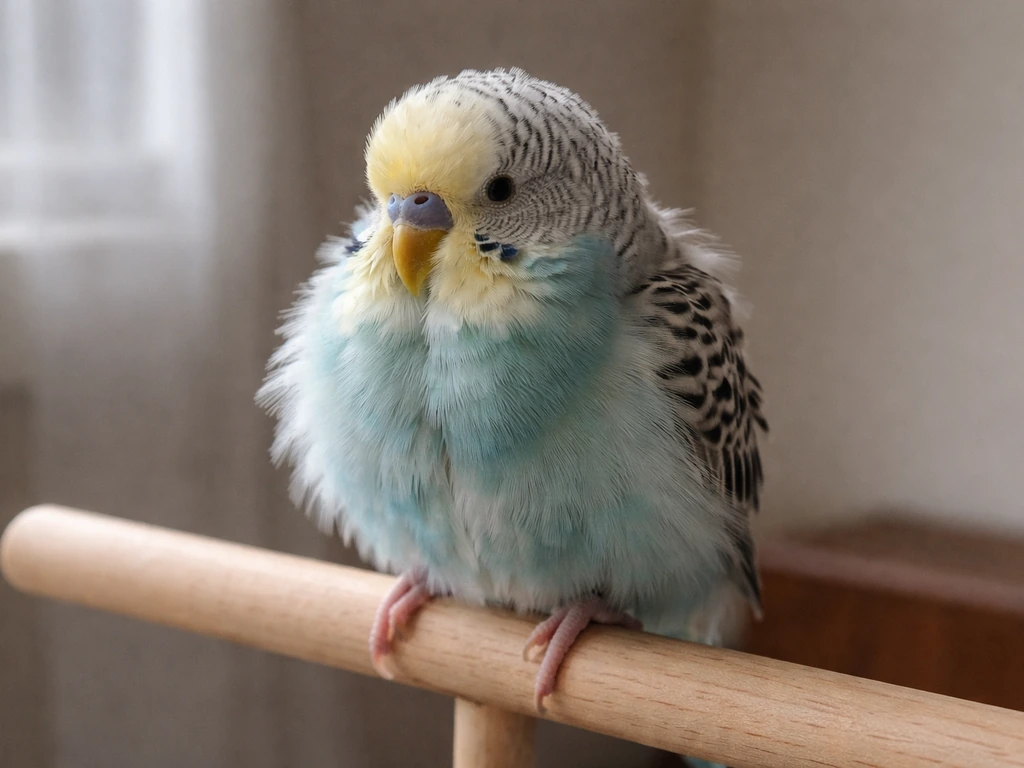
This connection surprises a lot of owners, but feather condition can be a visible window into internal health. Because budgie bird health problems can show up through feather damage and picking, acting quickly helps you get the right diagnosis sooner feather condition can be a visible window into internal health. When a budgie is dealing with a respiratory infection, liver disease, kidney failure, or a tumour, the discomfort and metabolic strain of that illness can trigger feather-destructive behaviour. The bird is not doing it out of boredom; it is responding to internal pain or irritation it has no other way to express.
Fluffed feathers are a particularly important clue here. A budgie that sits fluffed up for extended periods is typically trying to conserve body heat, which points to fever, chills, or systemic illness rather than a simple feather issue. Combine that with laboured breathing, open-mouth breathing, or a tail that bobs noticeably with each breath, and you are looking at a bird that needs a vet, not just a cage clean.
Psittacine Beak and Feather Disease (PBFD), caused by a circovirus, is one of the more serious feather-related diagnoses. The classic signs are progressive, symmetrical loss of contour feathers, tail feathers, and down feathers, followed by replacement feathers that grow in twisted, discoloured, short, or fail to emerge at all. PBFD often starts at the head and wing feathers.
If you see feathers coming in deformed rather than just missing, PBFD belongs on your list of possibilities and needs a vet test to confirm or rule out. VCA Animal Hospitals notes that often the first visible clinical sign of psittacine beak and feather disease is severe beak deformation or misshapen, abnormally formed (dystrophic or necrotic) feathers feathers coming in deformed rather than just missing.
It is worth knowing that PBFD is also relevant if you have multiple birds, since it is contagious.
Psittacosis (a bacterial respiratory infection) can also produce relatively mild symptoms that are easily confused with a common cold, but it is a systemic disease with real consequences for both the bird and potentially the people in the household. Respiratory signs combined with feather changes should always be assessed properly.
What to check on your bird today
You do not need any special equipment to do a useful first assessment. Work through this systematically before you call a vet, because it will help you describe the problem accurately and potentially speed up the diagnosis.
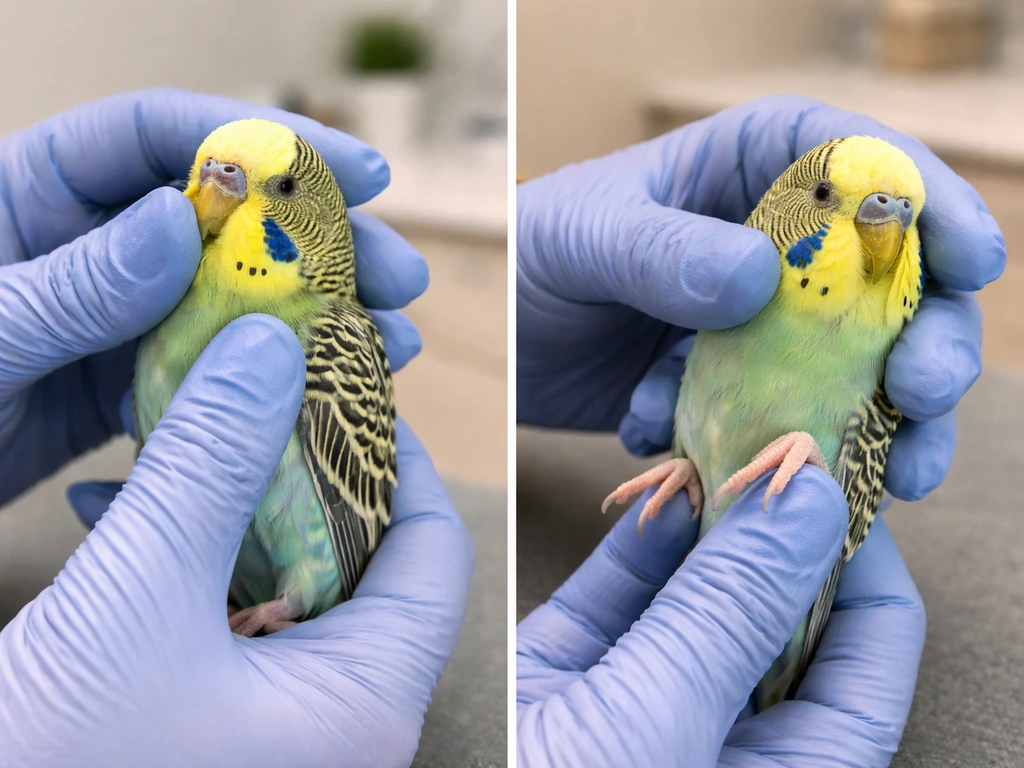
- Look at the bird from a distance first. Is it alert and upright, or sitting low and fluffed? Is it moving around, eating, and vocalising? A bird that is quiet and puffed up in a warm room is a concern regardless of what the feathers look like.
- Check respiration. Is the breathing visible from across the room? Any open-mouth breathing, tail bobbing, or nasal discharge? These are red flags that go beyond a simple feather problem.
- Inspect the feather distribution. Is the loss even across both sides, or patchy and one-sided? Are there bald spots on the head (which the bird cannot reach itself)?
- Look at the quality of the feathers themselves. Are they broken off at the skin level? Chewed at the tips only? Growing in deformed or discoloured? Or just a bit thin and dull?
- Check the skin around the beak, cere, and leg scales using a magnifying glass if you have one. Look for crusty, pitted, or honeycombed texture that would suggest scaly mites. Check for any unusual scaling or growths.
- Examine the cage at night or check crevices and perch ends for tiny dark specks that could indicate red mites.
- Review the diet. Is this bird eating mainly seeds? When did the feather changes start and did anything else change around the same time: new cleaning products, a new bird, a move, a change in temperature?
- Note how long the problem has been going on and whether it is getting worse, staying the same, or slowly improving.
Write down what you find. A specific description of the feathers, the bird's behaviour, its diet, and any recent changes in the home will give an avian vet a much clearer starting point than a general 'the feathers look bad.'
When to get to an avian vet and what to ask for
Some feather problems can wait a week for a routine appointment while you gather information. Others need to be seen quickly. Here is how to sort them:
Get to a vet urgently (within 24 to 48 hours)
- Open-mouth breathing, audible wheezing, or tail bobbing with each breath
- The bird is fluffed, lethargic, and not eating
- Active bleeding from a feather follicle or broken blood feather
- Feathers coming in visibly deformed, twisted, or not emerging properly (possible PBFD)
- Rapid feather loss across multiple body regions
- Any neurological signs alongside feather changes: falling off the perch, head tilt, tremors
Book a routine appointment (within the week)
- Persistent picking or chewing behaviour with no obvious environmental trigger
- Crusty or honeycombed skin around the beak, cere, or legs
- Feather loss that is not consistent with normal moult and not resolving after a few weeks
- Dull, pale, or lacklustre feathers alongside a seed-heavy diet
- Feathers chewed at the skin level, leaving only down feathers behind
When you get to the vet, be specific. Tell them: how long the feather changes have been happening, whether the bird is picking at itself or the damage appeared without picking, what the diet is, what the environment is like, and whether you have noticed any respiratory signs or behaviour changes. Ask specifically about a full physical exam, skin scrapings to check for mites, and blood work including a CBC and biochemistry panel if the bird seems systemically unwell. If PBFD is a concern, ask about viral testing. If the vet suspects behavioural picking driven by a medical cause, ask about imaging (radiographs) to check for internal issues like liver enlargement or tumours.
One thing worth knowing: if feather picking becomes an established habit, simply removing the stressor that caused it may not stop the behaviour. That is why getting a diagnosis early, rather than waiting to see if it resolves, gives the bird a much better outcome.
Feather problems rarely exist in isolation. Addressing bird behavior problems early can help you tell normal moulting from stress or illness before feather loss becomes severe. If you are hearing unusual concerns from neighbours, it can help to compare notes on scouse bird problems with a local avian expert, since patterns can differ by area. If your budgie has other symptoms alongside the feather changes, like beak abnormalities, weight loss, or broader signs of illness, those details fit into the bigger picture of your bird's overall health and are all worth flagging to the vet in the same visit.
FAQ
How can I tell if my budgie bird feathers problem is still a normal moult or something progressing faster?
Record when the feather changes started and whether the pattern is symmetrical (common in moult) versus concentrated in one patch or along the belly, breast, or face (more concerning). Also note if new feathers are growing in as pin feathers that look normal, or as short stubs or deformed shafts, because the latter is a stronger illness signal than slow shedding.
Should I bathe or spray my budgie when I see feather loss to improve the look of the feathers?
Avoid bathing or spraying “to help the feathers” if you suspect illness or picking. Bathing can temporarily improve feather lying, but if mites, inflammation, or infection are the cause it can worsen irritation or stress. Instead, offer stable warmth, clean water, and focus on identifying the trigger (diet, humidity, fumes, housing), then contact an avian vet if it is not clearly a normal moult.
What should I do if I have more than one budgie and one has feather abnormalities?
If your budgie has multiple birds nearby, separate them immediately if you see deformed or twisted new feathers, sudden progressive feather loss, or symptoms consistent with contagious diseases like PBFD. Keep airflow and cleaning separate (gloves, dedicated cloths), and wash your hands between birds so you do not spread mites or infections through handling.
My budgie feathers look bad, but it also breathes oddly. Does that change how urgently I should act?
If feather loss is paired with open-mouth breathing, tail bobbing with breaths, wheezing, or lethargy, do not wait for a “feathers only” solution, arrange an avian vet visit quickly. Even when the feathers look like the main issue, respiratory or systemic disease can be driving the picking or fluffed posture.
Could scaling skin around the beak or legs be from dryness or diet rather than mites?
Do not rely on skin flaking alone to decide it is just dry skin. A zinc or vitamin A deficiency can cause scaling and poor feather quality, and mites can also produce crusting. If you recently changed diet, started new foods, or switched pellet brands, tell the vet, because diet history helps interpret whether you are seeing nutritional deficiency versus a parasitic problem.
My budgie refuses pellets and sticks to seeds. What is the safest way to change its diet without triggering more feather picking?
If you find a diet that is mostly seeds and you want to switch, transition slowly while increasing the range of pellets and supplement sources. Sudden removal of seeds often increases stress and can worsen picking behaviour. Also introduce new foods one at a time so you can identify which items the bird accepts.
If my budgie is not picking at itself, should I still assume the problem is medical?
Check the pattern of damage. If feathers are missing where the bird reaches and you see active picking, that suggests a behavioural component or skin irritation that the bird is responding to. If the same areas are damaged without obvious picking, or feathers are replaced abnormally, prioritize medical causes and ask the vet about skin scrapings and blood work rather than focusing only on enrichment.
Why do vets insist on skin scrapings for mite suspects, can’t I just treat based on what it looks like?
For suspected mites (especially scaly face and leg mites), appearances can overlap with other skin conditions. Ask your avian vet whether skin scrapings under microscopy are needed before treatment, because some mites live deeper and can be missed without proper sampling. If the vet treats first based on appearance only, ask how they will confirm the diagnosis and when to reassess.
My budgie feather problem started after I changed something in the home. What kind of changes are most likely to trigger it?
During a house change, moving the cage, a new cleaning product, or adding scented items can trigger sudden picking through irritant contact and inflammation. Write down the exact change date and what products you used (including sprays and fumes) so you can show the timeline to the vet.
What at-home measurements or observations should I track to help the vet diagnose faster?
Do a quick at-home baseline now: weigh your budgie (daily or every other day for a week if possible), note appetite, and observe posture and activity. Weight loss and reduced food intake alongside feather loss are strong reasons to push the vet visit sooner rather than later.
Next Article
Budgie Bird Sick Symptoms: Check, Interpret, and React Fast
Learn budgie bird sick symptoms by breathing, poop, behavior, eyes and feathers, know urgency, and act safely at home.