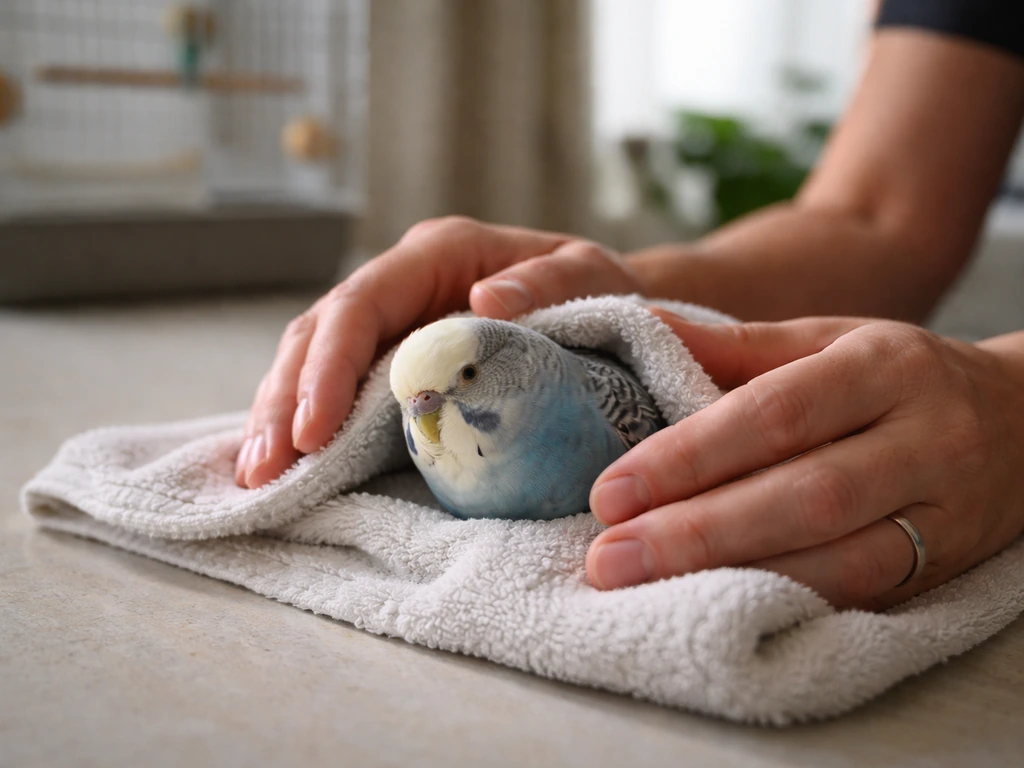
A bird cough rarely sounds like a human cough. Depending on the species and where the irritation is in the airway, it can come out as a short honk, a throaty expulsion of air, a clicking or snicking sound, a wet gurgle, or a wheeze followed by a brief silence. Some birds sound like they're clearing their throat. Others produce a low, repeated clicking that owners often mistake for a beak-grinding habit.
What Does a Bird Cough Sound Like? Sounds, Causes, Next Steps

Marcus Webb
18 May 2026
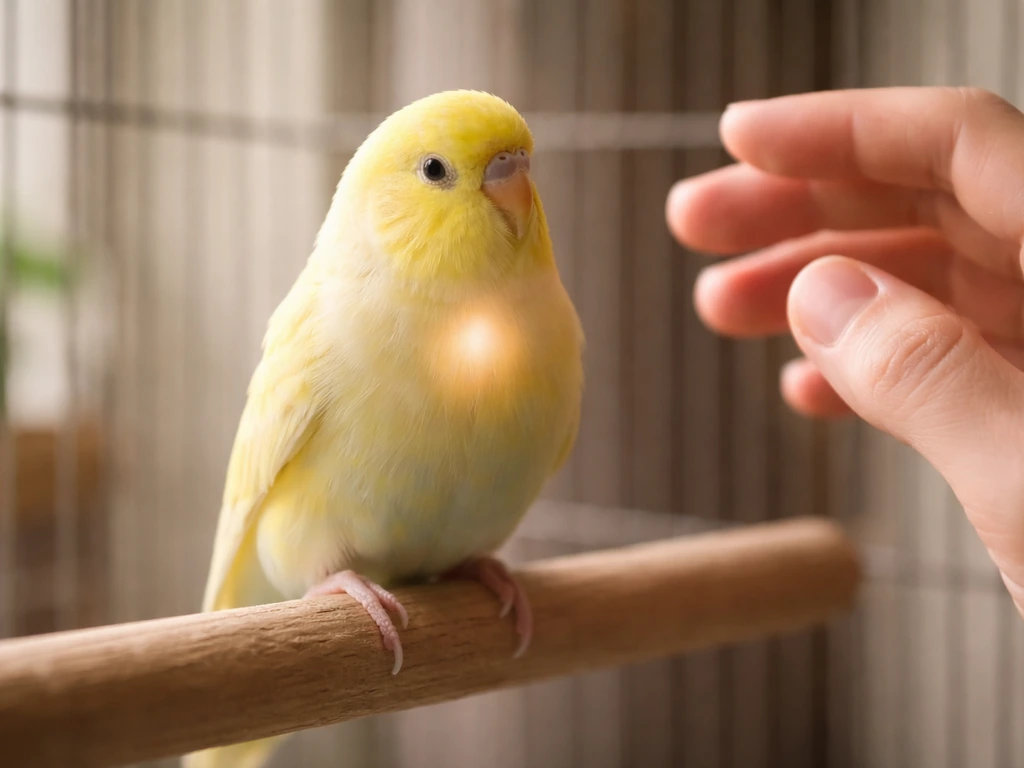
The tricky part is that birds also sneeze, gag, make contact calls, and mimic sounds, so not every strange noise means something is wrong with their respiratory tract. Knowing what a true cough sounds like, and what goes along with it, is how you figure out whether this is worth a vet call today.
How coughing sounds vary by species and situation
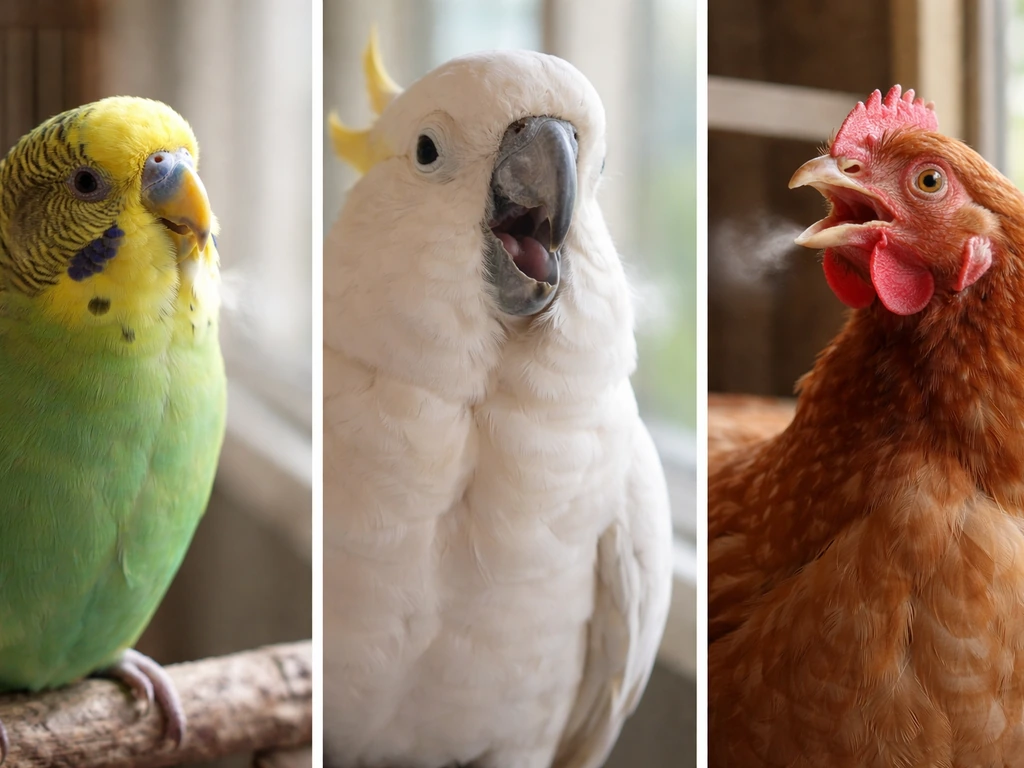
There is no single sound that covers "bird cough" across all species. A budgie coughing sounds nothing like a cockatoo or a chicken doing the same thing. Smaller birds like budgies, canaries, and finches tend to produce quieter, more subtle sounds: a soft clicking, a faint wheeze, or a brief gasping chirp between normal calls. Larger parrots like Amazons, African Greys, or cockatoos can produce a louder, almost honking expulsion or a wet, rattling sound that is hard to miss.
Where the irritation sits in the airway also changes the sound. Upper airway issues (nasal passages, trachea) tend to produce higher-pitched, clicking, or sneezing-type noises. Lower airway issues (lungs, air sacs) tend to produce wetter, gurgling, or rattling sounds that seem to come from deep in the chest or belly. A bird with air sac involvement may look like it's working hard to breathe even when it's not making much noise at all.
Context matters too. A bird that just shook its head and made a brief snicking sound after eating is behaving normally. A bird that is repeatedly making the same expulsive sound while sitting fluffed on the bottom of the cage is not. Dust, smoke, cooking fumes (especially non-stick cookware), and low humidity can all trigger brief bouts of cough-like sounds in otherwise healthy birds, and those usually stop when you remove the irritant.
Common noises that get mistaken for coughing
This is where most owners get confused, and honestly it makes sense because birds make a lot of unusual sounds and some of them overlap.
- Sneezing: Usually a sharp, single expulsion of air, sometimes with a tiny spray of moisture. Occasional sneezing is normal. Repeated sneezing with discharge coming from the nares is not.
- Clicking or snicking: A soft, repetitive clicking sound often heard during or right after eating. Can be normal (beak or throat clearing) but can also signal early respiratory irritation or aspiration of food particles.
- Wheezing: A high-pitched whistling sound on the inhale or exhale. Often confused with a cough, but wheezing points to airway narrowing rather than the expulsive effort of a cough.
- Gurgling or bubbling: A wet sound, like air moving through liquid. This is a red flag and typically means mucus in the airway. It is often described by owners as a cough but is more serious than a dry cough.
- Gagging: A repeated stretching of the neck forward, sometimes with retching. This can look and sound like a cough but may actually be regurgitation or a swallowing problem rather than a respiratory issue.
- Tail-bobbing with a sound: Some birds make a soft grunt or exhalation with each tail bob. The tail bob itself is the important symptom here, indicating labored breathing, and any sound paired with it deserves attention.
- Mimicking: Parrots and some other birds are excellent mimics. If your bird lives with a person who coughs regularly, it may simply be imitating the sound with no health issue whatsoever.
What goes along with a true cough vs a normal airway noise
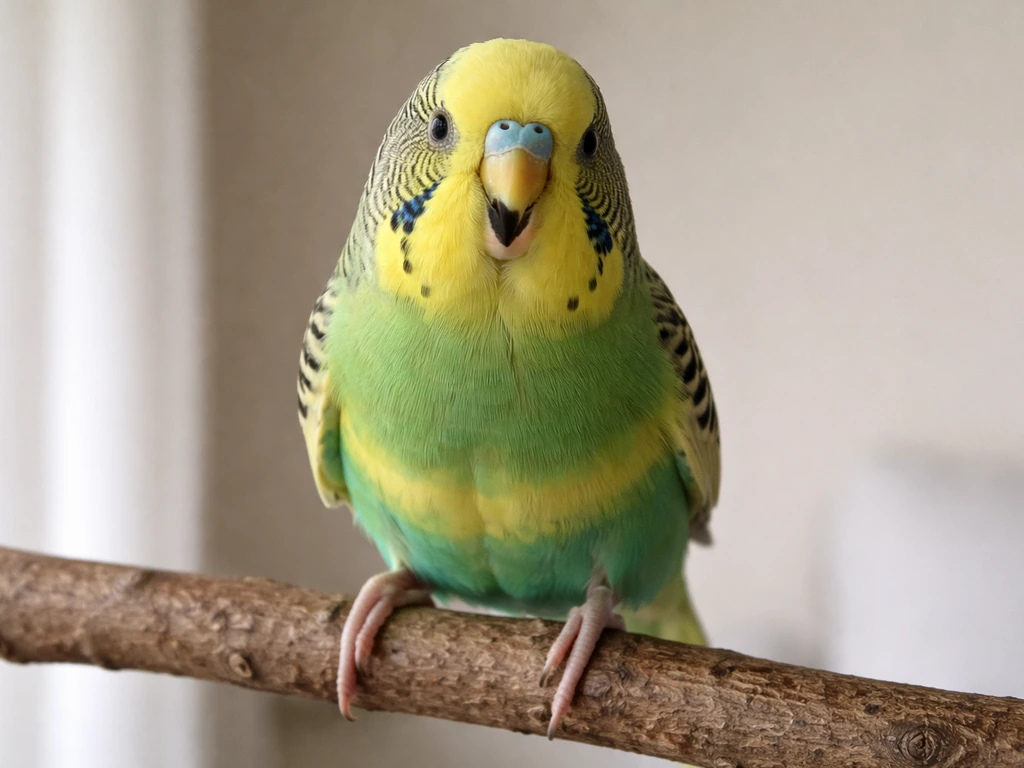
The sound alone is rarely enough to decide if something is wrong. What separates a concerning cough from an incidental noise is the package of symptoms that comes with it. A bird that is coughing due to respiratory illness almost always shows at least one or two of the following signs alongside the sound.
Upper respiratory tract illness can also include periocular swelling, oculonasal discharge, sneezing, scratching around the eyes, and frequent yawning, and dyspnea may show as open-mouth breathing, increased sternal motion, or tail bobbing LafeberVet. VCA Animal Hospitals notes that respiratory signs in pet birds can include labored or open-mouth breathing along with tail bobbing, where the tail moves up and down with each breath.
If you are wondering what a bird seizure looks like, watch for episodes of sudden collapse, stiffening, or uncontrolled movements rather than normal coughing sounds.
| Symptom | What it looks like | How urgent |
|---|---|---|
| Open-mouth breathing | Beak stays open at rest, not from heat or exertion | High — see vet same day |
| Tail bobbing | Tail moves visibly up and down with every breath | High — see vet same day |
| Nasal discharge | Wet, crusty, or discolored nares (nostrils) | Moderate — vet within 24-48 hours |
| Gaping or yawning repeatedly | Bird stretches neck and opens beak wide, repeatedly | Moderate — monitor closely |
| Lethargy and fluffing | Sitting on the cage bottom, eyes partially closed, feathers puffed | High — see vet same day |
| Reduced appetite or weight loss | Leaving food untouched, keel bone becoming more prominent | Moderate to high |
| Voice change | Calls sound hoarse, raspy, or quieter than usual | Moderate — vet within 24-48 hours |
| Abnormal droppings | Droppings that are green, yellow, or watery beyond normal range | Moderate — note and report to vet |
| Periocular or facial swelling | Puffiness around the eye or sinus area | Moderate to high |
| Cyanosis (blue/dark tint to skin or mucous membranes) | Rare, but means very poor oxygenation | Emergency — get to a vet immediately |
A bird that makes an occasional clicking sound but is eating well, active, bright-eyed, and holding its feathers normally is much less likely to have a serious problem than a bird making the same sound while also sitting fluffed at the bottom of the cage. The full picture is what counts.
What actually causes coughing and similar sounds in birds
Once you've identified that the noise sounds respiratory and the bird has companion symptoms, the next question is why. Here are the most common causes.
Infectious respiratory disease
Bacterial, viral, and fungal infections are among the most common causes of respiratory sounds in pet and captive birds. Aspergillosis (a fungal infection) is particularly common in birds that have been stressed or immunocompromised, and it frequently produces a subtle, progressive wheeze or voice change before the bird appears obviously sick. Broken bird syndrome is a related condition that avian vets often look for when a bird shows persistent respiratory symptoms and voice changes.
Bacterial infections, including Mycoplasma species and Pasteurella, can cause wet sounds, nasal discharge, and periocular swelling. Psittacosis (Chlamydia psittaci) is a well-known cause of respiratory illness in parrots and also poses a risk to humans in close contact with an infected bird, which is one reason an avian vet workup matters. If you suspect broken bird syndrome, an avian vet workup can help determine whether the sounds are respiratory or related to the bird’s overall condition.
Aspiration and food-related irritation
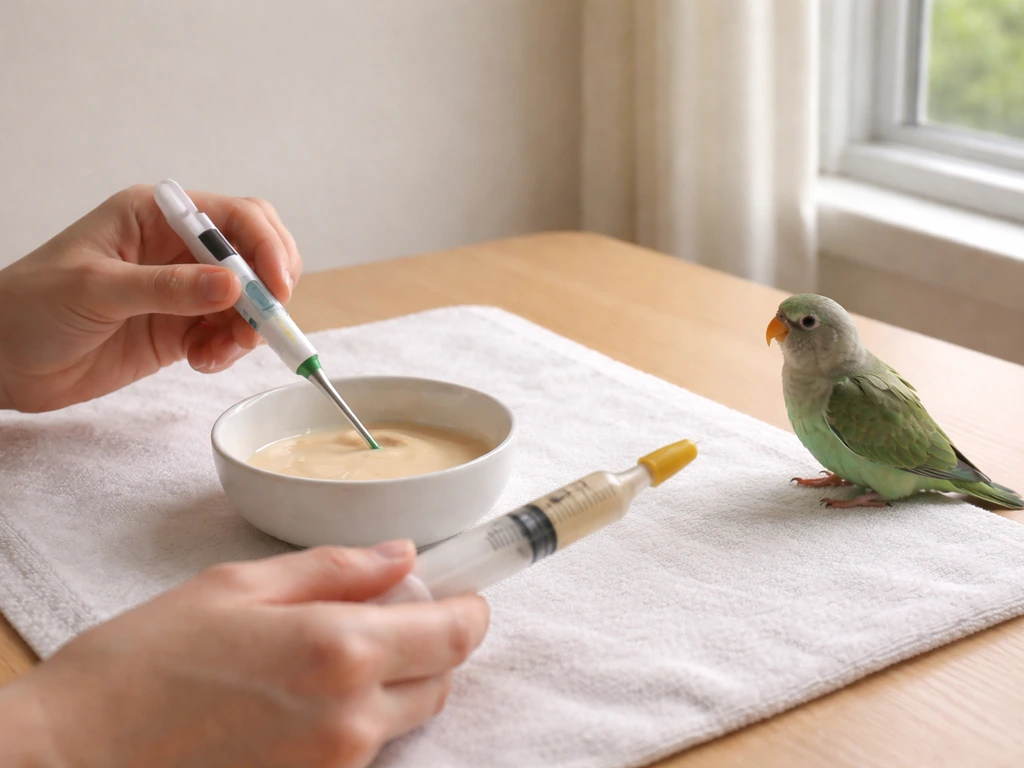
Birds that eat too fast, are hand-fed formula at the wrong temperature, or aspirate a small amount of food or liquid can develop a temporary cough or clicking sound. Aspiration can also lead to aspiration pneumonia if food material reaches the lower airways, which is a more serious concern. If you've recently hand-fed a chick or changed a bird's diet and a cough-like sound appeared shortly after, mention that to your vet. Sometimes people describe bird regurgitation as vomiting, but regurgitation is usually triggered by feeding and is not the same as true vomiting cough-like sound.
Environmental irritants
Birds have highly efficient respiratory systems that make them extremely sensitive to airborne irritants. Polytetrafluoroethylene (PTFE, the coating in non-stick cookware) is acutely toxic and can kill a bird within minutes. Cigarette smoke, candles, air fresheners, cleaning products, paint fumes, incense, and even very dusty environments can all cause coughing, sneezing, and breathing difficulty in birds. If your bird started making sounds shortly after something was burned, sprayed, or cooked in the kitchen, environmental toxicity is the first thing to rule out.
Air sac disease and lower respiratory conditions
Birds breathe through a system of air sacs connected to their lungs, and disease in the air sacs often produces sounds and breathing effort that owners describe as a "cough" or "wheeze." Air sacculitis (inflammation of the air sacs) can be caused by bacterial or fungal infections and often shows as a bird working hard to breathe, tail bobbing, and sometimes producing a wet or rattling sound. This type of illness tends to progress quickly, so early recognition matters.
Other causes worth knowing
Tracheal obstructions, tumors pressing on the airway, goiter (thyroid enlargement in budgies on all-seed diets causing a squeaky or wheezy sound), and even external parasites like Sternostoma tracheacolum (air sac mites) can produce sounds that owners identify as a cough. Some bird owners also search for what is bird cage syndrome when they notice persistent respiratory-type sounds that seem to follow the bird’s environment bird cough. Air sac mites are particularly common in canaries and finches, and they cause a clicking or wheezing sound that gets progressively worse.
At-home checks you can do safely right now

Before you call the vet or while you're waiting for a callback, there are some safe, practical things you can check and do at home. These won't replace a diagnosis but they'll help you gather information and reduce any immediate environmental risk.
- Remove any potential airborne irritants immediately. Turn off non-stick cookware, open windows, move the bird to a clean-air room, and put away candles, air fresheners, or any sprays used recently in the home.
- Check the humidity level. Dry air (below about 40% relative humidity) can irritate a bird's airways. If you have a humidifier, run it in the bird's room. If not, placing a bowl of water near (not in) the cage can help a little.
- Observe the breathing pattern for 5-10 minutes without disturbing the bird. Count how many breaths per minute if you can. Watch for tail bobbing, open-mouth breathing, or visible effort with each breath.
- Check the nares (nostrils) for discharge, crusting, or asymmetry. Gently look at the area around the eyes for any swelling or discharge.
- Note whether the sound happens at a specific time: right after eating, at night, during activity, or constantly. This pattern is very useful information for your vet.
- Weigh the bird if you have a gram scale. Even a 10-15% weight loss in a bird can indicate serious illness, and baseline weight is useful for the vet.
- Look at the droppings. Note the color of the urates (white part), the feces (green/brown part), and the urine (clear liquid). Take a photo to show your vet.
- Check what has been near the cage recently: new toys, cleaning products, fresh paint, carpet cleaners, or a change in food or substrate.
Do not try to use home steam treatments or human cough remedies on a bird. Many human medications and even some "natural" remedies are toxic to birds. Warmth is generally helpful for a sick bird (around 85-90°F in a hospital cage setup if you have one), but only if you're already planning to see a vet and need to keep the bird stable in the meantime.
When to contact an avian vet and what to tell them
If any of the following are present, do not wait. Contact an avian vet or emergency animal clinic the same day.
- Open-mouth breathing at rest (not from heat or fear)
- Tail bobbing with every breath
- The bird is sitting on the cage floor, unresponsive, or too weak to perch
- Any blue or gray tint to skin, beak, or feet (cyanosis)
- The bird was exposed to cooking fumes, smoke, or a chemical spray and now has respiratory symptoms
- The bird is making a wet, bubbling, or gurgling sound from the airway
- Symptoms came on very suddenly and are getting worse
For less acute situations (nasal discharge, sneezing, a new sound but the bird is otherwise alert and eating), scheduling a vet appointment within 24 to 48 hours is reasonable. A seizure can sometimes look like a sudden change in movement or breathing, so getting an avian vet involved quickly is important if you notice seizure-like episodes new sound. Respiratory illness in birds can progress faster than in mammals, so earlier is always better.
When you call or arrive, here is the information that will help your vet triage the problem quickly. Write it down before you call if you can.
- Species, age, and sex of the bird
- How long the sound has been happening and whether it is getting better, worse, or staying the same
- Whether the sound happens constantly or only at specific times (eating, sleeping, activity)
- Any other symptoms you've observed: lethargy, discharge, droppings changes, weight loss, voice change
- Recent changes in the environment: new products, cooking, cleaning, new birds, change in diet or cage substrate
- Vaccination and quarantine history if relevant (especially if there are multiple birds)
- Any potential toxin exposure, even if you're not sure it was significant
- Your bird's approximate normal weight versus current weight if you have that data
Severely dyspneic birds (those that are actively struggling to breathe) often require hospitalization and around-the-clock monitoring, so being prepared for that possibility when you call ahead is helpful. An avian vet will typically want to do a physical exam, and may recommend imaging, cultures, or bloodwork depending on what they find. The more specific your observations, the faster they can focus the workup.
Respiratory symptoms in birds are one of the clearer signals that something needs attention, even when the cause turns out to be something minor like environmental irritation. The same logic applies when you're dealing with other sudden changes in a bird's behavior or movement, and building a habit of systematic observation makes all the difference in catching problems early. Fainting or collapsing episodes can also happen with certain respiratory, cardiovascular, or neurological problems in birds, so it is worth getting specific veterinary guidance.
FAQ
How can I tell whether my bird’s “cough-like” sound is really a cough versus sneezing, gagging, or a call?
It is not specific enough to rely on. Use a symptom package approach, check whether the sound happens repeatedly over minutes to hours, and confirm breathing effort changes (tail bobbing, open-mouth breathing, neck stretching). If the bird is fluffed, off food, or breathing seems harder than usual, treat it as respiratory even if the noise sounds mild.
What should I do first if the cough-like sound started right after cooking, smoke, or using sprays?
Aim for “can I smell or recently used anything” as your first check. If the sound started soon after a kitchen event (burning, non-stick cooking, candles, incense, aerosol sprays, fresheners, new cleaning products), remove the bird to fresh air, stop the source immediately, and call an avian vet if breathing effort or color changes appear.
If the bird seems “okay,” when is it still urgent to call the vet?
Do not rely on human-style home monitoring alone. Birds can compensate until they cannot, so focus on behaviors: fluffed posture, reduced activity, slower head movements, hiding, and increased work of breathing. If any of those accompany the sound, plan a same-day avian vet call, especially in small species.
Can diet changes or hand-feeding cause a cough-like sound, and how would I track it?
Yes, aspiration and feeding-related problems can create cough-like sounds that appear soon after eating or drinking, especially if a bird eats fast or was hand-fed formula at the wrong temperature. Note the timing (minutes after feeding), whether it happens with particular foods, and whether you have seen regurgitation or normal swallowing changes.
My bird brought food back and it sounded like a cough, is that regurgitation or aspiration?
Regurgitation and vomiting are not the same, and they can sound different too. Regurgitation is often triggered by feeding or bonding behavior and may come with food coming back without the strong abdominal effort typical of true vomiting. Watch for whether the bird is able to swallow normally afterward and whether the sound persists later in the day.
What information should I write down or record before calling the avian vet?
Collect a short audio/video clip if you can, and record what the bird was doing right before the sound (after shaking the head, after eating, during sleep, after a cage-cleaning product, right after contact with another bird). Also note species, age, and any recent stressors, because triage depends heavily on pattern and context.
How would I suspect air sac mites versus a simple throat irritation?
If you suspect air sac mite activity (commonly described as clicking or wheezing that gradually worsens, especially in canaries and finches), avoid “guessing” with home treatments. Mites can cause progressive airway inflammation, so request an avian evaluation promptly, even if the bird still seems active at first.
Can respiratory infections start subtly, and what signs should I not ignore?
Yes. Some infections can start quietly, especially fungal disease, and owners may notice only subtle progression such as a slight change in voice or a faint wheeze before obvious illness. If the sound is increasing over days, or the bird’s voice or breathing pattern changes, do not wait for it to “get worse naturally.”
What home care is safe while I’m waiting for an avian vet appointment?
Many common “human cough” strategies are unsafe for birds, including steam treatments and cough medicines. If warmth is used, keep it as supportive care while you arrange veterinary help, aim for appropriate bird-safe warmth, and avoid overheating, because stress from improper temperature can worsen breathing.
Can coughing-like sounds be related to seizure-like episodes, and what should I do if I see that?
If you notice repeated collapse, sudden stiffening or uncontrolled movements, or episodes that seem seizure-like, treat it as an emergency rather than a simple cough issue. Seek urgent avian guidance right away, because neurologic, cardiovascular, and severe respiratory problems can look similar in the moment.
Next Article
What Causes Bird Seizures and What to Do Now
Discover bird seizure causes, how to spot true seizures vs shaking, and the urgent steps to take now safely.