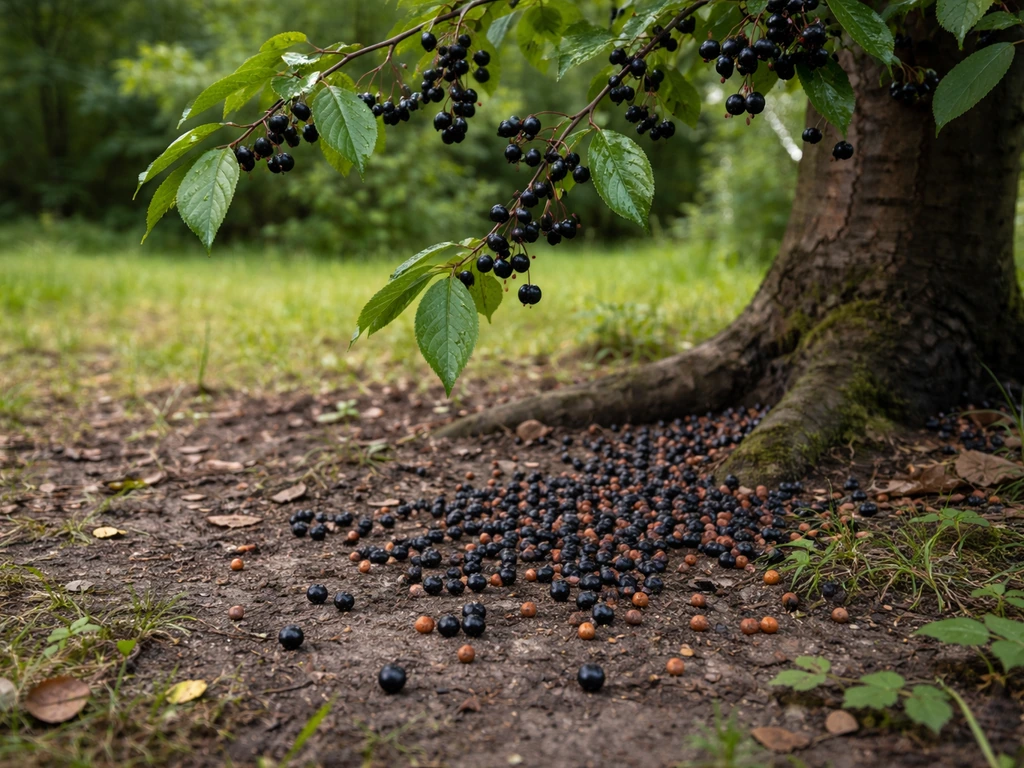
Bird canker (avian trichomonosis) causes blank" rel="noopener noreferrer">yellow or white cheese-like plaques and sores inside the mouth and throat. If your bird has visible lesions in its beak, is struggling to swallow, smells bad from its mouth, or is sitting fluffed and not eating, those are the main red flags. Bird nest spruce problems can sometimes be mistaken for mouth and throat illness, so get an avian vet to confirm what you are seeing. The sooner you get an avian vet involved, the better the outcome, because this disease can escalate from minor mouth sores to a blocked esophagus fast.
Bird Canker Symptoms Checklist: Signs, Causes, and Next Steps

Marcus Webb
19 May 2026
What bird canker actually is
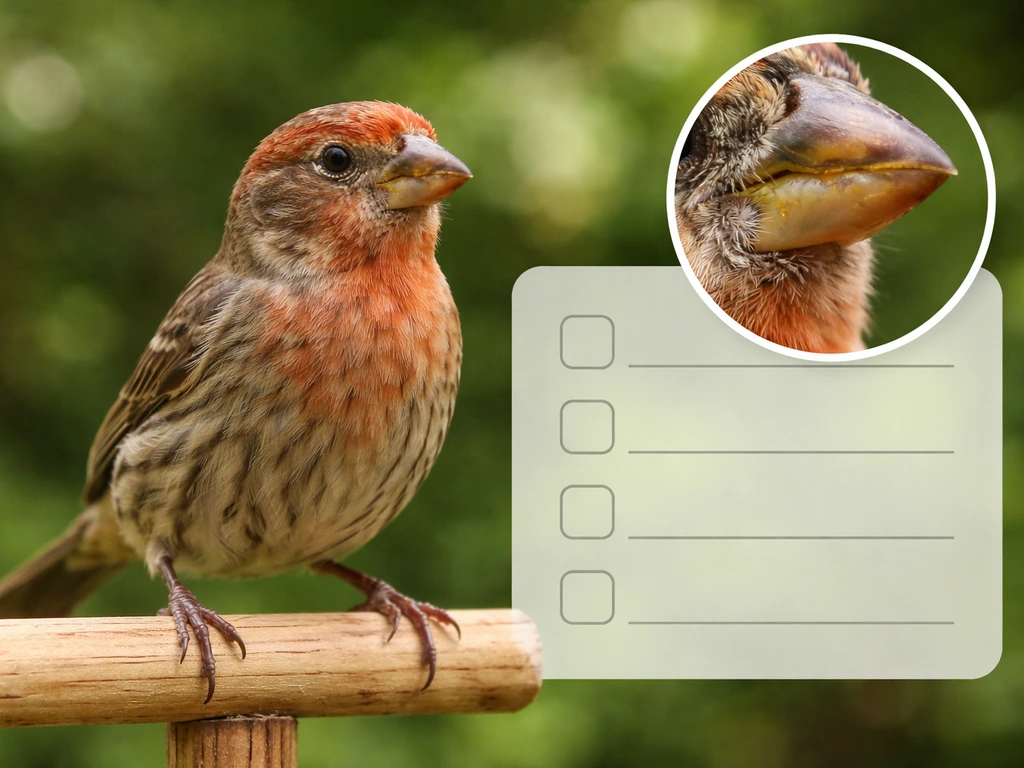
Avian trichomonosis is a contagious disease of the upper digestive tract caused by the protozoan parasite Trichomonas gallinae. It is most commonly known as "canker" in pigeons and doves, and "frounce" in raptors. The organism lives in the sinuses, mouth, throat, esophagus, and can even reach the liver and other organs in advanced cases.
Pigeons and doves, especially mourning doves, are the species most commonly affected, but the disease has been reported across a wide range of avian orders including parrots (Psittaciformes), songbirds (Passeriformes), birds of prey (Falconiformes), waterfowl (Anseriformes), and chickens (Galliformes). Pet birds like budgerigars and cockatiels can also get it. Basically, no bird species is completely off the table.
Transmission happens when a bird eats food or water contaminated by the saliva or feces of an infected bird. Parent birds can also pass it directly to chicks through regurgitated crop secretions (what pigeon keepers call "pigeon milk"). A shared water dish at a backyard feeder is a very common transmission route for wild birds.
The symptoms to look for right now
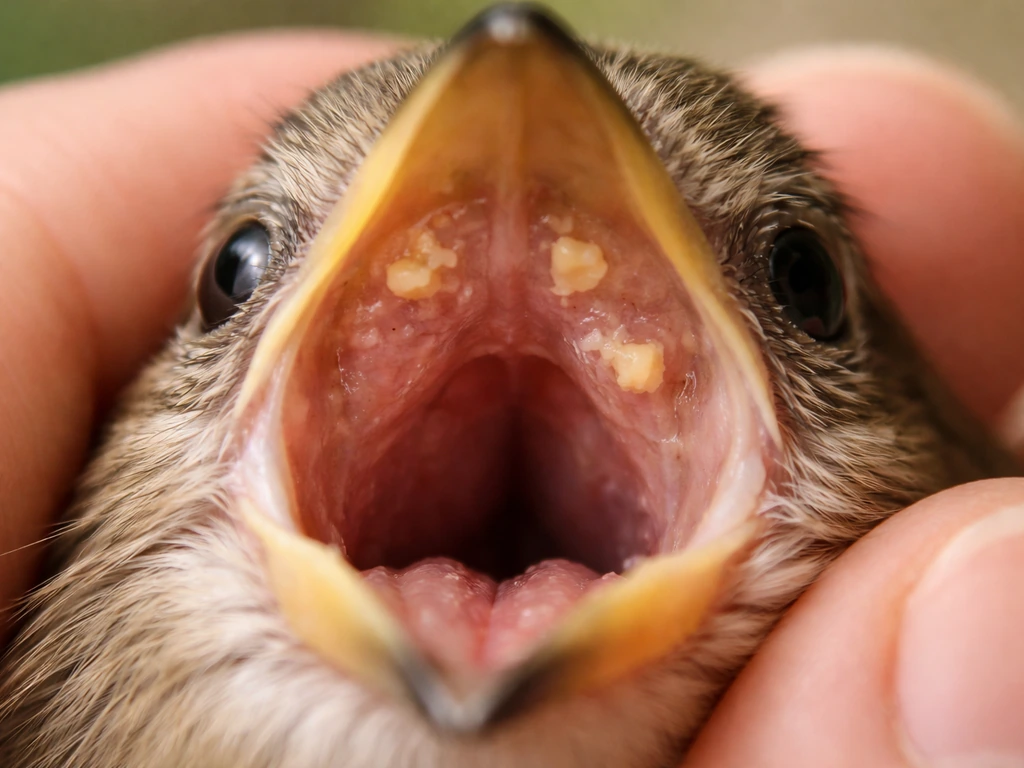
The most telling sign is what you find inside the bird's mouth. In early canker, you may see small yellowish or whitish spots on the roof of the mouth, the inside of the beak, or at the back of the throat. These spots look like soft cheese or curd, and that is a good description to keep in mind. As the disease progresses, those spots grow, harden, and merge into larger yellowish-grey masses of dead tissue.
- Yellow, white, or grey cheese-like plaques on the roof of the mouth or inside the beak
- Thick, necrotic (dead tissue) lesions in the throat or esophagus
- Visible swelling around the beak, neck, or jaw area
- Foul, fetid odor coming from the mouth
- Redness or raw-looking tissue around the mouth
- Discharge or excessive mucus in the mouth or crop
- Inability to fully close the beak (as lesions grow and block movement)
One important note: the lesions can look characteristic but are not a guaranteed confirmation of canker specifically. Merck Veterinary Manual notes that trichomonosis lesions in birds are characteristic but not pathognomonic, and it highlights important differentials such as salmonellosis, poxvirus, Capillaria spp, candidiasis, aspergillosis, and hypovitaminosis A lesions can look characteristic but are not a guaranteed confirmation of canker specifically. Several other conditions look remarkably similar, which is why a vet visit is essential and not optional.
Behavior and feeding signs that suggest something is wrong
Even if you can't easily inspect the inside of your bird's mouth, the behavior changes often show up clearly. A bird with canker will usually start struggling at mealtime before the situation becomes critical. Watch for these behavioral clues:
- Repeated swallowing movements with the head stretching forward
- Difficulty swallowing or gagging when trying to eat
- Drooling or excessive wetness around the beak
- Dropping food or refusing food it normally loves
- Reduced appetite that worsens over a few days
- Noticeable weight loss, especially visible at the keel (breastbone)
- Lethargy, sitting in a hunched or puffed-up posture
- Dull, ruffled feathers and an overall listless appearance
- Watery eyes in some cases
A bird that normally rushes to its food bowl and is now standing there with its head down, making swallowing motions with nothing in its beak, is telling you something is wrong in its throat. That pattern combined with any mouth odor should push you toward calling a vet that same day.
How severe canker can affect breathing and overall health
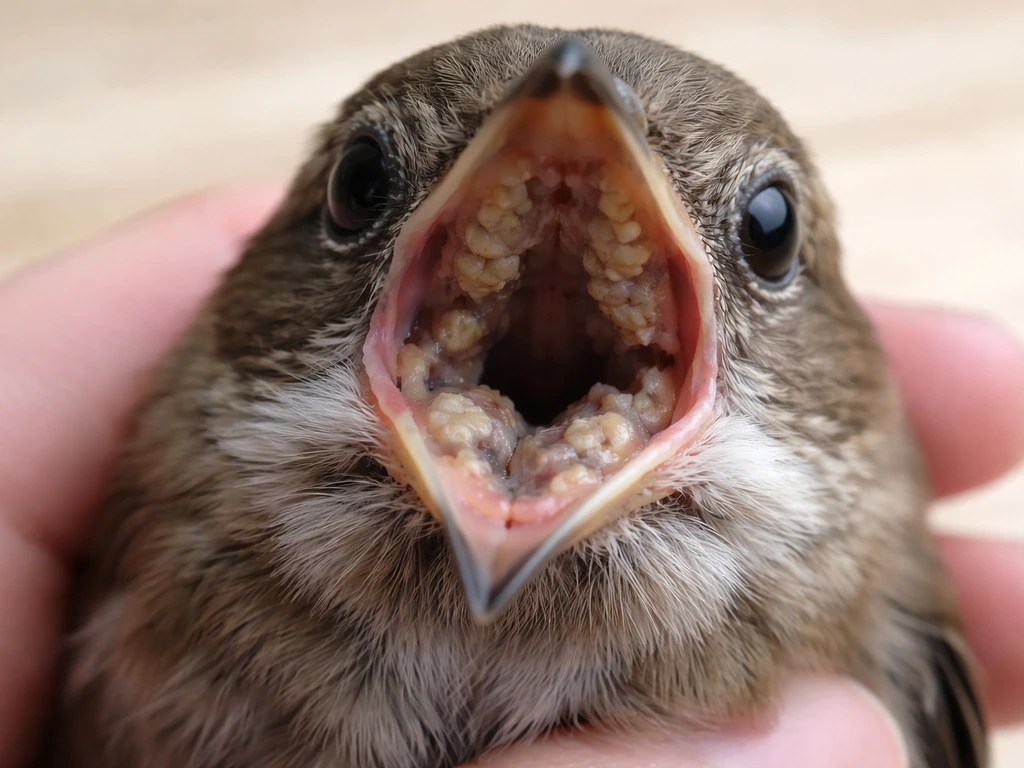
When canker is caught early, it stays mostly in the mouth and upper throat. But the lesions can grow rapidly and coalesce, meaning several smaller plaques can merge into a single large mass. When that happens inside the esophagus, the bird literally cannot swallow. The same blockage can press against or grow toward the trachea, causing labored or noisy breathing and open-mouth breathing.
In some cases the infection spreads beyond the throat into the sinuses, bone, and surrounding neck tissue and skin, and in more severe cases can extend to the liver and other internal organs. This is why what starts as a few white spots in the beak can become life-threatening. Birds have died from both starvation because they couldn't swallow, and from suffocation when lesions block the trachea.
Signs that the disease has become severe include open-mouth breathing, noisy or labored breathing, complete refusal to eat, significant visible swelling around the neck or beak, extreme weakness, and inability to perch or stand properly. These are emergency-level signs.
Quick at-home steps: what to do and what to avoid
If you suspect canker, the most useful thing you can do right now is observe carefully and get organized for a vet call. Here is a practical sequence:
- Isolate the sick bird from other birds immediately to prevent transmission through shared water or food dishes.
- Disinfect shared water sources and food dishes that other birds may have used.
- Try to get a clear look inside the bird's mouth with a flashlight if the bird will allow it calmly, and note what you see (color, size, and location of any plaques or lesions).
- Note and write down how long symptoms have been present, when appetite changed, and any behavior shifts you have noticed.
- Keep the bird warm and in a low-stress environment while you arrange veterinary care.
- Make sure fresh, clean water is available even if the bird is drinking less.
What to avoid: do not attempt to scrape or remove the plaques yourself. The tissue underneath is raw and damaged, and manual removal causes bleeding and pain without treating the underlying infection. Also avoid any over-the-counter "canker treatments" not prescribed by a vet, as the antiprotozoal drugs used for this condition (like metronidazole) are prescription-only and require appropriate dosing for birds specifically. Giving the wrong dose or the wrong drug can make things worse.
For wild birds: if you spot a wild bird (a dove, pigeon, or hawk, for example) showing these signs near your yard, stop using that feeder temporarily and clean it thoroughly with a dilute bleach solution before refilling. This limits the spread to other birds at the feeding station. You can contact a local wildlife rehabilitator if you find a wild bird that appears critically ill.
When to call an avian vet, and how urgently
Use this as a rough triage guide based on what you are seeing:
| What you are seeing | Urgency level | Suggested action |
|---|---|---|
| Small white or yellow spots in mouth, eating normally | Moderate — within 1 to 2 days | Book a vet appointment today for this week |
| Struggling to swallow, reduced appetite, mouth odor | High — same day if possible | Call an avian vet today |
| Open-mouth breathing, noisy breathing, extreme weakness | Emergency | Get to an emergency avian vet now |
| Cannot close beak, significant neck or face swelling | Emergency | Get to an emergency avian vet now |
| Not eating for more than 24 hours, severe lethargy | High to emergency | Same-day or emergency vet contact |
One thing worth knowing: birds hide illness well as a survival instinct, so by the time the symptoms are obvious to you, the disease has often been progressing for a while. If you suspect bird nest fern problems, watch for changes in mouth odor, swallowing, appetite, and breathing, and arrange an avian vet visit promptly. If something feels off, act sooner rather than waiting to see if it gets better on its own.
Conditions that look like canker but are not
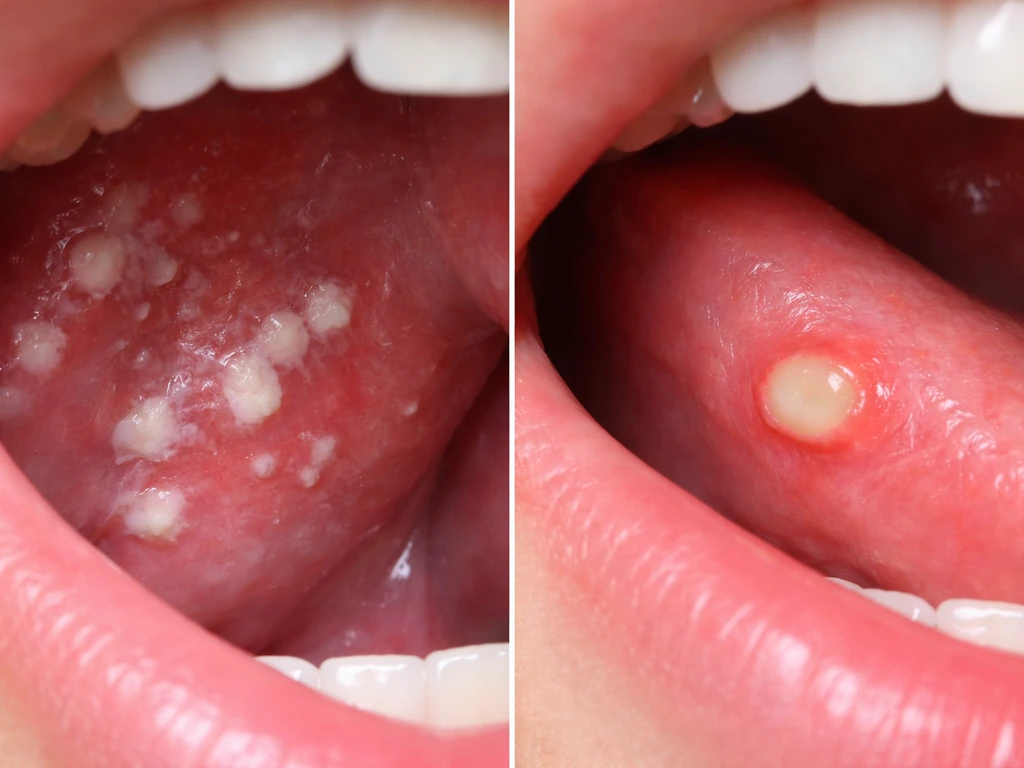
This is where things get genuinely tricky, because several different conditions produce very similar-looking plaques and sores in the mouth and throat. Seeing white or yellow lesions in a bird's mouth does not automatically mean canker. Here are the most important look-alikes:
| Condition | What it looks like | Key differences from canker |
|---|---|---|
| Candidiasis (yeast infection) | Whitish plaques and pseudomembranes in mouth and esophagus | Often associated with antibiotic use or immune suppression; diagnosed differently; treated with antifungals not antiprotozoals |
| Avian poxvirus (wet/diphtheritic form) | Yellow-grey plaques in mouth and trachea | Often accompanied by skin lesions (dry pox); spread by mosquitoes and direct contact; different disease course |
| Capillaria (roundworm) infection | Inflammation and plaques in the upper GI tract | Parasitic worm infection; can look similar but requires different treatment (antiparasitics) |
| Hypovitaminosis A | Hyperkeratotic plaques and white lesions in mouth and throat | Caused by Vitamin A deficiency, not infection; common in parrots on all-seed diets; responds to dietary correction and supplementation |
| Salmonellosis | Can produce similar necrotic lesions in the digestive tract | Usually includes systemic illness, diarrhea, and septic signs; different diagnosis and treatment |
| Aspergillosis | Fungal plaques in the respiratory and digestive tract | More commonly affects the respiratory system; different microscopy and culture findings |
The bottom line is that you cannot reliably tell these apart just by looking at the lesions, and neither can most vets without testing. This is not a situation where an educated guess at treatment makes sense, because treating for canker (a protozoan) with antiprotozoals does nothing for a yeast infection or a vitamin deficiency, and vice versa. If your bird has beak or throat problems, a veterinary exam is the only reliable path forward.
Because some birds develop beak and throat issues from other causes, it helps to also consider bird cherry tree problems when figuring out what is affecting your bird. Because bird beak problems can have many different causes, you should not assume it is canker without a proper exam beak or throat problems.
It is also worth noting that some of these conditions can overlap with general beak problems in birds. Issues like structural beak abnormalities or injuries can sometimes complicate identifying what is truly going on inside the mouth, which is another reason a hands-on exam matters.
What happens at the vet and what treatment looks like
A vet will typically do a physical exam including a close look inside the mouth and throat. The most common diagnostic method for trichomonosis specifically is a saline wet mount from a swab of the lesion material, which is then examined under a microscope for motile (moving) trichomonads. PCR testing is also an option and is more sensitive. The vet may also run additional tests to rule out candidiasis, poxvirus, Capillaria, or other differentials listed above, especially if the wet mount is not definitive.
If canker is confirmed, treatment involves antiprotozoal medication. Metronidazole and related drugs are the standard approach, but these are prescription-only medications with specific dosing requirements for birds, and they are used extralabel (meaning they are not officially approved for birds in the US). Your vet will determine the appropriate drug, dose, and duration based on species, weight, and severity. Never source these medications without a prescription or dose them yourself.
Treatment duration varies depending on how advanced the disease is. Mild early-stage cases may respond well within one to two weeks of treatment. More advanced cases with large or invasive lesions take longer, and in some severe cases where the disease has spread systemically, the prognosis is more guarded. This is exactly why catching the symptoms early makes a real difference in the outcome.
During treatment, supportive care matters too. If the bird cannot swallow well, the vet may recommend assisted feeding or nutritional support. Keeping the bird warm, stress-free, and hydrated while it heals is part of the recovery plan, not just the medication. Follow-up is usually advised to confirm the infection has cleared before returning the bird to contact with other birds.
If a crop infection is also suspected alongside oral canker signs, your vet may evaluate for that as well, since Trichomonas can affect the crop and esophagus, not just the visible mouth lesions. Early and thorough diagnosis makes it easier to treat the full picture rather than just what is visible at the beak.
FAQ
Can I tell bird canker symptoms from just the look of the plaques in the mouth?
Yes. You can ask the vet to confirm by testing lesion material (wet mount or PCR) because multiple conditions can mimic the same yellow or white plaques. Until testing is done, avoid “treating by guess,” since antiprotozoal drugs won’t help yeast or deficiencies and wrong dosing can stress the bird.
When should I treat bird canker symptoms as an emergency versus a routine visit?
If the bird is having swallowing trouble, making repeated swallowing motions without food, refusing to eat, or breathing with an open mouth or noisy/labored sounds, treat it as urgent and call the avian vet the same day. Waiting to “see if it improves” can allow lesions to enlarge and block the esophagus or trachea.
What should I avoid doing at home if I suspect bird canker symptoms?
Do not scrape or peel lesions off. The tissue beneath is already damaged and can bleed or worsen. Instead, handle the bird as little as possible, keep it warm and calm, and prepare a clear photo and timing notes for the vet (what changed, when it started, appetite, breathing, odor).
Can I use over-the-counter “canker treatments” if I recognize bird canker symptoms?
Not safely. Some products marketed for “canker” are incorrect drugs, incorrect dosing, or the wrong formulation for birds. Birds often need species- and weight-specific dosing, and giving the wrong antiprotozoal can delay correct treatment or create additional illness.
What if I can’t see the mouth well, but I think my bird has bird canker symptoms?
If you can’t inspect the mouth, rely on functional signs: changes at mealtime (hesitating or struggling to swallow), head-down posture at the bowl, persistent mouth odor, decreased appetite, and any breathing changes. These often show up before you can clearly see lesions.
Can bird canker symptoms also involve the crop or esophagus, and how would I know?
Yes, overlap can happen. If there are feeding issues plus regurgitation, crop fullness, or continued illness after oral lesions improve, ask the vet to check the crop and esophagus too. Trichomonosis can involve more than the mouth, and treating only the visible area can leave the underlying problem.
Could bird canker symptoms be caused by something other than trichomonosis, like a beak injury?
Yes. Birds with chronic mouth irritation, beak injuries, or structural beak issues can develop secondary lesions that look similar. Mention any recent trauma (dropped cage items, aggressive cage mates, chewing hazards) to the vet, because the cause of the mouth problem may not be trichomonosis.
What should I do about wild birds if I notice bird canker symptoms at my feeder?
For wild birds at feeders, stop using the feeder and clean it thoroughly before refilling, especially if multiple birds are acting ill. Replace with fresh food and water only after cleaning, and reduce lingering food/water that can stay contaminated.
How do I know when bird canker symptoms are truly resolved during or after treatment?
During treatment, expect that eating and swallowing may improve before the mouth looks completely normal. Ask your vet whether follow-up testing is recommended, not just visual healing, especially for birds with severe disease or lesions that reached deeper tissues.
If I suspect bird canker symptoms today, what should I do before the vet appointment?
Because treatment is prescription-only and dosing is species- and weight-dependent, the safest next step is to contact an avian vet promptly and keep the bird isolated from other birds until you have a diagnosis. If the vet visit is delayed, focus on warmth, low-stress handling, hydration, and avoiding shared water or food with other birds.
Next Article
Bird Cherry Tree Problems: Symptoms, First Aid, and Prevention
Spot bird cherry tree problems in pets or wild birds, give safe first aid, and prevent toxin and pesticide exposure.