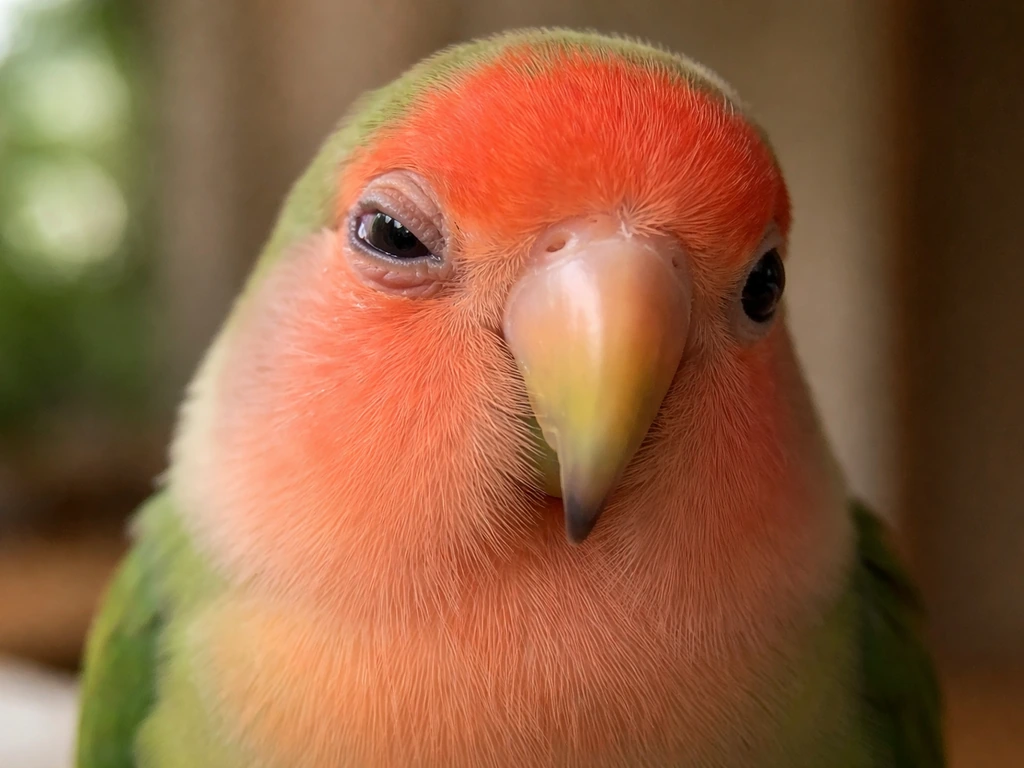
Lovebird neck problems can mean a few very different things: a visible lump or swelling, a head tilt or twisted neck posture, weakness in holding the head upright, feather loss or crusty skin around the neck, or a bird stretching its neck out while struggling to breathe. Some of these are urgent emergencies. Others can wait a day or two for a vet visit. The key is knowing which is which, and that starts with a quick, focused look at your bird right now.
Lovebird Neck Problems: Triage, Causes, and What to Do Now

Marcus Webb
20 Jun 2026
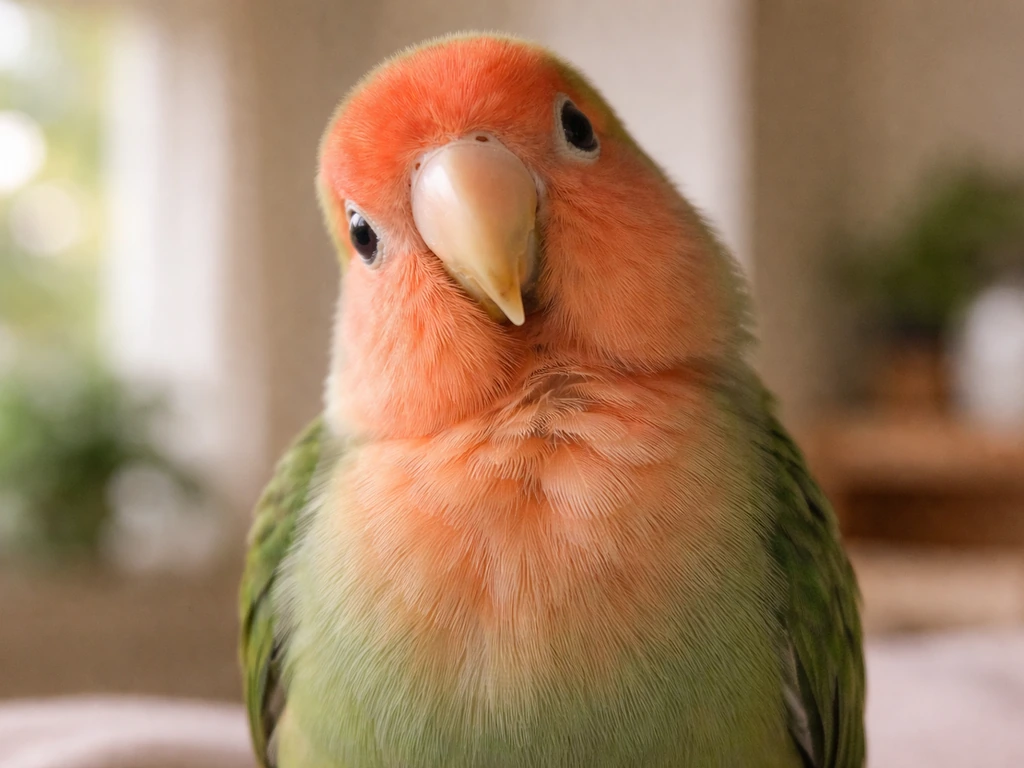
Quick triage: what to check on a lovebird with neck problems
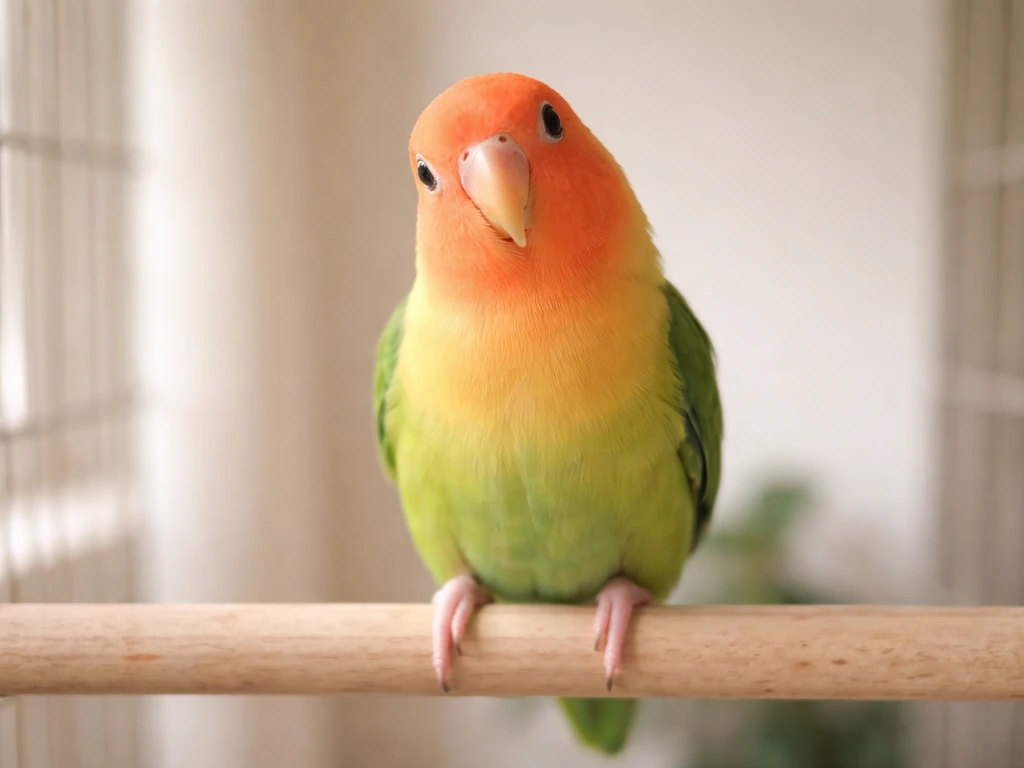
Before you do anything else, spend two to three minutes watching your bird without picking it up. You want to gather information, not cause extra stress. Here is what to check and what each sign tells you.
| What to observe | What you are looking for | What it might mean |
|---|---|---|
| Breathing | Open mouth, neck stretched forward, tail bobbing, labored chest movement | Respiratory distress — treat as urgent |
| Head/neck position | Tilt to one side, twisted neck, head tucked or drooping | Neurological issue, inner ear problem, or injury |
| Energy and perching | Unable to perch, sitting on cage floor, eyes half-closed | Serious illness — needs vet today |
| Appetite and droppings | Refusing food, no droppings, or green/watery droppings | Systemic illness, toxin exposure, or infection |
| Neck and face skin | Crusty or scaly patches around beak, cere, eyes, or neck feathers | Mite infestation (knemidokoptic mange) |
| Visible swelling | Lump on neck, swollen crop area, puffed neck feathers over a raised area | Goiter, crop issue, abscess, or injury |
If your bird is open-mouth breathing, collapsing, or too weak to perch, stop reading and call an avian vet or emergency animal clinic right now. Those signs alone make this an emergency, regardless of what else is going on.
Common neck and head posture issues and their likely causes
A lovebird holding its head at an odd angle, tilting to one side, or seeming unable to keep its neck straight is one of the more alarming things to see. Vets call the twisted or tilted neck presentation torticollis, and it nearly always points to something affecting the nervous system, inner ear, or brain. It is not a condition you can diagnose at home, and guessing based on posture alone is not reliable, so an in-person neurological exam is really the only way to get a useful answer.
That said, here are the most common reasons lovebirds develop abnormal neck or head posture:
- Inner ear infection or vestibular disease: disrupts balance and causes a persistent head tilt, often with the bird circling or rolling
- Neurological damage from infection: diseases like Newcastle disease can cause head bobbing early on and progress to twisting of the neck and completely abnormal head positions
- Heavy metal toxicosis (lead or zinc poisoning): a lovebird that has chewed on cage hardware, old paint, or metal toys can develop incoordination, weakness, drooped wings, and neurological signs including abnormal neck posture
- Cerebrospinal parasites: larval migration through the central nervous system (cerebrospinal nematodiasis) can cause torticollis and ataxia, though this is less common in well-managed pet birds
- Nutritional deficiency: severe calcium, phosphorus, or vitamin D3 imbalance can cause general muscle weakness that shows up as poor head and neck control — indoor birds that never get unfiltered sunlight are at higher risk for vitamin D3 deficiency
A lovebird repeatedly stretching its neck forward and upward is a different presentation. That posture is often a sign of respiratory distress rather than a neck problem itself. The bird is trying to open its airway. Watch closely for the other breathing signs listed in the triage section above.
Neck lumps, swelling, and injury: what it could mean
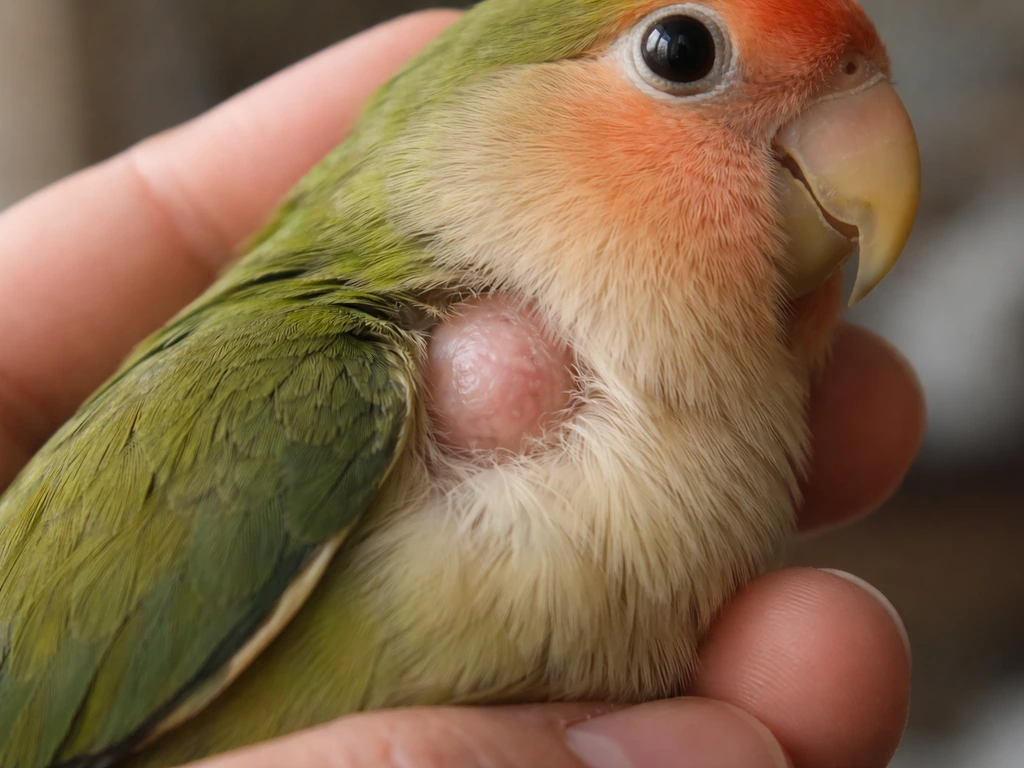
Finding a lump or visible swelling on your lovebird's neck is understandably alarming. The location matters a lot here. The most common neck-area swelling in small pet birds like lovebirds involves the thyroid gland, which sits near the base of the neck at the thoracic inlet. When the thyroid enlarges (a condition called avian goiter or thyroid hyperplasia), it can press on the trachea and cause noticeable breathing changes, loss of voice, and in more advanced cases, visible swelling in that area. Goiter in birds is often linked to iodine deficiency or exposure to goitrogenic substances, meaning foods or compounds that interfere with thyroid hormone production.
Other possibilities for neck lumps or swelling include:
- Crop issues: the crop sits at the base of the neck and can appear swollen if food is impacted, if the bird has sour crop (yeast infection), or if there is a blockage — you may also notice regurgitation or a foul smell
- Abscess or cyst: a localized, firm or soft lump under the skin that may or may not be painful to the touch
- Trauma or injury: a fall, collision, or attack from another bird can cause swelling, bruising, or tissue damage around the neck — look for asymmetry or signs of pain when the area is gently touched
- Feather cyst: an ingrown feather that forms a lump under the skin, sometimes visible as a rounded raised area
Do not press, squeeze, or try to drain any lump yourself. Crop issues in particular can be made significantly worse by improper handling. Get a vet to look at any new lump before you decide it is harmless.
Respiratory and infectious causes that show up in the neck area
Lovebirds with upper respiratory infections often look like they have a neck problem because of the way they position themselves. This kind of presentation can sometimes be part of the Indiana bird problem too, so it is worth discussing with your avian vet as soon as possible neck problem. When breathing is hard, a bird will stretch its neck and head forward, sometimes with the beak open, trying to maximize airflow. The chest may heave visibly, the tail will bob up and down with each breath, and the bird may make clicking or wheezing sounds. These are signs of respiratory distress, and the neck posture is a symptom of that distress, not a separate issue.
Respiratory infections in lovebirds can stem from bacterial, viral, or fungal sources. Sinusitis, for example, causes nasal discharge, sneezing, noisy breathing, and sometimes visible swelling around the eyes and face that can extend toward the neck area. If you notice swelling around the eyes or eye discharge, also consider an eye problem alongside the neck symptoms and tell your vet promptly. Airsacculitis, which is inflammation of the air sacs deep in the bird's respiratory system, can cause labored breathing without much nasal discharge, making it harder to spot early.
Some systemic infections are worth mentioning specifically. Newcastle disease can start with head bobbing and respiratory signs, then progress to neurological symptoms including twisted or abnormal neck positions. This is a serious viral disease that needs immediate veterinary attention. If you have recently introduced a new bird to your home or your lovebird has had any contact with other birds, mention that to your vet right away.
Because lovebirds share some health concerns with other small parrots, many of the respiratory and infectious issues described here overlap with what you might see in other pet bird species as well. These pet bird problems can look different across species, but the same urgent triage mindset applies.
Parasites, mites, irritation, and itch-related neck and head behavior
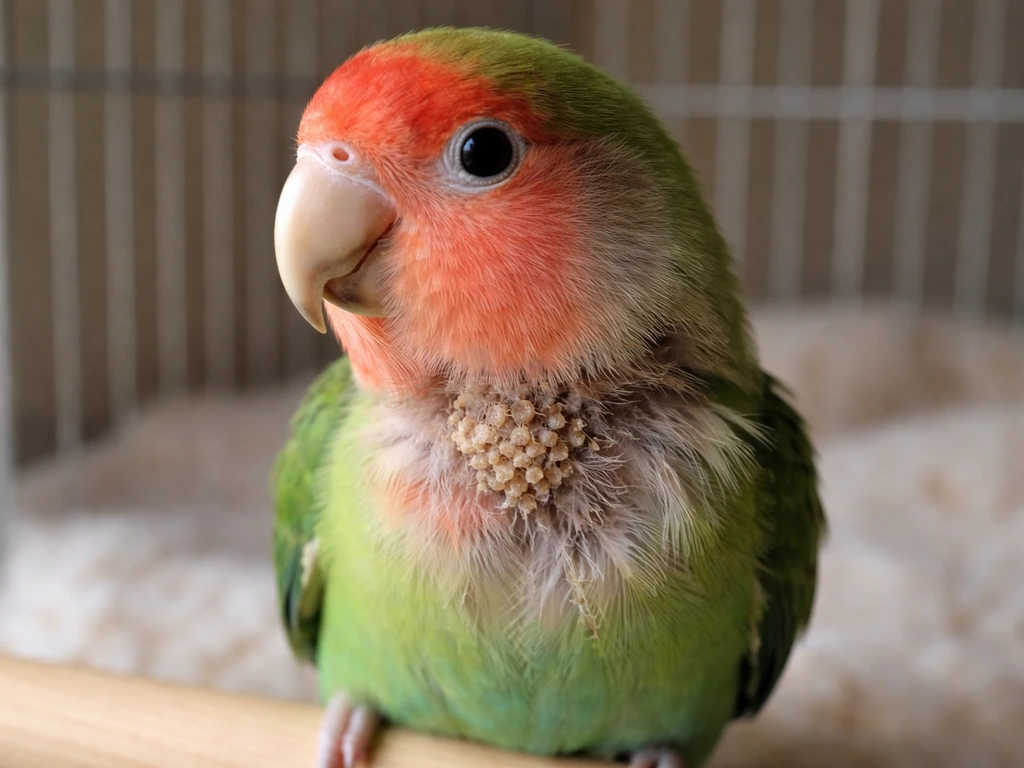
If your lovebird is rubbing its head and neck against perches or cage bars, scratching at its neck or face repeatedly, or you can see crusty, honeycomb-looking scales around the beak, cere, eyes, or base of the neck, knemidokoptic mange (scaly face and leg disease) is a strong possibility. This is caused by the mite Knemidocoptes pilae, a microscopic burrowing mite that creates those distinctive crusty tunnels in the skin. It spreads slowly and is usually manageable with treatment, but it needs a vet diagnosis (typically confirmed with a skin scraping) and prescription antiparasitic medication.
Feather mites are a less common but possible cause of feather loss or abnormal feathering around the neck and head, particularly in areas the bird cannot reach to preen itself. If your lovebird has patches of missing or damaged feathers on the back of its neck or top of its head, and you have ruled out barbering by a cagemate, mites are worth investigating.
Neck scratching and head rubbing can also signal simple skin irritation from dust, a new perch material, or contact dermatitis from something in the environment. If the behavior is mild and there are no visible skin changes, monitor it for a day or two and consider whether anything in the cage setup has recently changed.
Supportive at-home care and monitoring steps
If your lovebird is alert, perching, eating, and not showing any emergency signs, you have a short window to observe and stabilize before a vet visit. Here is what you can do right now that is unlikely to cause harm and may genuinely help.
- Keep the bird warm: a sick bird loses heat quickly. Move it to a quiet spot and provide gentle warmth, around 85 to 90 degrees Fahrenheit (29 to 32 Celsius), using a heating pad set to low under one side of the cage (not the whole floor, so the bird can move away if too warm). Do not use a heat lamp without monitoring carefully.
- Lower the perches: if your bird is unsteady or has a head tilt, lower perches or add soft material to the cage floor so a fall will not cause injury.
- Reduce stress: cover three sides of the cage with a light cloth, keep the room quiet, and limit handling to the absolute minimum. Stress worsens almost every illness in birds.
- Keep food and water accessible at floor level: if your bird is weak or tilted, it may not be able to reach elevated food dishes. Place soft, easy foods (cooked rice, mashed egg, pellets softened with a little water) within easy reach.
- Document everything: take photos or short video clips of the posture, any lumps, skin changes, or breathing pattern. Note when symptoms started, what changed, and what the droppings look like. This is genuinely useful information for your vet.
- Check the environment for metal hazards: if you suspect toxin exposure, look at the cage hardware, toys, and any items the bird has been chewing. Galvanized metal, old paint, costume jewelry, and some imported toys are common lead and zinc sources.
- Do not give human medications or home remedies: do not give antibiotics left over from another pet, vitamin drops at random, or herbal treatments without vet guidance. Some are toxic to birds, and others can mask symptoms that help the vet diagnose the problem.
If your bird is a lovebird with a head tilt or suspected neurological issue, keep handling to an absolute minimum. Disoriented birds can injure themselves badly if they panic and fall. A padded, low-sided box lined with a soft towel works better than a standard cage for transport and short-term holding.
When to go to an avian vet urgently and what to tell them
Some situations do not allow for waiting. Go to an avian vet or emergency animal clinic the same day if your lovebird is showing any of the following: If you suspect pee wee bird problems, call an avian vet promptly so they can check breathing, posture, and overall health right away.
- Open-mouth breathing or audible wheezing/clicking with each breath
- Tail bobbing with every breath while at rest
- Neck stretched forward and upward continuously with labored breathing
- Unable to perch or sitting at the bottom of the cage
- Head tilting severely to one side, rolling, or circling
- Visible swelling in the neck area that is new or growing
- Completely refusing food and water for more than 12 hours
- Collapsing, seizure-like movements, or complete unresponsiveness
- Green or black watery droppings combined with any of the above
When you call or arrive at the clinic, be ready to answer these questions: How long have you noticed the symptoms? Has anything changed recently (new food, new toy, new bird in the home, access to any metal objects or paint)? What does the bird eat day-to-day? Have there been any other birds in contact with your lovebird? Is this a new lovebird or one you have had for years? Bring the photos or videos you took at home. A vet seeing a 20-second clip of your bird's head tilt or breathing pattern has far more to work with than a verbal description alone.
It also helps to bring a sample of the normal droppings in a small container, or at minimum a photo of recent droppings on white tissue paper. Droppings are one of the fastest diagnostic clues an avian vet has.
Lovebird neck problems range from treatable mite infections to serious neurological or respiratory emergencies. The Merck Veterinary Manual notes that calcium-deficient diets in indoor birds can be compounded by inadequate unfiltered sunlight, which can lead to vitamin D3 deficiency blank" rel="noopener noreferrer">calcium-deficient diets in indoor birds compounded by inadequate unfiltered sunlight. Heavy metal toxicoses such as lead or zinc can also cause neurologic signs in pet birds, including incoordination, weakness, drooped wings, reduced activity, anorexia, and seizures blank" rel="noopener noreferrer">lead or zinc toxicosis. If you notice swallow-like breathing or sudden changes around the beak, treat it as a swallowing bird problem and get veterinary guidance promptly lovebird neck problems. The faster you identify which category you are dealing with, the better the outcome tends to be. When in doubt, call an avian vet first and describe what you are seeing. Most will be able to tell you over the phone whether it can wait until morning or needs attention tonight.
FAQ
If my lovebird has a lump on the neck, how can I tell whether it is the thyroid (goiter) versus something else?
Not necessarily. Neck-area swelling can come from the thyroid region (avian goiter), but similar outward lumps can also be skin cysts, abscesses, or feather follicle problems. Because pressing or trying to drain can worsen some conditions (especially crop-related issues), the safe next step is to photograph the area and book an avian vet exam, especially if the swelling is new or changing.
Is it okay to squeeze or drain a neck lump on my lovebird to relieve it?
No. Do not try to puncture, drain, or squeeze any neck swelling. Birds have fragile tissues and some causes are infectious or connected to deeper organs, so DIY handling can increase bleeding, spread infection, or make breathing worse.
My lovebird tilts its head, is there a quick at-home way to decide if it is torticollis or just breathing difficulty?
A head tilt can be torticollis, but you still should treat it as a “needs exam” sign rather than a home diagnosis. One useful distinction is that true neurological tilt often stays present and may come with balance problems, while respiratory distress posture usually tracks breathing effort (neck stretched, beak position changes, tail bobbing). If you cannot confirm a breathing link, contact an avian vet.
Why does swelling around the eyes matter when my lovebird also has neck symptoms?
Eye discharge or swelling around the eyes often means an eye or sinus/upper-respiratory process, which can look like a neck issue because the bird adopts a forward-stretch posture. Tell the vet exactly what you see (watery versus thick discharge, one side versus both) and note whether the bird is sneezing or making noisy breathing.
What should I do during the “watch and wait” window if my lovebird seems stable but has neck changes?
If the bird is alert and perching, the goal is short observation without “fixing” everything at once. Keep the cage environment stable, avoid switching foods or adding new supplements, and focus on recording breathing and posture (video helps). If breathing becomes open-mouth, the bird collapses, or it cannot perch, go to an emergency clinic immediately rather than waiting for the next day.
My lovebird is rubbing its neck after I changed the cage, could this be environmental irritation and what should I test first?
New or changed cage items matter because irritation can mimic neck problems. For 24 to 48 hours, remove anything newly introduced (new perch material, new bedding, fragranced cleaners, fresh wood, loose dust) and switch back to the safest prior setup. If there are no skin changes, mild rubbing may settle, but if crusting or feather loss appears, you should get a vet diagnosis.
How do I know whether crusty scaly skin at the base of the neck is mites, and should I start treatment immediately?
With scaly face or crusty honeycomb-looking skin, ask the vet specifically about knemidokoptic mange. Early treatment is easier, and the diagnosis usually requires a skin scraping. Treating mites without confirmation can delay effective care, especially if the crusting is from something else or there is underlying infection.
What breathing-related signs mean I should not wait for a regular appointment?
Yes. Birds can compensate early, so you may miss urgency until breathing worsens. Consider emergency evaluation the same day if you notice any combination of tail bobbing, chest heaving, clicking or wheezing, open-mouth breathing, sudden drop in appetite, or progressive worsening over a few hours.
Why is it important to mention if a new bird joined the household when my lovebird has neck or head changes?
New birds increase risk for infectious diseases, and some illnesses start with respiratory or head-bobbing signs before neurological signs appear. If your lovebird has had contact with other birds (including shared cages, aviaries, or even contaminated items), inform the clinic right away so isolation and testing decisions can be made sooner.
What videos or photos should I take so the vet can triage my lovebird’s neck problem faster?
A vet can use short, clear videos to interpret breathing effort and posture stability. Record from the front and side if possible, and include a few seconds where the bird naturally perches and breathes. If you can, also capture droppings and whether the bird is eating.
If my lovebird seems weak and keeps a weird neck posture, how should I transport it safely to the vet?
General weakness can be infectious or neurological, but it also affects safety. Avoid letting the bird climb to unsafe heights, and keep handling to a minimum if you suspect disorientation. For transport, use a padded, low-sided box so the bird has less chance of falling and getting injured.
Next Article
Lovebird Eye Problem: Symptoms, Safe Home Care, Vet Urgency
Step-by-step guide to love bird eye problem signs, safe home care, and when to see an avian vet urgently