A Reddit thread about “fever bird” folklore discusses identifying a bird by its three-note call pattern, with commenters trying to match the three-note sound to the right name repetitive three-note call sounds like it's saying 'brain fever, brain fever, brain fever. ' That bird is perfectly healthy and poses no disease risk.
It's just a quirky bit of birding folklore.
The second and far more medically relevant use is 'bird fever' as an informal name for psittacosis (also called ornithosis or avian chlamydiosis). If you’re wondering why was bird fever named so, it usually comes down to how people use the term for psittacosis in everyday speech. If you meant “bird fever” in the medical sense, that informal label usually points to psittacosis (also called ornithosis or avian chlamydiosis).
Psittacosis is a genuine bacterial infection caused by Chlamydia psittaci, and it can make birds genuinely sick with fever-like signs. It can also spread to humans, which is why it matters. If you are dealing with psittacosis, it can feel scary, but treatment and prevention steps can help you get through it safely. If you're here because a bird you care for seems unwell, this is probably the more relevant thread to follow.
There's also a third layer of confusion worth naming: people sometimes hear about 'bird disease going around' and reach for the nearest shorthand, which is sometimes 'fever bird. If you’re hearing about “bird disease going around,” it’s often a shorthand people use for specific infections like psittacosis. If you want the most up-to-date guidance on bird disease outbreaks, see the latest on bird disease.
' That overlap with other current avian illnesses is worth keeping in mind as you read through this guide. Understanding what's actually happening with a sick bird matters far more than nailing down a name. This kind of bird-disease “going around” talk is often referring to contagious infections like psittacosis, which can spread between birds and to people.
How to recognize true bird illness vs normal conditions
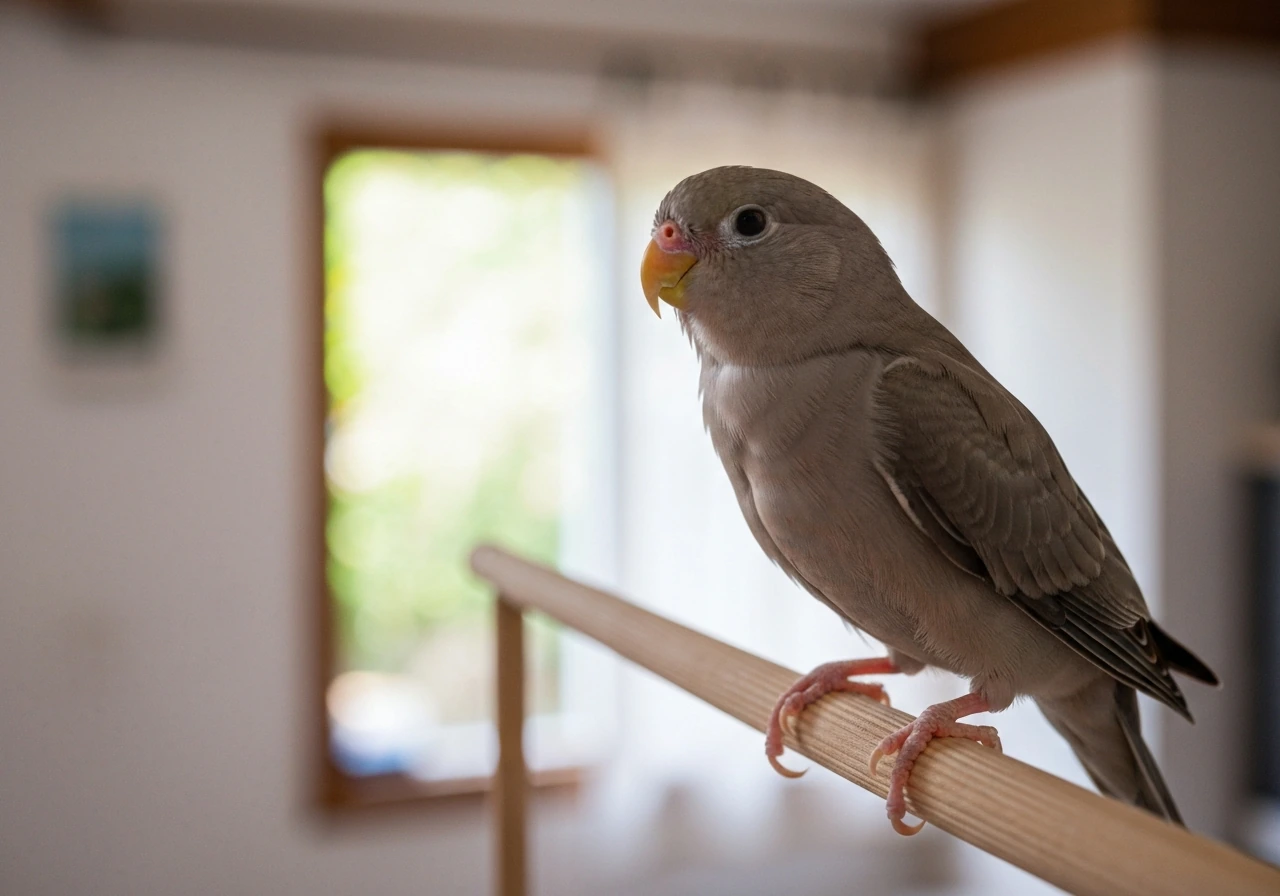
Birds hide illness extremely well. In the wild, showing weakness makes a bird a target, so they're hard-wired to look normal even when they're not. If you keep hummingbirds, watch for the same fever-like signs and contact a wildlife rehabilitator or avian vet promptly if you suspect an infectious bird disease. By the time a bird looks obviously sick to you, it's often been unwell for longer than you'd expect. That said, there are reliable tells that separate real illness from things like stress, molting, or just being a naturally quiet bird.
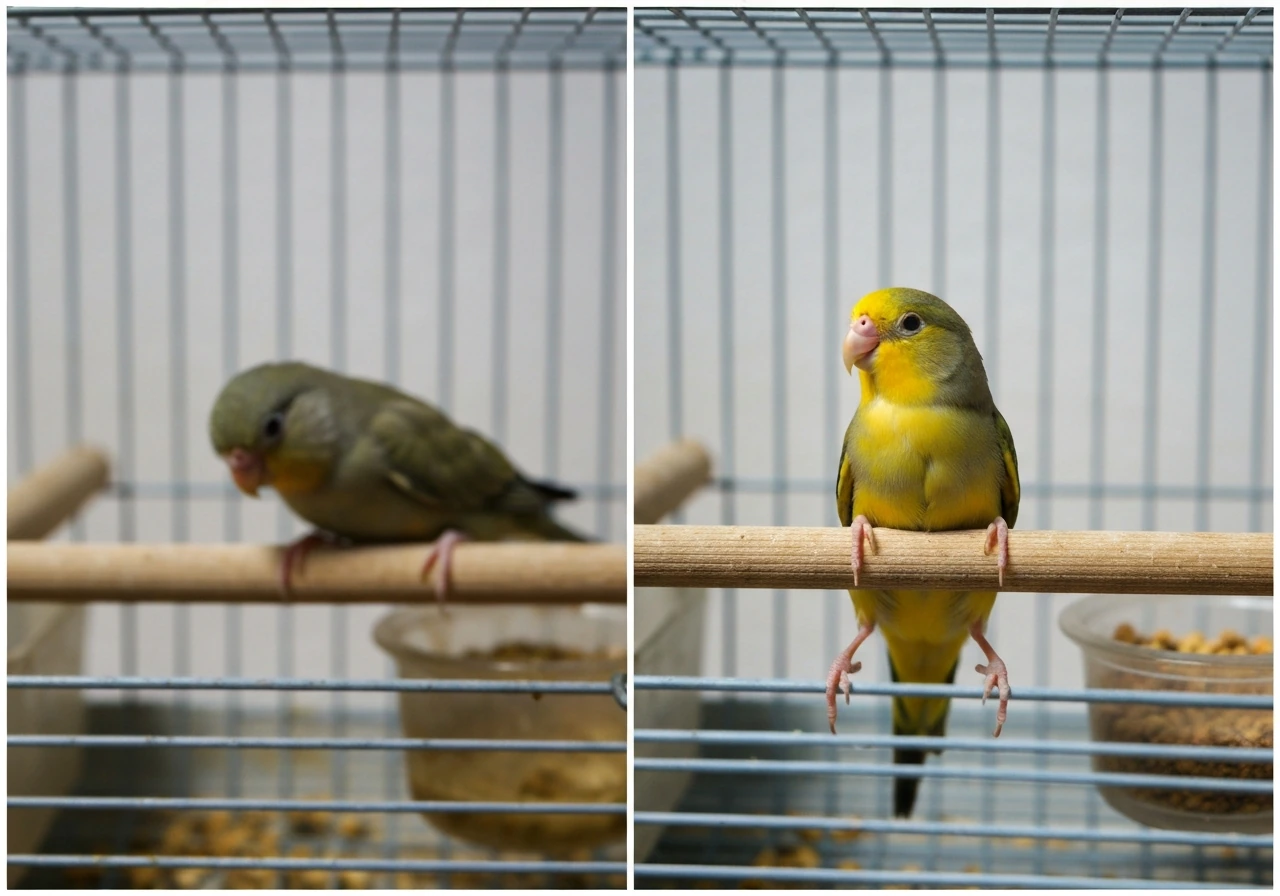
One of the most useful baselines is knowing what your bird looks like when it's healthy. What's its normal posture? How much does it eat and drink on a typical day? How active is it first thing in the morning? If you don't already track this, start now, even informally. A healthy bird is alert, responsive, and holds its feathers close to its body (not puffed out) unless it's sleeping or genuinely cold.
Normal conditions that can look worrying but usually aren't include: molting (which causes scruffiness and sometimes mild lethargy), preening after a bath (wet, temporarily bedraggled feathers), and sleeping mid-afternoon if the bird is elderly or very young. If the behavior resolves on its own within an hour or two and the bird goes back to its normal self, it's unlikely to be illness. Persistent changes that last more than 24 hours are the ones to take seriously.
Key symptoms to look for: fever, breathing, and lethargy
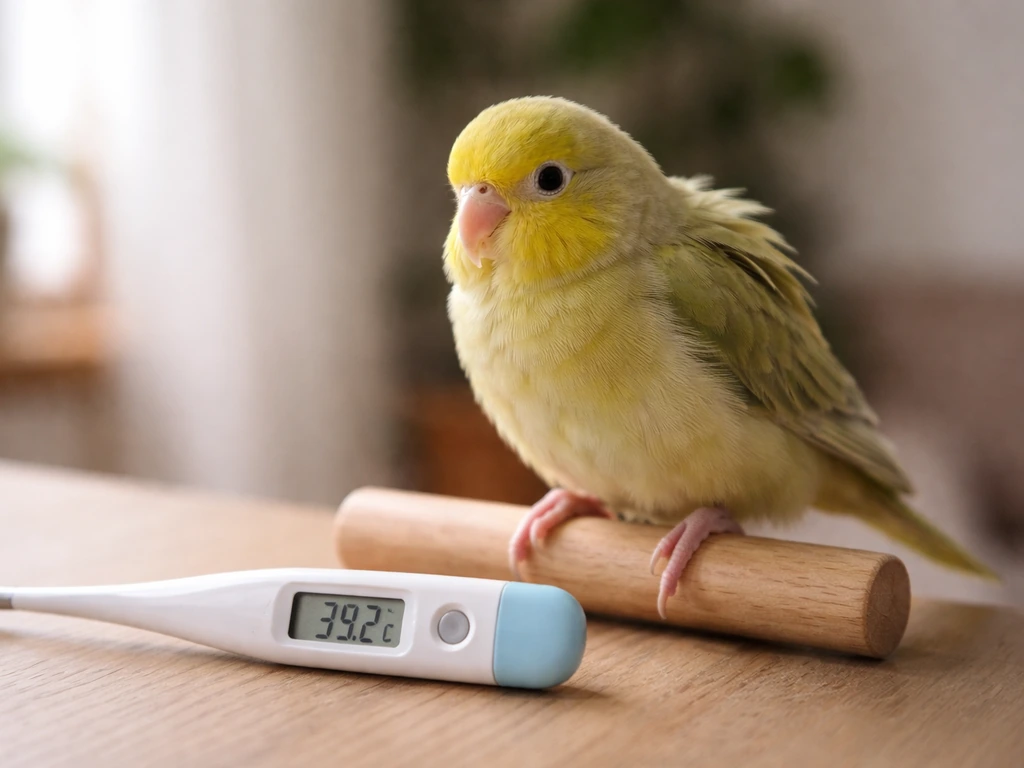
Birds have a higher baseline body temperature than mammals, typically somewhere between 104 and 112 degrees Fahrenheit depending on the species. You generally can't take a bird's temperature at home without specialized equipment and training, so you have to rely on indirect signs. A bird running a fever will often look 'puffed up,' meaning its feathers are fluffed away from the body in a way that resembles a ball. This is the bird trying to conserve or shed heat. Combined with other symptoms, it's a meaningful red flag.
Breathing is one of the clearest windows into a bird's health. In a healthy bird at rest, breathing is smooth, quiet, and barely visible. Labored breathing looks like a visible tail bob with each breath, an open beak while resting, clicking or wheezing sounds, or the bird stretching its neck as if trying to get air. Any of these signs in a resting bird is serious and needs attention quickly.
Lethargy is the third major signal, but it needs context. A lethargic bird doesn't just look sleepy, it fails to respond the way it normally would. It won't startle easily, won't move toward food or water, and may sit hunched at the bottom of the cage rather than on a perch. That 'sitting on the cage floor' sign especially is something I'd treat as urgent. Healthy birds perch. When they stop, something significant is usually wrong.
- Puffed or fluffed feathers lasting more than a few hours
- Tail bobbing with each breath while the bird is at rest
- Open-mouth breathing or audible clicks, wheezes, or rattles
- Bird sitting on the cage floor or unable to stay on a perch
- Nasal discharge, wet nostrils, or crusting around the nares
- Sneezing repeatedly (more than occasional single sneezes)
- Significant reduction in food or water intake over 24 hours
- Droppings that have changed color, consistency, or volume dramatically
- Eyes that look dull, half-closed, or sunken
Differential diagnosis: what's likely causing a 'fever' in your bird
Several conditions can produce the cluster of signs described above. No one can diagnose a bird remotely, but knowing the most common causes helps you give your vet useful information and understand what tests might be ordered.
| Condition | Common Signs | Transmission Risk to Humans | Notes |
|---|
| Psittacosis (bird fever) | Puffing, lethargy, nasal/eye discharge, diarrhea, difficulty breathing | Yes (zoonotic) | Caused by Chlamydia psittaci; treatable with antibiotics if caught early |
| Respiratory bacterial infection (e.g., Mycoplasma) | Sneezing, nasal discharge, wet-sounding breathing, lethargy | Very low | Common in flocks; stress can trigger flare-ups |
| Aspergillosis (fungal) | Labored breathing, tail bob, weight loss, low energy | Minimal direct risk | Often linked to damp bedding or poor ventilation |
| Avian influenza (bird flu) | Sudden severe illness, neurological signs, high mortality | Low but possible in some strains | Notifiable disease; wild bird exposure is a risk factor |
| Heat stress | Panting, wings held away from body, lethargy | None | Resolves quickly when bird is moved to cooler environment |
| Newcastle disease | Respiratory distress, neurological signs, discharge | Very low (mild conjunctivitis possible) | Highly contagious between birds |
| Nutritional deficiency | Lethargy, poor feather condition, weakness | None | Often seen with all-seed diets lacking vitamin A |
Heat stress deserves a specific callout because it can look nearly identical to infectious illness. If the room is very warm (above 85 to 90 degrees Fahrenheit) and you have no other reason to suspect disease, try moving the bird to a cooler, well-ventilated spot and offering fresh cool water. If the bird perks up within 30 to 60 minutes, heat was likely the issue. If it doesn't, treat the situation as illness and proceed accordingly.
Psittacosis specifically is worth understanding well because it's the condition most directly linked to the informal 'bird fever' label. The Merck Veterinary Manual explains that psittacosis is caused by Chlamydia psittaci and that suspected cases should be reported to state health officials, with specific quarantine and treatment rules in the United States Psittacosis specifically is worth understanding well.
What is bird virus? In practice, the term is usually used loosely to describe infections that birds can catch and sometimes spread to people. It affects parrots, cockatiels, pigeons, and many other species. Birds can carry it without showing obvious signs for long periods, then shed the bacteria when stressed.
If you've recently introduced a new bird into your home or had contact with wild birds, psittacosis should be on your list of things to raise with your vet.
Home first-aid: safe steps while you observe and monitor
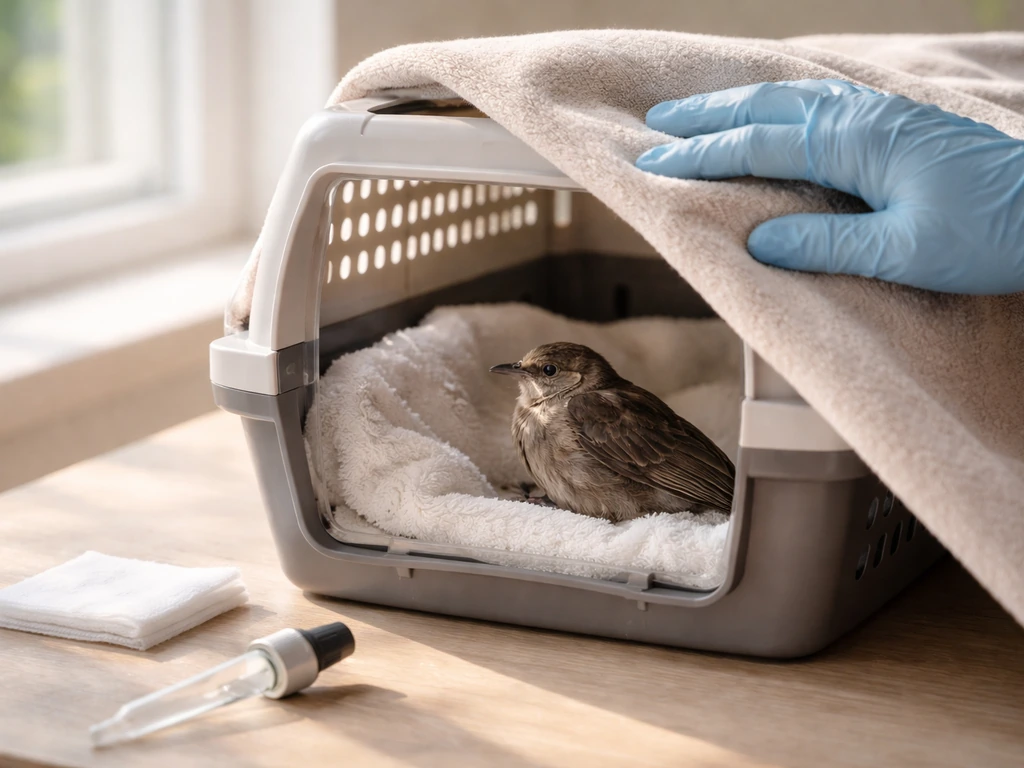
The most important thing to understand about bird first-aid at home is that most of what you can do is supportive, not curative. You're not going to treat a bacterial infection with home remedies, and attempting things like force-feeding or using over-the-counter medications not prescribed by a vet can genuinely make things worse. What you can do is keep the bird stable and comfortable while you arrange proper care.
- Isolate the sick bird from any other birds immediately to prevent potential spread. Use a separate cage in a different room if possible.
- Keep the bird warm, not hot. A temperature of around 85 to 90 degrees Fahrenheit is generally supportive for a sick bird. A small heating pad on the lowest setting placed under half the cage (so the bird can move away from it) works well. Never cover the entire cage floor with heat.
- Make food and water easy to access. If the bird is weak, lower food and water dishes to floor level so it doesn't have to climb to reach them.
- Don't force food or water. Offer favorites if you have them, but don't restrain the bird to make it eat or drink.
- Reduce stress. Cover part of the cage, keep the room quiet, dim the lights slightly, and minimize handling.
- Wash your hands thoroughly before and after any contact with the bird, especially if psittacosis or another zoonotic condition is a possibility.
- Start a written log: note the time, what you observed, what the droppings look like, whether the bird ate or drank, and any recent changes (new food, new bird nearby, environmental changes). This information is genuinely useful to a vet.
Avoid misting or bathing a sick bird. Wet feathers lower body temperature fast, which is the opposite of what a bird with a fever-like illness needs. Also avoid aromatherapy products, scented candles, non-stick cookware fumes, and air fresheners near a sick bird. Birds have extremely sensitive respiratory systems, and many common household products that are safe for humans are toxic to birds.
When to seek an avian veterinarian urgently
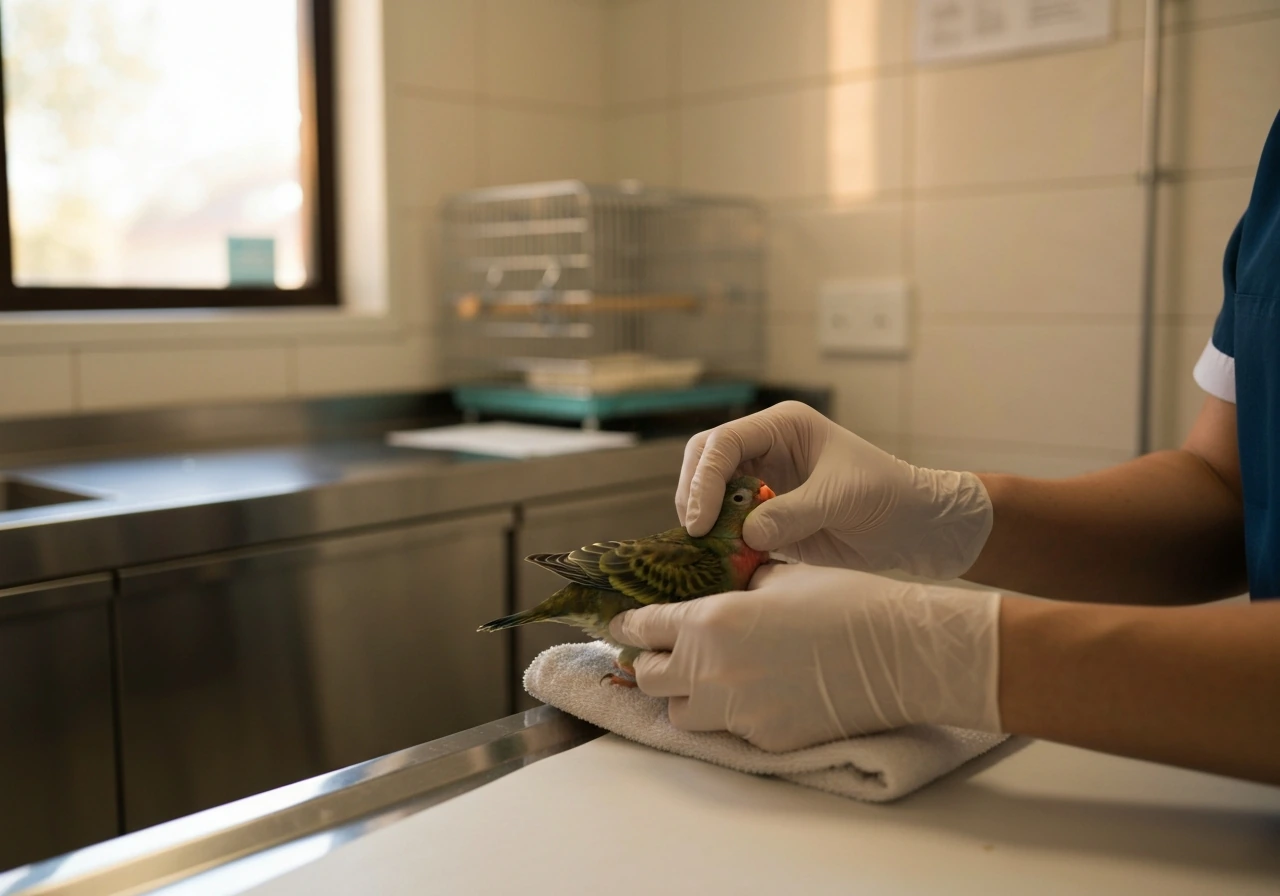
Some situations don't warrant a 'wait and see' approach. If you observe any of the following, contact an avian vet the same day, or go to an emergency exotic animal clinic if it's outside normal hours.
- Open-mouth breathing or audible clicking/wheezing sounds while the bird is at rest
- The bird is sitting on the cage floor and cannot perch
- Seizures, loss of balance, or obvious neurological signs (head twisting, falling)
- Bleeding that isn't stopping
- The bird is unresponsive or barely responsive to your presence
- No food or water consumed in more than 24 hours combined with other symptoms
- Suspected exposure to a toxin (fumes, a household chemical, a poisonous plant)
- Any wild bird that appears sick and is unable to fly, especially if you've had direct contact with it
It's also worth seeking urgent care if you personally develop flu-like symptoms (fever, chills, dry cough, muscle aches) within 1 to 4 weeks of close contact with a sick bird, particularly one that was diagnosed with or suspected of having psittacosis. For more severe cases, the CDC recommends doxycycline treatment blank" rel="noopener noreferrer">particularly one that was diagnosed with or suspected of having psittacosis. Tell your doctor about the bird contact. Psittacosis in humans is treatable with doxycycline, but it does need to be diagnosed and treated, it won't resolve on its own reliably.
When you call the vet, be ready to describe: the species and age of your bird, how long the symptoms have been present, any recent changes to the bird's environment or flock, what the droppings look like, and whether the bird has had any contact with new birds or wild birds recently. The more specific you can be, the faster the vet can prioritize and prepare.
Prevention and keeping other birds safe
Prevention looks a little different depending on whether you have a single pet bird, a multi-bird household, or you're dealing with wild birds. Here's how to approach each situation practically.
Single pet bird
The biggest risks for a single pet bird are new introductions (a bird you've just brought home, or a friend's bird visiting), exposure to wild birds through open windows or outdoor time, and environmental stressors that suppress immunity. Any new bird should be quarantined in a completely separate room for a minimum of 30 days before contact with your existing bird. Keep outdoor time supervised and away from areas where wild birds congregate. Diet quality matters too: an all-seed diet is a common source of nutritional deficiency, which weakens immunity over time. A diet that includes quality pellets, fresh vegetables, and minimal processed treats goes a long way.
Multi-bird household or flock
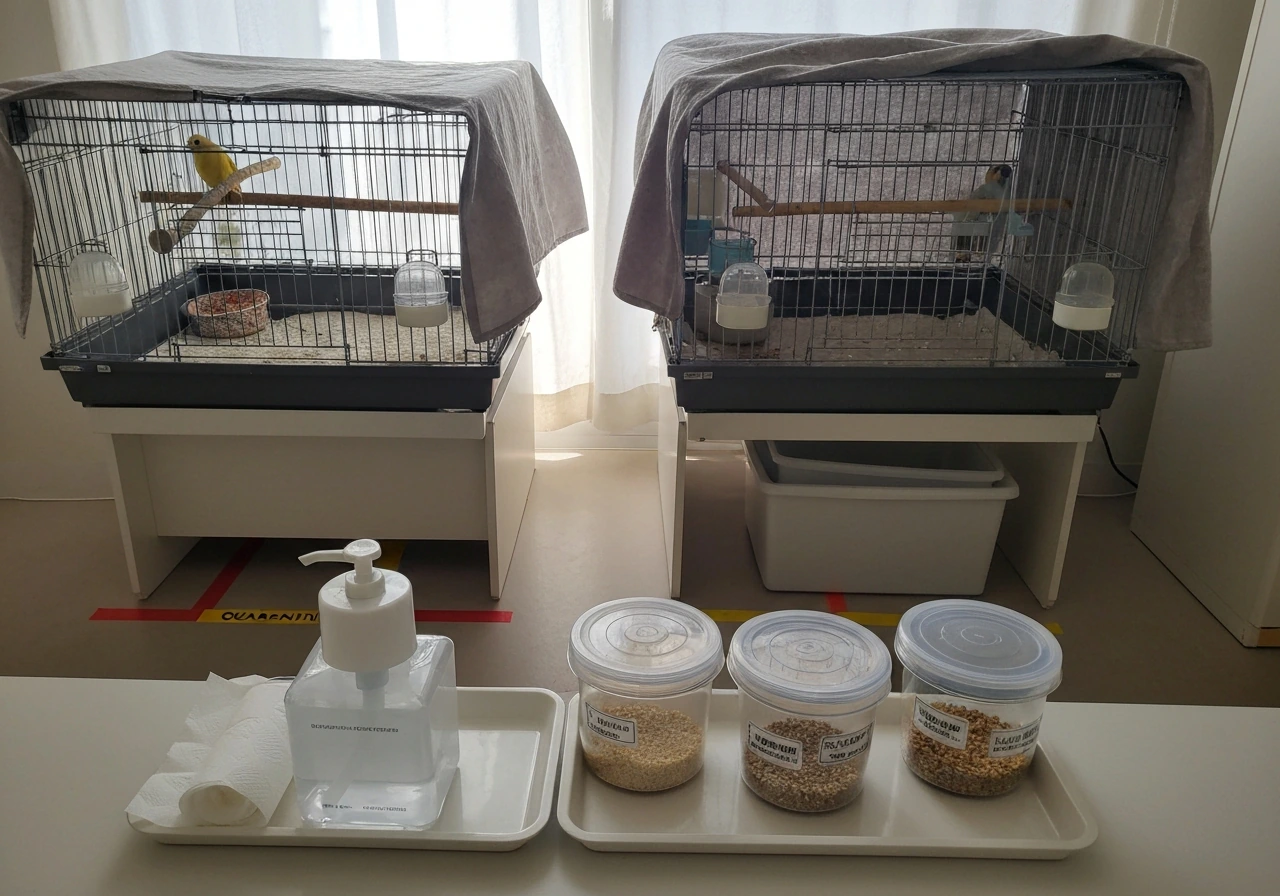
In a flock setting, one sick bird can expose every other bird quickly. Stick to the quarantine rule strictly for every new arrival, no exceptions. Clean and disinfect food and water dishes daily. Use a bird-safe disinfectant (diluted bleach solution works, but rinse thoroughly and allow to dry completely before use). Rotate which birds get handled first if you're working through a flock, going from youngest or most vulnerable to others. And if a bird dies unexpectedly, consider having a necropsy done. It sounds difficult, but knowing the cause protects the rest of your flock.
Wild birds
If you're feeding wild birds or found an injured or sick wild bird, the rules shift a bit. Keep feeders and birdbaths clean, scrubbing them with a dilute bleach solution every one to two weeks, because dirty feeders are a real disease vector. If you notice multiple dead or dying wild birds in your area, don't handle them with bare hands. Report clusters of sick or dead wild birds to your local wildlife authority or state veterinarian, especially if you suspect avian influenza. For a single sick wild bird, contact a licensed wildlife rehabilitator rather than trying to care for it yourself, both for the bird's benefit and yours.
Regardless of the context, hand hygiene is the single most reliable protection against zoonotic bird diseases. Wash hands with soap and water after handling any bird, its cage, its food, or its droppings. This simple step reduces your risk of psittacosis and other transmissible conditions dramatically. It also keeps you from accidentally transferring pathogens between birds if you're caring for more than one.