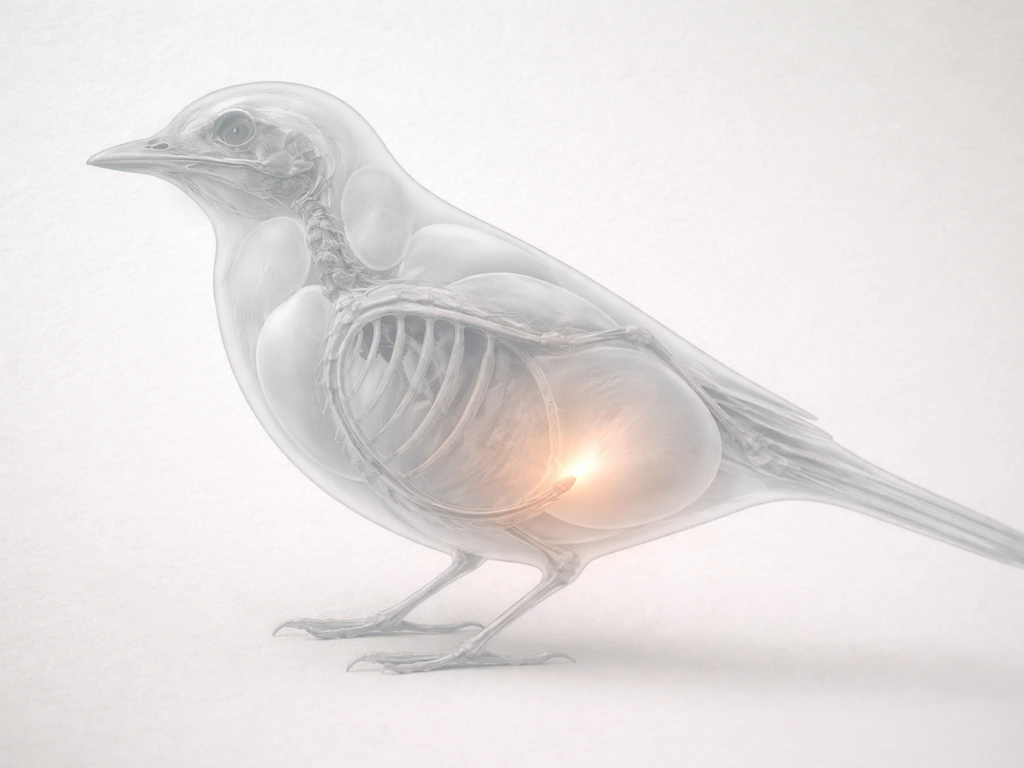
The most reliable signs a bird is dying or in serious decline are: sitting fluffed on the cage floor, open-mouth breathing, tail bobbing with every breath, complete loss of interest in food or surroundings, inability to grip a perch, and droppings that have turned green-black or watery. Any combination of two or more of these means you are dealing with an emergency and need to act within the hour, not tomorrow.
Dying Bird Symptoms: Checklist and What to Do Right Now

Marcus Webb
2 Jun 2026
Rapid triage: what actually counts as an emergency
Birds hide illness until they physically cannot anymore. By the time you can clearly see something is wrong, the situation is usually more advanced than it looks. That said, not every sick bird is moments from death. Here is how to sort quickly.
Call an avian vet or wildlife rehab right now if you see any of these. Do not wait to see if the bird improves on its own.
- Open-mouth breathing or labored breathing at rest
- Tail bobbing visibly with every breath
- Collapse, inability to stand, or inability to grip a perch
- Seizure, tremors, or the bird spinning/falling repeatedly
- Active bleeding that will not stop
- Unconscious or completely unresponsive to touch or sound
- Neck stretched forward and upward constantly while breathing
- Droppings that are pure blood-red or entirely absent for more than 24 hours
- Body temperature clearly cold to the touch, especially the feet and legs
Signs that are serious but give you slightly more time (still call the vet today, not next week) include persistent fluffing, reduced but not absent droppings, mild lethargy, slightly reduced food intake, or one watery dropping in a series of otherwise normal ones. The key word is persistent. A single abnormal dropping is not a crisis. A bird sitting puffed on the floor of the cage for two hours absolutely is.
General signs a bird is actively declining
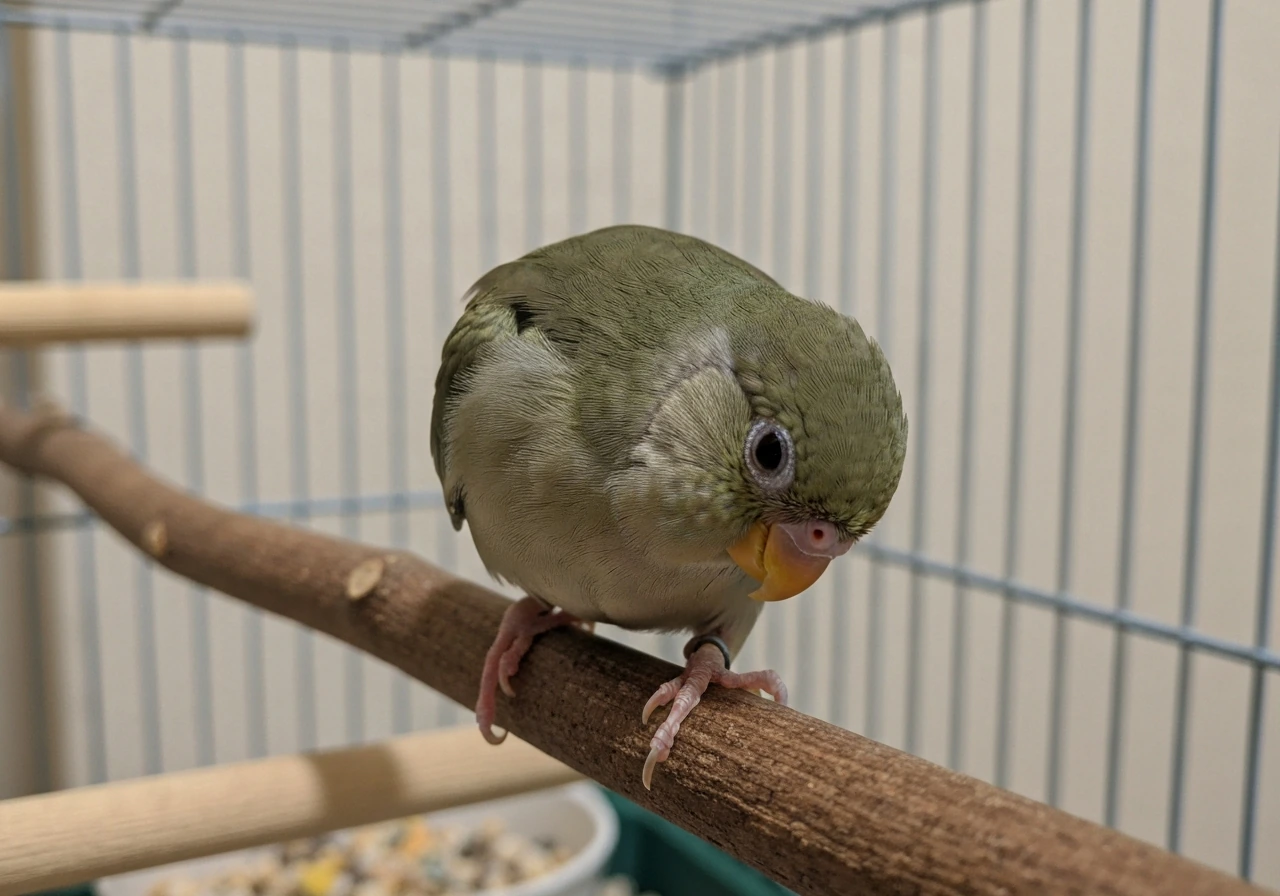
Behavioral changes are often the first thing you notice, and they are worth taking seriously. A bird that is deteriorating will stop doing the things it normally does: no morning chatter, no interest in toys or people, no reaction when you approach. It may sit with feathers puffed out and eyes half-closed, which is a bird's way of conserving heat when something is very wrong internally.
Weakness shows up fast. Watch whether the bird can grip a perch firmly or whether it keeps losing its footing. A bird that has moved from its normal perch to the cage floor is a major red flag. Birds go to the floor when they no longer have the strength or balance to stay elevated. In the wild, this is a death sentence because it signals predators. In your home, it signals that you need to act.
Responsiveness is one of the best quick tests you have. Clap gently near the cage, say the bird's name, or offer its favorite treat. A healthy bird reacts. A bird in serious decline may barely lift its head, blink slowly, or not respond at all. Slow blinking with a sunken or dull eye in combination with fluffing and floor-sitting puts the bird firmly in the emergency category.
Respiratory and breathing distress warning signs
Breathing problems are the clearest emergency flag in birds, and they require the fastest response. Any respiratory issue in a bird should be treated as an emergency, full stop. If a dog may have harmed the bird, treat it as a possible bite or trauma case and watch for symptoms like breathing distress, weakness, and changes in droppings dog ate bird symptoms. Birds breathe through a completely different system than mammals, using air sacs that run through most of their body, which means respiratory distress can deteriorate faster than you expect.
The signs to look for are open-mouth breathing (especially when the bird is at rest, not just after activity), a noticeable tail bob that pumps with each breath, wheezing or clicking sounds when the bird inhales or exhales, a neck that is stretched forward and upward as the bird tries to get more air, and visible movement of the sternum (chest) with each breath that looks exaggerated compared to normal. The LafeberVet article on avian respiratory emergencies lists signs of dyspnea such as open-mouth breathing, increased sternal motion, and tail bobbing blank" rel="noopener noreferrer">open-mouth breathing, noticeable tail bob, and visible movement of the sternum. Frequent sneezing that produces discharge is also concerning.
At the vet, a bird in respiratory distress will typically need supplemental oxygen before anything else can be done. Air sac rupture can also cause acute respiratory distress, so watch for open-mouth breathing and rapid, labored breathing. That is why you cannot manage this at home. Do not delay getting the bird professional care because you are hoping it will pass. It won't.
Neurologic signs, posture, and pain indicators
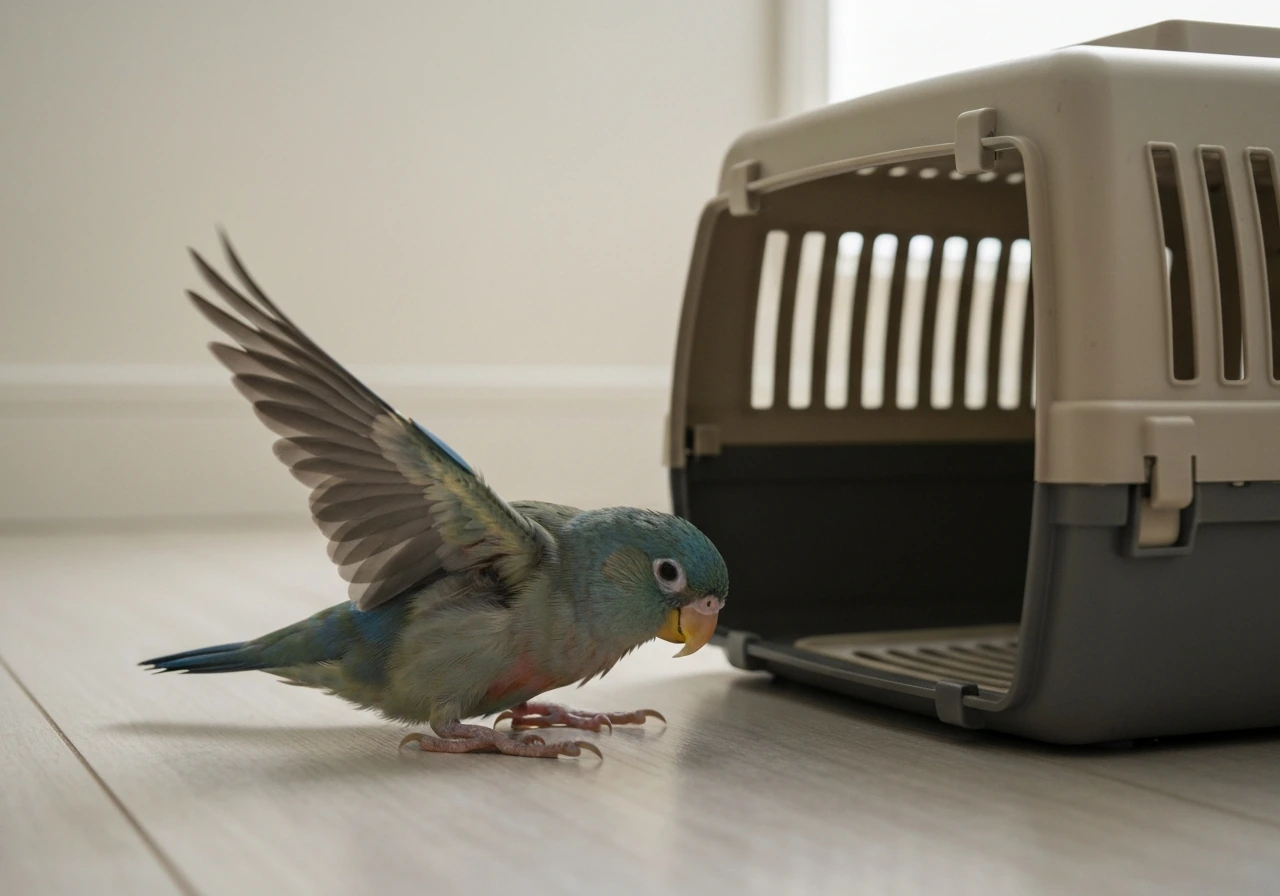
Neurologic symptoms are frightening to witness but important to recognize. Seizures look like sudden, uncontrolled wing flapping, falling off the perch, paddling legs, or the bird lying on its back and cycling its legs. Tremors are subtler and can look like a gentle shaking of the head or body that doesn't stop. Head tilting to one side, circling, or rolling are also neurologic signs.
Posture tells you a lot about how a bird is feeling. A bird in pain or extreme weakness often hunches with its head tucked into its back feathers and its feathers puffed up to retain heat. One leg tucked up continuously can indicate pain in that leg or a more systemic problem. A bird sitting directly on the perch (instead of gripping it with toes) is compensating for leg weakness.
Wings that droop or hang lower than normal suggest injury, extreme weakness, or neurologic involvement. If one wing is drooping and the bird cannot raise it, that is an emergency. If both wings droop and the bird is also on the cage floor, that combination is critical.
Appetite, drinking, crop problems, vomiting, and droppings
A bird that stops eating completely for more than 24 to 48 hours is in real trouble. Birds have fast metabolisms and cannot go without food the way larger animals can. If food sits untouched and the bird shows no interest even in foods it usually loves, that is a serious warning sign. Reduced water intake paired with lethargy is equally concerning and can lead to rapid dehydration.
Vomiting (actual expulsion of food, not regurgitation directed at a toy or person) is a red flag. Regurgitation from crop motility issues can look similar but is often repetitive and involves undigested or partially digested food. A crop that is visibly enlarged and stays that way for hours without emptying (sour crop) or feels firm and impacted is an emergency on its own.
Check the droppings carefully. A normal bird dropping has three parts: a firm green or brownish fecal portion, white or cream urates, and a small amount of clear liquid urine. Changes to watch for in a declining bird include: droppings that are entirely liquid, droppings that are bright red or very dark black (which can indicate internal bleeding), droppings that are all urates with no fecal material (pointing to no food intake), or droppings that are absent entirely. Significant changes in dropping color or consistency for more than 24 hours warrant a vet call.
Eyes, skin, visible changes, and body temperature
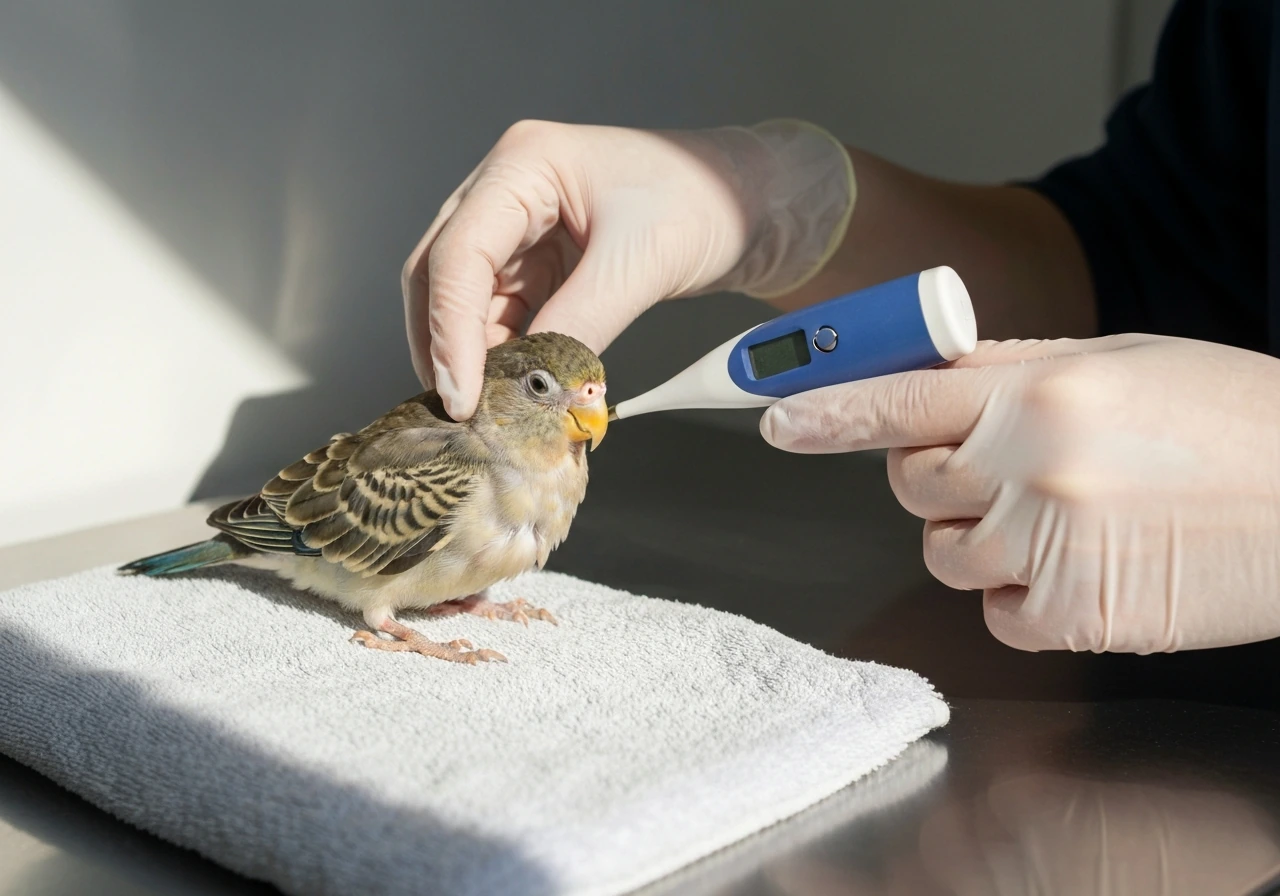
The eyes are one of the first places illness shows up. Healthy birds have bright, alert, round eyes. A bird that is dying or very ill will often have half-closed, dull, or sunken-looking eyes. Discharge around the eyes, swelling of the tissue around the eye, or eyes that are crusted shut are all signs that something is wrong and needs professional evaluation.
Check the mucous membranes if you can safely do so. The inside of the beak and the tissue around the choana (the slit in the roof of the mouth) should be pink and moist. Pale, bluish, or grayish coloring there, or membranes that look dry and tacky, indicates either circulatory problems or dehydration. Either is serious.
Body temperature is a critical and often overlooked sign. A bird that is dying will often feel cold, especially in the feet, legs, and lower body. Birds regulate temperature by fluffing their feathers, but when the underlying physiology is failing, they lose the ability to stay warm. If the feet feel distinctly cold compared to what is normal for that bird, treat it as an emergency. Swelling, masses under the skin, bleeding, or open wounds visible anywhere on the body are also emergencies.
What to do right now while you get help
For pet birds
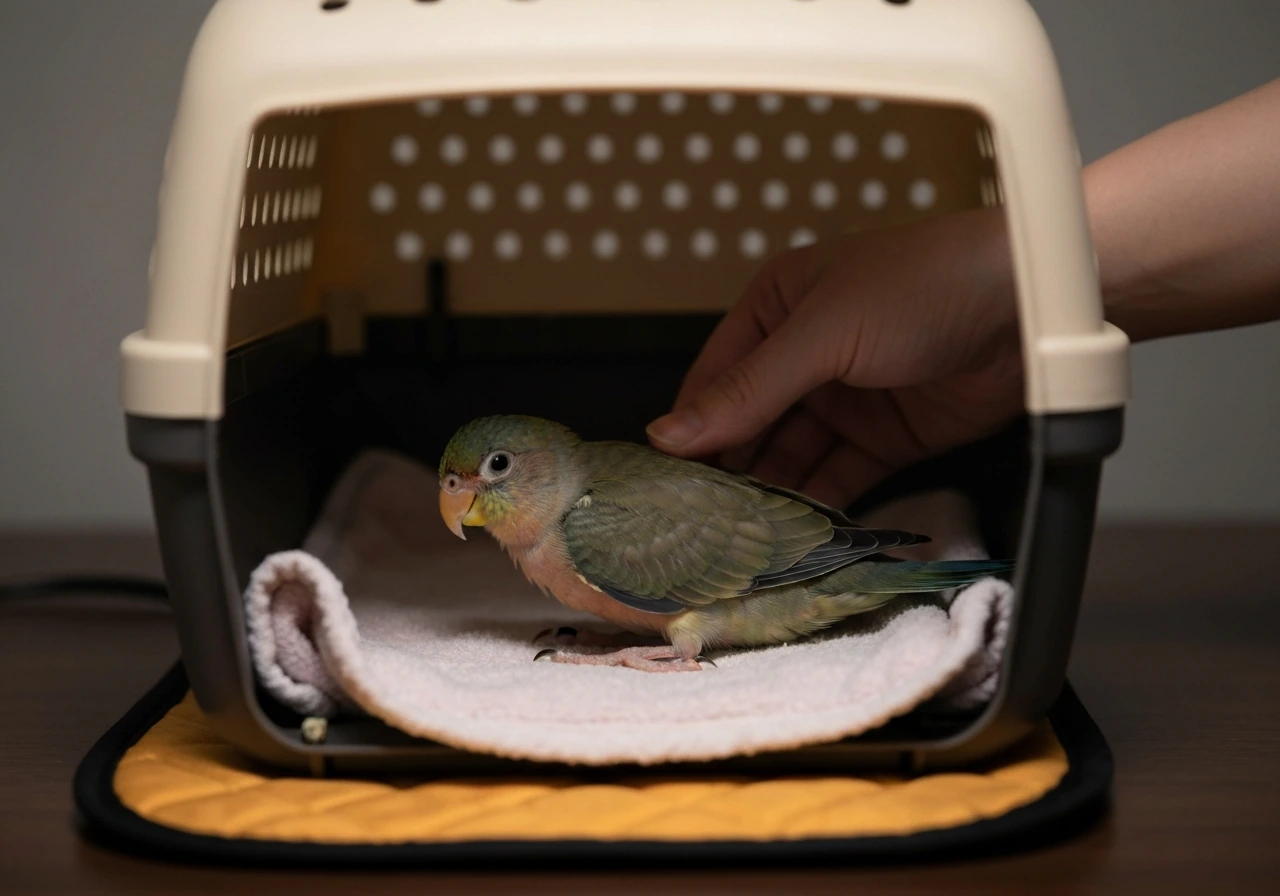
- Keep the bird warm. This is the single most important first-aid step. Place the bird in a small, secure box or carrier lined with a soft cloth. Provide gentle external heat using a heating pad set to low under one half of the box (never the whole bottom, so the bird can move away if too warm). Aim for an ambient temperature of about 85 to 90 degrees Fahrenheit inside the enclosure. Do not use a heat lamp directly on the bird.
- Minimize stress. Dim the lights, reduce noise, and handle the bird as little as possible. Stress accelerates decline in critically ill birds. Cover the carrier with a light cloth to reduce visual stimulation.
- Do not force food or water. If the bird is weak or unconscious, giving water by dropper can cause aspiration and make things worse. If the bird is alert enough to drink on its own, place water nearby but do not force it.
- Note exactly what you see. Before you call the vet, take 60 seconds to note the bird's breathing rate, posture, last normal droppings, when it last ate, and any specific symptoms. This information helps the vet triage the situation over the phone.
- Call an avian vet immediately. Use the Association of Avian Veterinarians directory to find a certified avian vet near you. If your regular vet is closed, look for an emergency exotic animal clinic. Explain you have a bird in respiratory distress or showing signs of serious decline and ask if they can see you urgently.
- Do not give medications intended for humans or other animals, and do not administer supplements without vet guidance.
For wild birds
Wild birds need different handling than pet birds, and getting it wrong can cause additional harm even with the best intentions. If you find a wild bird showing dying bird symptoms, the most important thing is to contact a licensed wildlife rehabilitator before you do much else. For more specific signs of dehydration, review the section on dehydrated bird symptoms and treat it as urgent if the pattern fits. If you notice sick wild bird symptoms like open-mouth breathing, tail bobbing, or repeated watery droppings, treat it as urgent and seek wildlife help immediately dying bird symptoms. In the US, it is actually illegal to keep most wild birds without a permit, even temporarily.
- Use gloves or a folded cloth to gently pick up the bird. Protect yourself (some wild birds carry diseases transmissible to humans) and avoid squeezing the bird's chest, which can prevent it from breathing.
- Place it in a ventilated cardboard box lined with a paper towel or cloth. Do not use a wire cage, which causes additional stress and injury.
- Keep it in a quiet, warm (but not hot), dark place. The goal is to reduce stress, not to rehabilitate the bird yourself.
- Do not give food or water unless specifically instructed by a rehabilitator. Many well-meaning people accidentally aspirate wild birds this way.
- Call a wildlife rehabilitator immediately. In the US, the National Wildlife Rehabilitators Association and the Wildlife Rehabilitation Information Directory (WRID) can help you find someone local. Many areas also have wildlife rescue hotlines.
- If the bird is showing signs like a stunned bird that flew into a window, the situation may be different from a bird that is actively dying from illness. Be specific when you describe what you saw to the rehabilitator.
How to tell the difference: emergency vs. serious but stable
| Sign | Emergency (act now) | Serious but slightly more time |
|---|---|---|
| Breathing | Open-mouth breathing, tail bobbing, wheezing at rest | Occasional sneeze, mild clicking sound only with activity |
| Posture/perching | On cage floor, cannot grip perch, wings drooping | Fluffed on perch, slightly hunched but still gripping |
| Responsiveness | No response to voice, touch, or food offer | Slow to respond, interested in food briefly |
| Droppings | Blood-red, pure black, completely absent for 24+ hours | Watery or green but still present and some volume |
| Temperature | Feet and body cold to touch | Normal or slightly cool |
| Neurologic | Seizure, tremors, rolling, head tilt, circling | Mild imbalance when moving, no seizure activity |
| Eyes | Half-closed, sunken, discharge, crusted shut | Slightly dull but open, no discharge |
Related conditions worth knowing
Some of the symptoms described here overlap with other specific conditions. A bird that flew into a window and is sitting stunned may look similar to a dying bird but could recover fully with minimal intervention. Stunned bird symptoms can mimic severe decline, so look for breathing, posture, and responsiveness changes to decide on emergency care. A bird showing severe dehydration has its own set of warning signs that can be confused with general decline.
Poisoning (from fumes, plants, or ingested toxins) can cause rapid neurologic collapse that looks like dying from illness but has a different cause and different urgency. Air sac ruptures, wild birds in shock, and wild birds with general illness each have specific considerations for how you handle and help them. Knowing which situation you are actually in helps you communicate clearly with a vet or rehabilitator and get the right help faster.
FAQ
What should I do in the first 5 minutes if I suspect dying bird symptoms?
Place the bird in a quiet, warm, draft-free container with breathable sides (a small box lined with a soft towel). Minimize handling, keep lights dim, and check breathing and responsiveness. If you see open-mouth breathing, tail bobbing, or repeated watery droppings, call an avian vet or wildlife rehab immediately rather than waiting to see if symptoms change.
Should I offer food or water if the bird is fluffed on the cage floor?
Do not force-feed or syringe water. Offer a normal favorite food briefly only if the bird is alert enough to swallow and is not having open-mouth breathing or severe weakness. In respiratory distress, attempting to give anything can increase stress and aspiration risk, so focus on getting professional care fast.
Is a single abnormal dropping ever okay?
Yes. One abnormal dropping can happen from stress or diet changes, especially if the bird otherwise seems normal. Treat it as urgent when abnormal droppings persist beyond about 24 hours, are paired with lethargy or floor-sitting, or involve multiple red flags (for example, watery series, absent fecal part, or very dark black/red).
How can I tell if the problem is breathing distress or normal after-stress breathing?
Check the bird at rest. Open-mouth breathing when the bird is calm, tail bobbing with each breath, chest (sternum) movement that looks exaggerated, neck stretching forward and upward, wheezing or clicking during inhale or exhale, and visible air-sac effort are emergency indicators. If breathing settles quickly after activity, it can be less severe, but any persistent pattern still warrants a same-day call.
My bird is stunned after a window strike, can it still be dying?
Yes, but the pattern differs. Window shock can cause temporary sitting and dullness, yet a bird that continues to have abnormal breathing, tail bobbing, inability to grip, or progressive eye dullness is more concerning. Use responsiveness and breathing at rest as your deciding factors, and contact an avian vet the same day if the symptoms do not clearly improve quickly.
What if the bird seems cold, is that always an emergency?
Cold body temperature or distinctly cold feet and lower body is serious in birds because they lose heat regulation when internal systems fail. Warm the bird gently in the interim by placing the container in a draft-free, warm area (not hot). If coldness is paired with floor-sitting, dull eyes, open-mouth breathing, or loss of appetite, seek urgent care rather than only applying heat.
Can I use a heating pad or heat lamp, and what’s the safe way?
Use indirect warmth. Place the container so only part of it is warmed, and avoid overheating by checking that the bird is not becoming hot to the touch and remains calm. Birds in respiratory distress should still be prioritized for professional care, because warmth alone does not fix breathing emergencies.
What should I do if I suspect poisoning or fumes instead of illness?
Treat it as urgent immediately. Remove the bird from the exposure area, ensure fresh air in the room, and keep the bird as quiet as possible in a container. Do not try home remedies. If you can, note what plants, chemicals, nonstick cookware, aerosols, or smoke were involved so you can tell the vet or rehab.
If I find a wild bird outdoors, can I just keep it temporarily until it improves?
In many places it is illegal to possess wild birds without a permit, even temporarily. The safest next step is to contact a licensed wildlife rehabilitator right away. While waiting, keep the bird warm, dark, and contained, and do not offer food or water if it cannot stand or shows open-mouth breathing.
When do neurologic symptoms mean immediate danger, and what should I watch for?
Neurologic signs like seizures, uncontrolled wing flapping, paddling, rolling onto the back, head tilting with circling, or tremors that do not stop can signal severe internal problems or toxins. If these are present, call for urgent professional help immediately and keep the bird contained to prevent injury, because movements can worsen falls and trauma.
What’s the difference between regurgitation and true vomiting in a bird?
Regurgitation is often repetitive and may involve food coming back without the same force, while true vomiting is actual expulsion. If the bird is actively vomiting, especially with weakness or breathing changes, treat it as more serious and contact an avian vet promptly. For crop motility concerns, watch for a persistently enlarged or firm, impacted crop.
Should I bring the cage or just the bird when I call the vet or wildlife rehab?
You can transport the bird in a small, secure, ventilated container, and keep the cage nearby only if it helps you describe symptoms. If droppings are part of the concern, bring a sample or a photo of the last droppings when possible. Avoid delays, because respiratory distress and severe floor-sitting are time-sensitive.
Next Article
Air Sac Rupture Bird Symptoms: Signs, Causes, and Next Steps
Learn air sac rupture bird symptoms, key causes, how to avoid misdiagnosis, and what to do before the vet.