A poisoned bird usually looks sick fast. Within 15 to 45 minutes of exposure you may see tremors, open-mouth breathing, sudden weakness, uncoordinated movement, or a bird that has simply dropped to the cage floor. Sometimes the collapse comes out of nowhere with no obvious warning. If you're looking at your bird right now and something feels seriously wrong, skip to the emergency section below, then come back for the full picture.
Poisoned Bird Symptoms: Checklist, Causes, and What to Do Now

Marcus Webb
18 Jun 2026
What a poisoned bird typically looks like (the fast symptom pattern)
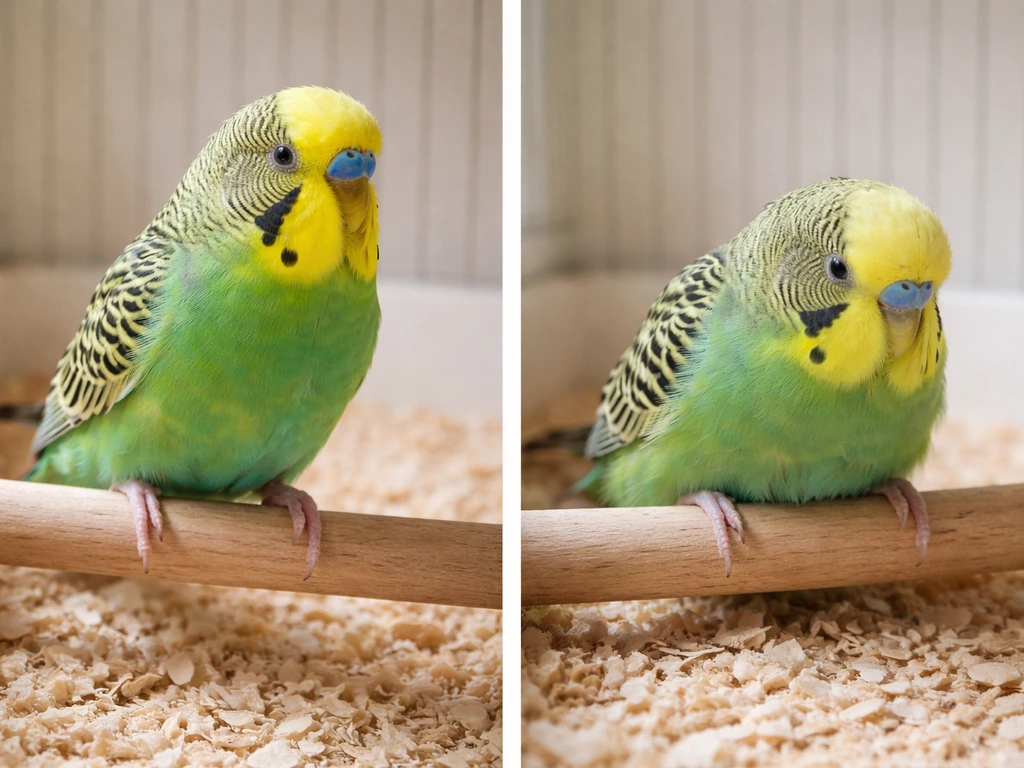
Poisoning in birds tends to move quickly. Unlike a slow respiratory infection that builds over days, toxic exposures often tip a bird from seemingly normal to critically ill in under an hour. The speed itself is a clue. You might walk back into the room and find a bird that was fine an hour ago now sitting on the cage floor, puffed up, struggling to breathe, or convulsing. If your bird seems to be struggling to breathe, it can also be worth considering air sac rupture bird symptoms as an adjacent possibility to discuss with the vet.
The classic rapid pattern goes like this: the bird becomes suddenly quiet or agitated (both can happen depending on the toxin), then shows physical signs like trembling, labored breathing, drooling, or loss of balance, and in severe cases progresses to seizures, collapse, or unconsciousness. High-dose pesticide exposures can show signs within minutes. Moderate doses may take several hours. Anticoagulant rodenticides are the outlier, often taking 24 to 64 hours before visible bleeding problems appear because the toxin has to deplete the bird's clotting factors first.
One important wrinkle: by the time a bird shows symptoms, the original poison source is often long gone from the gut. You may not find the culprit, which is why the symptom pattern and your knowledge of recent exposures matters so much.
Common poisoning sources in and around birds
Household fumes and chemicals
Birds have extremely sensitive respiratory systems, and fumes that barely bother a human can kill a bird in minutes. The most notorious example is overheated non-stick (PTFE/Teflon) cookware. At high temperatures, it releases gases that cause rapid respiratory distress, neurological signs, and death. Other dangerous fume sources include aerosol sprays (air fresheners, hairspray, cooking sprays), scented candles, paint fumes, and cleaning products. Mixing bleach with ammonia creates chloramine gas, which causes severe breathing distress. Even secondhand tobacco smoke can cause chronic respiratory disease and eye problems over time.
Metals in the home

Metal toxicity is surprisingly common in pet birds. Lead and zinc are the main culprits, and the sources are not always obvious: costume jewelry, mirror backings, some bird toys, hardware cloth, curtain weights, galvanized wire, and even some paints and blinds. A bird that chews on anything metal is at risk.
Pesticides, rodenticides, and insecticides
Organophosphates (found in many insecticides) are among the most acutely dangerous toxins for birds. Rodenticides are another major concern, especially second-generation anticoagulants like brodifacoum, which can stay in a bird's system for over 100 days and require months of treatment. Wild birds are particularly vulnerable to rodenticides through secondary poisoning (eating a poisoned rodent). Pest control sprays used indoors or in gardens without adequate ventilation or removal of the bird are a frequent cause of poisoning.
Toxic foods and plants
Several common foods are toxic to birds: avocado, chocolate, onions, garlic, alcohol, caffeine, and xylitol (an artificial sweetener found in many products). Moldy or old refrigerated food is also a real risk that owners sometimes overlook. On the plant side, many common houseplants and garden plants are toxic. If your bird has access to any plant you haven't specifically confirmed as safe, treat it as a suspect.
Tobacco and nicotine
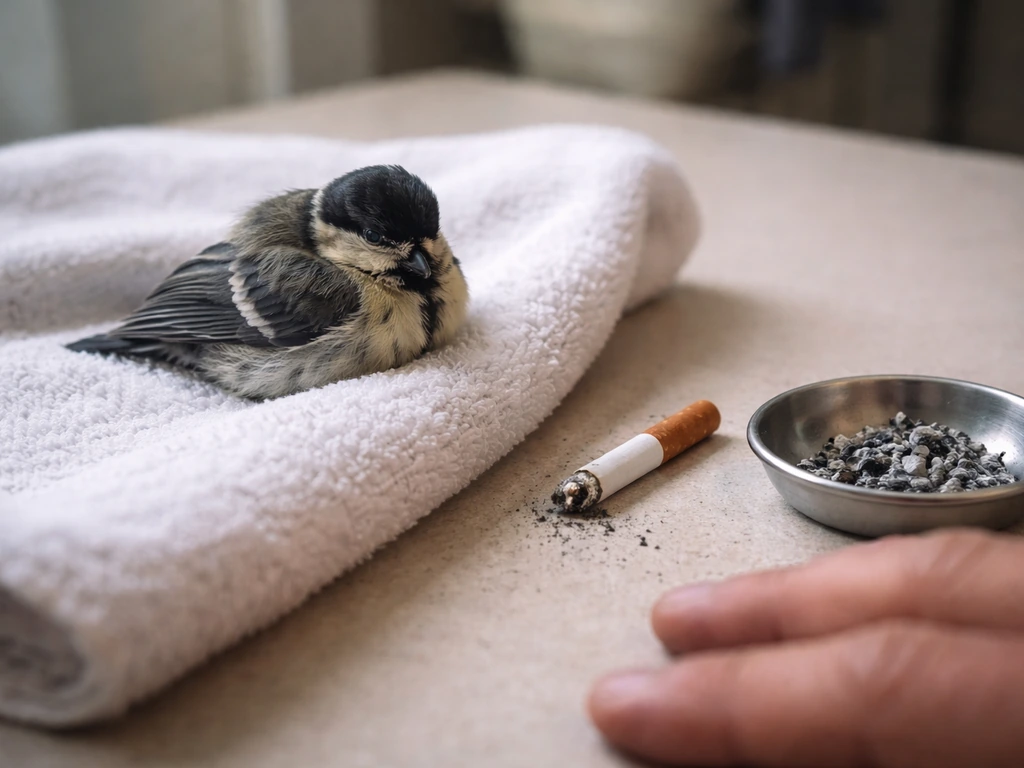
Nicotine is highly toxic to birds. Tobacco residue on hands or clothing that a bird chews or contacts can cause hyperexcitability, vomiting, diarrhea, rapid heart rate, tremors, seizures, and death. Tobacco poisoning moves fast and should be treated as an emergency.
Key symptoms to watch for, organized by body system
| Body System | Symptoms to Watch For |
|---|---|
| Neurological | Tremors, muscle twitching, seizures/convulsions, loss of balance, incoordination, weakness, paralysis, inability to stand or perch, sudden collapse, dilated or constricted pupils |
| Gastrointestinal | Vomiting or regurgitation, diarrhea, excessive drooling or salivation, loss of appetite, blood in droppings, crop stasis, pain or bloating in the abdomen |
| Respiratory | Open-mouth breathing, tail bobbing with each breath, gasping, wheezing, coughing, nasal discharge, clicking sounds when breathing, labored or rapid breathing (tachypnea) |
| Eyes and Skin | Conjunctivitis (red, swollen, or weeping eyes), nasal discharge, redness or swelling of skin, rash or feather loss around exposed areas, pale or bluish tissues (indicating oxygen deprivation) |
| Cardiovascular / General | Rapid heart rate, sudden extreme lethargy, collapse, unconsciousness, unexpected bleeding from any site (anticoagulant rodenticides) |
Organophosphate poisoning has a fairly recognizable cluster: the first signs are often hypersalivation (excessive drooling) and constricted (pinpoint) pupils, followed by frequent urination, diarrhea, vomiting, and breathing difficulty from increased bronchial secretions. Tremors and muscle weakness follow, and in acute cases respiratory muscle paralysis can cause death rapidly. PTFE/Teflon fume exposure typically presents as sudden respiratory distress combined with neurological signs. Metal toxicity tends to show more neurological and GI symptoms. Knowing the likely source helps you interpret the symptom pattern.
How to tell poisoning from similar illnesses
Poisoning can look a lot like several other bird emergencies, and it's worth running through the key differences so you're not chasing the wrong problem. The speed of onset is often the biggest differentiator. A respiratory infection like bacterial or viral pneumonia typically develops over hours to days, with gradually worsening signs. Poisoning, especially from fumes or organophosphates, tends to hit fast and hard. If your bird was completely fine an hour ago and is now collapsing, that urgency strongly suggests a toxic exposure, heat stroke, or a sudden cardiovascular event, not an infection.
Compared to a stunned bird (from a window collision, for example), a poisoned bird will often show progressive worsening rather than a brief period of disorientation followed by recovery. A stunned bird usually stabilizes within 30 to 60 minutes if left in a quiet, safe space. Stunned bird symptoms may look like brief disorientation, but they typically stabilize much sooner than poisoning. A poisoned bird tends to deteriorate.
Dehydration and heat stress can cause weakness and lethargy that superficially resembles poisoning, but usually lack the neurological signs (tremors, seizures, pupil changes) and the acute fume-related respiratory pattern. Dehydrated bird symptoms can also look like weakness and lethargy, but addressing hydration quickly and watching for other illness signs matters just as much. If you've ruled out heat exposure and the bird hasn't had access to fresh water, check for dehydration signs before assuming poison.
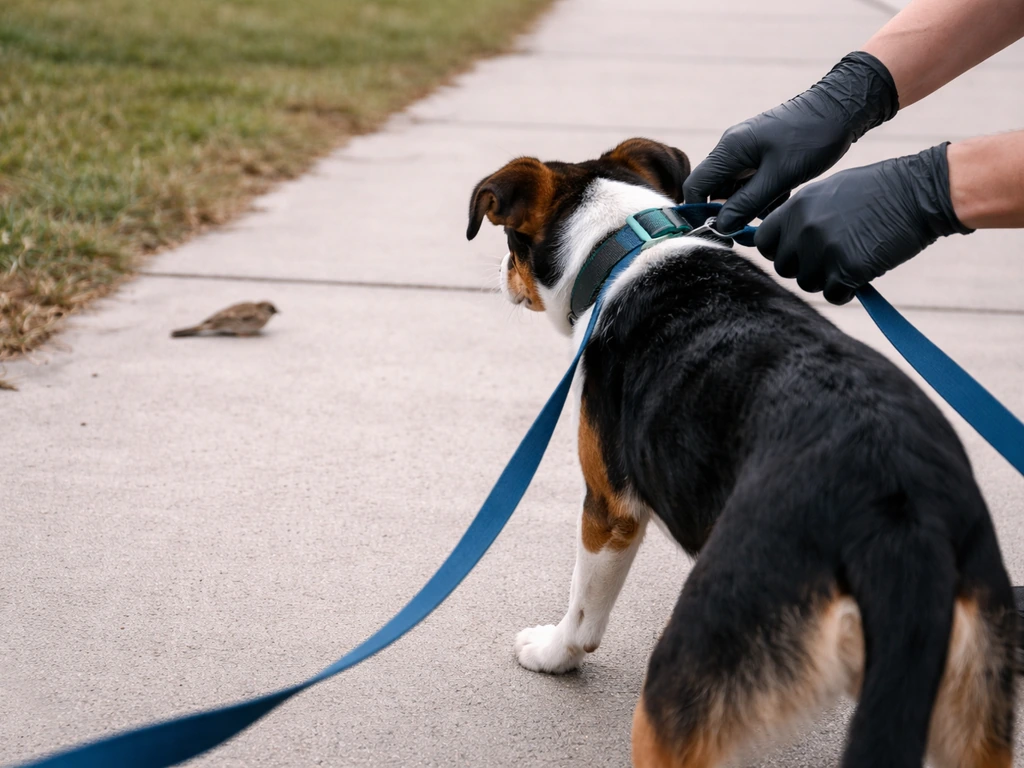
Ingestion of a foreign body can cause GI symptoms similar to some toxicoses, but foreign body obstruction usually produces gradual regurgitation, crop distension, and discomfort without the neurological component. A bird showing both neurological signs and GI signs together should be treated as potential poisoning until proven otherwise. If you suspect a dog ate a bird, the symptoms can overlap with other poisons, so act quickly and treat it as a poisoning until a vet rules it out dog ate bird symptoms.
Sudden metabolic crises (like egg binding, hypoglycemia, or severe infections) can also cause rapid collapse. If you found your bird collapsed but have no obvious toxic exposure history, don't rule out poisoning, but mention all possibilities to the vet. Context is everything: what the bird had access to in the last 12 hours matters enormously.
What to do right now at home
Gather this information first
While you're getting ready to call a vet or animal poison control, pull together as much information as you can. This will save time and help the vet make faster decisions.
- The exact name of the suspected toxin (bring the packaging, bottle, or plant to the clinic, or take a clear photo right now)
- When the exposure likely happened or when you first noticed symptoms
- How the bird was exposed: inhaled, ingested, or contacted skin/feathers
- How much the bird may have been exposed to
- The bird's species, weight if known, and age
- All current symptoms and when each one started
Safe immediate steps
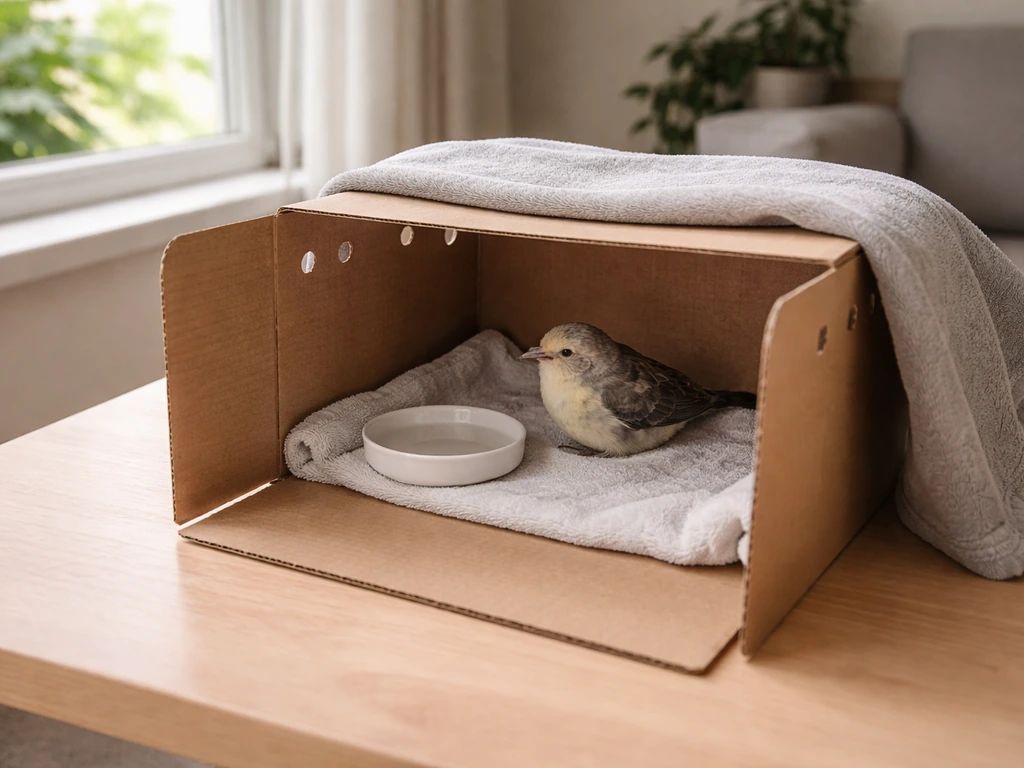
- Remove the bird from the source of exposure immediately. If fumes are the issue, move the bird to a well-ventilated room or outside (in appropriate temperature) and ventilate the affected area thoroughly.
- If the toxin is on the bird's feathers or skin, rinse the affected area with plain running water for 15 to 20 minutes. Do this only if the bird is stable enough, because removing feather contaminants is not recommended if the bird is seriously ill (stabilize first).
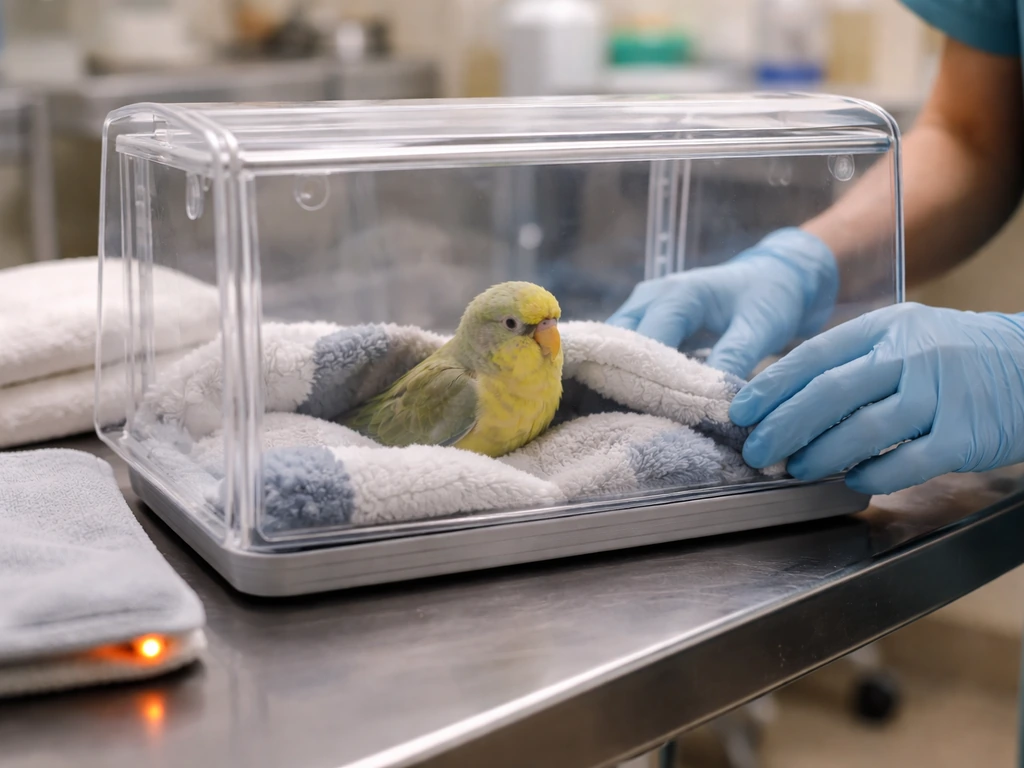
- Keep the bird warm and quiet. A hospital cage setup, meaning a small enclosed space with supplemental warmth aimed at one end so the bird can move toward or away from the heat, helps reduce stress and supports the bird while you arrange transport. A target of around 85 to 90 degrees Fahrenheit on the warm side is commonly recommended for a sick bird.
- Minimize handling and stress. A bird in distress uses enormous energy reserves. Keep the environment quiet and dark.
- Call an avian vet or 24/7 animal poison control (Pet Poison Helpline, for example) immediately. Do not wait to see if the bird improves on its own.
Critical don'ts
- Do not try to induce vomiting. Birds can't reliably vomit on command, and forcing it risks aspiration.
- Do not give activated charcoal at home without specific instruction from a vet. If aspirated, activated charcoal can cause respiratory distress and potentially death.
- Do not give any home antidotes, oils, milk, or remedies you've read about online unless a vet or poison control specifically instructs you to.
- Do not assume the bird will 'sleep it off.' Poisoning in birds is a medical emergency that moves fast.
- Do not bathe or soak a critically ill bird to remove skin/feather contamination before stabilizing it first.
When to go to an avian vet or emergency clinic right now
Some situations cannot wait. If your bird shows any of the following, call ahead so the clinic can prepare oxygen and warming support, then get there as fast as safely possible.
- Open-mouth breathing, gasping, or tail bobbing with every breath
- Seizures or convulsions
- Collapse or unconsciousness
- Inability to stand or perch
- Blue or pale tissues (lips, skin around the beak, or feet)
- Uncontrolled or unexpected bleeding from any body site
- Sudden extreme weakness or inability to hold the head up
- Rapid deterioration in any symptoms over minutes to an hour
Even if the bird seems stable but you know or strongly suspect a toxic exposure happened, same-day veterinary care is still the right call. Toxins like anticoagulant rodenticides may not show symptoms until 24 to 64 hours after ingestion, but treatment is far more effective when started before the bird is in crisis. When in doubt, call and describe what you're seeing. An avian vet can help you decide over the phone whether it's a rush-in-now or a get-here-today situation.
Testing, diagnosis, and what vets typically do
When you arrive at the clinic, the vet's first priority is stabilization, not diagnosis. Expect the bird to receive oxygen if there is any respiratory distress, and warming support if it's in shock. A wild bird in shock can also show signs like rapid weakness, breathing trouble, or tremors, so treat it as an emergency and seek avian care wild bird in shock symptoms. IV or subcutaneous fluids may be started quickly. Only after the bird is stable will the vet work through the diagnostic picture.
Blood work is the main diagnostic tool. For anticoagulant rodenticide exposure, prothrombin time (PT) is the key test, and it should ideally be drawn before starting vitamin K therapy. Packed cell volume (PCV) and total protein are monitored every 6 to 12 hours until stable. One important limitation to know: there are currently no reliable blood tests in birds specifically to detect rodenticide toxicity or confirm many other toxins directly. Diagnosis often relies heavily on the exposure history you provide combined with the clinical pattern. This is why the information you gather at home is so valuable.
For inhaled toxins, treatment centers on oxygen therapy, anti-inflammatory medications, and sometimes bronchodilators. For inhaled toxic gases or particulate matter, toxicoses can irritate and inflame the respiratory tract, leading to difficulty breathing, coughing or wheezing, nasal discharge, and potentially progression to airway sloughing, edema, and obstruction [inhaled toxic gases/particulate matter](https://pmc. ncbi. nlm.
nih. gov/articles/PMC12375962/). For organophosphate poisoning, atropine is the primary antidote and may be given repeatedly. For anticoagulant rodenticides, vitamin K1 is the treatment, and it may need to continue for weeks to months depending on the specific compound involved.
Second-generation anticoagulants like brodifacoum can remain in the system for over 100 days, so the vet will recheck PT 2 to 3 days after stopping vitamin K therapy to confirm values have normalized. If the bird has already had significant blood loss, plasma or whole blood transfusion may be needed.
Activated charcoal may be used at the clinic to bind certain ingested toxins in the gut and prevent further absorption, but it requires careful administration (often through a gavage tube with airway protection) to avoid the serious risk of aspiration. Decontamination of feathers and skin will also be completed properly by the vet team once the bird is stable.
Prevention and bird-proofing after an exposure
After a poisoning scare, a full audit of the bird's environment is worth the time. Most toxic exposures in pet birds are preventable once you know where to look.
- Replace non-stick (PTFE/Teflon) cookware with stainless steel, cast iron, or ceramic alternatives, especially any pans used at high heat. Never use non-stick cookware in the same room as a bird.
- Ban aerosol sprays, scented candles, air fresheners, and perfumes in the bird's room. Use these in a completely separate area with the door closed and adequate ventilation.
- Store all cleaning products, pesticides, and chemicals in locked cabinets well away from the bird's area. Never use spray pesticides or insecticides near the bird.
- Inspect all bird toys, perches, hardware cloth, and cage accessories for zinc or lead content. Choose bird-safe stainless steel hardware where possible.
- Keep the bird out of the kitchen during cooking entirely. Fumes from overheated oil, smoke, and various cookware can all be dangerous.
- Never smoke near a bird, and wash hands and change clothes before handling the bird after smoking.
- Keep all toxic plants out of the bird's reach. If you're unsure whether a plant is safe, keep it out of the house entirely or place it completely inaccessible to the bird.
- Discard old, moldy, or questionable food rather than offering it to the bird. Fresh food only.
- If you use rodenticides anywhere in or around your home, use enclosed bait stations inaccessible to birds, and consider non-toxic alternatives (snap traps). Rodent carcasses left around the property pose secondary poisoning risks to wild birds.
- Keep a list of emergency contacts ready: your avian vet's number, an emergency avian clinic, and a 24/7 animal poison control number. In a poisoning emergency, seconds matter and you don't want to be searching.
Once you've been through a toxic exposure with your bird, it's also worth reviewing general illness recognition skills. Poisoning shares features with several other urgent conditions, and being able to recognize when a bird is sick quickly (including signs seen in respiratory illness, shock, and other emergencies) makes a real difference in outcomes. If you suspect a sick wild bird, the same symptom clusters can help you decide whether it needs urgent veterinary care or wildlife rescue being able to recognize when a bird is sick quickly. The faster you recognize something is wrong and contact a vet, the more treatment options remain available.
FAQ
If my bird only has drooling and pinpoint pupils, is that always poisoning?
Drooling plus pinpoint pupils strongly suggests an acetylcholinesterase-inhibitor exposure, such as an organophosphate, but you still should treat it as an emergency until a vet rules it out. Also think about whether the bird recently had contact with insecticides, pesticides, or residue on hands, clothing, or cage liners.
How fast should I act if the exposure might have happened hours ago?
If symptoms are developing now, don’t assume the worst exposure already passed. For many toxins, especially anticoagulant rodenticides, outward signs can be delayed 24 to 64 hours. Call your vet anyway and tell them the exact timeline, including when the bird was last normal.
What should I do if I’m not sure whether it was fumes, food, or something the bird chewed?
Use pattern plus access history. Fume or inhalation events often cause sudden breathing distress with neurological signs, while chewed metal or chewing-related exposures can create a mix of GI and neurologic signs. Food toxicoses may start with vomiting or GI upset, then progress. Provide the vet with what the bird had access to in the last 12 hours (kitchen, sprays, plants, chew toys, chewable metal items).
Can I give home treatment like vitamins, water, or milk to help a poisoned bird?
Avoid giving anything unless your avian vet or a poison service specifically directs it. For example, trying to force fluids can worsen distress in birds with breathing issues, and certain “common remedies” can delay proper antidote therapy. Focus on keeping the bird warm, reducing stress, and contacting the right help immediately.
Should I induce vomiting or use activated charcoal at home?
Do not induce vomiting, and don’t try charcoal or other decontamination at home. In birds, aspiration risk is real, and charcoal dosing and administration require careful technique and airway protection that only a clinic can provide.
My bird is breathing with an open mouth, can I give oxygen or move the cage somewhere first?
You can move the bird away from the suspected source to fresh air if it is safe to do so, then get to veterinary care fast. Do not delay the trip to improvise home oxygen. If the bird is already in severe respiratory distress, call the clinic first so they can prepare oxygen on arrival.
What if the bird seems stable for a short time, then worsens later?
That pattern can still fit poisoning. Some toxins show a window where the bird looks “okay enough,” then deterioration follows, especially with anticoagulant rodenticides or exposures that cause progressive breathing and neurological decline. When in doubt, treat any suspected exposure as urgent even if the bird temporarily improves.
Could it be heat stress or dehydration instead of poisoning?
They can overlap, but poisoning often includes neurological signs such as tremors, seizures, or pupil changes, and inhaled toxin exposures often bring a distinct acute respiratory pattern. If you ruled out overheating and the bird has not had access to water, dehydration becomes more likely, but you should still contact a vet if symptoms include neurologic changes or rapid collapse.
Does a bird have to ingest a toxin to be poisoned, or can it be poisoned by contact?
Contact can be enough. Many fume and aerosol exposures harm through breathing, and skin or feather contact with residues can contribute as the bird preens. This is one reason to keep the bird away from any aerosol sprays, scented products, and contaminated surfaces until you get veterinary guidance.
How do I describe the symptom timing to the vet when calling?
Tell them three things: when the bird was last observed normal, the time symptoms started, and the sequence of signs (for example, drooling then labored breathing then collapse). Also mention any likely exposures in the same window (kitchen non-stick heating, sprays, indoor pest control, access to metal items, plants, or toxic foods).
If I suspect rodenticide, what should I bring or check at home?
Bring packaging or photos of the bait if you have it, and note whether it was used indoors or outdoors, how long ago it was placed, and whether other pets or wild birds could have eaten bait or a poisoned rodent. This helps the vet estimate which anticoagulant class is more likely and how long monitoring and vitamin K might need to continue.
What environmental changes should I make after a poisoning scare?
Do a targeted audit, not just a general cleaning. Look for remaining sources such as pantry foods with sweeteners like xylitol, accessible houseplants, chewable metal items, galvanized hardware or curtain weights, lingering aerosol residues, and any ongoing pest control products. After suspected fume exposure, also ventilate the space thoroughly and remove any heat-prone cookware or air fresheners from the bird’s area.
Next Article
Dog Ate Bird Symptoms: What to Check and What to Do Now
Triage after dog ate a bird: signs of bird illness, cleanup safety, when to call vet or avian help.